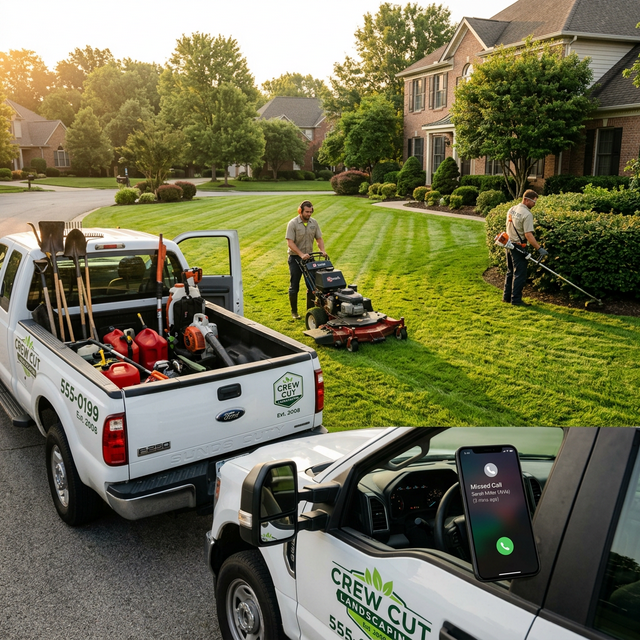
Green Industry Pros 2024 benchmarking data found that landscaping companies with 2 to 8 crews missed an average of 37 percent of inbound calls during active field hours (7 AM to 3 PM weekdays during peak season). This is the field blindness problem.
Treat any number without a nearby source or stated method as a planning assumption, then replace it with your own records.
Landscaping is one of the strongest referral-driven service businesses in the home services category. When a crew does great work on a lawn, the neighbors notice. The hedges are trimmed precisely, the edging is clean, the grass has that professional cut pattern that distinguishes a landscaping company from a DIY job. And the neighbors want the same thing. They reach for the phone while the crew is still in the driveway. They call the number from the truck wrap or the A-frame sign on the property.
And in the majority of landscaping businesses operating between April and October, nobody answers. The owner is running a mower with ear protection on. The one person who might answer calls is also on the property carrying equipment. The truck dashboard phone shows 3 missed calls by the time the job is finished. One of those callers became a client for the company that did answer. The other two left no message and are neighbors in the same block as the job just completed. The warm referral chain that landscaping companies build through visible work output breaks at the exact moment it generates the most opportunity.
Green Industry Pros 2024 benchmarking data found that landscaping companies with 2 to 8 crews missed an average of 37 percent of inbound calls during active field hours (7 AM to 3 PM weekdays during peak season). This is the field blindness problem.
Why Field Hours Are Also Peak Call Hours in Landscaping
Landscaping inbound call timing follows a specific pattern that is different from most other service categories. Calls from prospective new clients in the lawn care and landscaping category concentrate in two windows: 7 to 9 AM (before the workday, when homeowners see their lawn and decide to do something about it) and 10 AM to 2 PM (mid-morning, often triggered by seeing a landscaping crew in the neighborhood). Both windows overlap with peak field operation hours.
The visibility trigger is the mechanism most landscaping owners miss. In most service businesses, leads arrive through search: someone needs HVAC repair, searches Google, calls the first result. In landscaping, a significant fraction of leads arrive through direct observation. The homeowner sees the crew. The lawn looks good. They call. This is the highest-quality lead type in the category because the prospect has already seen the work product and the barrier to conversion is very low. They are not comparing quotes. They are asking if you can also do their property. Losing this call to a voicemail is a different kind of loss than losing an inbound search call, because the trust is already established before the call is placed.
The new client call window is short. Angi consumer behavior data from 2024 found that homeowners who call a landscaping company after observing the crew in the neighborhood typically decide on a provider within 4 hours of making their initial call. If the first company does not respond within that window, they call the second company and that decision is made just as quickly. Unlike major renovation projects where homeowners expect a several-day turnaround for quotes, lawn care and landscaping decisions are low-anxiety and low-deliberation. The prospect wants their lawn looked after. The first landscaping service business that confirms they can do it gets the job.
The Revenue Compounding Effect of Field Blindness
The missed call is just the first loss. A law firm or dental practice that misses an intake call loses one client with a defined lifetime value. A landscaping company that misses the call from the neighbor of the job in progress loses something more compounded: that neighbor and the referral chain that would have flowed from them. Landscaping clients refer at high rates because the service is visible to their neighbors and because satisfied clients in a neighborhood tend to consolidate around one company. LawnStarter 2024 market data found that a single new residential landscaping client in a suburban neighborhood generates an average of 1.6 additional referral clients over 24 months. At an average recurring monthly contract value of $180 to $250, a single missed new-client call has a 24-month compounded revenue exposure of $540 to $750 per property in direct revenue, plus the referral chain that never started.
Seasonality makes the math worse. Every missed call during the April to October peak season is a missed contract that either starts or does not start at the beginning of the season. A prospective client who calls in April and reaches voicemail and calls a competitor instead represents 7 months of recurring weekly service that the landscaping service business never sees. At 4 visits per month at $120 per visit, that is $3,360 in revenue from a single April miss. Multiplied across the 12 to 18 inbound calls per week a growing landscaping company misses during field hours in peak season, the seasonal revenue gap from field blindness alone is significant.
How the Best-Run Landscaping Companies Solve Field Blindness
Solution 1: Dedicated intake coverage during field hours. The structural fix for field blindness is creating a call coverage system that operates independently of the crew being in the field. At 2 to 4 crew scale, the most common approach is a combination: the office manager or dispatcher handles calls during normal business hours from a fixed location, and an AI voice intake system handles the windows when the dispatcher is unavailable, on the phone, or between tasks. The landscaping company that implements this combination sees its field-hours missed call rate drop from 37 percent (industry average) to under 10 percent within 60 days, per Jobber operator data from 2024.
Solution 2: A-frame and truck wrap call-to-action that routes to a coverage number. The most common landscaping business marketing asset, the truck wrap and job-site A-frame sign, typically lists a mobile number that rings directly to the owner or foreman. Changing this number to one that routes to a covered intake line (dispatcher or AI system) converts the most powerful marketing moment in the landscaping category, the visible work in progress, into a reliably answered lead source. A landscaping service business owner who changes this single routing detail and implements coverage for that line recaptures most of the high-quality referral calls generated by in-progress job site visibility.
Solution 3: AI intake configured for outdoor service context. An AI voice intake system built for landscaping handles the specific qualification questions that determine whether a new prospect is a viable client: service type (weekly lawn care, garden maintenance, one-time cleanup, seasonal cleanup, hardscaping), property type (residential versus commercial), approximate property size, current service status (do they have a provider, are they looking to switch, or is this a new property), and geographic location for route density optimization. A well-configured landscaping AI system delivers this information to the owner or foreman at the end of the field day as a structured summary of new inquiries, with caller contact information and appointment booking already confirmed. The business owner arrives home from a day in the field with 4 booked qualification walks instead of 4 missed calls.
Solution 4: Same-day callback guarantee with an automated acknowledgment. For calls that arrive during field hours and cannot be answered by either human or AI coverage, the minimum viable intervention is an automated callback acknowledgment: an SMS that sends within 60 seconds of a missed call, confirming receipt and providing a booking link or a specific callback time window. Landscaping companies that implement missed-call SMS acknowledgment recover 42 percent of otherwise lost new-client inquiries, per Hatch communication data across outdoor service categories. The prospect who receives "Hi, this is [Company], we saw your call, we will call you back by 4 PM today" has a 3 to 4 times higher probability of still being available for conversion when the callback happens versus a prospect who received no acknowledgment.
Building a Year-Round Intake System for a Seasonal Service Business
The landscaping intake problem has a seasonal dimension that most other service business categories do not. From November to March in most US markets, call volume drops significantly and the owner has the bandwidth to answer the phone personally. From April to October, call volume spikes, field hours expand, and coverage needs are highest. This creates a temptation to solve the problem seasonally rather than systematically.
The seasonal-solution trap. Landscaping business owners who set up intake coverage "for the busy season" often find that the friction of a temporary setup exceeds the willingness to implement it. The most effective intake systems for seasonal service businesses are configured once, run year-round, and scale with volume. A system running at low volume from November through March costs the same as during peak season. It ensures that the late-February calls from clients who are pre-booking spring cleanups, the highest-margin and earliest-converting calls of the year, are answered with the same consistency as mid-summer replacements.
Route density is where intake pays double. For a landscaping service business, every new client in a neighborhood where the company already has accounts has near-zero incremental travel cost. The crew is already on that street. The mower is already on the truck. Adding one client in an existing dense zone adds revenue with minimal labor overhead. A landscaping company that answers calls during field hours from neighbors of existing job sites and books them efficiently builds route density while the competitor who misses those calls is building scattered, inefficient routes that require more drive time per dollar of revenue.
The landscaping service business owner who solves field blindness is not just answering more calls. They are compounding their route density, their referral network, and their revenue per crew hour simultaneously.
The Authority Standard: High-Resonance Scaling
In the context of Landscaping Companies and the Field Blindness Problem: Why Your Best Days Cost You the Most Leads, we must address the fundamental friction that exists in manual intake. Every 'missed call' is a missed revenue opportunity, but more importantly, it is a signal of operational weakness that high-value prospects detect instantly. By bridging this gap with AI-driven intake, you are not just 'automating.' You are humanizing the interaction by ensuring that your clients get the attention they deserve, instantly. This is the math of responsiveness that wins markets.
Strategic ROI: When we apply the Quiet Protocol math to Landscaping Companies and the Field Blindness Problem: Why Your Best Days Cost You the Most Leads, the result is always the same: a dramatic reduction in cost-per-acquisition (CAC) and a significant increase in client lifetime value (LTV) through immediate resolution.
The loss estimate is basic business math, not a magic claim.
Revenue-leak examples on this site are built from visible operating inputs: inquiry volume, missed-call or slow-response rate, booking rate, average job or client value, repeat value, and follow-up recovery. The fastest way to make the number real is to run the diagnostic for your closest business type, then compare it against your own call log, CRM, booking calendar, form timestamps, and review activity.
The practical questions behind this decision.
How should a solo landscaping operator with no office staff handle inbound calls during field hours?
For a solo operator or owner-operator running a small crew, the most practical approach is two-part: an AI intake system that answers every call during field hours, collects basic prospect information, and sends a callback request to the owner at the end of the field day, combined with a missed-call SMS acknowledgment that fires automatically for any call the AI does not reach in time. The specific platforms most commonly configured for landscaping operations are Jobber and ServiceTitan for scheduling integration, plus an AI voice layer through platforms like Vapi or purpose-built small business AI intake systems. Total monthly cost for this configuration: $150 to $300. For a solo operator who books even 2 additional new weekly clients per month from previously missed calls, this pays for itself from a single contract.
What information should a landscaping intake system collect from a new prospect?
An effective landscaping intake system collects seven data points that determine whether a prospect is a fit and how to route the follow-up. First: service type requested (weekly maintenance, monthly, one-time, seasonal). Second: property address, which allows the owner to assess route density and proximity to existing clients. Third: approximate property size or number of mowable acres. Fourth: existing service provider status. Fifth: preferred service start date. Sixth: best callback time. Seventh: how they heard about the company. This last point is critical: a caller who says "I saw your truck on my street" is a visibility referral and should be flagged as high priority because they have already seen the work. A caller from Google is a search lead with a different conversion profile. The intake system that distinguishes these two lead types allows the business owner to prioritize their callback sequence accordingly.
Does implementing AI intake affect the personal relationship that makes landscaping referrals work?
The personal relationship in landscaping is built through the service interaction, the technician who speaks with the client at property visits, the consistency of the cut quality, and the reliability of the schedule. It is not built through the intake call. A prospective new client who reaches an AI system, receives a clear booking confirmation, and then meets the crew for a professional walkthrough of the property has exactly the same relational experience as one who spoke to a human on the initial inquiry call. What breaks the personal relationship in landscaping is not who answers the initial call. It is when the ongoing service is inconsistent, when the crew changes frequently, or when billing disputes are handled poorly. These are service delivery problems. The intake system exists to get the prospect to the service delivery stage. If it does that efficiently, the relationship can be built from there.
Map how a serious buyer decides in this kind of business.
Use the operating reality of the industry instead of copying a generic lead-generation playbook.

Vikram Roy is the founder of The Quiet Protocol, a Toronto-based systems firm serving service businesses across the Greater Toronto Area, Canada, and the United States. He works directly with professional firms, home service companies, dental practices, clinics, and local businesses to connect websites, customer intake, booking, reviews, follow-up, and practical AI into a clearer digital front door. All content is written from Toronto, Ontario. See the editorial method →
Replace broad industry assumptions with the business's actual inquiry volume, customer value, response time, and booking data.
See how the capability in this article fits into a complete customer journey.
Landscape ArchitectureSee the same decision through the language, buyer behavior, and operating reality of this industry.
Client Results & ProofInspect the starting condition, installation, measurement window, and outcome behind real client work.
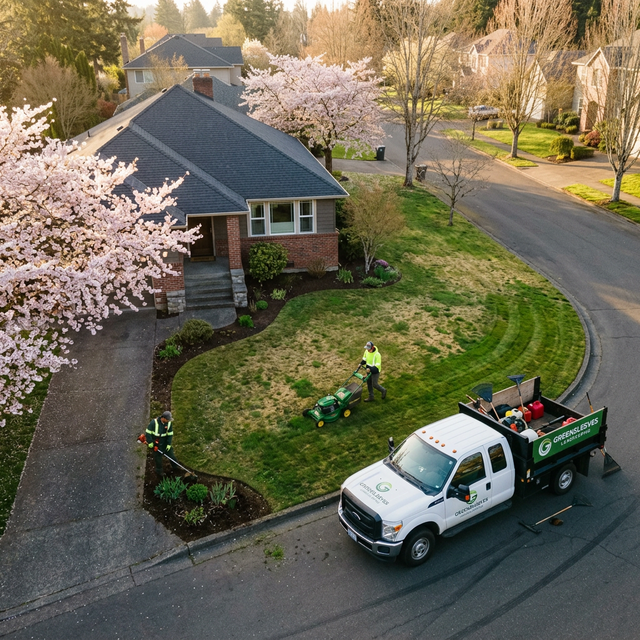
Lawn Care and Landscaping: How to Book 200 Spring Clients Before April Without Hiring
The homeowner who decides who cuts their lawn in 2026 makes that decision in February or March, not in May. By the time the grass is growing too fast to ignore, the best lawn care routes are full. The landscaping and lawn care businesses that dominate their market every summer are not better at marketing in April. They are better at capturing intent in February and converting it into booked seasonal agreements before the surge arrives.
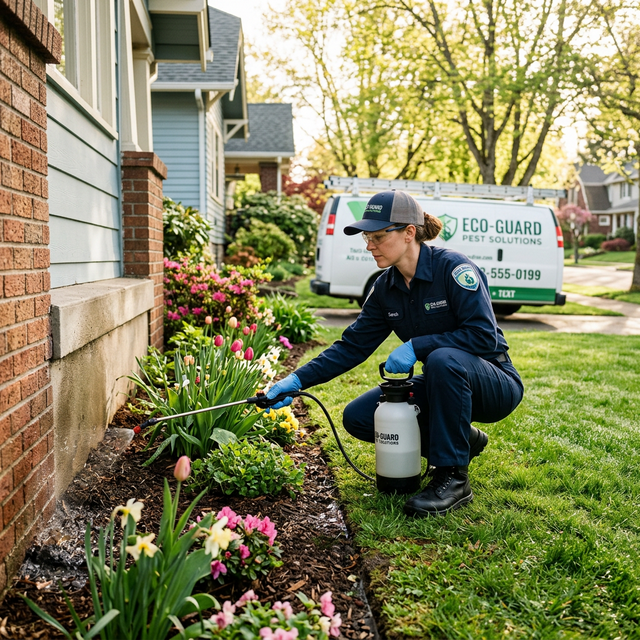
Pest Control Spring Surge: Why April Is the Month You Win or Lose the Season
In the pest control industry, more than 40 percent of annual residential service agreements are initiated between March and May. The pest control business that captures the most inbound calls in April does not just have a strong month. It locks in recurring contract revenue for the entire year while competitors are still trying to answer their phones. Here is how to build the intake infrastructure that wins the spring surge before it arrives.
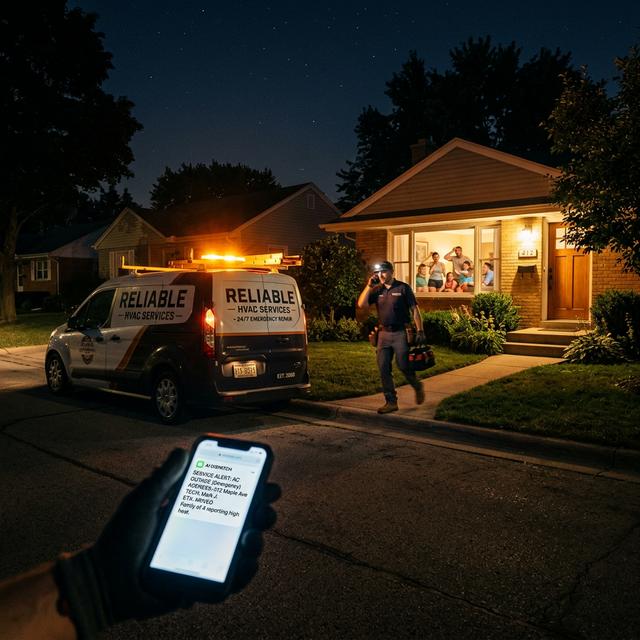
How HVAC Companies Are Using AI to Never Miss an Emergency Call
An AC failure at 8 PM in July is not a scheduling problem. It is a medical situation for vulnerable households, and it is the highest-value call your HVAC service business will receive all week. The company that answers it closes the job. The company that sends it to voicemail gives that job to a competitor who does answer. AI voice systems changed that equation permanently in 2025, and the HVAC operators who deployed early are now compounding the advantage.