

This happens dozens of times every month in a plumbing operation that's running normally , doing everything "right." And I've seen enough of these businesses to tell you something most plumbing owners don't hear from their accountant or their marketing company: the damage goes well beyond the individual job.
This article links to 1 external source beside the claims they support.
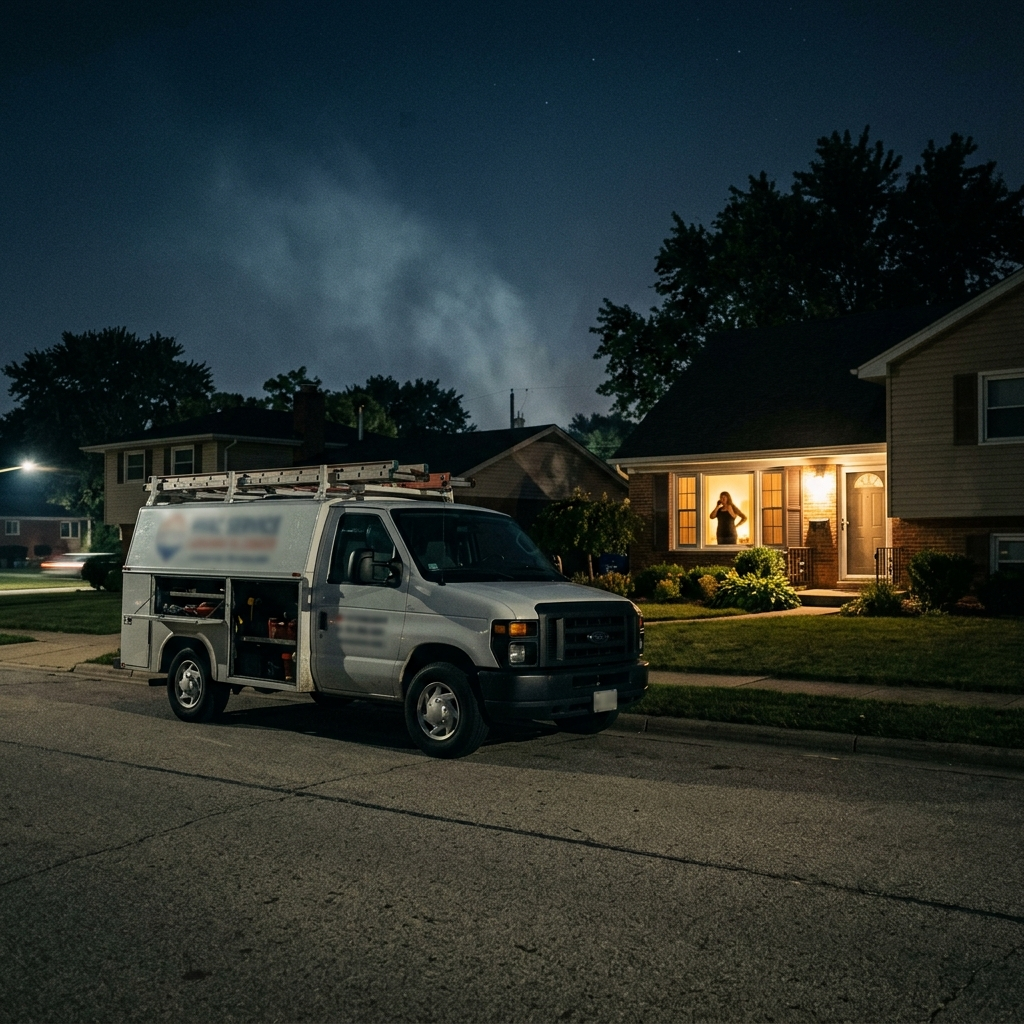
Saturday at 8:43 AM. A homeowner discovers water spreading across their kitchen floor from under the sink. The cabinet is soaked. Something has failed. They pull up Google, see your company listed, and call.
Your technician is already on a job across town. The call rings four times and hits voicemail. The homeowner hangs up and calls the next result.
By 9:15 AM, a competitor has answered, confirmed, and dispatched a plumber. By 10 AM, the job is underway. You never knew the call came in.
This happens dozens of times every month in a plumbing operation that's running normally, doing everything "right." And I've seen enough of these businesses to tell you something most plumbing owners don't hear from their accountant or their marketing company: the damage goes well beyond the individual job.
The Weekend Revenue Math
Weekend emergency calls are the highest-value calls a plumbing company receives.
The homeowner is not comparison-shopping. They are not waiting for multiple quotes. A burst pipe, a sewage backup, a failed water heater on Saturday morning creates immediate, urgent need. The buyer wants resolution in hours. They will pay a premium for availability. Price is secondary.
Emergency plumbing call values range from $400 for a simple diagnostic and repair to $2,500 or more for a water heater replacement, main line clearing, or slab leak investigation. The average emergency call in a mid-sized market comes in around $1,100 to $1,400 depending on job type.
Saturday and Sunday represent 28 percent of the week in hours but typically account for 35 to 45 percent of emergency call volume. People are home. They discover problems. They need them fixed before Monday.
A five-truck plumbing operation missing an average of three weekend calls per week at a 30% close rate and $1,200 average ticket loses approximately $56,000 per year from the weekend gap alone.
That's the conservative scenario. In markets with high homeowner density and older housing stock, three missed calls per weekend is a floor, not a ceiling.
Why Weekend Calls Go Unanswered
This is not about laziness or poor business management. Weekend call loss is structural.
Plumbing technicians work hard during the week. When Saturday arrives, most of them are on one of two things: a scheduled job booked through the week, or a day off they've genuinely earned.
When they're on a job, they can't simultaneously answer dispatch calls. A technician elbow-deep in a crawl space replacing a corroded drain line cannot take a call, qualify the lead, confirm the address, and dispatch themselves. It's physically impossible.
When they're off, expecting them to manage inbound calls on their personal time is a tax on the very thing they're trying to recover. Most technicians who are expected to answer dispatch calls on their days off eventually stop doing it consistently. The resentment builds. The coverage erodes. The calls continue coming in.
The owner fills the gap. Because someone has to.
Here's how it typically starts: the owner begins taking inbound calls on their personal cell after hours. Just a few. Just the urgent ones. But "just the urgent ones" means checking the phone constantly, because you can't know which call is urgent without answering it.
The personal cell becomes the business phone after 5 PM. Weekends stop being weekends. Calls arrive during dinner. During kids' soccer games. During the rare quiet moment the owner was trying to take.
One plumbing owner I worked with in Mississauga described it this way: "I'd be at my daughter's hockey game and I'd feel the phone buzz and I'd think, 'Is that an emergency?' I couldn't just ignore it. That's how you lose a $2,000 job on a Saturday." He'd been doing this for four years.
This is not a staffing problem. It's an infrastructure problem. And infrastructure, not headcount, is what fixes it.
The True Cost of the Weekend Call Problem
The immediate cost is visible: a job not won, revenue not earned. The full cost is wider than most owners calculate.
The job itself. At $1,200 average and 30% close rate, a missed emergency call represents $360 in expected revenue per call. Over 52 weekends with three missed calls per weekend, that's $56,160 annually in direct opportunity cost.
The review that never happened. A homeowner whose Saturday morning emergency is resolved by noon is emotionally grateful. They leave a 5-star review. They mention you to their neighbors. They become a repeat client. The homeowner whose call went to voicemail becomes a customer of your competitor instead. Every missed call is the start of a client relationship that began with someone else.
The referral chain that never started. Research on service business referral patterns shows that a satisfied residential service client generates an average of 1.1 to 1.4 referrals over a two-year period. A plumbing company missing 156 emergency calls per year (three per weekend) isn't just missing those 156 jobs. It's missing the downstream referral network that would have grown from them.
The owner's peace. The owner who is the fallback for every after-hours and weekend call pays a cost that doesn't appear in any financial report. It appears in the absence of real weekends. In the constant low-grade awareness of a phone that might ring. In the slow erosion of the boundary between running a business and living a life.
We call this the Vibration Tax: the attention and presence consumed by being the last line of defense between the business and voicemail.
The Owner Treadmill This Creates
Here's the pattern, almost universally consistent across plumbing owner-operators:
The business grows. The owner handles the growth by working more. The front desk handles what it can during business hours. After hours, the owner is the system. Weekend calls go to the owner's cell. Personal time erodes gradually, then completely.
The owner is now not running a plumbing business. They're running the plumbing business and doing the job of a 24/7 dispatcher simultaneously. These are two different jobs. Neither gets done as well as it should.
Revenue would grow if the owner had time to manage operations, build relationships with commercial accounts, develop the technician team, and oversee fleet management. Instead, the owner is triaging dispatch calls from the couch on Sunday morning.
The treadmill gets faster as the business gets busier. More jobs means more after-hours calls. More after-hours calls means more owner involvement. More owner involvement means less time for the strategic decisions that would grow the business further. It's a compounding trap.
Breaking out of it doesn't require a new hire. It requires infrastructure that does the work the owner is currently doing manually.
Three Things That Fix the Weekend Call Problem
AI Voice Agent: Answers Every Call, Captures Every Job
An AI voice agent trained on your specific business answers every call within three rings, seven days a week, around the clock. It handles the caller's inquiry with knowledge specific to your operation: service area, pricing structure, urgency tiers, on-call protocols.
When a homeowner calls Saturday morning with a burst pipe, the system captures the address, the nature of the emergency, the preferred callback number, and the urgency level. It either routes an immediate text alert to the on-call technician with all captured details, or confirms receipt with an SMS and schedules the follow-up.
The caller doesn't reach voicemail. They get a response. The job is captured.
The on-call technician gets a text: "Emergency call: burst pipe, [address], [name], [number]. Customer available now." The technician decides whether to dispatch based on their on-call status, not whether they happened to hear their phone ring while watching the game.
Missed-Call Text-Back: Recovery for the Calls That Slip Through
Within 60 seconds of any missed call, the caller receives an automated SMS: "Hi, this is [Company Name]. We missed your call, are you having a plumbing emergency? Reply here or call us back and we'll pick up."
This single mechanism recovers a meaningful fraction of missed calls before they go to a competitor. The caller who would have moved on to the next Google result is now engaged in a text conversation with your business. That engagement holds the relationship through the gap.
Emergency Routing: Context Delivered Instantly to the On-Call Tech
The most expensive part of the traditional callback chain is information loss. The dispatcher takes a message. The message is relayed to the owner. The owner calls the technician. The technician calls the customer. At each step, information degrades and time passes.
A properly configured routing system collapses the chain. The caller's information is captured once and delivered instantly to the on-call technician with complete context. No relay. No degradation. No delay.
The on-call tech receives a structured text with everything needed to decide and act: emergency type, address, customer name, phone number, urgency level, and any specific notes from the caller. The decision to dispatch takes 30 seconds. The call back to the customer happens in under three minutes from the original inbound call.
Compare that to a traditional callback chain averaging 25 to 45 minutes. In a plumbing emergency, 40 minutes is the difference between winning the job and losing it.
What the Owner Stops Doing When the System Is in Place
The Mississauga plumbing owner I mentioned earlier described the change in week three: he went to his daughter's hockey tournament on a Saturday. No calls on his personal cell. No voicemail pile waiting when he checked the phone at halftime. The system handled it.
Within three to four weeks of a properly installed system, most plumbing owners stop:
Taking inbound calls on their personal cell after 5 PM. The system answers. The system routes. The on-call tech gets the information they need. The owner isn't in the chain.
Acting as the dispatcher between customer and technician. The routing system handles this. The tech gets the job information directly. The owner is not the relay.
Spending Sunday evenings returning voicemails. The voicemail inbox stops filling because calls are answered when they come in. The ones that do reach voicemail trigger an automated text-back that re-engages the caller before the owner would have seen the message anyway.
Being the single point of failure between every after-hours lead and a confirmed appointment.
His Google review count went from 22 to 51 in 90 days. The reviews came in because the system requested them after every completed job, automatically, within two hours. The map pack position improved. Inbound call volume increased further.
The Review Flywheel in Plumbing
Review velocity is more important in plumbing than in almost any other home services category.
Why? Because plumbing emergencies have a short decision window. A homeowner calling at 9 AM on Saturday is not going to read 300 reviews. They're going to look at the first two or three results on Google Maps, check the star rating and review count, and call the one that looks most credible.
A plumbing company with 65 recent reviews at 4.8 stars dominates click share against a company with 18 reviews at 4.5 stars, regardless of which company has the better plumbers.
Automated review requests, sent by SMS within two hours of every completed job, compound this advantage over time. The business doesn't get better at plumbing. The system starts asking every satisfied customer for a review, at the right moment, with a direct link, every single time.
Over 12 months, that consistent velocity becomes a structural competitive advantage. Competitors asking for reviews manually and inconsistently cannot close the gap.
Calculating Your Own Weekend Revenue Gap
Three inputs.
Take your average number of weekend calls per week. If you don't have call tracking data, estimate based on voicemail count and what you recall.
Take your average emergency call ticket value. If you're not tracking this specifically, use $1,100 as a conservative estimate for a mixed service area.
Apply a 30% close rate to the calls you're currently missing.
Multiply by 52 weeks.
That's the floor of your weekend revenue gap. The actual number, including lifetime value and referral multiplier, is two to three times higher.
If you want the calculation run with your specific inputs, the Plumbing Revenue Leak Diagnostic at The Quiet Protocol runs the full model, including dormant database potential, review gap, and website lead capture analysis, alongside the missed call calculation.
Before the Next Sales Call
Use this section as a quick buyer check. A plumbing company owner does not need another vague automation pitch. They need to know which part of the front door is leaking, what the system will change, and how they will measure whether the fix is working.
Source method: compare the article against your own call log, CRM notes, booking calendar, missed-call records, web form timestamps, and Google Business Profile review recency. Those records are more useful than a generic benchmark because they show what buyers actually experienced in your business.
What proof should I look for in my own business?
Look for proof in the places where demand either moved forward or stalled: missed calls, short calls, unbooked forms, slow callbacks, no-show recovery, old leads, and reviews that were never requested. If the business cannot see those moments clearly, the first improvement is better tracking and routing.
How do I know whether this is a marketing problem or an operations problem?
If people are already calling, filling forms, asking for prices, requesting appointments, or comparing reviews, the problem is usually operations. More marketing will not fix a front door that lets warm demand wait. The better move is to capture and route the demand already arriving.
What should happen after the first response?
The first response should create a next step: booked appointment, estimate path, intake handoff, callback window, review request, or reactivation sequence. A response that only says someone will get back to you is not enough when the buyer is comparing several providers at once.
Where does The Quiet Protocol fit?
The Quiet Protocol fits when the business already has demand but too much of it depends on manual attention. We connect AI receptionist coverage, web intake, missed-call recovery, booking logic, follow-up, review requests, and reactivation into one managed front-door system.
The loss estimate is basic business math, not a magic claim.
Revenue-leak examples on this site are built from visible operating inputs: inquiry volume, missed-call or slow-response rate, booking rate, average job or client value, repeat value, and follow-up recovery. The fastest way to make the number real is to run the diagnostic for your closest business type, then compare it against your own call log, CRM, booking calendar, form timestamps, and review activity.
The practical questions behind this decision.
How many weekend calls does the average plumbing company miss?
For a five-truck operation, the pattern is typically three to six missed weekend calls per week during moderate demand periods. During high-demand periods , cold snaps, spring thaw, holiday weekends , the number goes higher. Most owners who've never tracked this are surprised by how consistent the pattern is once they pull actual call data.
Do customers leave voicemail when they have a plumbing emergency?
Rarely. In emergency situations, buyers call two or three numbers and hire whoever answers first. They don't leave messages and wait. This means the voicemail count in your inbox dramatically understates the true call volume that's going unanswered.
Does an AI voice agent work for complex plumbing calls?
It works for intake and routing, which is what the front-door system is designed to do. For technically complex conversations, the system captures the caller's information and routes to a human. It's not replacing the technician's expertise , it's ensuring the call gets captured and the relationship starts before the caller moves to the next Google result.
What happens if my on-call tech doesn't respond to the routing alert?
Well-built systems include escalation paths: if the primary on-call tech doesn't respond within a configured time window, the alert goes to a backup contact. The owner is the final escalation , but the last resort, not the first point of contact.
Can I set different routing rules for weekends versus weekdays?
Yes. Most AI intake systems support time-based routing rules. Weekend routing can go directly to an on-call tech for any emergency. Weekday routing can go through the standard dispatch queue. After-hours rules override business-hours rules automatically.
How long before I see results?
Most plumbing owners see measurable improvement within the first three to four weeks. Weekend call capture improves immediately because the system is live. Review velocity increases within the first 30 days as post-job requests go out consistently. Map pack improvements typically become visible within 60 to 90 days of consistent review accumulation.
What proof should I look for in my own business?
Look for proof in the places where demand either moved forward or stalled: missed calls, short calls, unbooked forms, slow callbacks, no-show recovery, old leads, and reviews that were never requested. If the business cannot see those moments clearly, the first improvement is better tracking and routing.
How do I know whether this is a marketing problem or an operations problem?
If people are already calling, filling forms, asking for prices, requesting appointments, or comparing reviews, the problem is usually operations. More marketing will not fix a front door that lets warm demand wait. The better move is to capture and route the demand already arriving.
What should happen after the first response?
The first response should create a next step: booked appointment, estimate path, intake handoff, callback window, review request, or reactivation sequence. A response that only says someone will get back to you is not enough when the buyer is comparing several providers at once.
Where does The Quiet Protocol fit?
The Quiet Protocol fits when the business already has demand but too much of it depends on manual attention. We connect AI receptionist coverage, web intake, missed-call recovery, booking logic, follow-up, review requests, and reactivation into one managed front-door system.
Map how a serious buyer decides in this kind of business.
Use the operating reality of the industry instead of copying a generic lead-generation playbook.
Replace broad industry assumptions with the business's actual inquiry volume, customer value, response time, and booking data.
See how the capability in this article fits into a complete customer journey.
Home & Field ServicesSee the same decision through the language, buyer behavior, and operating reality of this industry.
Client Results & ProofInspect the starting condition, installation, measurement window, and outcome behind real client work.
The After-Hours HVAC Revenue Gap: What Your Voicemail Is Actually Costing You Each Year
HVAC companies lose their highest-value calls after 5 PM. Here is what the annual cost is in precise terms, and what fixed looks like without adding headcount.

Why Med Spas Lose 40% of Their Bookings Before the Phone Even Rings
Most med spa revenue leaks before intake, not in the treatment room. Here is exactly where it goes, how much it costs annually, and what the fix looks like without adding staff.