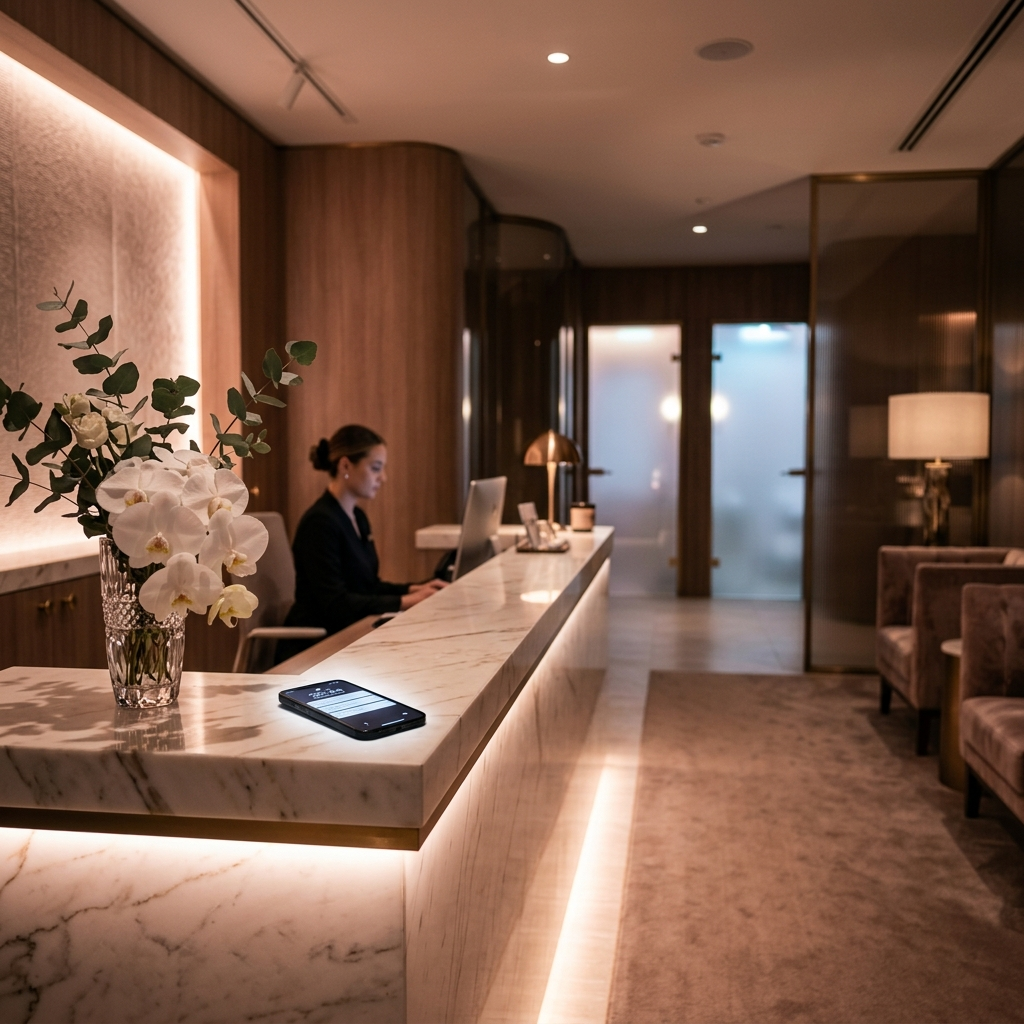

Here's what I almost always find: the booking problem isn't inside the practice. It's before the first call is answered.
This article links to 1 external source beside the claims they support.
There is a pattern I see in nearly every med spa Revenue Leak Diagnostic I run.
The practice has excellent treatments. The injector or the laser tech is skilled. The before-and-afters are compelling. The Google reviews that exist are strong. But bookings feel stuck relative to marketing spend, and the owner can't quite identify why.
Here's what I almost always find: the booking problem isn't inside the practice. It's before the first call is answered.
In medical aesthetics, buyers make purchase decisions at unusual hours. They are scrolling Instagram at 9 PM, comparing treatment options and reviews after the kids are in bed, when they finally have mental space to think about what they want to change about themselves. When they reach a decision point, they act: they call, they fill out the form, they send a message.
And nobody answers.
The next morning, the team walks in to a voicemail, a form submission, and three missed calls. By the time a callback happens at 9 AM, the prospect has often already contacted a competitor, talked herself out of the procedure, or simply moved on.
The intent window in medical aesthetics is short. And most practices are systematically missing it.
The Five Points Where Med Spa Revenue Disappears
1. After-Hours and Evening Inquiries
This is the largest single revenue leak in most med spa operations. Based on patterns I consistently see in Front Door Audits, 35 to 45 percent of aesthetics inquiry activity happens between 7 PM and midnight. That is the window when people are off work, off obligation, and finally have the mental space to think about what they want.
When they reach out during that window and nobody answers, not a person, not even an automated response, the lead goes cold. By the following morning, the emotional momentum has faded. Practical concerns reassert themselves. The competitor who sent an instant text confirmation has already booked the consultation.
2. The Consultation Form That Routes Nowhere Fast
Most med spa websites have a consultation request form. Most of those forms route to an email inbox someone checks during business hours.
The form creates a false sense of capture. The lead is "in the system," but the response time is four to eight hours on a good day, zero response on a weekend. A lead form without an instant follow-up mechanism is a waiting list for competitors. It collects intent at peak moment and returns nothing until the moment has passed.
I audited a Toronto med spa last spring that was running $4,000 per month in Google Ads. Their form submission rate was excellent, 35 to 40 leads per month. Their consultation booking rate from those leads was 9 percent. When we tracked their response time, the team was averaging 5 hours to reply. We switched to a 60-second automated SMS acknowledgment. Within 60 days, their form-to-consultation rate was 23 percent. Same ad spend. Same traffic. Different response time.
3. The Front Desk Doing Two Jobs Simultaneously
During business hours, the front desk is the most overloaded role in most med spa operations. They handle check-ins. They process payments. They manage scheduling conflicts. They answer questions from clients who are physically in the building.
When an inbound call comes in during that window, one of two things happens: the person at the desk answers while managing another client, delivering a distracted, rushed experience that rarely converts, or the call goes to voicemail, which converts at near zero.
This is a structural problem. One person cannot do two revenue-generating things at the same time. The call that comes in when the desk is occupied isn't just delayed. It's usually lost.
4. The Follow-Up Gap
Most med spas never follow up systematically on no-shows, unreplied inquiries, or consultations that did not convert.
A prospect books a consultation and doesn't show. What happens next? In most practices, nothing. She falls off the radar. No follow-up sequence. No second touchpoint. The slot is filled by someone else.
A prospect fills out a form, gets a callback, and doesn't pick up. Without a systematic follow-up sequence, that lead is effectively gone.Research on service business follow-up patternsconsistently shows that the second through fifth contact points account for the majority of revenue. Most small practices stop at one.
5. The Dormant Database
Every established med spa is sitting on a revenue asset it isn't using: past clients.
A practice operating for three years with 20 consultations per month has a database of 700-plus past clients. Most of those clients received one or two treatments and went quiet, not because they were unhappy, not because they moved away, but because no one ever reached out to bring them back.
The average reactivation rate on a well-executed past-client campaign in aesthetics runs 8 to 15 percent. At a $900 average treatment value, a 10 percent reactivation of 700 past clients is 70 clients and $63,000, from zero new ad spend.
Why Speed to First Response Is Everything in Aesthetics
Aesthetics is not like plumbing or HVAC. In those industries, urgency is driven by a broken system. In aesthetics, urgency is driven by an emotional state: a life event, accumulated frustration with something visible in the mirror, confidence during a specific season.
That emotional readiness has a shelf life.
A prospect who inquires about Botox at 8:30 PM and hears back at 10 AM the next morning has had thirteen hours for the emotion to cool, for practical concerns to reassert themselves, for a competitor's Instagram ad to catch her eye.
A prospect who gets an immediate text confirmation, not a sales pitch, just a simple "Thanks for reaching out, we'll have someone call you tomorrow at 9 AM", is far more likely to keep that appointment.
The response doesn't have to close the sale. It has to hold the relationship at the moment of peak intent.
Research on lead response timingshows that companies reaching leads within an hour are nearly seven times more likely to qualify them than companies waiting even one additional hour. For aesthetics, where the purchase is emotional and discretionary, the decay is even steeper.
The Numbers Behind the Leak
A med spa in a mid-sized market sees 60 inbound inquiries per month, phone calls, form submissions, direct messages. Conservative estimate for a practice with any marketing activity.
Of those 60, approximately 40 percent occur outside business hours. That's 24 inquiries with no live response.
Of those 24, an optimistic 30 percent will still be reachable the next business day and will convert at roughly 20 percent. That's about 1.4 consultations recovered.
The remaining 70 percent, approximately 17 consultations, are effectively gone. Monthly.
At $1,200 average consultation value, that's $20,400 in monthly opportunity cost from the after-hours gap alone.
Annualized: $244,800 per year. Not from bad marketing. Not from poor treatment outcomes. From a phone nobody answered after 5 PM.
This is before accounting for the follow-up gap, the dormant database, and the front desk collision problem.
What a Fixed Front Door Looks Like for a Med Spa
AI Voice Agent for After-Hours and Overflow Calls
An AI voice agent answers every call, regardless of time. It's trained on the practice's specific services, pricing structure, and booking process. It captures the caller's name, preferred treatment, contact information, and preferred callback time.
For high-urgency inquiries, it sends an immediate text to the practice owner or on-call coordinator. For standard consultation requests, it confirms receipt with a text to the caller and schedules a callback for first thing in the morning.
The caller is not going to voicemail. They're being heard. That distinction holds the relationship through the overnight gap.
Instant SMS Response to Every Form Submission
When a prospect submits the consultation form at 11 PM, they receive a text within 60 seconds, not from a person, but from the system: confirmation that the request was received, what happens next, and an optional self-scheduling link. This single mechanism converts form leads at two to three times the rate of next-morning email responses.
Automated Reply to Every Missed Call
When a call is missed during business hours: "Sorry we missed you. This is [Practice Name]. We'll call you back within the hour. Is there a better time that works for you?" This converts a missed call from a dead end into an active thread.
Consultation Confirmation Sequence
For every booked consultation: a confirmation text at booking, a reminder 48 hours before, and a reminder the morning of. This alone reduces no-show rates from the industry average of 25 to 30 percent down to 8 to 12 percent. Every recovered no-show slot is direct revenue.
Database Reactivation for Past Clients
Past clients segmented by last contact date and service history. Clients who haven't returned in 90 to 365 days enrolled in a personalized SMS or email reactivation sequence, tied to the season or their service history.
A single reactivation campaign to a 650-person past client database produced $48,960 in recovered revenue for a Toronto med spa within 60 days. Zero new ad spend.
Reputation Automation
After every completed appointment, an automated review request via SMS within two hours, the window when the client is still in the emotional high of the result. Consistent review velocity builds buyer trust and improves local search rankings.
Before the Next Sales Call
Use this section as a quick buyer check. A med spa owner does not need another vague automation pitch. They need to know which part of the front door is leaking, what the system will change, and how they will measure whether the fix is working.
Source method: compare the article against your own call log, CRM notes, booking calendar, missed-call records, web form timestamps, and Google Business Profile review recency. Those records are more useful than a generic benchmark because they show what buyers actually experienced in your business.
What proof should I look for in my own business?
Look for proof in the places where demand either moved forward or stalled: missed calls, short calls, unbooked forms, slow callbacks, no-show recovery, old leads, and reviews that were never requested. If the business cannot see those moments clearly, the first improvement is better tracking and routing.
How do I know whether this is a marketing problem or an operations problem?
If people are already calling, filling forms, asking for prices, requesting appointments, or comparing reviews, the problem is usually operations. More marketing will not fix a front door that lets warm demand wait. The better move is to capture and route the demand already arriving.
What should happen after the first response?
The first response should create a next step: booked appointment, estimate path, intake handoff, callback window, review request, or reactivation sequence. A response that only says someone will get back to you is not enough when the buyer is comparing several providers at once.
Where does The Quiet Protocol fit?
The Quiet Protocol fits when the business already has demand but too much of it depends on manual attention. We connect AI receptionist coverage, web intake, missed-call recovery, booking logic, follow-up, review requests, and reactivation into one managed front-door system.
The loss estimate is basic business math, not a magic claim.
Revenue-leak examples on this site are built from visible operating inputs: inquiry volume, missed-call or slow-response rate, booking rate, average job or client value, repeat value, and follow-up recovery. The fastest way to make the number real is to run the diagnostic for your closest business type, then compare it against your own call log, CRM, booking calendar, form timestamps, and review activity.
The practical questions behind this decision.
How many med spa inquiries come in after business hours?
In the practices I've audited, 35 to 45 percent of consultation inquiries arrive outside standard business hours, with the highest volume between 7 and 11 PM. This is the primary revenue leak point. The number almost always surprises owners who've never looked at it explicitly.
How much does a missed consultation cost a med spa?
A missed consultation represents the direct appointment value ($800 to $2,500 depending on treatment) plus the lifetime value of a client who never enters the practice ($3,000 to $8,000 over 3 to 5 years) plus the referral value of a satisfied client who would have brought others. The full opportunity cost of a single missed consultation, calculated over a client's projected lifetime, is typically $5,000 to $15,000.
Can an AI voice agent handle aesthetics inquiries without sounding robotic?
Modern AI voice systems trained specifically on a practice's services and intake process perform very differently from generic call-center bots. The system knows your treatments, your pricing, and your specific intake questions. Callers typically can't tell they're speaking to an AI if it's properly configured.
What is the fastest ROI move for a med spa with a booking problem?
Database reactivation is usually the fastest revenue recovery. Past clients convert at 3 to 5 times the rate of cold leads and require no new acquisition spend. A single well-executed reactivation campaign to a dormant client list typically produces $30,000 to $80,000 in the first 60 days for established practices.
Does fixing the front door require replacing existing staff?
No. The systems operate in parallel with your existing team. AI intake handles the calls and inquiries that would otherwise go unanswered. It reduces the burden on the front desk, not the size of the team.
How does response time affect consultation show rates?
Practices that confirm consultations within 5 minutes of booking and send structured reminder sequences see no-show rates fall from 25 to 30 percent down to 8 to 12 percent. Each recovered no-show slot is direct revenue.
What proof should I look for in my own business?
Look for proof in the places where demand either moved forward or stalled: missed calls, short calls, unbooked forms, slow callbacks, no-show recovery, old leads, and reviews that were never requested. If the business cannot see those moments clearly, the first improvement is better tracking and routing.
How do I know whether this is a marketing problem or an operations problem?
If people are already calling, filling forms, asking for prices, requesting appointments, or comparing reviews, the problem is usually operations. More marketing will not fix a front door that lets warm demand wait. The better move is to capture and route the demand already arriving.
What should happen after the first response?
The first response should create a next step: booked appointment, estimate path, intake handoff, callback window, review request, or reactivation sequence. A response that only says someone will get back to you is not enough when the buyer is comparing several providers at once.
Where does The Quiet Protocol fit?
The Quiet Protocol fits when the business already has demand but too much of it depends on manual attention. We connect AI receptionist coverage, web intake, missed-call recovery, booking logic, follow-up, review requests, and reactivation into one managed front-door system.
Decide what the AI must handle before you choose the software.
A useful intake system begins with the caller journey, the rules, and the human handoff, not a long feature list.
Give the receptionist a realistic scenario and hear how it answers, gathers context, and moves the caller toward a useful next step.
See how the capability in this article fits into a complete customer journey.
Aesthetics & Med SpaSee the same decision through the language, buyer behavior, and operating reality of this industry.
Client Results & ProofInspect the starting condition, installation, measurement window, and outcome behind real client work.
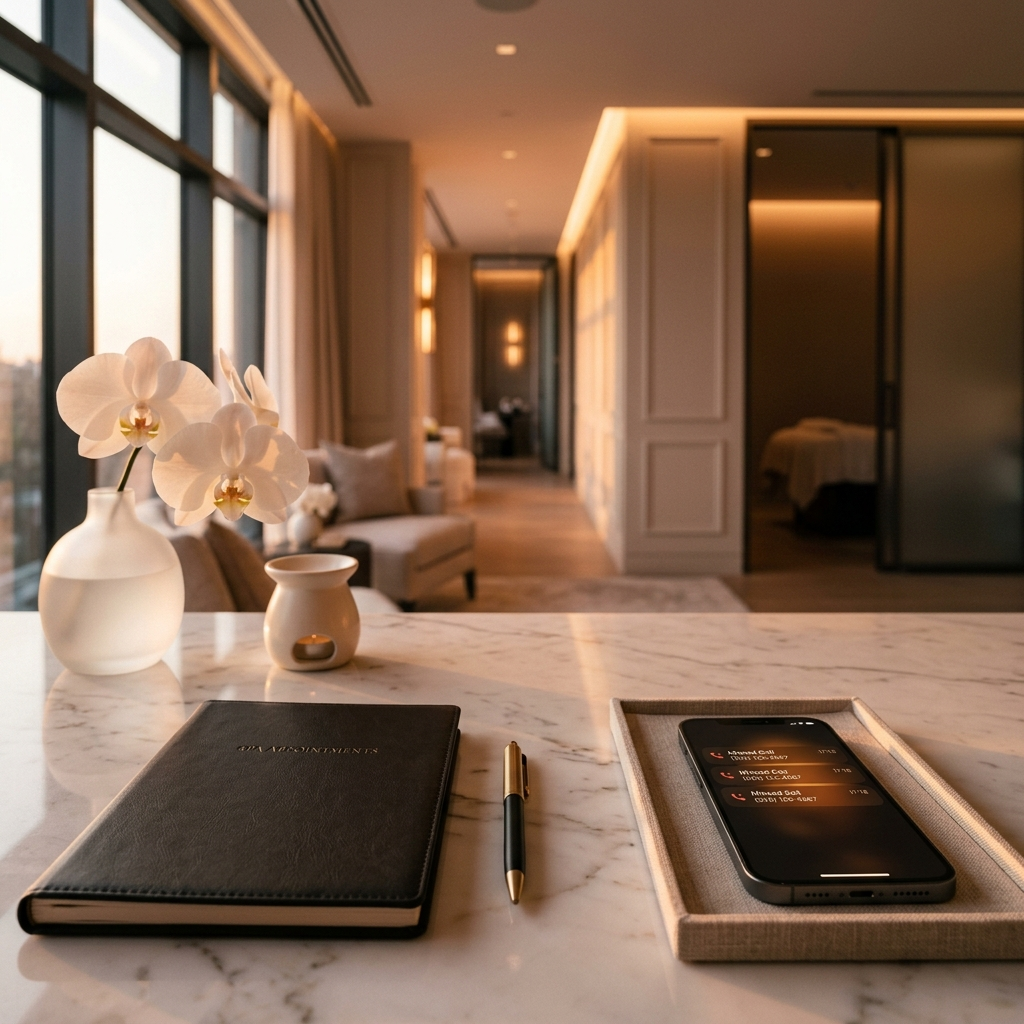
The Med Spa Booking Leak: Why Your Marketing Works But Your Calendar Doesn't Fill
Med spas spend thousands attracting new clients, then quietly lose 40 to 60 percent of them at the phone. Here is where the leak is, how much it costs, and what the fix looks like.
Med Spa Intake System: What to Automate and What Needs a Human
A buyer's guide to faster inquiry response, safer intake, better consultation booking, and clear boundaries between software and people.
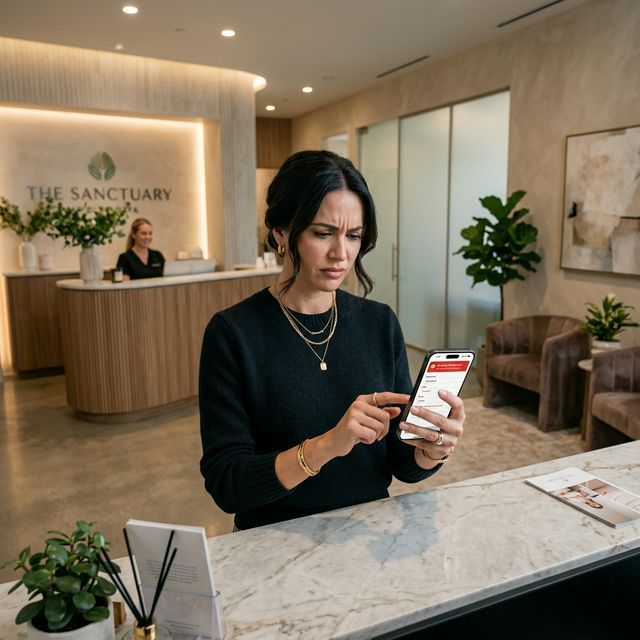
Why Med Spas Lose 40 Percent of Inquiries After 5 PM (And What That Number Costs You Annually)
A prospect calls your med spa at 6:43 PM on a Wednesday to book a Botox consultation. Your front desk closed at 5. The call goes to voicemail. She does not leave a message. By Thursday morning she has booked a consultation with a competitor who had a live voice on the other end of the line. You never knew she called. This is not an edge case. For most med spas, it is Tuesday through Sunday, every week, all year.
Calculate the revenue leak.
Stop guessing. See how much demand your business may be losing through missed calls, slow replies, weak booking, review gaps, and follow-up drag, then decide whether Voice AI is the right system path.
Run the calculationPrefer to hear it first?
Call the live AI receptionist and test the conversation.
Call the live AI receptionist anytime. Tell it about aesthetics & med spa, then hear a short live roleplay based on the calls your front desk actually gets.