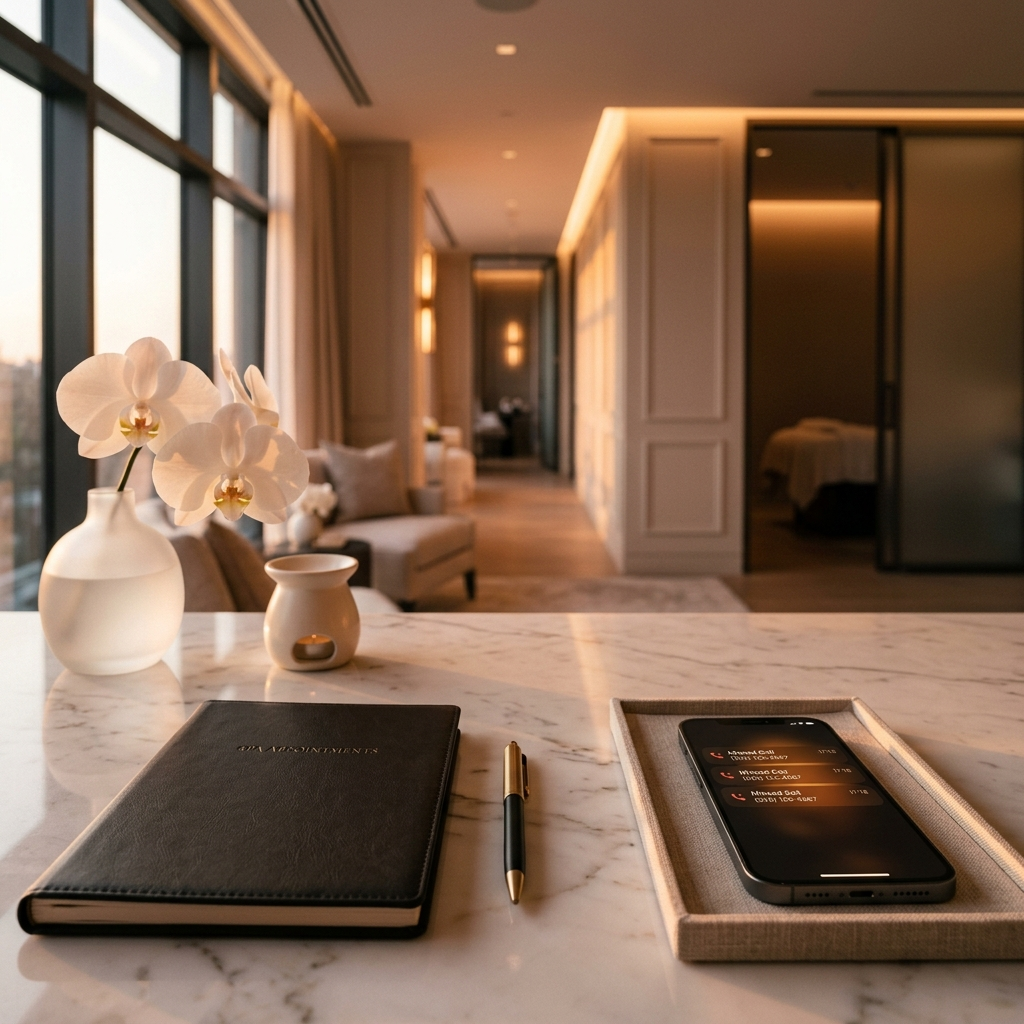
What they do not do - almost ever - is sit down and count how many inbound calls they are losing before the conversation even begins.
Treat any number without a nearby source or stated method as a planning assumption, then replace it with your own records.
The Paradox Every Med Spa Owner Recognizes
You spend $3,000 a month on Instagram ads. You have a Google Business profile with 4.7 stars and 130 reviews. Your website has before-and-after galleries that convert at above-industry-average rates. Your front desk team is professional and knowledgeable.
And yet, the treatment rooms are not full.
When med spa owners audit their revenue gap, they almost always start in the wrong place. They adjust ad targeting. They test new before-and-after creative. They invest in a new website section. They add more service offerings.
What they do not do - almost ever - is sit down and count how many inbound calls they are losing before the conversation even begins.
The answer, when they finally look, is usually somewhere between 40 and 60 percent. Not 10 percent. Not a small edge case. Nearly half of every qualified prospect who picks up the phone to book with you fails to reach a human being.
That is not a marketing problem. That is an intake problem. And it requires a completely different fix.
How the Med Spa Booking Gap Actually Works
The med spa booking journey follows a predictable pattern. A prospective client - let us call her Sarah - sees an Instagram ad for lip filler, clicks through to your website, reads through your services, looks at your pricing page, and feels ready to book.
At this point, Sarah has already done significant research. She is not comparing whether to get lip filler - she has decided to. She is comparing which practice to trust with her face.
She picks up the phone.
What happens next determines whether you capture several hundred dollars in immediate revenue and, more importantly, a client relationship worth potentially thousands over years of repeat treatments.
If someone answers promptly, greets her warmly, confirms availability, and books her - the conversion happens. You win a client.
If the call rings out to voicemail, or she is placed on hold for three minutes while the front desk manages two other conversations simultaneously, or she reaches a voicemail that says "please leave a message and we'll call you back" - you lose the client. Not to a competitor necessarily. You lose her to the friction. She closes the tab. She tells herself she'll try again later. She usually doesn't.
The tragedy is that everything leading up to that moment worked perfectly. The ad algorithm found her. The creative resonated. The website convinced her. All of that investment in top-of-funnel performance evaporated at the single moment that actually mattered.
The Numbers Most Med Spa Owners Have Never Run
A mid-size med spa - let us define that as a practice with two to four treatment providers running 160 to 200 appointments per month - typically generates between 60 and 90 inbound call and inquiry attempts per week during peak periods.
Of those, industry patterns suggest that:
- **30 to 40 percent** arrive outside of business hours (evenings, weekends, during lunch rushes when staff are occupied)
- **15 to 25 percent** arrive during business hours but during high-volume windows when front desk staff are managing check-ins, processing payments, and handling post-treatment questions simultaneously
- **An additional 10 to 15 percent** make it to a voicemail and do not leave a message
In practice, this means that at any given med spa without structured intake automation,45 to 60 percent of qualified inbound interest is being lost before a human conversation occurs.
Now run the math for a moment.
If your average new client represents $400 in initial appointment value and $2,800 in estimated 12-month value (realistic for a client who returns for Botox quarterly, adds a facial treatment twice yearly, and purchases one retail product per visit), losing 20 prospective clients per week to intake friction costs approximately $8,000 in immediate revenue and $56,000 in 12-month client value. Every week.
At those stakes, a $3,000-per-month ad spend to generate more top-of-funnel traffic - while the intake gap remains unaddressed - is the operational equivalent of filling a bathtub with the drain open.
The Three Intake Failure Modes Specific to Med Spas
Med spas have a distinct set of intake challenges that differ from HVAC companies or legal practices. Understanding the specific failure modes matters because the fix needs to match the problem.
Failure Mode 1: The High-Touch Parallel Conversation Problem
Med spa front desk teams carry an unusually high cognitive load. A client is checking out after a Botox treatment, asking follow-up questions about bruising timelines and which products to use for the next 48 hours. Simultaneously, the phone rings with a new inquiry about lip filler pricing. The front desk professional - who genuinely wants to serve both people well - cannot give the phone caller the attentive, warm, personalized experience that converts a prospect into a client. Something gets sacrificed.
In most practices, it is the incoming call. The caller gets put on hold or goes to voicemail, the checkout gets completed properly, and the opportunity evaporates.
Failure Mode 2: The Consultation Qualification Gap
Med spa services - particularly injectable treatments, laser procedures, and body contouring - require a level of consultation and contraindication screening that other service businesses do not. This means the front desk cannot simply take a name and drop it into an open slot. They need to understand what service the client wants, confirm there are no obvious contraindications, match the appointment type to the appropriate provider, and communicate pre-treatment instructions.
This elevated complexity means each call takes longer. And longer calls mean fewer calls get answered.
The irony is that the same consultation framework that protects client safety and service quality is also what makes the intake process vulnerable to volume overload. Voice AI systems trained on med spa intake logic can handle the initial qualification - confirming treatment interest, flagging any obvious contraindications for follow-up, matching the client to the right appointment type - before connecting to a human for the final booking confirmation.
Failure Mode 3: The Evening and Weekend Visibility Window
Aesthetics is an emotional purchase. Prospective clients are most likely to research and decide during private moments - evenings at home, Sunday afternoons, weekday lunch breaks. These windows often fall outside clinic hours.
A client who decided on Thursday evening that she wants to finally try microneedling is at peak buying intent. She searches, finds your Instagram, clicks through to your website, and calls. She gets voicemail. She goes to bed without booking. By Saturday, the impulse has cooled. She may still book eventually, but the urgency has diminished, the window of highest intent has closed, and the conversion is significantly less certain.
Competitors who have capture systems running outside business hours book these clients immediately. You send them a call-back request email on Friday morning that they may or may not respond to.
What a Fixed Intake System Looks Like for a Med Spa
The solution is not simply "hire more front desk staff." Adding headcount addresses capacity constraints, but it does not address the structural timing problem - staff hours cannot cover the evening and weekend windows where intent is highest.
What it looks like, in practice:
After-hours inquiry capture:When a caller reaches your practice outside of business hours, instead of hitting voicemail, they interact with a voice AI trained specifically on your services. It greets them warmly, confirms which service they're interested in, collects their name, phone number, preferred appointment window, and - for services that require provider matching - any relevant intake information. It then sends the caller a confirmation text ("We've got your interest in a lip filler consultation - we'll reach out to confirm your appointment within two business hours tomorrow"). The next morning, your front desk team arrives to a structured list of qualified leads with all the information needed to book them in a single call.
Business-hours overflow handling:During peak windows when the front desk is occupied, an AI handles the first touch - qualifying the caller, gathering information, and confirming that someone will follow up with available times. This prevents the "I'll call back when I have a minute" pattern that results in dropped leads.
Web chat integration:Not every prospect prefers to call. A significant percentage of aesthetics clients - particularly younger demographics considering their first injectable treatment - would rather type than talk. A web chat AI that answers the same intake questions, captures contact information, and routes to booking confirmation captures this segment without requiring additional staff.
Missed call text-back:When a call does ring through and goes unanswered, an automated text deploys within 60 seconds: "Hi, we missed your call at [Practice Name]. I can help you book - what service were you looking into?" This single automation alone recovers 20 to 40 percent of calls that would otherwise be permanently lost.
Together, these components close the majority of the intake gap that was previously invisible.
The Client Experience Difference
There is a concern that aesthetics practice owners raise frequently: will AI intake damage the premium, personalized experience that med spas are supposed to deliver?
The answer depends on how it is implemented, and the answer - when implemented correctly - is no.
The key insight is that the premium experience clients expect from a med spa is not limited to what happens inside the treatment room. It begins the moment they first attempt to contact you. A prospect who calls your practice on a Tuesday evening and reaches a warm, responsive, professional interaction - even if that interaction is AI-assisted - has a materially better first impression than one who reaches voicemail.
The goal is not to replace human warmth. It is to ensure that human warmth is available at every touchpoint, including the ones where human staff are not physically present.
The AI handles the mechanical components of intake - confirming contact information, qualifying the service interest, establishing the appointment window. The human practitioner handles everything that requires nuance: clinical judgment, treatment customization, relationship building. Neither compromises the other.
Practices that have implemented this system consistently report that clients do not differentiate between the AI-assisted initial contact and fully human contact - provided the AI interaction is warm, natural, and competent. What clients do notice is being ignored. Voicemail is a brand experience failure. A responsive after-hours interaction is not.
What This Specifically Costs
The Core Protocol from The Quiet Protocol - which includes voice AI intake, web chat, missed call text-back, CRM lead routing, and booking integration - is $497 per month with a $297 setup fee. For med spas, the implementation includes:
- A voice AI knowledge base trained on your specific service menu, pricing ranges, and intake requirements
- Contraindication awareness flags for common med spa services (anticoagulants, recent dental procedures, active skin conditions, pregnancy)
- Provider-specific booking routing based on service type
- Integration with your existing booking software (Jane App, Mindbody, Vagaro, or custom EHR systems)
- Pre-treatment instruction delivery via automated text post-booking
The system is typically live within five business days of setup.
Payback timeline: if your practice captures one additional new client per week from previously lost leads, at an average initial value of $400, the monthly revenue gain is $1,600 - more than three times the monthly subscription cost. Most practices see materially more than one additional booking per week once the intake gap is closed.
What the System Does Not Do
Being direct about scope:
It does not replace clinical consultation.Any service with meaningful contraindication risk requires a clinical touchpoint before treatment. The AI qualifies and gathers intake information - it does not make clinical decisions.
It does not manage your booking calendar autonomously.At this price point, the AI captures and routes. A human confirms the final booking slot. Fully autonomous calendar management is available in bespoke builds for larger multi-location practices.
It does not resolve a pricing or quality perception problem.If your conversion rate from booked consultations to completed treatments is below 60%, that is a different issue - consultation technique, pricing structure, or competitive positioning. The intake system addresses the gap between intent and first contact. What happens after contact is the practice's domain.
It does not substitute for a trained front desk professional.The system handles overflow and after-hours capture. During business hours, your front desk team remains the primary human face of the practice. The AI is a structural safety net, not a replacement.
How to Know If This Is Your Problem
Run this self-diagnostic:
Pull your inbound call data for the last 30 days. Most practice management platforms and business phone systems will show you total inbound call volume alongside answered vs. missed call counts. If your missed call rate is above 20 percent, intake friction is a meaningful revenue gap.
If your platform does not show this data, check your voicemail. Count the messages from unknown callers who did not leave a callback number. These are the prospects who tried to leave a message, started speaking, and deleted it before finishing. Each one represents a lost booking.
Look at your Google Business insights. If your profile shows 180 direct calls per month and your booking system reflects 90 new bookings, the conversion rate from call-to-booking is 50 percent. Some of that gap is callers who were price-shopping and did not convert - but a significant portion is intake loss.
Finally, call your own practice at 7 PM on a Tuesday. What happens? Whatever your answer is, that is the experience your prospects are having.
The Operating Principle
Med spas are built on trust and transformation. Clients bring you concerns about aging, confidence, and self-image. The relationship requires a level of trust that other service businesses rarely achieve.
That trust is built - or broken - in the first impression. Not the first treatment. The first contact.
A practice that answers reliably, communicates professionally, and responds within minutes to after-hours inquiries signals to a prospective client that it is organized, attentive, and capable of delivering the care they are trusting it with. A practice that routes callers to voicemail sends the opposite signal - regardless of how exceptional the practitioners inside are.
The technology to fix this is not experimental. It is not expensive relative to the revenue it recovers. And it is available to independent med spas at the same price point that only large multi-location chains could access five years ago.
The question is not whether to close the intake gap. The question is how long to let it remain open.
If you want to see the specific revenue number your practice is losing to booking leak, the Front Door Diagnostic calculates it based on your call volume, your average client value, and your current after-hours coverage. Most med spa owners find the number uncomfortable. That discomfort is useful - it turns the invisible into a decision.
The loss estimate is basic business math, not a magic claim.
Revenue-leak examples on this site are built from visible operating inputs: inquiry volume, missed-call or slow-response rate, booking rate, average job or client value, repeat value, and follow-up recovery. The fastest way to make the number real is to run the diagnostic for your closest business type, then compare it against your own call log, CRM, booking calendar, form timestamps, and review activity.
The practical questions behind this decision.
What proof should I look for in my own business?
Look for proof in the places where demand either moved forward or stalled: missed calls, short calls, unbooked forms, slow callbacks, no-show recovery, old leads, and reviews that were never requested. If the business cannot see those moments clearly, the first improvement is better tracking and routing.
How do I know whether this is a marketing problem or an operations problem?
If people are already calling, filling forms, asking for prices, requesting appointments, or comparing reviews, the problem is usually operations. More marketing will not fix a front door that lets warm demand wait. The better move is to capture and route the demand already arriving.
What should happen after the first response?
The first response should create a next step: booked appointment, estimate path, intake handoff, callback window, review request, or reactivation sequence. A response that only says someone will get back to you is not enough when the buyer is comparing several providers at once.
Where does The Quiet Protocol fit?
The Quiet Protocol fits when the business already has demand but too much of it depends on manual attention. We connect AI receptionist coverage, web intake, missed-call recovery, booking logic, follow-up, review requests, and reactivation into one managed front-door system.
Decide what the AI must handle before you choose the software.
A useful intake system begins with the caller journey, the rules, and the human handoff, not a long feature list.

Vikram Roy is the founder of The Quiet Protocol, a Toronto-based systems firm serving service businesses across the Greater Toronto Area, Canada, and the United States. He works directly with professional firms, home service companies, dental practices, clinics, and local businesses to connect websites, customer intake, booking, reviews, follow-up, and practical AI into a clearer digital front door. All content is written from Toronto, Ontario. See the editorial method →
Give the receptionist a realistic scenario and hear how it answers, gathers context, and moves the caller toward a useful next step.
See how the capability in this article fits into a complete customer journey.
Aesthetics & Med SpaSee the same decision through the language, buyer behavior, and operating reality of this industry.
Client Results & ProofInspect the starting condition, installation, measurement window, and outcome behind real client work.
Why Med Spas Lose 40 Percent of Inquiries After 5 PM (And What That Number Costs You Annually)
A prospect calls your med spa at 6:43 PM on a Wednesday to book a Botox consultation. Your front desk closed at 5. The call goes to voicemail. She does not leave a message. By Thursday morning she has booked a consultation with a competitor who had a live voice on the other end of the line. You never knew she called. This is not an edge case. For most med spas, it is Tuesday through Sunday, every week, all year.
Medical Spa Consultation Booking: Why Online Forms Leak High-Value Procedures
Aesthetic clinics spend thousands on Instagram ads to drive high-intent leads to a "Contact Us" form. When the patient coordinator finally replies four hours later, the prospect has already booked a consultation with the med spa down the street.

The Missed Call Problem: How Service Businesses Lose $180,000 Per Year From the Front Door
Missed calls are not harmless. Learn how service businesses calculate the annual revenue leak from unanswered calls, delayed callbacks, and lost buyer intent.
Calculate the revenue leak.
Stop guessing. See how much demand your business may be losing through missed calls, slow replies, weak booking, review gaps, and follow-up drag, then decide whether Voice AI is the right system path.
Run the calculationPrefer to hear it first?
Call the live AI receptionist and test the conversation.
Call the live AI receptionist anytime. Tell it about aesthetics & med spa, then hear a short live roleplay based on the calls your front desk actually gets.