

When service business owners first hear the words "AI receptionist," I've learned to expect one of three reactions.
Treat any number without a nearby source or stated method as a planning assumption, then replace it with your own records.
The first: skepticism. "My customers aren't going to talk to a robot." The second: confusion. "Is this the same as one of those phone menus?" The third: curiosity. "How is this different from an answering service?"
All three reactions are understandable. The category is marketed with enough vague enthusiasm that it's genuinely hard to know what you're evaluating.
So let me be specific.
An AI receptionist for a small service business is a voice-based software system that answers inbound phone calls, captures caller information, qualifies the nature of the inquiry, and routes or responds based on configurable rules, without requiring a human to be present.
It is not a phone menu ("Press 1 for sales, Press 2 for support"). It is not a chatbot. It holds a real, context-aware phone conversation. It can ask clarifying questions, capture addresses, identify urgency levels, and confirm next steps with the caller.
The clearest way to understand it is to understand what it replaces: the voicemail box and the callback chain.
The Problem It Solves
Most small service businesses lose 35 to 50 percent of their after-hours inbound calls to voicemail. Those callers, in the overwhelming majority of cases, do not leave a message and wait. They call the next business in their search results.
I've talked to hundreds of HVAC owners, plumbers, restoration companies, and med spas about this. Almost universally, the owner's first instinct is that voicemail is "fine." Then I pull up their Google Business Profile call history with them on a screen share. We look at the after-hours call volume together. The number of calls between 5 PM and 9 AM is always larger than the owner expected.
Then we multiply it by the average ticket value and a conservative close rate.
That's when the room gets quiet.
An AI receptionist solves this by answering every call the moment it arrives, regardless of hour, staffing situation, or how many other calls are currently active.
What an AI Receptionist Actually Does
The term gets used loosely. Here's a precise breakdown of what a properly built AI voice system for service businesses does.
Answers inbound calls immediately, 24/7.The system picks up within three rings, without exception. No voicemail, no hold music, no "press 1 to speak to someone." A caller dialing at 11 PM gets a live voice within seconds.
Speaks naturally in the business's specific context. A generic AI voice system doesn't understand that your HVAC company only services the GTA, that your med spa charges $650 for a Botox session, or that your plumbing business has a $149 diagnostic fee. A properly configured system is trained on the specifics of the business it represents, service types, pricing structure, service area, and common caller questions.
Identifies and captures caller intent.The system determines through conversation why the caller is reaching out. Emergency? Quote request? Follow-up on an existing appointment? The nature of the inquiry is captured and determines what happens next.
Collects contact information.Name, phone number, address, and any relevant details. A roofing business needs location and damage description. A med spa needs name, treatment interest, and preferred timing. The system collects what it needs without making the caller feel interrogated.
Routes based on urgency.For emergencies, a burst pipe, a failed furnace, a same-day consultation, the system sends an immediate text alert to the on-call contact with all captured details. No delay. No lost information. No callback chain.
Confirms with the caller.Before ending the call, the system confirms what will happen next: "We've got your information and an on-call technician will call you within 20 minutes," or "The team will call you tomorrow morning at 9 AM to schedule." The caller isn't left wondering.
Sends follow-up SMS to the caller.After the call, an automatic text goes to the caller with the confirmed next step. This also functions as a soft appointment confirmation, reducing no-show rates.
What It Is Not
Being honest about limitations matters more to me than selling a good story. AI voice systems for service businesses in 2025 do specific things very well and other things not at all.
Not a replacement for technical expertise.The AI captures and routes. It does not diagnose a plumbing problem over the phone, prescribe an aesthetic treatment, or determine whether an electrical issue is dangerous. Technical decisions need a human.
Not infinitely flexible.A well-built system handles the high-volume, repeatable scenarios that make up most inbound calls. Unusual or emotionally demanding situations outside the trained scenarios should escalate to a human quickly. A system that tries to handle everything and fails some of it damages caller trust.
Not a phone menu. A phone menu is a friction device, it makes callers work to navigate to a human. An AI receptionist is a conversation. The caller speaks naturally; the system responds naturally. This distinction matters significantly for caller experience and completion rate.
Not a virtual assistant.It does not manage email, book across complex multi-person calendars, or handle internal operations. It handles inbound call intake. That's what it's designed for. That's what it does well.
How It Differs From an Answering Service
This distinction matters practically.
A traditional answering service employs human operators, typically in a shared call center, who take messages on behalf of multiple businesses. They have limited context about any specific business. They work from scripts. They cost $200 to $600 per month and deliver a generic, low-context experience.
An AI receptionist is configured specifically for one business. It knows the services, pricing structure, service area, urgency protocols, and common caller questions. The performance comparison across a few dimensions:
Dimension AI Receptionist Human Answering Service
|---|---|---|
Availability 24/7, no exceptions Varies; may have gaps
Business-specific knowledge Fully trained Minimal, script-dependent
Response time Under 3 rings, always Variable, hold times possible
Consistency across calls Identical Varies by operator
Emergency routing speed Immediate text alert Depends on protocol
Cost per month Fixed, predictable Per-minute or per-call variable
One real-world difference I've seen repeatedly: answering services often struggle with emergency routing. When a caller describes a broken furnace on a cold January night, the answering service operator reads from a script and promises "someone will call you back." An AI system configured specifically for HVAC emergency dispatch fires a structured text to the on-call technician within 10 seconds of the caller providing their address.
How It Differs From Hiring a Receptionist
A full-time receptionist in a US or Canadian service business earns $35,000 to $55,000 annually before benefits and overhead. They cover 40 hours per week. They don't work weekends. They don't work evenings. They take sick days and vacations. When they leave, the position opens again.
An AI voice system costs a fraction of that annually and covers all 168 hours of the week, weekends, holidays, and the Sunday evening call from a homeowner with a failed water heater.
This is not a replacement for a skilled office administrator who handles complex coordination and client relationships. It's a replacement for the voicemail box. Those are different things.
Most service businesses that implement an AI receptionist keep their existing administrative staff. What changes is that the after-hours and overflow calls, the ones going to voicemail, now get answered. The human team handles what requires human judgment. The system handles what requires availability.
The Setup Process: What It Actually Takes
One of the most common misconceptions is that implementing this requires months of technical work or a large IT budget.
For a single-location service business, a properly scoped installation typically goes live within 48 to 72 hours. The configuration work involves:
Training the system on the business's services, pricing, service area, and common caller questions, done through a structured intake process, not coding.
Setting up routing rules. Which call types get escalated immediately? Which get held for morning scheduling? Who receives the emergency text alert?
Configuring the follow-up SMS. What does the post-call text to the caller say? What does the internal alert to the team say?
Connecting to the existing phone number. Callers dial the same number they always have. The system intercepts according to the configured schedule, after-hours only, overflow only, or 24/7.
Testing. Before going live, the most common caller scenarios are simulated and verified.
Signs an AI Receptionist Is Right for Your Business
Three questions:
First, are you or your team currently missing inbound calls, during business hours because everyone is occupied, or after hours because the office is closed? If yes, you have a front-door problem this directly solves.
Second, do you receive emergency calls outside business hours that currently go to voicemail or to the owner's personal cell? If yes, you have a routing and response gap costing jobs and creating owner burnout simultaneously.
Third, does your business rely on inbound call volume as the primary source of new client acquisition? If yes, the efficiency of your intake function is directly linked to your revenue ceiling.
If the answer to any of those is yes, the math is worth running.
When It May Not Be the Right Priority
Honestly: if your business is generating fewer than 10 inbound calls per week, the leverage from a 24/7 AI receptionist is limited. At that volume, a structured missed-call text-back and consistent same-day callback discipline may be sufficient and less investment.
The AI receptionist is highest-value for businesses where call volume is regular enough that missing calls is a consistent, documented problem, not an occasional one.
Before the Next Sales Call
Use this section as a quick buyer check. A service business owner does not need another vague automation pitch. They need to know which part of the front door is leaking, what the system will change, and how they will measure whether the fix is working.
Source method: compare the article against your own call log, CRM notes, booking calendar, missed-call records, web form timestamps, and Google Business Profile review recency. Those records are more useful than a generic benchmark because they show what buyers actually experienced in your business.
What proof should I look for in my own business?
Look for proof in the places where demand either moved forward or stalled: missed calls, short calls, unbooked forms, slow callbacks, no-show recovery, old leads, and reviews that were never requested. If the business cannot see those moments clearly, the first improvement is better tracking and routing.
How do I know whether this is a marketing problem or an operations problem?
If people are already calling, filling forms, asking for prices, requesting appointments, or comparing reviews, the problem is usually operations. More marketing will not fix a front door that lets warm demand wait. The better move is to capture and route the demand already arriving.
What should happen after the first response?
The first response should create a next step: booked appointment, estimate path, intake handoff, callback window, review request, or reactivation sequence. A response that only says someone will get back to you is not enough when the buyer is comparing several providers at once.
Where does The Quiet Protocol fit?
The Quiet Protocol fits when the business already has demand but too much of it depends on manual attention. We connect AI receptionist coverage, web intake, missed-call recovery, booking logic, follow-up, review requests, and reactivation into one managed front-door system.
The loss estimate is basic business math, not a magic claim.
Revenue-leak examples on this site are built from visible operating inputs: inquiry volume, missed-call or slow-response rate, booking rate, average job or client value, repeat value, and follow-up recovery. The fastest way to make the number real is to run the diagnostic for your closest business type, then compare it against your own call log, CRM, booking calendar, form timestamps, and review activity.
The practical questions behind this decision.
Can callers tell they are speaking to an AI?
With modern AI voice systems trained on a specific business, many callers don't know they're speaking to an AI , particularly for standard intake scenarios. The voice is natural, the responses are contextual, and the conversation flows logically. The old generation of robotic, scripted IVR systems is a different category entirely.
What happens if a caller asks something the system doesn't know?
Well-built systems have escalation protocols for out-of-scope questions. The system captures the caller's contact information and routes an alert for human follow-up. The caller is not left with a broken or confusing experience.
Can I use my existing phone number?
Yes. In most configurations, the AI system intercepts calls to your existing business number according to the schedule you set. Callers dial the same number they always have.
Does it work for text messages and web forms too?
Some platforms extend AI intake beyond voice calls to include SMS conversations and form submission responses. The core AI receptionist function is voice-call handling; the broader intake infrastructure may include additional channels depending on the provider.
Is it HIPAA compliant for healthcare-adjacent businesses like med spas?
This depends on the specific implementation and provider. For businesses collecting protected health information, HIPAA compliance must be explicitly confirmed with the provider before deployment. We address this during our scoping process for health-adjacent clients.
What is the ROI timeline?
Most service businesses with consistent after-hours call volume recover the full monthly cost from a single recovered emergency call. For businesses with higher ticket values , HVAC, plumbing, legal, medical aesthetics , the break-even on a single month's subscription is typically one to two recovered calls.
What proof should I look for in my own business?
Look for proof in the places where demand either moved forward or stalled: missed calls, short calls, unbooked forms, slow callbacks, no-show recovery, old leads, and reviews that were never requested. If the business cannot see those moments clearly, the first improvement is better tracking and routing.
How do I know whether this is a marketing problem or an operations problem?
If people are already calling, filling forms, asking for prices, requesting appointments, or comparing reviews, the problem is usually operations. More marketing will not fix a front door that lets warm demand wait. The better move is to capture and route the demand already arriving.
What should happen after the first response?
The first response should create a next step: booked appointment, estimate path, intake handoff, callback window, review request, or reactivation sequence. A response that only says someone will get back to you is not enough when the buyer is comparing several providers at once.
Where does The Quiet Protocol fit?
The Quiet Protocol fits when the business already has demand but too much of it depends on manual attention. We connect AI receptionist coverage, web intake, missed-call recovery, booking logic, follow-up, review requests, and reactivation into one managed front-door system.
Decide what the AI must handle before you choose the software.
A useful intake system begins with the caller journey, the rules, and the human handoff, not a long feature list.
Give the receptionist a realistic scenario and hear how it answers, gathers context, and moves the caller toward a useful next step.
See how the capability in this article fits into a complete customer journey.
Service BusinessesSee the same decision through the language, buyer behavior, and operating reality of this industry.
Client Results & ProofInspect the starting condition, installation, measurement window, and outcome behind real client work.
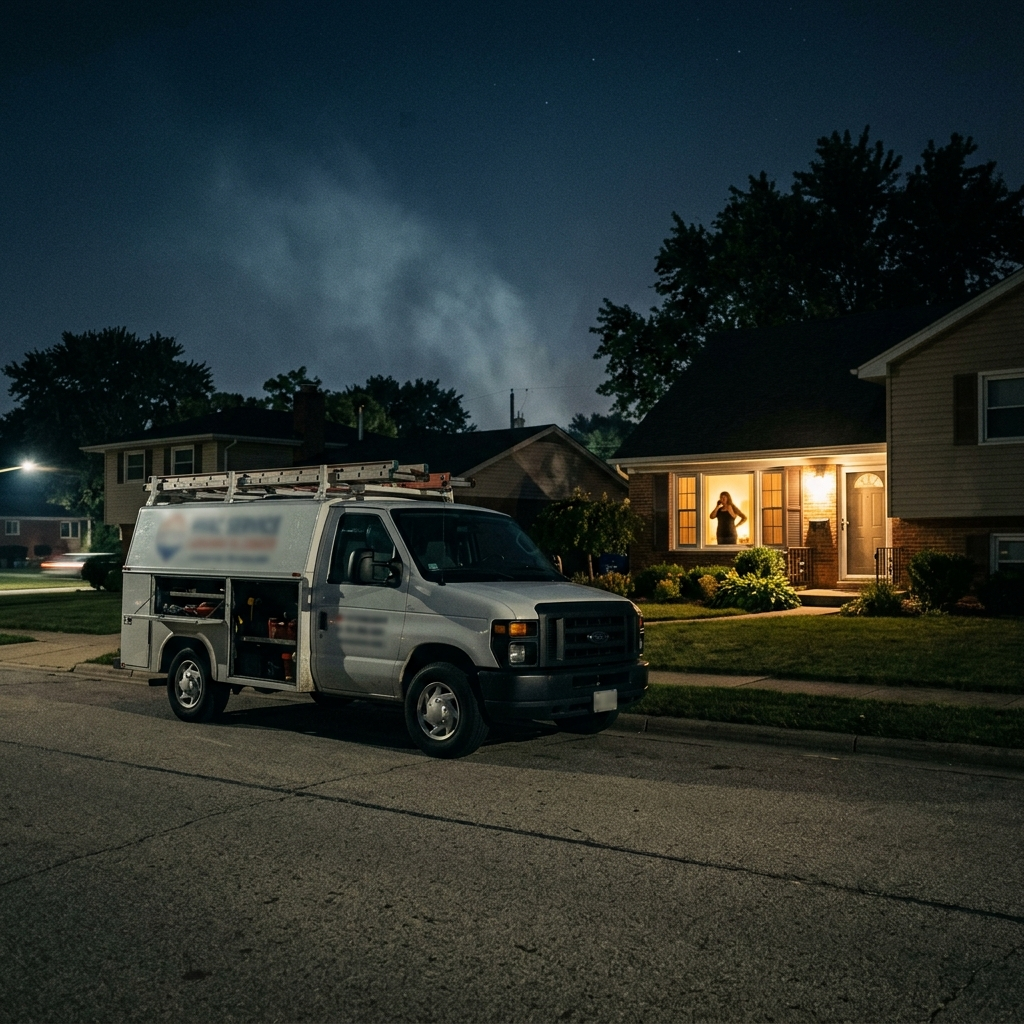
The After-Hours HVAC Revenue Gap: What Your Voicemail Is Actually Costing You Each Year
HVAC companies lose their highest-value calls after 5 PM. Here is what the annual cost is in precise terms, and what fixed looks like without adding headcount.
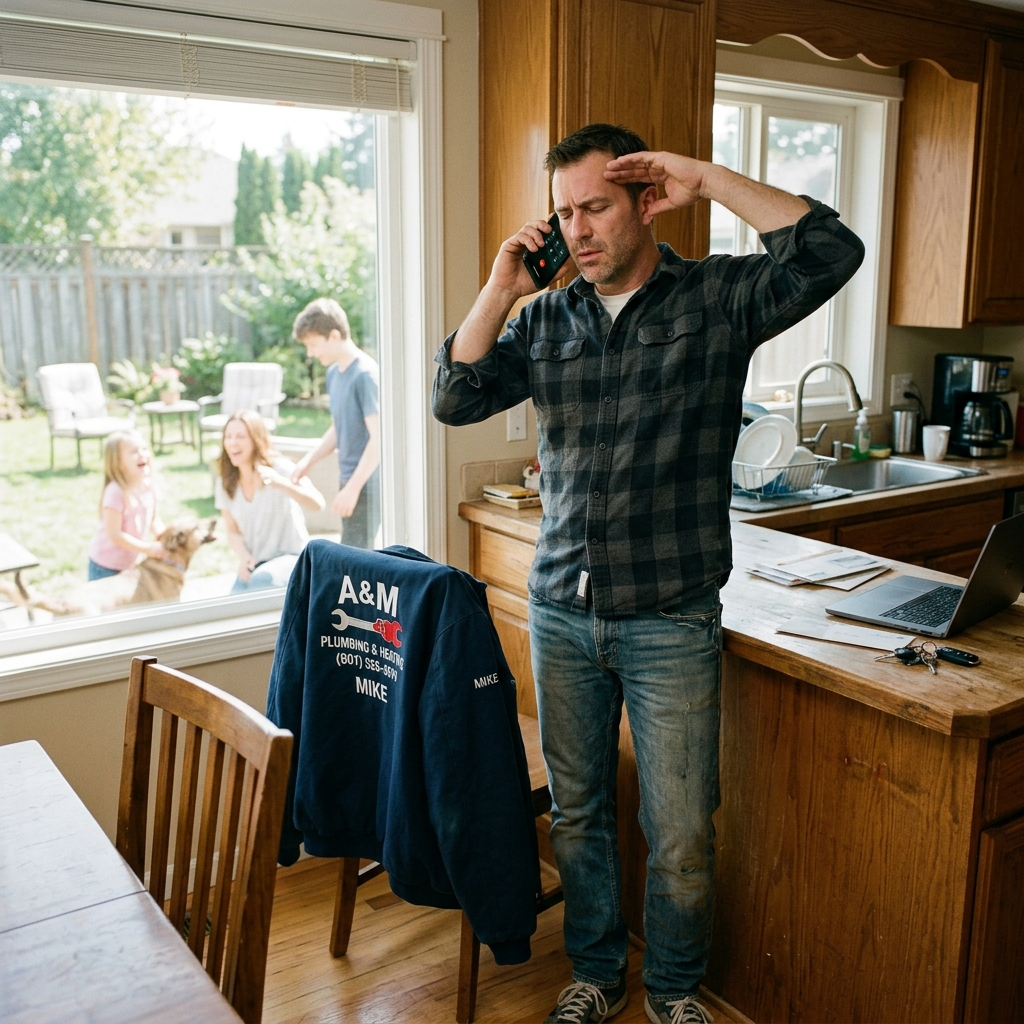
Why Plumbers Lose Weekend Calls and How to Stop It Without Hiring More Staff
The weekend emergency call is the highest-value call a plumbing company receives. Here is the structural reason so many go unanswered, and the fix that does not require headcount.
Calculate the revenue leak.
Stop guessing. See how much demand your business may be losing through missed calls, slow replies, weak booking, review gaps, and follow-up drag, then decide whether Voice AI is the right system path.
Run the calculationPrefer to hear it first?
Call the live AI receptionist and test the conversation.
Call the live AI receptionist anytime. Tell it about service businesses, then hear a short live roleplay based on the calls your front desk actually gets.