

One is growing steadily. One is treading water despite spending more on ads than it ever has.
This article links to 2 external sources beside the claims they support.
Two plumbing companies. Same market. Similar pricing. Similar Google ratings.
One is growing steadily. One is treading water despite spending more on ads than it ever has.
When I run a Revenue Leak Diagnostic on businesses like the second one, the answer is almost always the same. It's not the marketing. It's not the pricing. It's the response gap.
There's a window between when a prospect reaches out and when they commit to someone else. Most service business owners have no idea how short it is.
That window is five minutes.
The Research Behind the Rule
The foundational data comes from a Harvard Business Review study published in 2011 analyzing 100,000 sales call attempts across industries. The core finding: calling a lead within five minutes of their inquiry made that lead 21 times more likely to qualify and convert than calling after 30 minutes.
Only 37 percent of companies in that study responded within an hour. The majority were operating in the callback window where conversion probability had already dropped by 80 to 90 percent.
Xant.ai (formerly InsideSales.com) updated this research through 2022 and 2023. The pattern hasn't meaningfully changed. If anything, consumer patience has gotten shorter. In urban markets, the average time a service prospect waits before calling a competitor dropped from 42 minutes to 27 minutes between 2019 and 2023.
The window is narrowing, not widening.
Why Service Businesses Feel This Harder Than Anyone
The 5-minute rule applies across industries, but its impact on service businesses is disproportionate. Here's why.
When a homeowner's furnace fails at 6 PM in January, they're not comparison shopping. They're not reading blog posts about what to look for in an HVAC company. They're cold, they're anxious, and they're calling. The first company that answers and sounds competent gets the job. The second company gets a voicemail from the homeowner saying "we already called someone."
I've heard that voicemail described to me by business owners in probably forty different industries. The wording is always almost identical: "we already called someone." Past tense. Done.
When a med spa client decides she wants to book a consultation, something she's been putting off for three months, she's acting on a moment of momentum. That momentum has a half-life measured in hours, not days. A callback two days later reaches someone whose decision energy has already dissipated. She'll rebook eventually, maybe. Or she'll walk into the place down the street that called her back in six minutes.
When a homeowner discovers water damage on a Saturday morning and searches for restoration companies, the job goes to whoever answers. Not the company with the best story. Not the company with the nicest website. The one that picked up.
This is the structure of service demand. Urgency creates intent. Intent decays fast. Speed is the primary conversion variable, and most service businesses have no system for it.
The Three Response Layers Where Businesses Are Losing
Most owners believe their response time is pretty good. Most are wrong. The gap between what owners think their response time is and what it actually is, consistently, across every inquiry channel, tends to be significant.
Layer One: After-Hours Blindspot
Between 35 and 50 percent of service business inbound calls arrive outside business hours. For most businesses, those calls go to voicemail. The response time is zero, because there's no response. The prospect calls someone else.
This isn't a failure of individual people. It's a structural gap. You can't staff a phone line 24 hours a day on a service business budget without automation.
Layer Two: In-Hours Bottleneck
During business hours, calls get missed because the front desk is occupied with someone in the office, the office manager is on another call, or the owner, who is also the dispatcher, is on a job. Each of these missed calls has a response time measured in hours if the callback happens at all.
I audited a plumbing company in Charlotte last year that had a fantastic reputation and strong marketing. They were missing roughly 22 percent of their daytime calls because their one full-time office person was managing everything from scheduling to supply orders. Twenty-two percent of answered calls is roughly 11 calls per month falling into a callback queue. At $900 average ticket and 30% close rate, that's $2,970 per month in missed daytime revenue, before you even count after-hours.
Layer Three: Form Submission Delay
Web form inquiries sit in an email inbox until someone checks it. Sometimes an hour. Sometimes the next morning. The research on form response time is consistent: a 24-hour response converts at about 10 percent of the rate of a 5-minute response. Businesses are investing in websites, in SEO, in paid ads that drive people to contact forms, and then leaving those leads to go cold in an inbox.
The Competitor Advantage
In most local service markets, the business that answers fastest wins a disproportionate share of available work.
Google Maps search behavior dataGoogle Maps search behavior datashows that consumers in urgent and emergency service situations call multiple listings. The first business that answers captures the prospect. The others find out when they call back and get voicemail at the prospect's address.
The fastest-growing service businesses in competitive markets are not necessarily the ones with the most marketing spend. They're the ones that have closed the response gap. When every competitor is operating on a 2 to 4 hour average callback time, a business that responds in under 5 minutes is operating with a structural advantage on every lead it generates.
That advantage compounds. Faster response leads to more closed jobs. More closed jobs leads to more satisfied clients. More satisfied clients leads to more reviews. More reviews leads to higher Google Maps ranking. Higher ranking produces more inbound calls. The flywheel is driven at the origin by response speed.
What 5-Minute Response Actually Requires
The target is simple. Achieving it consistently is an operational challenge that can't be solved with effort alone.
For a business to respond to every inbound inquiry within five minutes, the response system cannot depend on a human being available to answer. Humans aren't available at 10 PM. They're not available when they're on another call. They're not available Christmas Day when a boiler fails.
The structural solution is a first-response layer that doesn't depend on human availability:
Immediate call answering.A voice AI system answers every call within three rings, gathers the caller's information, identifies urgency level, and either routes to an on-call contact or confirms the callback timeline. The caller's information gets to the right person in seconds. No voicemail, no lost lead.
Missed-call text-back. For calls that miss the live answer window for any reason, an automatic SMS goes to the caller within 90 seconds. Something like: "Hi, this is [Business]. We missed your call, we're calling you back right now." That text alone recovers 20 to 40 percent of leads that would otherwise call a competitor.
Form submission automation.When a contact form is submitted, an immediate SMS and email go to the submitter within 30 seconds. The message confirms receipt and gives a specific callback timeline. This collapses the perceived response window from hours to seconds.
Together, these three mechanisms address the three layers of response delay. The human team handles the work. The system handles the response.
The Math on Closing the Gap
Modest assumptions for a service business receiving 50 inbound inquiries per month:
Current state:60% answered live. 40% go to voicemail or form submission. Of 20 missed inquiries, 3% eventually convert (1 job) via messages and callbacks.
Fixed state:With immediate response coverage, 80% of previously missed inquiries convert at the same rate as live-answered calls (35% close rate), adding roughly 5 to 6 additional jobs per month.
At an $800 average ticket, those 6 jobs represent $4,800 in additional monthly revenue, $57,600 annualized, from improving response time alone, without changing marketing spend, pricing, or service quality.
Industry-Specific Speed Benchmarks
Response patience varies significantly by service category:
Service Category Caller Urgency Patience Before Next Call Break-Even Response Window
|---|---|---|---|
Emergency HVAC / Plumbing Critical Under 3 minutes 90 seconds
Water Damage Restoration Critical Under 5 minutes 2 minutes
Med Spa Consultation Intent-driven 20 to 40 minutes 5 to 10 minutes
Family Law Inquiry High anxiety 15 to 30 minutes 5 minutes
General Contracting Quote seeking 2 to 4 hours 15 to 30 minutes
Dental Emergency Critical Under 5 minutes 2 minutes
Non-urgent scheduling Low 24 hours 2 to 4 hours
Emergency service calls have near-zero patience. A caller with a burst pipe isn't waiting 15 minutes. They're calling the next number. For these categories, the response system must be measured in seconds.
For non-emergency categories, the 5-minute window still provides a meaningful competitive advantage even if it's not strictly required. Responding to a quote request faster than every competitor creates a positive first impression that influences the final decision even when the buyer takes time to compare.
Before the Next Sales Call
Use this section as a quick buyer check. A service business owner does not need another vague automation pitch. They need to know which part of the front door is leaking, what the system will change, and how they will measure whether the fix is working.
Source method: compare the article against your own call log, CRM notes, booking calendar, missed-call records, web form timestamps, and Google Business Profile review recency. Those records are more useful than a generic benchmark because they show what buyers actually experienced in your business.
What proof should I look for in my own business?
Look for proof in the places where demand either moved forward or stalled: missed calls, short calls, unbooked forms, slow callbacks, no-show recovery, old leads, and reviews that were never requested. If the business cannot see those moments clearly, the first improvement is better tracking and routing.
How do I know whether this is a marketing problem or an operations problem?
If people are already calling, filling forms, asking for prices, requesting appointments, or comparing reviews, the problem is usually operations. More marketing will not fix a front door that lets warm demand wait. The better move is to capture and route the demand already arriving.
What should happen after the first response?
The first response should create a next step: booked appointment, estimate path, intake handoff, callback window, review request, or reactivation sequence. A response that only says someone will get back to you is not enough when the buyer is comparing several providers at once.
Where does The Quiet Protocol fit?
The Quiet Protocol fits when the business already has demand but too much of it depends on manual attention. We connect AI receptionist coverage, web intake, missed-call recovery, booking logic, follow-up, review requests, and reactivation into one managed front-door system.
The loss estimate is basic business math, not a magic claim.
Revenue-leak examples on this site are built from visible operating inputs: inquiry volume, missed-call or slow-response rate, booking rate, average job or client value, repeat value, and follow-up recovery. The fastest way to make the number real is to run the diagnostic for your closest business type, then compare it against your own call log, CRM, booking calendar, form timestamps, and review activity.
The practical questions behind this decision.
What is speed to lead in service businesses?
Speed to lead is the elapsed time between a prospect's first contact , a phone call, web form, text , and a meaningful response from your business. In service businesses, it's the single most important conversion variable for inbound inquiries, because service demand is often urgent and decays rapidly if not answered quickly.
Why does the 5-minute rule matter so much?
Research consistently shows leads contacted within 5 minutes convert at 21 times the rate of leads contacted after 30 minutes. For urgent service categories like HVAC, plumbing, and restoration, the effective window is even shorter , often 90 seconds to 3 minutes. By the time your morning callback goes out, that prospect has already confirmed a technician with someone else.
What's a realistic speed-to-lead target for a small service business?
For emergency and urgent categories: under 3 minutes for first contact. For scheduling and quote requests: under 10 minutes during business hours, under 20 minutes outside business hours. These targets require an automated first-response layer because human availability can't guarantee them consistently, especially outside normal hours.
How does an AI receptionist improve speed to lead?
An AI voice receptionist answers every call within three rings and immediately begins an intake conversation , capturing caller name, contact information, location, and urgency level. This first contact happens in under 30 seconds. The caller's information routes to the appropriate team member simultaneously. No voicemail. No delay. The caller gets an answer. You get the job.
What if I can't afford a full AI system right now?
Start with missed-call text-back. It's the single highest-ROI intervention for response time. When a call goes unanswered for any reason, an automated text goes to the caller within 90 seconds. Implementation takes hours and recovers a significant fraction of leads that would otherwise go to a competitor. Most platforms offer this as a standalone feature at a fraction of the cost of a full AI receptionist.
Does faster response actually lead to more revenue?
Measurably, yes. Businesses that close the response gap typically see 15 to 35 percent improvement in close rates on inbound inquiries without changing any other variable. The revenue impact scales with call volume and ticket size. A home services business handling 60 inbound calls per month that moves from a 2-hour average response to a 5-minute response can expect 8 to 12 additional jobs per month at the same marketing spend.
What proof should I look for in my own business?
Look for proof in the places where demand either moved forward or stalled: missed calls, short calls, unbooked forms, slow callbacks, no-show recovery, old leads, and reviews that were never requested. If the business cannot see those moments clearly, the first improvement is better tracking and routing.
How do I know whether this is a marketing problem or an operations problem?
If people are already calling, filling forms, asking for prices, requesting appointments, or comparing reviews, the problem is usually operations. More marketing will not fix a front door that lets warm demand wait. The better move is to capture and route the demand already arriving.
What should happen after the first response?
The first response should create a next step: booked appointment, estimate path, intake handoff, callback window, review request, or reactivation sequence. A response that only says someone will get back to you is not enough when the buyer is comparing several providers at once.
Where does The Quiet Protocol fit?
The Quiet Protocol fits when the business already has demand but too much of it depends on manual attention. We connect AI receptionist coverage, web intake, missed-call recovery, booking logic, follow-up, review requests, and reactivation into one managed front-door system.
Connect one customer path before adding more disconnected tools.
The first useful system owns a defined journey from customer action to team handoff and follow-up.
See where a Smart Website, software plan, AI intake path, or Custom Business System fits before committing to a scope.
See how the capability in this article fits into a complete customer journey.
Service BusinessesSee the same decision through the language, buyer behavior, and operating reality of this industry.
Client Results & ProofInspect the starting condition, installation, measurement window, and outcome behind real client work.
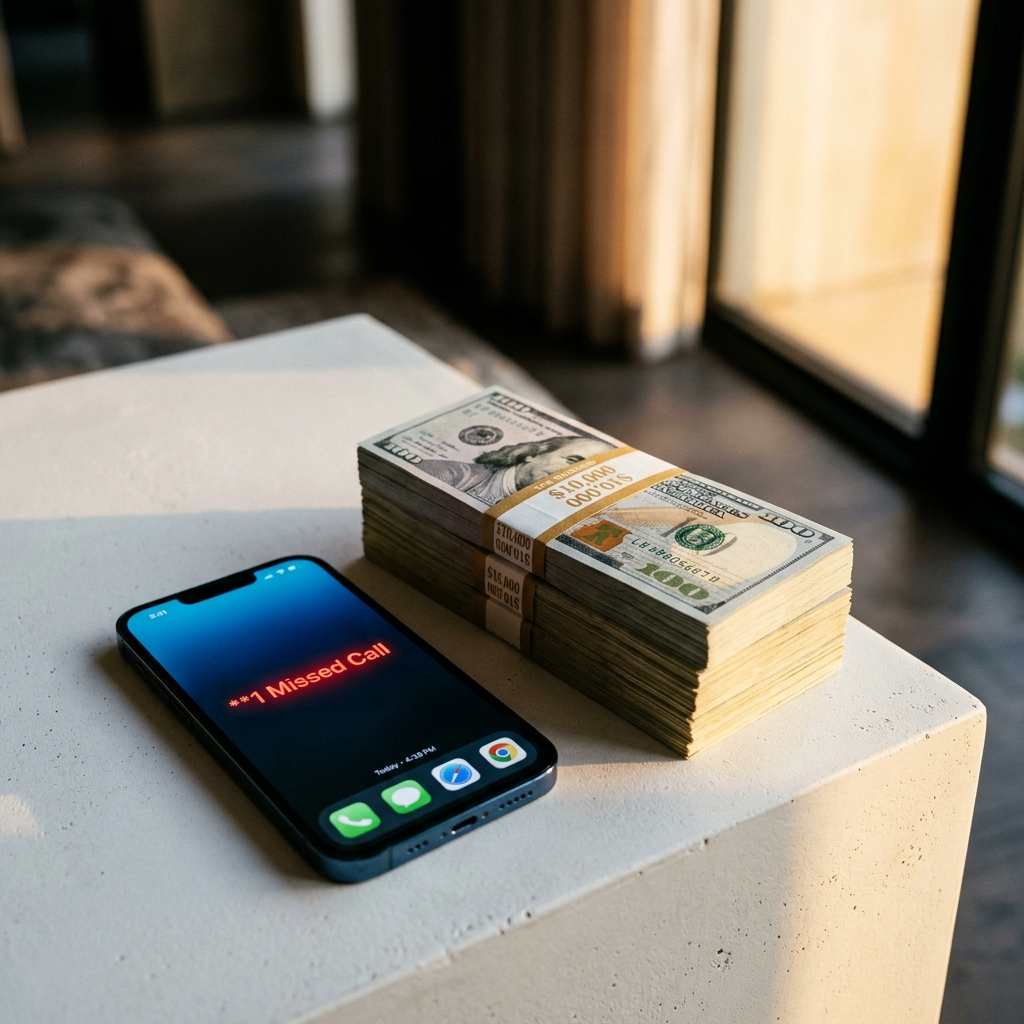
The Real Cost of a Missed Call for a Service Business: The Math Nobody Runs
A missed call costs more than the immediate job. Here is the full three-layer calculation, immediate value, lifetime client value, and referral chain, and the annual total most owners never see.

What Is an AI Receptionist for a Small Service Business? (The Honest Explanation)
An AI receptionist answers calls 24/7, captures leads, qualifies urgency, and routes emergencies, without voicemail. Here is exactly how it works and what it cannot do.
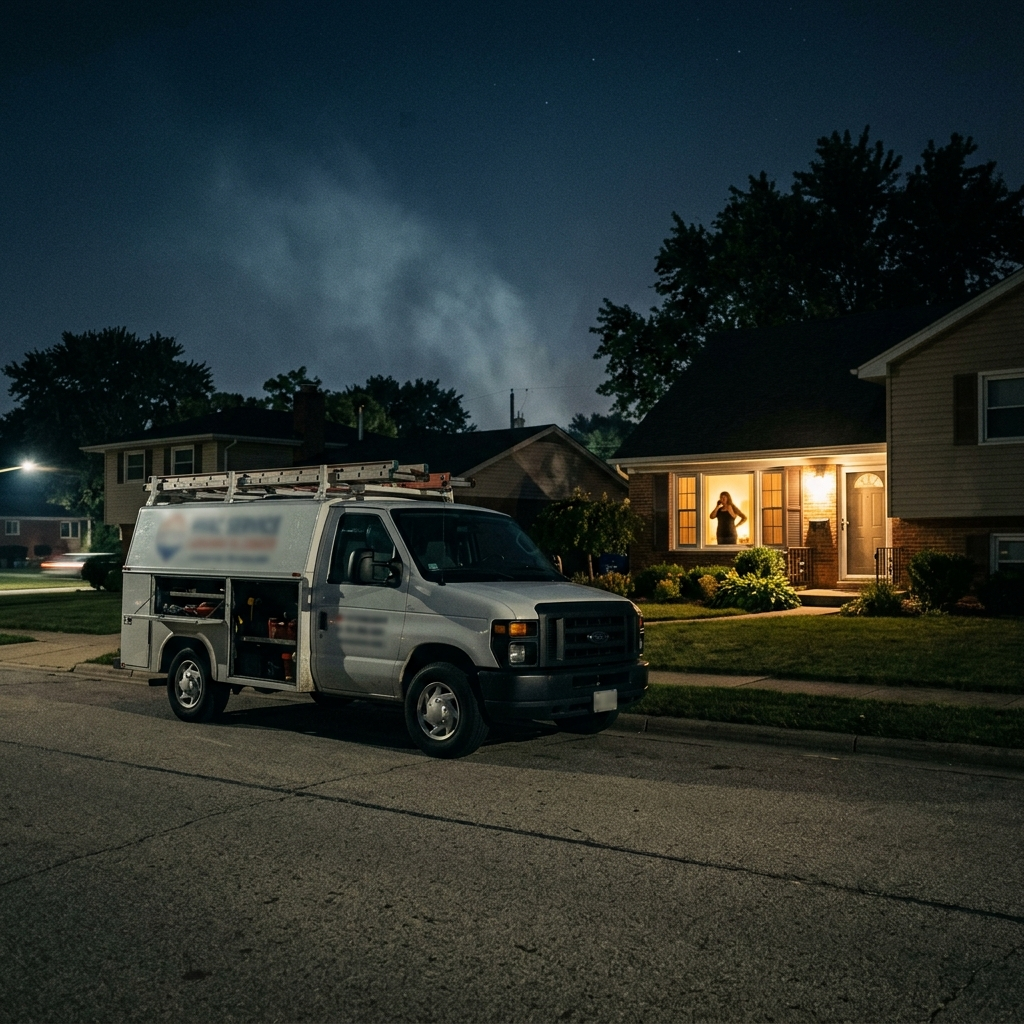
The After-Hours HVAC Revenue Gap: What Your Voicemail Is Actually Costing You Each Year
HVAC companies lose their highest-value calls after 5 PM. Here is what the annual cost is in precise terms, and what fixed looks like without adding headcount.