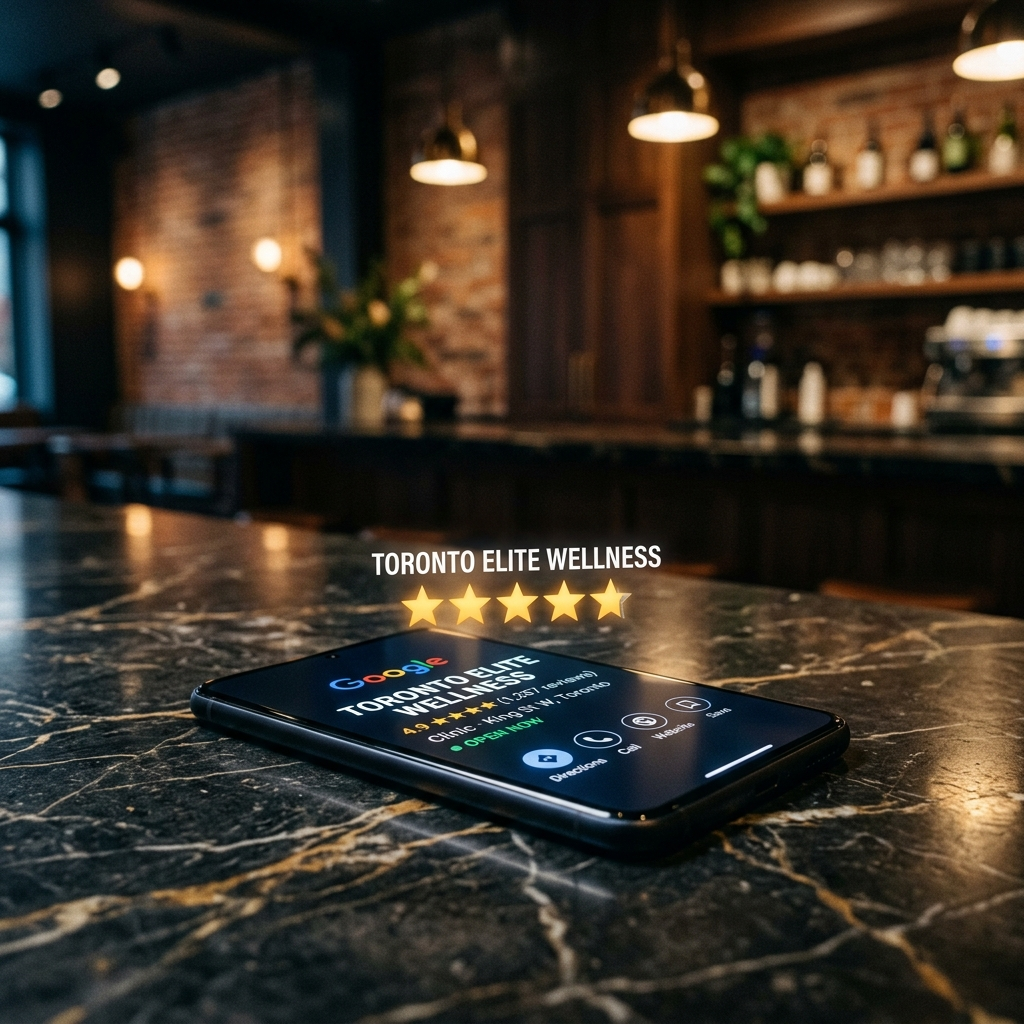

In Toronto, Mississauga, Brampton, Vaughan, Markham, Oakville, and the rest of the GTA, that invisibility matters because buyers compare local businesses quickly. They see rating, count, recency, and review language before they decide who to call.
Treat any number without a nearby source or stated method as a planning assumption, then replace it with your own records.
Most GTA service businesses do not lose reviews because customers are unhappy.
They lose reviews because nobody asks at the right time.
The technician finishes the job. The patient leaves the appointment. The homeowner is relieved. The customer says thank you. The team gets busy. The review request never goes out.
That is how good work stays invisible.
In Toronto, Mississauga, Brampton, Vaughan, Markham, Oakville, and the rest of the GTA, that invisibility matters because buyers compare local businesses quickly. They see rating, count, recency, and review language before they decide who to call.
AI reputation management should not create fake praise.
It should make earned trust visible.
That is the standard.
Why Google Reviews Matter In The GTA
The GTA is dense, competitive, and local-search heavy.
A homeowner looking for a plumber in Mississauga may compare several companies in minutes. A dental patient in Brampton may look at reviews before calling. A med spa prospect in Toronto may compare rating, photos, and recent customer language before booking.
Reviews are not decoration.
They are part of the front door.
If your business has good service but weak recent reviews, buyers may never reach the call.
That is why reputation belongs inside the operating system.
The Real Review Problem
Most businesses do not need a lecture about reviews.
They know reviews matter.
The problem is consistency.
Common gaps:
- Staff forget to ask.
- Requests go out too late.
- Happy customers are not identified.
- Unhappy feedback is not routed internally.
- Review velocity comes in bursts.
- The owner only thinks about reviews after rankings soften.
AI helps when it turns asking into a workflow instead of a memory test.
What AI Reputation Management Does
A practical AI reputation system can:
- Detect completed jobs or appointments.
- Send review requests at the right time.
- Personalize the message.
- Route unhappy feedback to humans.
- Track review request volume.
- Track review velocity.
- Show the owner gaps.
The goal is not to pressure customers.
The goal is to make the ask timely, respectful, and consistent.
The Ethical Boundary
Do not buy fake reviews.
Do not pressure customers.
Do not build a system designed to mislead.
Do not treat unhappy customers as a nuisance to hide.
The right system asks for honest feedback and routes problems to the business quickly.
That is both cleaner and more durable.
Timing Is The Whole Game
Review requests work best when the customer still feels the successful outcome.
For a plumber, that may be after the leak is fixed.
For an HVAC company, after comfort is restored.
For a dental practice, after a positive visit.
For a med spa, after the client has had the right amount of time to appreciate the appointment or result.
For a contractor, after a milestone or project completion.
The system should match the service moment.
Generic timing creates awkward asks.
The Feedback Gate
Before sending every customer directly to Google, the business should know whether the experience was good.
This does not mean manipulating reviews.
It means listening.
If a customer signals frustration, route them to a human. If they are happy, make leaving a review easy. If they are neutral, follow up carefully or leave it alone.
The system should protect relationships, not just chase stars.
Review Velocity
Review velocity means reviews arrive steadily over time.
This matters because a business with 200 reviews but nothing recent can still look stale.
A business with steady recent reviews looks alive.
AI helps by making review requests part of the job-completion workflow.
No panic campaigns.
No random bursts.
Just consistent proof.
GTA Examples
A Mississauga HVAC company can request reviews after completed emergency repairs.
A Brampton dental clinic can request feedback after positive appointments while routing sensitive patient concerns to staff.
A Toronto med spa can time requests around consultation and treatment experience.
An Oakville contractor can ask after project milestones.
A Vaughan auto service business can ask after successful pickup.
The category changes.
The operating principle stays the same.
Good work should become visible.
What To Measure
Track:
- Completed jobs.
- Review requests sent.
- Reviews received.
- Average rating.
- Review recency.
- Review velocity.
- Unhappy feedback routed.
- Staff or location gaps.
The owner should not need to guess whether reputation is improving.
The Local SEO Connection
Reviews influence buyer behavior and local visibility.
But do not treat AI reputation management as a trick.
Treat it as proof distribution.
The business already earned trust through service.
The system helps that trust show up where future buyers are deciding.
That is the clean version.
The Review Request Sequence
A practical sequence is simple.
First, mark the job or appointment complete.
Second, send a short satisfaction check or direct review request depending on the workflow.
Third, route unhappy replies to a human.
Fourth, send one polite reminder if appropriate.
Fifth, track whether reviews are actually arriving.
Do not overcomplicate the first version.
The power is in consistency.
What The Message Should Say
The message should be short and human.
For example:
"Thanks for choosing us today. If the experience was strong, a quick Google review helps other local customers know who to call."
That is enough.
It does not beg.
It does not pressure.
It connects the review to helping future local buyers.
What Not To Do
Do not ask angry customers for reviews before resolving the issue.
Do not send five reminders.
Do not use fake urgency.
Do not offer incentives that create compliance problems.
Do not write reviews for customers.
Do not treat reputation as a shortcut around service quality.
AI should make the process more consistent, not less honest.
The Multi-Location Issue
Some GTA businesses operate across multiple areas.
Toronto, Mississauga, Brampton, Vaughan, Markham, Oakville, and Scarborough may all produce different customer patterns.
If the business has multiple locations or service areas, the reputation system should help show gaps by area.
Maybe Mississauga customers are reviewing consistently while Brampton jobs are not. Maybe one technician gets strong feedback while another location has slow response complaints.
That information is useful.
Reviews are public proof, but they are also operational feedback.
The Staff Adoption Problem
If review requests depend entirely on staff remembering, the system will be uneven.
Some people ask.
Some forget.
Some feel awkward.
Some ask the wrong customer.
The AI system should support the team by making the request automatic and timely.
That does not remove staff responsibility for service quality.
It removes the memory burden.
The Service Recovery Benefit
A good reputation system helps service recovery.
If a customer says the experience was poor, the owner should know quickly.
That gives the business a chance to fix the issue, apologize, clarify, or improve the process.
Without a system, unhappy customers may go straight to public review.
With a system, the business can hear the signal earlier.
That is good operations.
The 30-Day GTA Review Reset
For 30 days, run a simple reset.
Week one: define which completed jobs should receive requests.
Week two: write the message and feedback route.
Week three: automate requests after completion.
Week four: review velocity, replies, and any negative feedback patterns.
The goal is not to flood Google with reviews overnight.
The goal is to create a steady rhythm that the business can sustain.
The Revenue Connection
Reviews influence calls.
If stronger recent reviews help a GTA business win a few more calls per month, the impact can be meaningful.
Suppose better proof helps create five more qualified calls monthly.
If two become jobs at $800 average value, that is $1,600 per month.
Annualized, that is $19,200.
The math will vary, but the principle is clear.
Reputation is not vanity when it changes buyer behavior.
The Owner Dashboard
The owner should see:
- Requests sent.
- Reviews received.
- Review velocity.
- Average rating.
- Recent review themes.
- Negative feedback routed.
- Location or staff gaps.
This keeps reputation out of the "we should ask for more reviews" fog.
It becomes an operating metric.
Review Language Matters
The words customers use in reviews matter.
A review that says "great service" is nice.
A review that says "answered after hours, showed up in Mississauga the same day, explained the repair clearly, and cleaned up after the job" is stronger.
The business should not write reviews for customers.
But it can create a service experience that gives customers specific things to mention.
Clear communication, arrival windows, professionalism, speed, cleanliness, and follow-up often show up in review language when the business actually delivers them.
AI can help analyze those themes.
That feedback can improve the website, sales scripts, service training, and local positioning.
Why Review Recency Changes Trust
Buyers do not only look at the average rating.
They look at whether the business is active now.
A company with strong reviews from three years ago but little recent proof may feel stale.
A company with steady recent reviews feels alive.
For GTA buyers choosing between several providers, recency can be the small trust signal that creates the call.
This is why reputation should run every week, not once a quarter.
What AI Should Flag
The system should flag:
- Review requests not being sent.
- Review velocity slowing.
- Negative feedback themes.
- Locations underperforming.
- Service categories with weak proof.
- Staff members receiving repeated praise or complaints.
- Customers who need human follow-up.
That is more useful than simply counting reviews.
The point is to understand reputation as an operating signal.
The Competition Problem
GTA customers often compare quickly.
They may search "plumber near me," "dentist Brampton," "med spa Toronto," or "HVAC Mississauga" and scan the map results.
If competitors have fresher reviews, more specific feedback, and stronger visible trust, they may win the call.
That does not mean they are better.
It means their proof is easier to see.
AI reputation management helps close that proof gap.
A Simple Policy
Create a simple internal policy:
Every completed successful job should trigger a review opportunity.
Every unhappy response should trigger human follow-up.
Every week, the owner reviews velocity and themes.
That policy is enough to start.
The software supports the policy.
It does not replace it.
What Happens Without A System
Without a system, reviews become random.
The business asks when it remembers. Staff ask when they feel comfortable. Happy customers leave quietly. Frustrated customers are more motivated than satisfied ones. The owner notices only when reputation already feels behind.
That is a weak operating model.
Good reputation should be earned in service and captured through rhythm.
The rhythm is what AI helps protect.
The Bad Review Fear
Some owners avoid asking because they fear bad reviews.
That fear makes sense, but silence is not a strategy.
If customers are unhappy, the business needs to know. If customers are happy, future buyers need to know.
A reputation system gives both signals a place to go.
Happy customers are asked respectfully.
Unhappy customers are routed to humans.
That is better than waiting and hoping.
How This Supports Paid Ads
Reviews also affect paid traffic.
If someone clicks an ad and then checks your Google profile, reputation can decide whether they call.
That means weak reviews can waste ad spend.
The business pays to create attention, then loses trust at the moment of comparison.
Review automation helps protect the conversion path that paid ads depend on.
How This Supports Referrals
Even referred buyers check reviews.
A neighbor may recommend your business, but the buyer still searches your name.
If the review profile looks strong and current, the referral feels safer.
If it looks thin or stale, doubt enters.
That is why reputation supports more than Google Maps.
It supports every trust path.
The First Question To Ask
Ask this:
How many happy customers did we serve last month who never left a review because we never asked?
That is the reputation leak.
Not every customer will review.
But the business should not lose the opportunity because the ask never happened.
What A Good Month Looks Like
A good month does not mean every customer leaves a review.
It means the system did its job.
Completed jobs were identified. Requests went out. Unhappy feedback was routed. Review velocity was visible. The owner could see which locations, services, or staff had gaps.
That is the calm version of reputation management.
No begging.
No panic.
No fake proof.
Just earned trust moving into public view.
Why This Belongs In The AI Business OS
Reviews belong in the AI Business OS because they affect future demand.
Intake captures today's lead.
Follow-up protects today's warm opportunity.
Reputation helps create tomorrow's call.
That is why review automation should connect to the same operating system as calls, forms, follow-up, and visibility.
The front door does not start when the phone rings.
It starts when the buyer decides whether to call at all.
Bottom Line
Google reviews are not a side project for GTA service businesses.
They are part of the front door.
AI helps when it makes review requests timely, respectful, and consistent without turning reputation into something fake or pushy.
Do the work well.
Then build the system that makes the proof visible.
Use your own records before you decide
Source: start with your call log, CRM notes, booking calendar, missed-call records, web form timestamps, and Google Business Profile. Those records show whether buyers reached you, how fast they heard back, what they asked for, and where the next step broke down.
For seven days, mark each missed call, late reply, unbooked form, stale estimate, and review request that never went out. That small sample gives an owner a practical picture of the front-door gap before they spend more on ads, software, or staff.
The loss estimate is basic business math, not a magic claim.
Revenue-leak examples on this site are built from visible operating inputs: inquiry volume, missed-call or slow-response rate, booking rate, average job or client value, repeat value, and follow-up recovery. The fastest way to make the number real is to run the diagnostic for your closest business type, then compare it against your own call log, CRM, booking calendar, form timestamps, and review activity.
The practical questions behind this decision.
Can AI help GTA businesses get more Google reviews?
Yes, by sending timely review requests, routing feedback, tracking review velocity, and making the process consistent.
Is AI review automation ethical?
It can be, if it requests honest feedback, avoids fake reviews, avoids pressure, and routes unhappy customers to humans for service recovery.
When should a business ask for a review?
Ask after the customer has experienced a successful outcome. The right timing depends on the service category.
What should GTA businesses measure?
Measure review requests sent, reviews received, review recency, rating trend, negative feedback routed, and review velocity.
Does this replace good service?
No. AI reputation management only helps make good service visible. It cannot replace the actual customer experience.
Review the trust signals visible before someone decides to call.
The useful question is not only the star rating. It is whether recent proof supports the promise the website makes.
Inspect review recency, response habits, and the public trust signals buyers see before they contact the business.
See how the capability in this article fits into a complete customer journey.
Service BusinessesSee the same decision through the language, buyer behavior, and operating reality of this industry.
Client Results & ProofInspect the starting condition, installation, measurement window, and outcome behind real client work.

How to Compare AI Automation Agencies in Toronto and the GTA
A buyer-led comparison of discovery, workflow scope, evidence, AI governance, handoffs, ownership, support, and acceptance testing for Toronto service businesses.

After-Hours Revenue Recovery for Toronto Service Businesses: What AI Changes
Most Toronto service businesses lose 30 to 50 percent of their evening and weekend inbound revenue to voicemail. This guide covers the exact after-hours revenue leak, the math behind what it costs, and what an AI system does to close the gap.