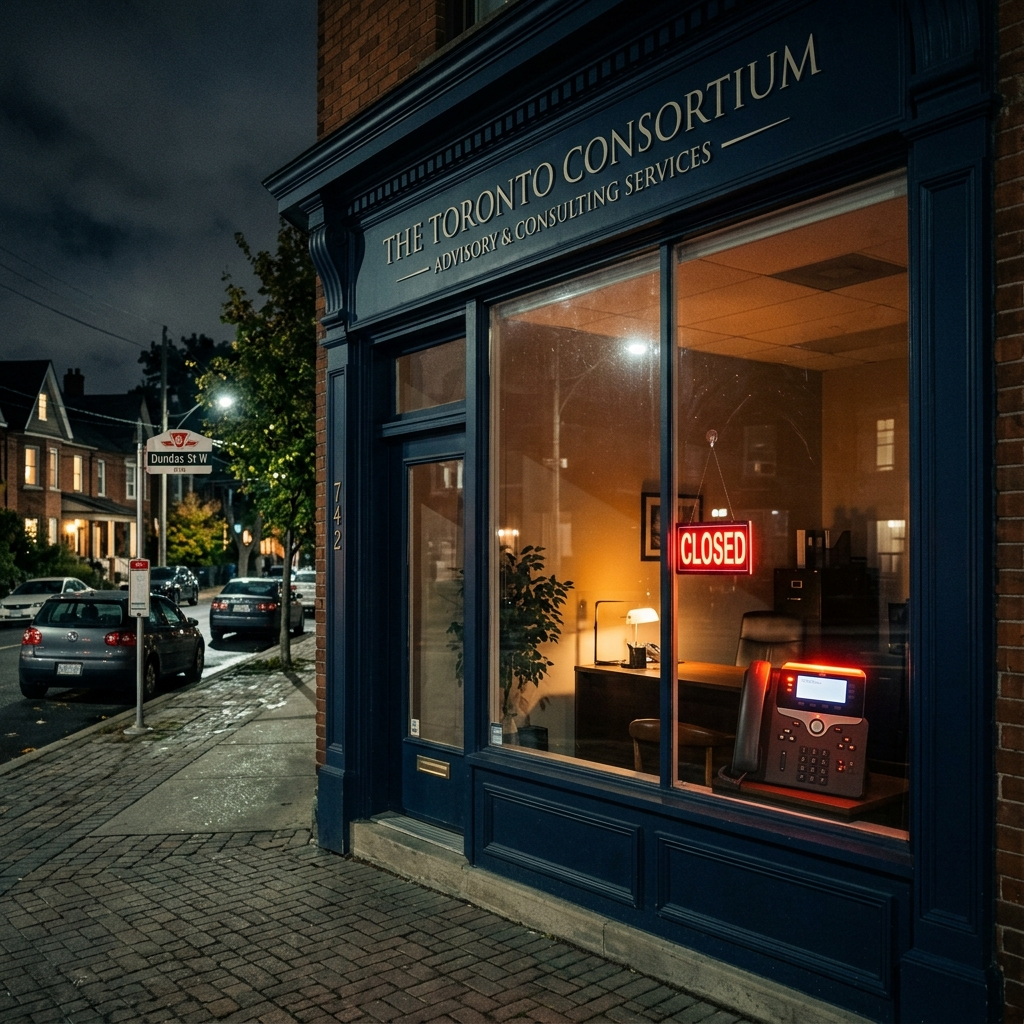

Most Toronto service business owners know they miss calls. What they usually do not know is how much each missed call actually costs, and how often the most valuable calls come in outside business hours.
Treat any number without a nearby source or stated method as a planning assumption, then replace it with your own records.
The Most Expensive Hours of the Business Day
A plumber in East York gets a call at 8:45 PM from a homeowner with a slow leak under the kitchen sink. The call goes to voicemail. The homeowner listens to the recording, hesitates, and calls the next plumber on their Google search. That plumber answers. Books the job. Shows up the next morning. The original plumber never knows any of this happened.
The call lasted zero seconds in their records. But the lost revenue was real.
This happens dozens of times per month across the GTA. For HVAC companies, plumbers, electricians, and other home service trades, the evening window between 6 PM and 9 PM is when homeowners finally have time to deal with the problem they noticed that morning. For dental practices and clinics, it is when patients with tooth pain or an urgent concern are ready to act. For general contractors, it is when homeowners who have been thinking about a renovation project all week finally pick up the phone.
These are not low-priority calls. They are often the highest-intent calls of the day. And most of them go to voicemail.
When the Revenue Actually Disappears
After-hours revenue loss does not follow a random pattern. It concentrates in three specific windows.
The evening surge runs from roughly 6 PM to 9 PM on weekdays. This is when working homeowners are home, aware of problems, and ready to book. For HVAC companies and plumbers in the GTA, this window accounts for a significant share of emergency and next-day bookings. For clinics and professional services, it captures after-work appointment scheduling.
The overnight window runs from 9 PM to 8 AM. Everything that rings in this window goes to voicemail for any business without after-hours coverage. For most home service businesses in Toronto, this includes a steady trickle of calls from night-shift workers, overnight emergencies, and international callers in different time zones.
The weekend window is where the volume hits hardest. Across most GTA home service verticals, Saturday sees call volume comparable to the busiest weekday. Homeowners have time. Problems that were tolerable on a Tuesday become urgent on a Saturday morning. And most service businesses in Toronto operate with minimal or no weekend phone coverage.
Add these three windows together and roughly 90 percent of a service business's missed calls fall within them. None of them require a human to be physically present to solve.
What Happens to the Caller Who Goes to Voicemail
Understanding what happens after a missed call changes how you think about the cost.
A caller who reaches voicemail outside business hours follows a predictable path. They leave a message roughly 30 percent of the time. The other 70 percent hang up without leaving a message. Of those who hang up, the majority do not call back. They search again immediately, find another option, and make a decision within the next 15 minutes.
The business that answers wins the job. The business that did not answer often never hears from that person again, even if they call back the next morning.
For a Toronto HVAC company dealing with a heating emergency in January, a caller who does not get an answer at 8 PM and books with a competitor by 8:15 PM is gone permanently. Not just the emergency call fee. The annual maintenance contract. The equipment replacement inquiry five years from now. The referral to the neighbour whose furnace makes the same noise.
The full lifetime value of an after-hours missed call in the trades can be four to ten times the value of the immediate job.
Why Most Solutions Have Not Worked
Toronto service businesses have tried various approaches to the after-hours problem. Most have not worked, or have worked poorly.
Forwarding calls to a personal cell phone is the most common approach. It solves the coverage problem but creates a different one. Business owners end up taking calls during dinner, at family events, and in the middle of the night. They burn out. The solution is not sustainable and it does not scale.
Answering services, where a third-party call center picks up on behalf of the business, are a step up. But the people answering the calls do not know the business, cannot book into the calendar, cannot answer technical questions, and often create a poor first impression. The caller senses they are not talking to the actual company.
Voicemail-to-text-back services send an automated text when a call is missed. This is better than nothing. But a text that says "Thanks for calling, we will get back to you" does not book the job. It creates a follow-up task for the morning and gives the caller six to eight hours to find someone else.
None of these approaches actually solve the after-hours conversion problem. They delay it, reduce friction at the margins, or transfer the burden to a person who is off the clock.
An AI receptionist is the first solution that actually closes the loop. It answers the call, handles the conversation, and converts the inquiry.
How an AI Receptionist Handles After-Hours Calls
The way a modern AI receptionist works for a Toronto service business is worth walking through in plain terms.
The phone rings. The AI answers within two seconds. The caller hears a natural voice, not a phone tree. The AI greets them with the business name and asks how it can help.
For a plumbing company, the AI then asks whether this is an emergency, a scheduled service inquiry, or an estimate request. Based on the answer, it follows a specific path.
For a genuine emergency, it asks for the address, confirms it is within the service area, and either books an emergency call-out directly into the dispatch calendar or routes the call to an on-call technician. The caller gets a confirmation text with the expected arrival window.
For a non-emergency service inquiry, the AI qualifies the job, asks for availability preferences, and books the appointment into the next available slot. The caller gets a confirmation. The business owner sees the new booking when they check their calendar in the morning.
For an estimate request, the AI captures the job details, confirms the service area, and schedules an estimate visit. A follow-up sequence starts automatically for jobs that do not convert within the first few days.
In every case, the caller had a complete, professional interaction with the business. They booked or they did not. But they did not leave in silence, unsure whether anyone would call them back.
The Language Reality in Toronto
Toronto is one of the most linguistically diverse cities in the world. The GTA's population speaks hundreds of languages at home, and a substantial number of service business callers are more comfortable communicating in a language other than English.
For a plumbing company serving North York, a significant share of callers may prefer Mandarin or Cantonese. For an HVAC company in Brampton, callers may prefer Punjabi or Hindi. For a clinic in Scarborough, Tamil or Arabic may be the first language for a meaningful portion of new patient inquiries.
An AI receptionist that can only handle English is turning away a portion of every service area's market without knowing it. A properly configured system handles multiple languages by default, routing the conversation naturally into the caller's preferred language from the first exchange.
This is not a minor feature in the Toronto context. It is a material competitive advantage over any competitor whose after-hours coverage only works in English.
The Math for Toronto Service Businesses
The revenue recovery from after-hours coverage follows a simple calculation. Take the number of calls that go to voicemail outside business hours. Multiply by the booking rate that a live conversation achieves. Multiply by the average job value. That is the monthly revenue recovery opportunity.
For an HVAC company in Toronto missing eight evening calls per month, with a 45 percent booking rate and $380 average ticket, the recovery is approximately $1,368 per month. Before any repeat business, referrals, or review generation from those jobs is counted.
For a plumbing company missing six emergency calls per month, with a 60 percent booking rate on emergencies and $520 average emergency ticket, the recovery is approximately $1,872 per month.
For a general contractor in the GTA missing four after-hours estimate calls per month, with a 30 percent booking rate and $12,000 average project value, the pipeline recovery is $14,400 per month. Every month.
At these numbers, an AI receptionist that costs $400 to $800 per month pays for itself within the first three recovered calls of the month. The rest is margin.
What Changes When After-Hours Is Covered
Toronto service businesses that have installed after-hours AI coverage consistently report the same secondary effects after the first 60 to 90 days.
Google review accumulation accelerates because jobs that would have been lost are now being completed and triggering review requests. Every recovered call is a potential five-star review.
Inbound call volume from organic search increases over time as the business climbs the local map pack. More reviews, more clicks, more calls.
Owner stress decreases because the personal cell phone is no longer the backup plan for the business. The system handles it.
Weekend and evening bookings as a share of total bookings increase, which smooths out the week and reduces the Monday morning scramble to fill the schedule.
And the customer experience improves in a way that is measurable: callers who reach the AI and get booked report a professional interaction. Callers who previously left a voicemail and waited until 9 AM for a callback often did not return at all.
What to Do First
For a Toronto service business that is not yet handling after-hours calls systematically, the first step is to understand the scale of the problem. Pull the last three months of call data from the phone system or service provider. Count the calls that came in between 6 PM and 8 AM on weekdays and any time on weekends. Multiply that number by the average ticket. That is the floor of the monthly after-hours revenue opportunity.
Most business owners who do this calculation for the first time are surprised by how large the number is. It is rarely under $2,000 per month, even for smaller operations.
The next step is to evaluate what a proper after-hours solution looks like for the specific business, service area, and language needs involved. Not every solution is the same. A general contractor has different qualifying questions than a dental practice. A Brampton business has different language requirements than a downtown Toronto firm.
The Revenue Leak Diagnostic is the starting point for that evaluation.
The Quiet Protocol
What You Actually Get When You Work With The Quiet Protocol
When a business partners with The Quiet Protocol, we install a connected AI operating system across five layers of their operation. Here is what that looks like in plain terms.
Every call gets answered.An AI voice receptionist picks up every phone call within two seconds, 24 hours a day, seven days a week. It greets the caller as your business, asks the right qualifying questions, and either books the appointment directly into your calendar or routes urgencies to the right person. No more voicemail. No more lost leads after hours.
Every inquiry gets followed up.Whether someone calls, submits a web form, sends an Instagram DM, or emails your general address, the system responds within 60 seconds and starts a structured follow-up sequence if they do not convert immediately. The sequence runs automatically for days or weeks without anyone on your team having to remember to send a message.
Dormant contacts come back.Every business has a database of past clients, lapsed patients, or cold leads that cost money to generate and then went quiet. The system runs re-engagement campaigns to these contacts on a schedule you approve, bringing back people who already trust you without any new ad spend.
Your Google review count climbs every month.The system sends a review request to every client at the right moment after they interact with your business. Not a mass blast. A personal, timed message that earns two to five times more reviews per month than manual requests do. More reviews mean a higher Google Maps position, which means more organic new business.
You see everything in one dashboard.Every call answered, every follow-up sent, every booking made, every review collected. The intelligence layer shows you what is working and where the system is recovering revenue you would otherwise have missed.
The businesses that install this system typically see a measurable improvement in new client capture within the first 30 days and a meaningful increase in organic Google traffic within 90 days as their review profile builds.
There are no long-term lock-in contracts. The system is configured for your specific business, your specific market, and your specific compliance environment. And every implementation starts with a Revenue Leak Diagnostic, a 30-minute diagnostic that quantifies exactly how much revenue your current setup is leaving behind.
The Quiet Protocol is a Toronto-based AI automation agency serving your Toronto service business and other service businesses across the Greater Toronto Area, Ontario, Canada, and the United States. Every engagement starts with a [Revenue Leak Diagnostic](/book/audit) that identifies exactly how much revenue your current intake and follow-up setup is leaving behind. The audit is free. The math is specific to your business.
[Book your Revenue Leak Diagnostic](/book/audit) | [See how it works](/services) | [Read client results](/results)
Related reading: [AI Receptionist for GTA Service Businesses](/blog/ai-receptionist-toronto-gta-service-businesses-guide-2026) | [Google Reviews for GTA Businesses](/blog/google-reviews-gta-businesses-ai-reputation-management-2026) | [Results](/results)
The loss estimate is basic business math, not a magic claim.
Revenue-leak examples on this site are built from visible operating inputs: inquiry volume, missed-call or slow-response rate, booking rate, average job or client value, repeat value, and follow-up recovery. The fastest way to make the number real is to run the diagnostic for your closest business type, then compare it against your own call log, CRM, booking calendar, form timestamps, and review activity.
The practical questions behind this decision.
What proof should I look for in my own business?
Look for proof in the places where demand either moved forward or stalled: missed calls, short calls, unbooked forms, slow callbacks, no-show recovery, old leads, and reviews that were never requested. If the business cannot see those moments clearly, the first improvement is better tracking and routing.
How do I know whether this is a marketing problem or an operations problem?
If people are already calling, filling forms, asking for prices, requesting appointments, or comparing reviews, the problem is usually operations. More marketing will not fix a front door that lets warm demand wait. The better move is to capture and route the demand already arriving.
What should happen after the first response?
The first response should create a next step: booked appointment, estimate path, intake handoff, callback window, review request, or reactivation sequence. A response that only says someone will get back to you is not enough when the buyer is comparing several providers at once.
Where does The Quiet Protocol fit?
The Quiet Protocol fits when the business already has demand but too much of it depends on manual attention. We connect AI receptionist coverage, web intake, missed-call recovery, booking logic, follow-up, review requests, and reactivation into one managed front-door system.
Turn the article into one week of real numbers.
Use your own call log, form timestamps, calendar, and CRM before accepting any industry estimate.
Use your own operating numbers to see where response, booking, reviews, and follow-up may be costing the business.
See how the capability in this article fits into a complete customer journey.
Service BusinessesSee the same decision through the language, buyer behavior, and operating reality of this industry.
Client Results & ProofInspect the starting condition, installation, measurement window, and outcome behind real client work.
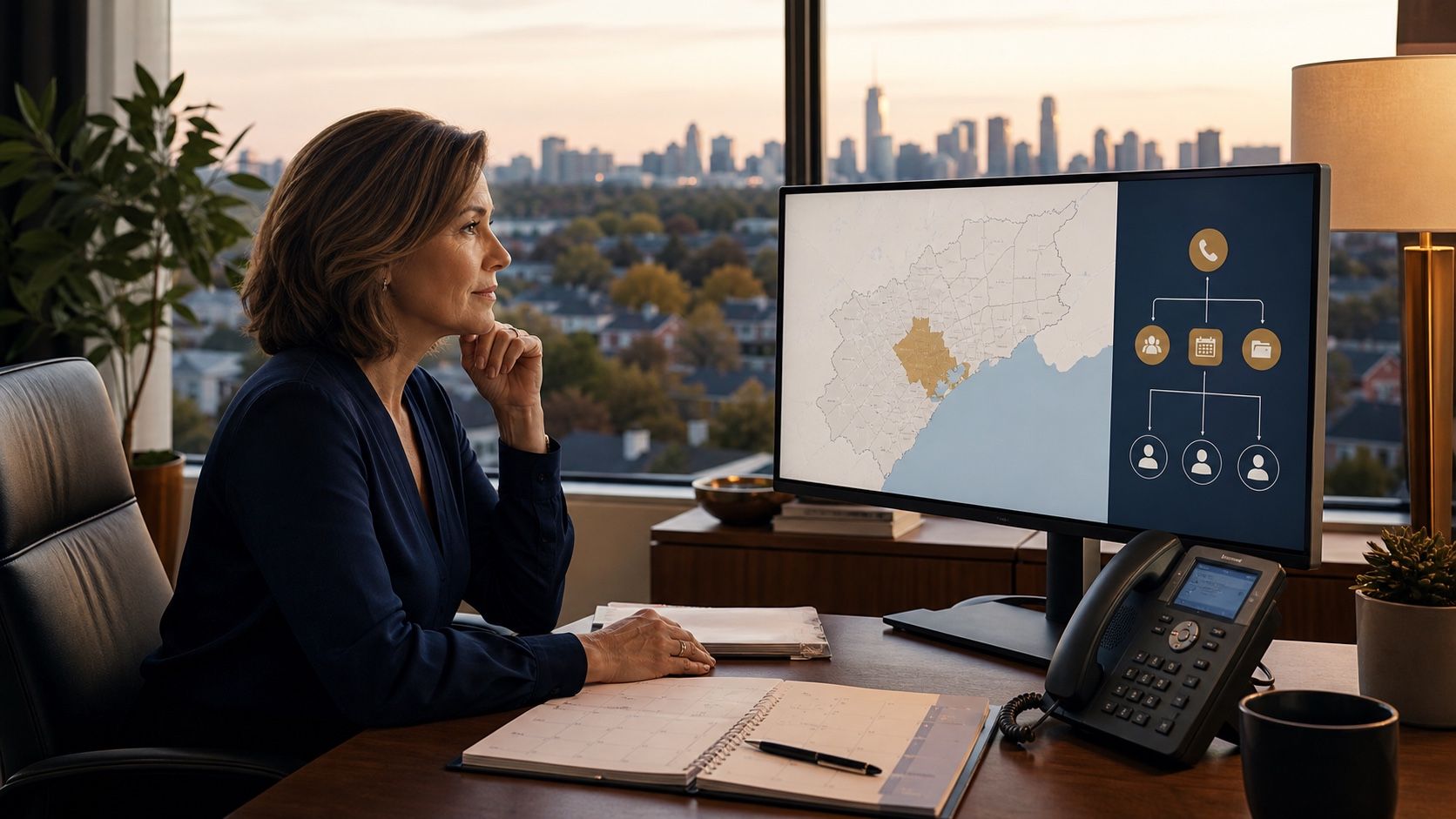
AI Receptionist for Toronto and the GTA: Local Implementation Guide
A practical Ontario guide to service-area rules, accessible customer service, privacy, messaging, multilingual intake, staff handoffs, and a controlled local launch.

How to Compare AI Automation Agencies in Toronto and the GTA
A buyer-led comparison of discovery, workflow scope, evidence, AI governance, handoffs, ownership, support, and acceptance testing for Toronto service businesses.