

The lesson is simple: profit is found in the gaps. If you close the gap between the ring and the booking, your revenue will climb without you ever having to spend another dollar on marketing.
Treat any number without a nearby source or stated method as a planning assumption, then replace it with your own records.
The 2 AM call starts with a sound like a wet slap against the floorboards. Then comes the steady, rhythmic drumming of water hitting plastic. A homeowner wakes up, steps out of bed, and feels their foot sink into cold, sodden carpet. This is the moment a customer is made. In that specific moment, that customer has zero interest in your 20 years of experience, your local community awards, or your beautifully wrapped trucks. They only care about one thing: Who will stop the water?
This is the operating reality of the plumbing industry. We like to think we are in the service business, but in an emergency, we are actually in the "dispatch race." The company that wins the race is the one that answers the phone first. Not the one that calls back in ten minutes. Not the one that has a polite voicemail. The company that picks up on ring two and confirms a technician is moving is the one that captures the high-margin plumbing service leads.
In 2026, the old ways of handling emergency plumbing dispatch are getting expensive. If you are still relying on a human dispatcher to wake up, check a schedule, and call a tech, you have already lost the job to a competitor who has automated their front door. This article is about the math of the "First Result" and why Voice AI is the cleanest way to reduce the revenue leak in a multi-truck plumbing shop.
Why Second Place Usually Means No Job
When a homeowner searches for a plumber during an emergency, they are participating in a blind auction. They open Google, they see the first three sponsored results or Local Service Ads (LSAs), and they start calling from the top down. They do not stop calling until a human being (or an intelligent machine) tells them that the problem is being handled.
The 85% rule. Statistical data across thousands of plumbing calls shows that the first company to pick up the phone and secure a booking window captures 85% of the jobs. For owners chasing plumbing service leads, this is the only statistic that matters. The remaining 15% is split between companies that were slightly cheaper but took longer to answer, and people who had a prior relationship with a specific plumber. This means if you are result #2 on the list but you take 60 seconds longer to answer than result #1, you are not functionally in second place. You are usually out of the job.
Think about your own team right now. When an emergency call comes in at 6 PM on a Friday, what happens? Does it go to a live office manager who is trying to finish their own dinner? Does it go to an "after-hours" call center where a representative with no technical knowledge puts the customer on hold for three minutes? Or does it go to a voicemail that says "your call is important to us"?
Every second of delay moves revenue toward a competitor. If the customer hangs up without a booking, they are calling the next company on the list. The moment they hear a human-sounding voice that can actually see the schedule and book the job, they stop calling. Your goal is to be the "stop point" for their anxiety.
The ServiceTitan Bottleneck: Why Manual Dispatching Fails During Surges
Most modern plumbing companies use powerful software like ServiceTitan or Housecall Pro. These systems are excellent at managing the job once it is in the system. They track the trucks, they handle the invoicing, and they manage the inventory. But they have a real weakness: They still require a human to put the data into the system.
The Manual Data Entry wall. When a storm hits or a freeze occurs, the call volume does not just double. It can multiply quickly. Your office manager can only handle one conversation at a time. While they are carefully taking down the details for a leaky faucet, three "Burst Pipe" calls are hitting the voicemail. Those are the $1,500 jobs flying past your front door because your dispatch process has a human bottleneck.
This is where manual emergency plumbing dispatch breaks down. You have the trucks. You have the technicians. You have the software. But you do not have the "Ear" to hear all the leads at once. Your ability to capture plumbing service leads is capped by your human team's speed. You are essentially asking a human team to process more calls than it can physically handle. You can only capture what your human team can process, and in a high-ticket service environment, that inefficiency costs you millions in annual revenue.
The solution is not always hiring more people. The first move is often automating intake. You need a system that can handle fifty simultaneous calls, cross-reference them with your ServiceTitan schedule, and book the jobs in real-time. This is the difference between a shop that grows during a surge and a shop that just gets "busier" without getting more profitable.
Voice AI for Plumbers: The Dispatch Use Case
The phrase "AI" gets thrown around a lot in 2026, but in the plumbing world, it has a very specific and very profitable application. Voice AI for plumbers is not a chatbot on a website. It is a high-fidelity, low-latency vocal agent that answers your main business line. It sounds local, it understands plumbing terminology, and it never gets tired.
How it works in the field. It starts with the answer. When a call comes in, the AI answers on the first ring. It identifies that the customer has a "clogged main" or a "broken water heater." Through voice ai for plumbers, it does not just take a message. It looks at your live calendar. It sees that Truck #4 is finishing a job five miles away. It tells the customer, "I can have a technician at your door between 4 PM and 6 PM today. Would you like to secure that window?"
The customer says yes. The AI collects the address, the credit card for the dispatch fee (if required), and creates the job directly in your CRM. All of this happens in 45 seconds. By the time your competitor's employee has even picked up the phone, your technician is already getting a notification on their mobile tablet. You have won the "First Result" game before the game even started.
This is why voice ai for plumbers is becoming useful for operators with serious emergency volume. It removes the human error from the equation. It does not forget to ask for the zip code. It doesn't get a "bad day" on a Friday afternoon. It is a consistent dispatch layer that turns your phone from an expense into a high-velocity revenue generator.
Why One Call Is Not Enough
Plumbing is a high-friction business. Parts are missing. Technicians are running late. The weather is working against you. In a manual office, these frictions cause leads to die. If a technician is running thirty minutes late for an emergency plumbing dispatch, the office manager might forget to call the homeowner. The homeowner gets nervous, thinks they have been ghosted, and calls someone else.
Automated persistence. A true Quiet Protocol system adds natural redundancy to the process. The AI does not just book the job; it manages the "Waiting Window." It sends a text when the tech is on the way. It calls the homeowner five minutes before arrival to ensure they are home. If a tech has to reschedule, the AI handles the call-back immediately, preserving the trust before the customer feels the need to look elsewhere.
This redundancy covers more than just the schedule. It covers your professional reputation. If your office team does not have the bandwidth to follow up on fifty estimate requests, your sales funnel is a leaky bucket. The AI ensures every lead is touched until they book or clearly disengage. This persistence is what builds the bottom line.
This redundancy is what creates "full capture." You aren't just capturing the lead; you are securing the job through to completion. You are closing every exit door that a customer might use to leave your sales funnel. When your front door is structured, fewer opportunities fall through the cracks. Every interaction is predictable. Every customer feels seen. Every plumbing service lead is treated like a five-figure opportunity.
Operating Example: Recovering After-Hours Plumbing Jobs
A 5-truck plumbing company in Atlanta was struggling with "After-Hours Anxiety." The owner knew they were missing calls at night, but they could not justify the $4,000/month cost of a high-quality live answering service. They were using a basic service that took messages and emailed them to the owner. The owner would then have to wake up and call the customer back.
The pattern: by the time the owner called back at 6 AM, 90% of the customers had already called a 24-hour competitor. They were "Msg Only" leads that never turned into jobs. The owner was effectively paying the answering service to tell him how much money he was losing.
The operating fix: install a Voice AI agent that hooked directly into their Housecall Pro account. The AI was trained to prioritize "Water Leak" and "Sewer Backup" calls. Instead of taking a message, it quoted the emergency dispatch fee and booked the next available morning slot (or dispatched the on-call tech for true emergencies).
In the first seven days, the AI booked eight emergency jobs that occurred between 8 PM and 5 AM. These were jobs the owner would have previously "called back" on too late. The total revenue from those eight "missed" jobs was $12,450. The cost of the system? Less than a single drain clear. The owner didn't have to hire a single new person. He just had to stop letting his phone go to a voicemail box.
The lesson is simple: profit is found in the gaps. If you close the gap between the ring and the booking, your revenue will climb without you ever having to spend another dollar on marketing.
Auditing the Front Door: The Math of the Missed Opportunity
If you want to feel the "Revenue Leak Diagnostic" in your own business, do a simple audit. Look at your phone logs for the last thirty days. Count every call that lasted less than 20 seconds or went to the "After-Hours" mailbox. Those are your lost plumbing service leads. Multiply that number by your average job value. That is the amount of money you are handing to your competitors every month.
For most plumbing shops, that number is usually larger than expected. It is usually the biggest expense on the entire P&L, but it does not have its own line item. It is the "Silent Leak" that keeps you from scaling. You aren't struggling because you do not have enough customers. You are struggling because you are letting the customers you already have walk away because of a slow dispatch process.
By automating your emergency plumbing dispatch, you are building defensive infrastructure. You are making your business "harder to miss." You are ensuring that every time a homeowner in your city is in crisis, you are the one that answers. You are the one that books. And you are the one that gets the check.
Simplifying the Complex: Why Your Tech Stack Should Feel Invisible
Owners often worry that technology will make their business feel cold. They think "humanization" means having a person answer the phone. But in an emergency, humanization means empathy + speed. A customer does not want a "warm conversation" when their basement is flooding. They want a solution. They want a time. They want a price.
Reliability is the ultimate human touch.When your system works perfectly every time, that is a form of care. When you never miss a call, that is a form of respect for the customer's problem. When you simplify the word choice and make the booking process as easy as ordering a pizza, you are being more "human" than a stressed-out office manager who is put on hold or overwhelmed by paperwork.
The Quiet Protocol is about making the technology invisible. The customer shouldn't be thinking about the AI; they should be thinking about the fact that their plumber is the only one who actually showed up. You are using high-tech systems to deliver a high-touch, old-school level of service. You are the professional who answers when the world is falling apart.
Don't let another emergency go to the guy down the street.The jobs are there. The phones are ringing.The only question is whether you have the infrastructure to answer them. Automate your dispatch, secure your plumbing service leads, and let your company run the way it was meant to.
Use your own records before you decide
Source: start with your call log, CRM notes, booking calendar, missed-call records, web form timestamps, and Google Business Profile. Those records show whether buyers reached you, how fast they heard back, what they asked for, and where the next step broke down.
For seven days, mark each missed call, late reply, unbooked form, stale estimate, and review request that never went out. That small sample gives an owner a practical picture of the front-door gap before they spend more on ads, software, or staff.
The loss estimate is basic business math, not a magic claim.
Revenue-leak examples on this site are built from visible operating inputs: inquiry volume, missed-call or slow-response rate, booking rate, average job or client value, repeat value, and follow-up recovery. The fastest way to make the number real is to run the diagnostic for your closest business type, then compare it against your own call log, CRM, booking calendar, form timestamps, and review activity.
The practical questions behind this decision.
Can the AI actually handle a complex plumbing quote?
The goal of the AI in an emergency plumbing dispatch scenario isn't to provide a final quote down to the penny. Its goal is to qualify the problem (e.g., "Is the water leaking from the tank or the pipes?") and secure the dispatch fee. It handles the "Intake" and "Booking" so your technicians can do the "Quoting" in the field where they can actually see the problem. This prevents the "Quote Gap" that often causes customers to hang up.
What happens if the AI encounters a problem it cannot solve?
We use a "Human-in-the-Loop" protocol. If the AI detects a call that is highly emotional or involves a complex commercial project it wasn't trained for, it can perform a "Warm Handoff" to a human supervisor. It tells the customer, "I'm going to connect you with our senior project head to make sure we get this right," and the call is instantly routed to your team. You get the benefit of AI speed with the safety net of human expertise.
How hard is it to connect the AI to ServiceTitan or Housecall Pro?
It is a standard integration. Our voice ai for plumbers is built to play nice with the software you already use. We don't ask you to change your workflow; we just make the entry point to that workflow thirty times faster than it is right now. You keep your schedule, you keep your techs, and you keep your CRM. You just change the speed at which the jobs arrive.
Does the AI work for after-hours calls specifically, or my main day line?
The best-performing shops use it for both. During the day, it handles the "Overflow" calls that your office staff is too busy to grab. At night, it handles 100% of the volume. This ensures your front door is always "Open for Business" regardless of whether it is 10 AM on a Tuesday or 2 AM on a Sunday. Total coverage means total revenue capture.
Decide what the AI must handle before you choose the software.
A useful intake system begins with the caller journey, the rules, and the human handoff, not a long feature list.
Give the receptionist a realistic scenario and hear how it answers, gathers context, and moves the caller toward a useful next step.
See how the capability in this article fits into a complete customer journey.
PlumbingSee the same decision through the language, buyer behavior, and operating reality of this industry.
Client Results & ProofInspect the starting condition, installation, measurement window, and outcome behind real client work.

Phoenix Plumbers Are Losing Emergency Calls During the Summer Monsoon Window
A plain-language guide for plumbing company owners who need faster response, cleaner booking, better follow-up, and a front door that keeps more high-intent demand from drifting to competitors.
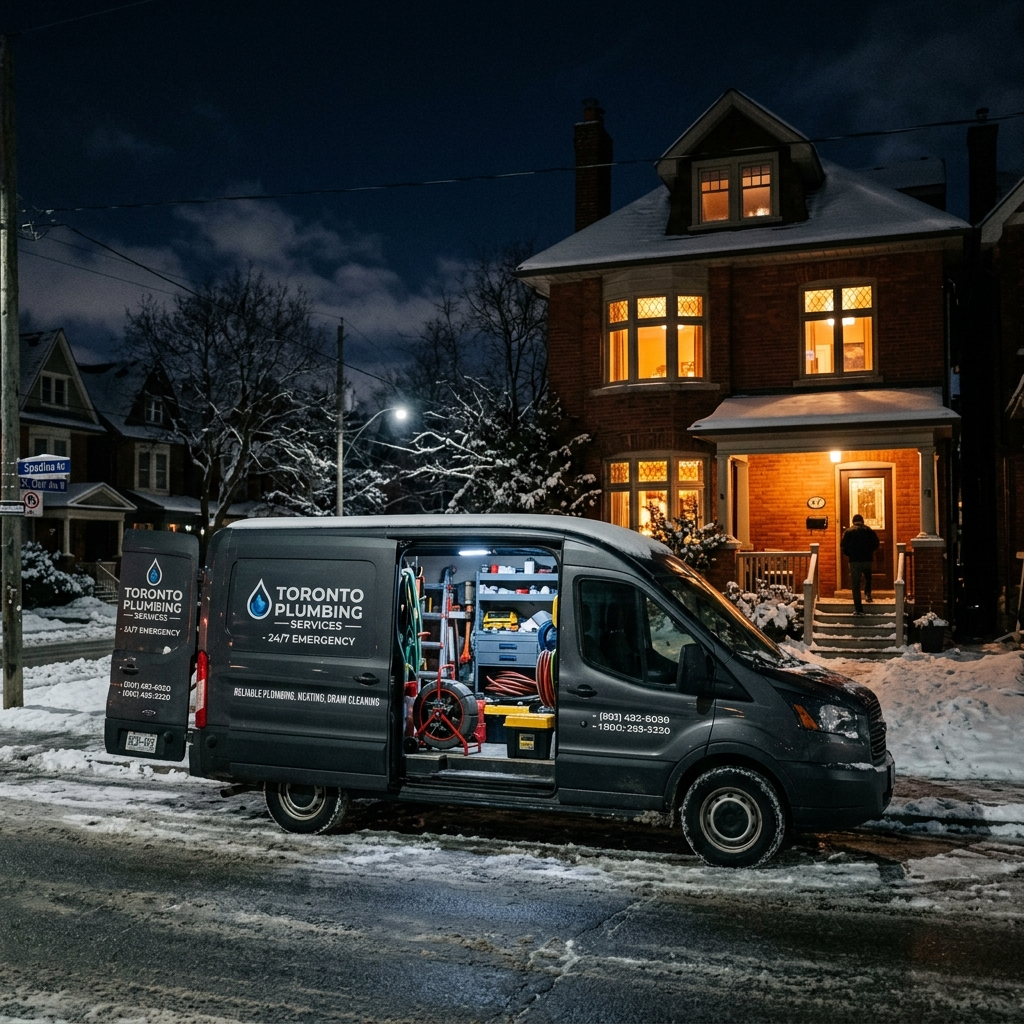
AI for Plumbers in Toronto and the GTA: More Emergency Calls Captured, More Jobs Protected (2026)
Plumbing is one of the most demand-driven trades businesses in the GTA. When someone's basement is flooding at 9 PM or a pipe bursts on a February weekend, they call the first plumber that answers. Not the best one. The one that picks up. This guide covers how Toronto and GTA plumbing companies are using AI to answer every call, capture every emergency, follow up on every estimate, and build the review profile that earns repeat and referral business.
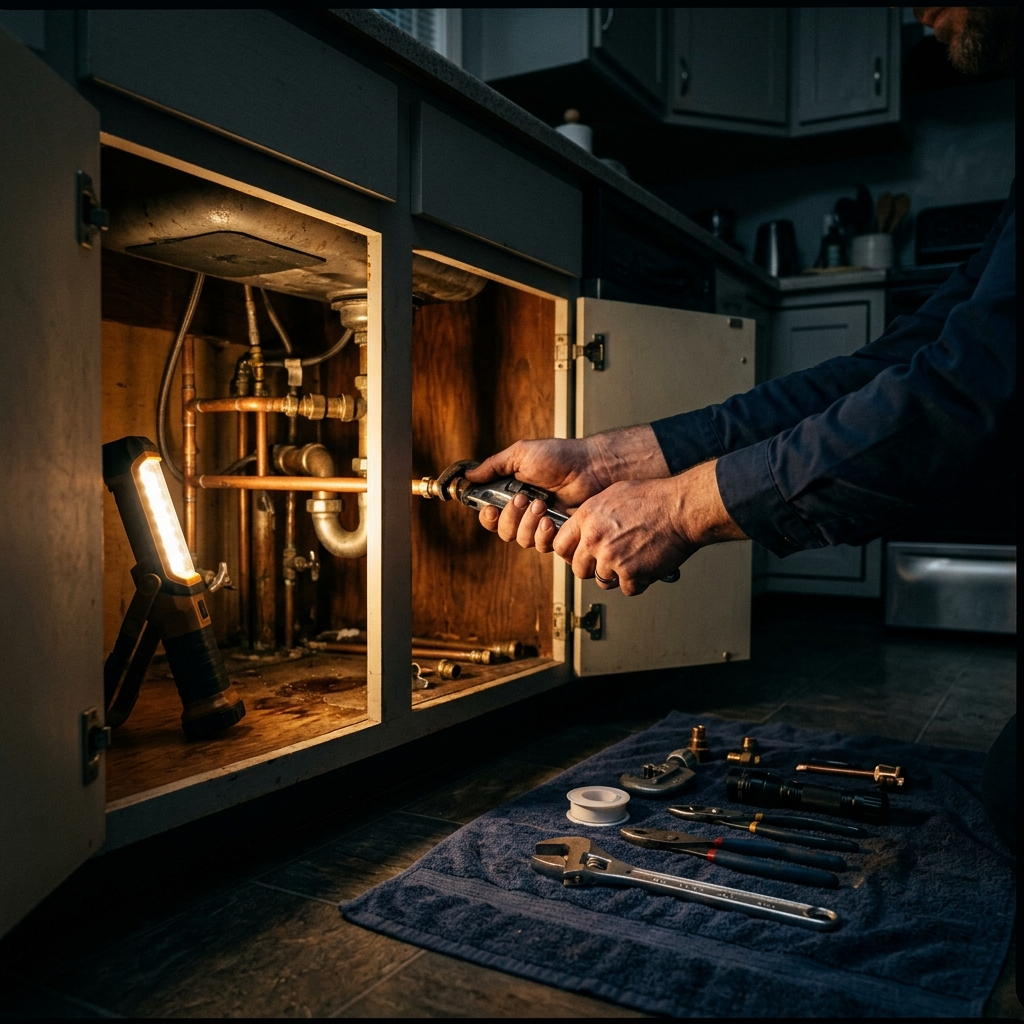
Emergency Plumbing Calls After Hours: How the Best Plumbers Turn Saturday Night Crises Into Loyal Clients
After-hours emergency plumbing calls are the highest-value, highest-margin leads a plumber receives. Most go to voicemail. Here is how the plumbers capturing these calls have built their intake systems.
Calculate the revenue leak.
Stop guessing. See how much demand your business may be losing through missed calls, slow replies, weak booking, review gaps, and follow-up drag, then decide whether Voice AI is the right system path.
Run the calculationPrefer to hear it first?
Call the live AI receptionist and test the conversation.
Call the live AI receptionist anytime. Tell it about plumbing, then hear a short live roleplay based on the calls your front desk actually gets.