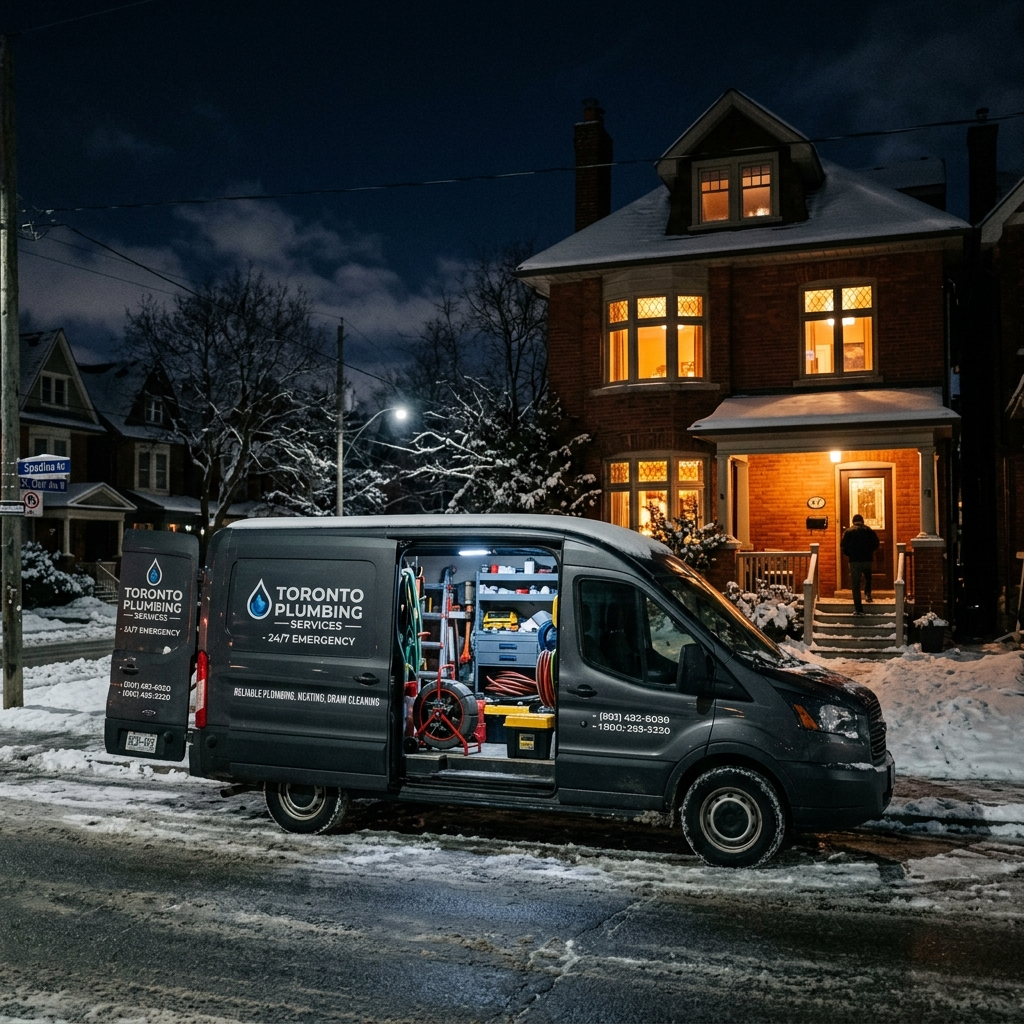
The plumber who answers gets the job. The plumbers who did not answer never find out it was offered.
Treat any number without a nearby source or stated method as a planning assumption, then replace it with your own records.
The Plumbing Emergency Is the Highest-Urgency Call in Any Trade
When a GTA homeowner's basement floods on a Saturday night, they are not shopping. They are panicking. They open Google, search "emergency plumber Toronto," and call the first result. If that company does not answer, they call the second. If the second does not answer either, they call the third.
The plumber who answers gets the job. The plumbers who did not answer never find out it was offered.
This is not a rare scenario for a Toronto plumbing company. It is a weekly occurrence, multiplied across every evening, every weekend, and every holiday period when a call comes in and the phone goes to voicemail because the crew is on a job, the office is closed, or no one is monitoring the line.
The GTA housing stock makes this worse than most Canadian cities. Toronto's pre-war and post-war residential neighbourhoods are dense with aging pipes, outdated drain systems, and plumbing infrastructure that is well past its expected lifespan. Plumbing emergencies in these areas are a near-certainty over the life of ownership, not a possibility. And when they happen, they happen at the worst possible times.
An AI operating system for a GTA plumbing company ensures that every one of those calls is answered, qualified, and booked. Not during business hours only. Every hour of every day.
When GTA Plumbing Calls Actually Come In
Seventy-two percent of plumbing calls in the GTA arrive outside standard 9 to 5 business hours. This is a well-documented pattern in the trades, and it makes intuitive sense.
Homeowners notice a dripping faucet, a slow drain, or a hot water heater that stopped working after they come home from work. A burst pipe or a backed-up sewer happens without regard to business hours. A basement flood triggered by heavy rain in one of the GTA's summer storms is discovered on a weekend morning.
These are the calls that determine whether a plumbing company grows or stays flat. A company that answers from 9 AM to 5 PM Monday through Friday is available for roughly 25 percent of the hours when its most valuable calls arrive. The other 75 percent go to voicemail, to a personal cell phone that the owner is increasingly reluctant to carry, or to a competitor who has solved the after-hours coverage problem.
For a GTA plumbing company missing 12 calls per week across evenings and weekends, at a 45 percent booking rate and $560 average emergency ticket, the annual missed revenue is over $156,000. From missed calls alone, before any follow-up failures or review gaps are counted.
What an AI Intake Layer Does for a Plumbing Emergency Call
The AI receptionist handles an emergency plumbing call differently than it handles a routine service inquiry. The qualification sequence is built specifically for the trade.
When a caller says their basement is flooding or water is actively coming in, the system identifies this as a high-urgency situation immediately. It confirms the address, verifies it is within the service area, and asks one key question: is water actively entering the home right now?
If the answer is yes, the call routes immediately to the on-call technician. The caller's information, address, and emergency description are sent to the technician by text in real time. The caller does not get transferred to a hold queue. They get a human callback from the technician within minutes.
If the situation is urgent but not actively catastrophic, such as a dripping pipe, a hot water tank that is not working, or a slow drain that has become a full blockage, the AI books the next available dispatch slot and sends the homeowner a confirmation with the technician's name and arrival window.
For routine service inquiries, such as a bathroom renovation estimate or a water heater replacement quote, the AI qualifies the job type, collects the key information, and books the estimate visit.
All of this happens in under 90 seconds. The caller never speaks to a voicemail. The job is booked before they have a chance to call the next company.
The GTA Housing Stock and Why It Matters
Toronto's residential plumbing market is shaped by the age and type of housing stock that dominates the city's inner neighbourhoods.
Houses built in the 1920s through 1950s in areas like the Annex, Roncesvalles, East York, and Riverdale are running on original or first-replacement cast iron drains, galvanized steel supply lines, and clay sewer laterals that are well past their service life. Plumbing problems in these homes are frequent, often urgent, and rarely simple.
Post-war bungalows throughout Etobicoke, North York, and Scarborough have similar profiles. The Peel Region suburbs of Mississauga and Brampton have higher proportions of 1970s through 1990s construction, which brings its own plumbing challenges: older copper supply lines, poly-B piping in many cases, and drain systems approaching the end of their effective lifespan.
A GTA plumbing company that understands this housing profile can configure its AI intake qualification to ask housing age and property type as part of the initial inquiry. This information helps dispatch the right technician with the right equipment and sets realistic expectations about job complexity before anyone arrives on site.
It also means the company demonstrates knowledge and professionalism from the first automated interaction, which builds trust before the technician rings the doorbell.
Estimate Follow-Up: Where Most GTA Plumbers Leave Money
Plumbing estimate follow-up is the most consistently neglected revenue recovery opportunity in the trade.
A plumber quotes a bathroom rough-in or a drain replacement. The homeowner says they want to think about it. The plumber moves on to the next job. Three weeks later, the homeowner either found another company or forgot about the project. The estimate is a dead file.
Most GTA plumbing companies send estimates and then make one follow-up call, if any, within the first week. After that, the lead is considered cold and no further action is taken.
An AI follow-up engine runs a structured sequence for every unconverted estimate automatically.
Day one, within 15 minutes of estimate delivery: A message confirming the estimate details and asking if the homeowner has any questions.
Day three: A brief check-in asking whether they have had a chance to review the quote.
Day seven: A value-add message relevant to the project. For a drain replacement, this might be a note about what happens if corroded drain lines are left in place too long. For a water heater replacement, it might reference the energy savings from a new unit versus keeping the old one.
Day 14: A direct question asking if they are ready to schedule.
Day 28: A final follow-up offering a clear path to either proceed or let the company know they went a different direction.
This sequence recovers approximately 20 to 25 percent of estimates that had gone cold without a single manual follow-up call. For a GTA plumbing company sending eight estimates per month that did not immediately convert, at a 22 percent recovery rate and $2,800 average job value, the annual recovery is approximately $59,000.
Building Google Reviews in a Crowded GTA Market
A GTA homeowner searching for a plumber on Google Maps sees review counts prominently. The companies in positions one, two, and three in most Toronto, Mississauga, and Brampton plumbing searches have review counts between 70 and 200. A company with 25 reviews is not in the map pack conversation regardless of how responsive and skilled the team is.
The reputation layer sends a review request after every completed job. The timing is specific: 24 hours after the job closes, when the relief of having the problem solved is still fresh and the homeowner has moved on from the stress of the situation.
The message is short and direct. It thanks the homeowner for choosing the company, references the type of job completed, and includes a single tap to the Google review form. A second message goes out 48 hours later for non-respondents.
At a 9 to 14 percent response rate across completed jobs, a GTA plumbing company completing 50 jobs per month collects four to seven new reviews per month. Over 12 months, a company at 28 reviews reaches 76 to 112 reviews. In most GTA plumbing searches, that accumulation earns a top-three map pack position and holds it through continued velocity.
The map pack position change translates directly to inbound call volume. Moving from position five to position two for "emergency plumber Toronto" adds four to eight organic calls per week. At $560 average ticket and 50 percent booking, that is an additional $58,000 to $116,000 in annual revenue from organic search alone.
The Multilingual Dimension for GTA Plumbing
The language diversity of the GTA is directly relevant to plumbing service businesses. A burst pipe emergency does not care what language the homeowner speaks, and neither should the AI receptionist.
Brampton has a large Punjabi-speaking population. Mississauga and Scarborough have significant Tamil, Mandarin, Cantonese, and Somali-speaking communities. North York and Etobicoke have dense Russian, Portuguese, and Korean-speaking neighbourhoods.
A GTA plumbing company whose AI receptionist handles calls and sends messages in multiple languages reaches a larger share of every service area than a company limited to English-only communication. For emergency calls especially, a homeowner who can describe a flooding basement in their primary language and receive a clear response in the same language converts at higher rates and develops stronger loyalty to the company that served them that way.
What the TSSA and Trade Licensing Context Means for Intake
The Technical Standards and Safety Authority governs licensing for plumbing contractors in Ontario. Licensed master plumbers and journeypersons operate under specific scope-of-work rules that affect which jobs can be dispatched to which technicians.
An AI intake system for a GTA plumbing company should capture the job type clearly enough to allow dispatch to route correctly based on the licensing requirements of the work. A gas line repair requires different qualifications than a drain cleaning. A rough-in for a bathroom addition requires a licensed contractor, while a fixture swap may not.
The qualification questions the AI asks during intake should collect enough information to flag jobs that require specific licensing so that dispatch is never sending the wrong technician to a job requiring a different certification.
This is an operational detail that most generic AI systems do not account for. A system built specifically for the Ontario trades environment handles it correctly by default.
The Full Revenue Recovery Math
For a GTA plumbing company doing $400,000 to $1.2 million in annual revenue, the recoverable value across three sources:
Missed emergency and after-hours calls: 12 per week, 52 weeks, at 45 percent booking and $560 average ticket, equals $156,624 per year.
Unworked estimate recovery: eight estimates per month at 22 percent recovery and $2,800 average job value, equals $59,136 per year.
Review-driven organic growth: moving from map pack position five to position two adds four to eight organic calls per week. At $560 average ticket and 50 percent booking, that is $58,240 to $116,480 per year in new revenue.
Total: $273,000 to $332,000 per year in recoverable or newly earned annual revenue.
For a plumbing company in the middle range of GTA revenue, this represents a 23 to 83 percent increase in top-line revenue from operational improvements alone, without spending more on advertising or adding headcount.
Where The Quiet Protocol Fits
What You Actually Get When You Work With The Quiet Protocol
When a business partners with The Quiet Protocol, we install a connected AI operating system across five layers of their operation. Here is what that looks like in plain terms.
Every call gets answered.An AI voice receptionist picks up every phone call within two seconds, 24 hours a day, seven days a week. It greets the caller as your business, asks the right qualifying questions, and either books the appointment directly into your calendar or routes urgencies to the right person. No more voicemail. No more lost leads after hours.
Every inquiry gets followed up.Whether someone calls, submits a web form, sends an Instagram DM, or emails your general address, the system responds within 60 seconds and starts a structured follow-up sequence if they do not convert immediately. The sequence runs automatically for days or weeks without anyone on your team having to remember to send a message.
Dormant contacts come back.Every business has a database of past clients, lapsed patients, or cold leads that cost money to generate and then went quiet. The system runs re-engagement campaigns to these contacts on a schedule you approve, bringing back people who already trust you without any new ad spend.
Your Google review count climbs every month.The system sends a review request to every client at the right moment after they interact with your business. Not a mass blast. A personal, timed message that earns two to five times more reviews per month than manual requests do. More reviews mean a higher Google Maps position, which means more organic new business.
You see everything in one dashboard.Every call answered, every follow-up sent, every booking made, every review collected. The intelligence layer shows you what is working and where the system is recovering revenue you would otherwise have missed.
The businesses that install this system typically see a measurable improvement in new client capture within the first 30 days and a meaningful increase in organic Google traffic within 90 days as their review profile builds.
There are no long-term lock-in contracts. The system is configured for your specific business, your specific market, and your specific compliance environment. And every implementation starts with a Revenue Leak Diagnostic, a 30-minute diagnostic that quantifies exactly how much revenue your current setup is leaving behind.
The Quiet Protocol is a Toronto-based AI automation agency serving your plumbing company and other service businesses across the Greater Toronto Area, Ontario, Canada, and the United States. Every engagement starts with a [Revenue Leak Diagnostic](/book/audit) that identifies exactly how much revenue your current intake and follow-up setup is leaving behind. The audit is free. The math is specific to your business.
[Book your Revenue Leak Diagnostic](/book/audit) | [See how it works](/services) | [Read client results](/results)
Related reading: [After-Hours Revenue Recovery for Toronto Service Businesses](/blog/toronto-service-business-after-hours-revenue-recovery-ai) | [AI Operating Systems for Brampton and Mississauga](/blog/ai-operating-systems-brampton-mississauga-businesses-2026) | [Results](/results)
The loss estimate is basic business math, not a magic claim.
Revenue-leak examples on this site are built from visible operating inputs: inquiry volume, missed-call or slow-response rate, booking rate, average job or client value, repeat value, and follow-up recovery. The fastest way to make the number real is to run the diagnostic for your closest business type, then compare it against your own call log, CRM, booking calendar, form timestamps, and review activity.
The practical questions behind this decision.
What proof should I look for in my own business?
Look for proof in the places where demand either moved forward or stalled: missed calls, short calls, unbooked forms, slow callbacks, no-show recovery, old leads, and reviews that were never requested. If the business cannot see those moments clearly, the first improvement is better tracking and routing.
How do I know whether this is a marketing problem or an operations problem?
If people are already calling, filling forms, asking for prices, requesting appointments, or comparing reviews, the problem is usually operations. More marketing will not fix a front door that lets warm demand wait. The better move is to capture and route the demand already arriving.
What should happen after the first response?
The first response should create a next step: booked appointment, estimate path, intake handoff, callback window, review request, or reactivation sequence. A response that only says someone will get back to you is not enough when the buyer is comparing several providers at once.
Where does The Quiet Protocol fit?
The Quiet Protocol fits when the business already has demand but too much of it depends on manual attention. We connect AI receptionist coverage, web intake, missed-call recovery, booking logic, follow-up, review requests, and reactivation into one managed front-door system.
Review the trust signals visible before someone decides to call.
The useful question is not only the star rating. It is whether recent proof supports the promise the website makes.

Vikram Roy is the founder of The Quiet Protocol, a Toronto-based systems firm serving service businesses across the Greater Toronto Area, Canada, and the United States. He works directly with professional firms, home service companies, dental practices, clinics, and local businesses to connect websites, customer intake, booking, reviews, follow-up, and practical AI into a clearer digital front door. All content is written from Toronto, Ontario. See the editorial method →
Inspect review recency, response habits, and the public trust signals buyers see before they contact the business.
See how the capability in this article fits into a complete customer journey.
PlumbingSee the same decision through the language, buyer behavior, and operating reality of this industry.
Client Results & ProofInspect the starting condition, installation, measurement window, and outcome behind real client work.

How to Compare AI Automation Agencies in Toronto and the GTA
A buyer-led comparison of discovery, workflow scope, evidence, AI governance, handoffs, ownership, support, and acceptance testing for Toronto service businesses.

Phoenix Plumbers Are Losing Emergency Calls During the Summer Monsoon Window
A plain-language guide for plumbing company owners who need faster response, cleaner booking, better follow-up, and a front door that keeps more high-intent demand from drifting to competitors.
Emergency Plumbing Calls After Hours: How the Best Plumbers Turn Saturday Night Crises Into Loyal Clients
After-hours emergency plumbing calls are the highest-value, highest-margin leads a plumber receives. Most go to voicemail. Here is how the plumbers capturing these calls have built their intake systems.