

Between 3 PM and 7 PM, the director may be managing current students, parents, tutors, room assignments, assessments, and schedule changes.
Treat any number without a nearby source or stated method as a planning assumption, then replace it with your own records.
Tutoring centers do not lose the September rush because parents are not interested.
They lose it because parents call at the exact moment the center is hardest to reach.
The school day ends.
Students arrive.
Tutors check in.
Parents ask questions at the desk.
Schedules change.
Someone is late.
Someone forgot their materials.
And the phone starts ringing.
That is the back-to-school front-door problem.
Demand arrives when the operation is already at its busiest.
If the call goes to voicemail, the parent does not always wait.
They call the next tutoring center.
Parent Anxiety Has a Short Window
Tutoring inquiries are emotional.
A parent is not just buying an hour of instruction.
They are reacting to fear.
Their child is falling behind.
The first progress report was worse than expected.
The SAT is closer than it felt in June.
The teacher suggested extra support.
The parent feels late.
That anxiety creates urgency.
The parent wants to hear:
Yes, we can help.
Yes, we understand this subject.
Yes, there is a next step.
Yes, someone will match your child properly.
If the center responds the next day, the parent may already be booked elsewhere.
The lead did not go cold because education stopped mattering.
It went cold because anxiety found another outlet.
The Peak-Hour Collision
Tutoring has a unique intake problem.
The best enrollment calls often happen after school.
That is also when the center is full.
Between 3 PM and 7 PM, the director may be managing current students, parents, tutors, room assignments, assessments, and schedule changes.
This is not a lazy front desk problem.
It is a collision.
The center is delivering service and selling service at the same time.
When one person has to do both, something slips.
If they answer the phone, the in-center experience suffers.
If they protect the students in the building, new inquiries go to voicemail.
That is the operational leak AI intake can solve.
What AI Should Capture
AI intake for tutoring should not diagnose the student.
It should not promise outcomes.
It should not replace the director's judgment.
It should collect the information needed to book the right consultation.
That includes:
- Student name.
- Grade level.
- Subject or test.
- School year timing.
- Primary concern.
- Current performance if the parent knows it.
- Availability.
- Location or online preference.
- Urgency.
- Parent contact information.
- Whether an assessment is needed.
This gives the director context before the human conversation.
The parent feels heard.
The center avoids a cold callback.
Subject Tutoring vs Test Prep
These are different intake paths.
Subject tutoring calls usually start with a pain point.
Math grade slipping.
Reading confidence.
Chemistry confusion.
Homework battles.
The intake should ask grade, subject, current issue, schedule, and whether the parent wants ongoing support or short-term help.
Test prep calls are more deadline-driven.
SAT date.
ACT date.
Target score.
Diagnostic test status.
College application timeline.
Group class or one-on-one preference.
The AI should route these differently.
A parent calling about SAT prep should not receive the same intake as a parent calling about fourth-grade reading.
Specificity creates confidence.
Three Parent Scenarios
The Grade-Slip Parent
This parent calls after seeing the first quiz, report card, or teacher note.
They may not know exactly what their child needs.
They know something is wrong.
The intake should slow them down, capture the subject and grade, and book a consultation or assessment.
The Test-Date Parent
This parent has a deadline.
SAT, ACT, SSAT, AP exam, entrance exam, or final exam.
They need to know whether there is enough time to improve and what the first step is.
The system should collect test date, prior score if available, target, and diagnostic status.
The Enrichment Parent
This parent is not panicked.
They may be looking for advanced math, writing, coding, or enrichment.
They need fit and schedule clarity.
They may not require the same urgent response, but they still should not disappear into voicemail.
Different parents need different intake paths.
That is why a generic answering service often underperforms.
The Placement Matching Layer
The most valuable intake output is not just a phone number.
It is a match-ready brief.
The director should know:
Which subject.
Which grade.
Which curriculum or test.
What the parent is worried about.
What schedule windows work.
Whether the student needs an assessment.
Whether the family prefers online or in-person.
Whether the parent is urgent or planning ahead.
With that information, the director can match a tutor faster and speak with more authority.
Without it, the consultation starts cold.
That is where many centers waste time.
The first human call becomes data gathering instead of enrollment guidance.
AI should remove that drag.
The Consult Is the Product
The first goal is usually not to sell a package on the first call.
The first goal is to book a consult, assessment, diagnostic, or placement conversation.
That is the next step.
A good AI intake system should say, in effect:
"We have enough information to get you to the right person."
Then it should offer times.
Not:
"Someone will call you."
That keeps the parent in uncertainty.
The parent should leave the first interaction with a calendar commitment.
That is how the center keeps the inquiry from drifting.
The Revenue Leak
Tutoring businesses often underestimate missed-call cost because each first session may look modest.
But a student can stay for months.
A test prep enrollment may include diagnostic, sessions, materials, and referrals.
A family may enroll siblings.
Use conservative math first.
Missed inquiries x qualified percentage x consult booking rate x first-month value.
If the center misses 30 inquiries during the rush month.
Twenty are real prospective families.
Half would have booked a consult with a fast response.
First-month value is $400.
20 x 50% x $400 = $4,000 in first-month revenue.
That does not include multi-month retention.
It does not include siblings.
It does not include test prep packages.
The conservative number is enough to justify attention.
The Follow-Up Sequence
Parents often need a small amount of follow-up, but it has to be useful.
A good sequence might look like this:
Immediate confirmation of the consult or diagnostic.
A reminder the day before.
A short preparation note.
A same-day follow-up if the parent misses the consult.
A program summary after the consultation.
A gentle check-in if the parent has not enrolled.
This should not feel like a marketing drip.
It should feel like support through a decision.
The parent is often juggling school emails, work, activities, and family logistics.
Good follow-up keeps the path clear without making them feel chased.
Another Revenue Example
Consider a test prep center during August and September.
It receives 80 inquiries tied to SAT or ACT prep.
Twenty are missed, delayed, or handled without booking a diagnostic.
Half of those are serious families.
If five would have enrolled in a $1,200 test prep package, the center just leaked $6,000 in one seasonal window.
That is conservative.
It does not include siblings.
It does not include college essay support.
It does not include future tutoring.
Seasonal education demand is short-lived.
If the center misses the window, it cannot simply recover the same parent three months later.
The test date moved.
The decision passed.
The student enrolled elsewhere.
The Director Burnout Problem
The director's job is already fragmented.
They manage parents.
They manage tutors.
They manage students.
They sell programs.
They solve operational problems.
They protect the brand.
Then peak-season calls interrupt everything.
This creates context switching.
The director is never fully with the student in front of them or the parent on the phone.
AI intake helps by moving the first capture layer out of the director's head.
The director still handles the consult.
But they enter with notes, scheduled time, and a calmer parent.
That is a better use of human attention.
Multi-Location Centers Have a Consistency Problem
The issue gets larger when the business has more than one location.
One center director may be excellent on the phone.
Another may be overwhelmed.
One location may book every parent into a diagnostic.
Another may simply take messages.
One person may ask about test dates.
Another forgets.
This creates uneven enrollment performance across the same brand.
AI intake can standardize the first layer.
Every parent gets asked the core questions.
Every inquiry is categorized.
Every location receives structured notes.
Every qualified parent gets a next step.
The human directors still matter.
But the brand no longer depends on every location having the same front-desk talent during the busiest hours of the day.
The Seasonal Calendar
Tutoring demand has predictable spikes.
Back-to-school.
First progress reports.
Parent-teacher conferences.
Midterms.
Finals.
SAT and ACT registration deadlines.
College application season.
Summer slide concerns.
Exam retake windows.
The intake system should be updated around those seasons.
In September, the script may focus on subject support and schedule matching.
In winter, it may focus on midterms and recovery plans.
In spring, it may focus on finals and test prep.
In summer, it may focus on enrichment, catch-up, and readiness.
Static intake misses seasonal intent.
A good system adjusts.
Prepare Before the Rush
The worst time to design intake is the week parents start calling.
Centers should prepare before the surge.
Update subject categories.
Confirm tutor availability.
Create diagnostic slots.
Write test-prep intake questions.
Define consult windows.
Prepare parent follow-up messages.
Decide which calls require the director.
Decide which can be booked automatically.
If this is done in August, September feels controlled.
If it is done after the phones start ringing, the center is already reacting.
The back-to-school rush is not a surprise.
Treat it like a launch.
The centers that do this calmly usually capture more of the same local demand without adding more stress to the lobby.
That matters when the rush lasts for weeks.
It also gives staff a calmer script. Instead of deciding in the moment what to ask every parent, the center has a prepared path for subject support, test prep, diagnostics, and placement calls.
It also protects the director's judgment.
The Revenue Leak Diagnostic for Tutoring Centers
Pull 30 days around the rush period.
Track:
Calls by hour.
Missed calls.
Voicemails.
Forms.
Response time.
Consults booked.
Assessments booked.
Subject or test category.
Student grade.
No-shows.
Enrollments.
Then look at the 3 PM to 7 PM window separately.
That is usually where the leak lives.
Also look at evenings after parents are home.
If parents research at 9 PM and your center responds the next day, you may be losing the decision window.
A 30-Day Fix
Week 1: Define Intake Categories
Subject tutoring.
SAT or ACT prep.
Elementary support.
High school math or science.
Reading and writing.
Enrichment.
Assessment request.
Each category needs its own questions.
Week 2: Add Overflow and After-Hours Capture
Start with the highest-leak windows.
After school.
Evenings.
Weekend inquiry periods.
The AI should answer when the director cannot.
Week 3: Book the Right Next Step
Consultation.
Diagnostic.
Assessment.
Placement call.
Trial session.
The system should not simply take a message.
Week 4: Review Consult Quality
Were parents better prepared?
Did directors have enough context?
Did more inquiries book?
Did fewer calls interrupt the lobby?
Did enrollment improve?
Tune from there.
What Not to Automate
Do not let AI diagnose learning differences.
Do not let AI promise grade improvement.
Do not let AI choose a tutor for complex cases without human review.
Do not let AI discuss sensitive educational concerns beyond intake.
Do not let AI replace the parent consultation when the family needs judgment.
The safe line is simple.
AI collects and routes.
The education team evaluates and recommends.
That boundary protects the brand and the family.
What Good Intake Sounds Like
The parent should hear calm specificity.
Not generic reassurance.
Good:
"We work with a lot of ninth-grade students who hit a wall in algebra after the first few weeks. The best next step is a short placement call so we can understand where the gap is and match the right tutor."
Bad:
"Someone will call you back."
Good:
"If your daughter is taking the November SAT, we would start with a diagnostic so we can see where the points are being lost. I can reserve a diagnostic slot this Saturday or book a consultation first."
Bad:
"Please check our website for programs."
Parents are looking for the first sign that the center has seen this before.
The intake layer should provide that sign.
Can AI handle tutoring center calls?
AI can handle first-layer intake: grade level, subject, test type, parent concern, availability, and consult booking. It should not diagnose learning issues or promise educational outcomes.
When do tutoring centers miss the most leads?
Often during after-school peak hours, when the center is full and parents are calling at the same time. Evening form fills and calls can also leak if response waits until morning.
Should AI book tutoring sessions directly?
Usually AI should book the consult, assessment, diagnostic, or placement conversation first. Direct session booking only makes sense when the center has clear matching rules.
How does AI help test prep centers?
It can capture test date, target score, diagnostic status, student grade, availability, and program interest, then book a diagnostic or advisor consult.
Will parents dislike AI?
Parents dislike being ignored more than they dislike automation. If the AI is calm, specific, and gets them to the right next step, it can reduce anxiety.
The Bottom Line
The September rush is predictable.
That means the intake problem is preventable.
Tutoring and test prep centers should not rely on one overwhelmed director to protect every parent inquiry during the busiest hours of the day.
AI intake can capture the first layer, book the right next step, and let the director focus on students and qualified consultations.
The parent gets clarity.
The center protects enrollment.
The director gets breathing room.
That is the real win.
*If your tutoring center loses calls during the after-school rush, run a Revenue Leak Diagnostic by hour and subject category. The leak is usually visible within one week of call logs.*
The loss estimate is basic business math, not a magic claim.
Revenue-leak examples on this site are built from visible operating inputs: inquiry volume, missed-call or slow-response rate, booking rate, average job or client value, repeat value, and follow-up recovery. The fastest way to make the number real is to run the diagnostic for your closest business type, then compare it against your own call log, CRM, booking calendar, form timestamps, and review activity.
Decide what the AI must handle before you choose the software.
A useful intake system begins with the caller journey, the rules, and the human handoff, not a long feature list.
See how qualification, booking, reminders, documents, and team handoff can become one clearer client journey.
See how the capability in this article fits into a complete customer journey.
Private SchoolsSee the same decision through the language, buyer behavior, and operating reality of this industry.
Client Results & ProofInspect the starting condition, installation, measurement window, and outcome behind real client work.

Why Service Businesses Lose Inbound Leads Before the Phone Rings
It is not a traffic problem. Many service businesses lose revenue because the front door breaks before the buyer reaches a real conversation.
The Anti-Snooze Protocol: Reviving Dead CRM Leads with Voice AI
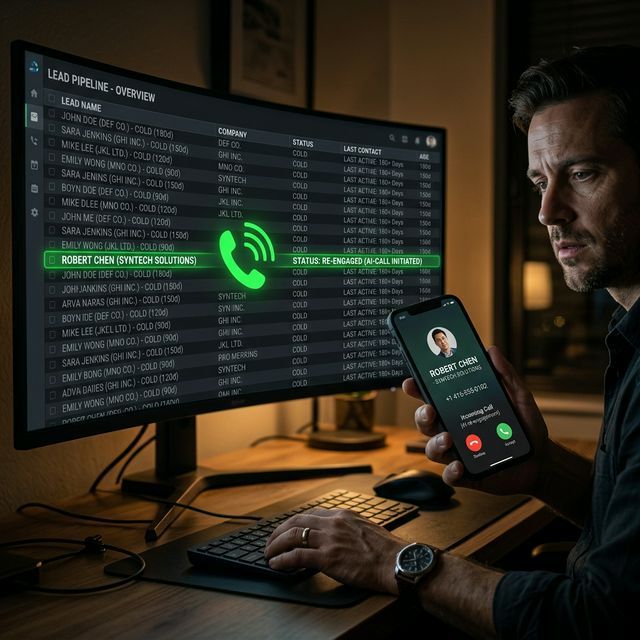
Old CRM leads are often almost-revenue, not dead data. Learn how service businesses can revive stale leads with a practical voice AI follow-up protocol.
Why So Many Service Business Calls Go Unanswered
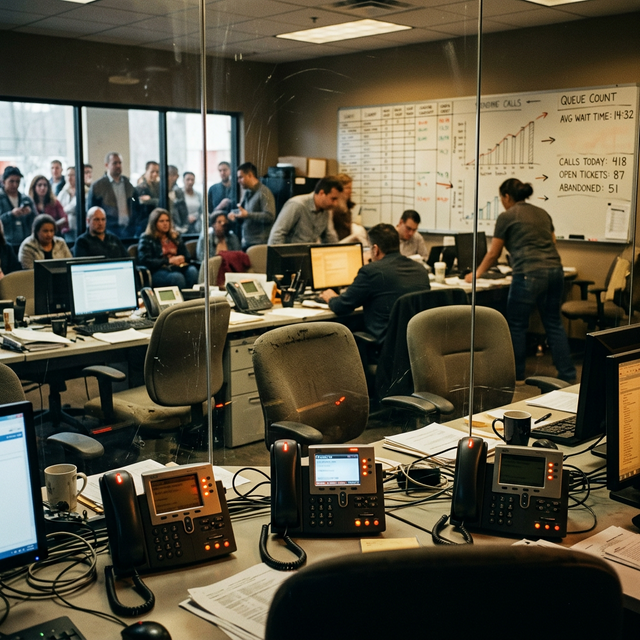
Many service business calls never reach a real next step. Here are the five silent signals that predict missed calls, lost bookings, and invisible revenue leaks.

Founder Burnout: Automating Intake Before Your Operations Break
Founder burnout often starts when every new lead, callback, booking, and follow-up depends on the owner. Learn how intake automation protects revenue before operations break.
Calculate the revenue leak.
Stop guessing. See how much demand your business may be losing through missed calls, slow replies, weak booking, review gaps, and follow-up drag, then decide whether Automation Systems is the right system path.
Run the calculationPrefer to hear it first?
Call the live AI receptionist and test the conversation.
Call the live AI receptionist anytime. Tell it about private schools, then hear a short live roleplay based on the calls your front desk actually gets.