
The founder becomes the front desk, sales desk, triage desk, scheduling desk, and memory system.
Treat any number without a nearby source or stated method as a planning assumption, then replace it with your own records.
Founder burnout in a service business rarely starts with one dramatic collapse.
It starts with a phone call during dinner.
Then a callback on Sunday.
Then a quote follow-up at 10:30 PM.
Then a customer asking a question while the founder is driving.
Then a new lead arriving while the founder is already solving another problem.
At first, it feels like commitment.
This is what owners do.
They answer.
They chase.
They remember.
They rescue.
They close.
But over time, the business learns a dangerous habit.
Every important intake moment routes through the founder.
That is not hustle anymore.
That is a structural risk.
The founder becomes the front desk, sales desk, triage desk, scheduling desk, and memory system.
When the founder is tired, the business slows down.
When the founder is unreachable, the front door closes.
The Owner Is Often the Hidden CRM
Small service businesses often run on founder memory longer than anyone wants to admit.
The owner knows which leads are serious.
The owner remembers who called twice.
The owner knows which customer needs a softer conversation.
The owner knows which quote is likely to close.
The owner knows which job should be prioritized.
The owner knows which technician can handle the request.
That knowledge is valuable.
It is also fragile when it only lives in one person's head.
If the founder gets busy, sick, distracted, or exhausted, the system does not have a backup.
Calls get missed.
Forms sit unanswered.
Quotes go stale.
Follow-ups become random.
Appointments stay unconfirmed.
Customers wait because nobody else has the full context.
This is the quiet path to burnout.
The founder is not only doing too much work.
They are holding too much operational memory.
Intake Is Where Burnout Shows Up First
Burnout does not only show up as fatigue.
It shows up in intake quality.
The founder starts delaying callbacks because every call feels like another decision.
They stop following up on older leads because new fires feel louder.
They let voicemail pile up because there is no clean block of time to handle it.
They answer calls while annoyed, rushed, or half-present.
They forget to ask the same qualifying questions every time.
They accept bad-fit jobs because they are too tired to filter properly.
They miss good-fit jobs because they are already overloaded.
The business may still look busy from the outside.
Inside, the owner is becoming the constraint.
That is the moment to fix intake.
Not after the owner breaks.
Before.
The Founder Bottleneck Has a Cost
Imagine a service company where the founder personally handles most inbound leads.
The business gets 45 new inquiries a week across phone, web form, Google Business Profile, referrals, and social messages.
The founder responds to most of them.
But 10 are delayed.
Five are missed entirely.
Five receive weak follow-up.
If only five of those mishandled opportunities could have become jobs worth $800 each, the weekly revenue leak is $4,000.
That is more than $16,000 a month.
The larger cost is not only the lost jobs.
It is the owner's nervous system.
The founder starts believing they can never step away.
Every dinner could become a sales call.
Every weekend could become a callback day.
Every vacation creates guilt.
Every missed call feels personal.
That is not a scalable business.
It is a business held together by one person's adrenaline.
More Leads Can Make Burnout Worse
This is the part marketing teams often miss.
A founder with weak intake does not always need more leads.
More leads can increase the pressure on the same overloaded person.
More ads create more calls.
More SEO creates more forms.
More referrals create more follow-ups.
More visibility creates more interruptions.
If there is no intake system, growth becomes punishment.
The owner asks for more demand because revenue needs to grow.
The demand arrives.
The owner has no more capacity.
The business starts losing opportunities in a louder, more expensive way.
This is why intake automation should come before another big push into paid ads or content volume.
The front door has to be able to receive the traffic.
What Intake Automation Should Remove From the Founder
Good automation does not remove the founder from judgment.
It removes the founder from repetitive first-contact work.
The system should be able to:
- Answer common inbound calls.
- Capture name, number, service, location, urgency, and timing.
- Separate new leads from existing customers.
- Ask the first qualifying questions.
- Book simple consults or appointments.
- Send missed-call text follow-ups.
- Summarize calls into the CRM.
- Trigger reminders for unclosed quotes.
- Route urgent or high-value calls to the right person.
- Tag bad-fit inquiries so the team learns from them.
That gives the founder better information with fewer interruptions.
Instead of answering every call cold, the founder can review structured briefs.
Instead of remembering every follow-up manually, the system can surface the next action.
Instead of being the intake system, the founder becomes the decision-maker again.
The First Automation Is Usually the Phone
For many service businesses, the phone is the highest-pressure channel.
It interrupts.
It demands immediate attention.
It arrives during jobs, meetings, family time, and driving.
It creates guilt when missed.
It creates stress when answered badly.
That is why the phone is often the best first place to automate.
Not because phone calls are unimportant.
Because they are too important to depend on founder availability.
A voice AI intake layer can answer when the founder cannot.
It can collect the details.
It can route emergencies.
It can book approved appointment types.
It can text the caller a confirmation.
It can send the founder a summary instead of forcing the founder into every first conversation.
That changes the emotional load of the business.
The phone stops feeling like a threat every hour.
It becomes a managed channel.
Founder Time Should Be Used For Leverage
The founder should still be involved in high-value moments.
Closing large opportunities.
Handling sensitive complaints.
Improving service quality.
Hiring.
Training.
Partnerships.
Pricing.
Escalations.
Those are leverage points.
But answering every routine "Do you service my area?" call is not leverage.
Manually chasing every stale lead is not leverage.
Typing the same follow-up text ten times is not leverage.
Remembering who needs a callback is not leverage.
That work matters, but it should not require founder attention every time.
The goal is not to make the business impersonal.
The goal is to reserve founder attention for moments where it actually changes the outcome.
Why Delegation Fails Without a System
Many founders try to solve burnout by hiring someone to help.
That can work.
But hiring alone does not fix intake if the process still lives in the founder's head.
The new person asks:
"What should I say when someone asks for pricing?"
"Which jobs do we avoid?"
"Who gets emergency calls?"
"When can I book directly?"
"What should I do if the customer is not ready?"
"How fast should I follow up?"
If every answer requires the founder, the founder is still the system.
They have not delegated.
They have created another person who needs constant direction.
That is why automation and documentation belong together.
The business needs a written intake path before it can expect staff or AI to handle the front door consistently.
The questions do not need to be complicated.
They need to be explicit.
Which services do we offer?
Which areas do we serve?
Which jobs are urgent?
Which jobs are not a fit?
Which calls can be booked?
Which calls must escalate?
Which follow-up message goes out after a quote?
Once those answers exist outside the founder's head, delegation becomes less exhausting.
Staff can work from the same rules.
AI can work from the same rules.
The founder can improve the system instead of personally carrying every exception.
The Founder Should See The Day Differently
A good intake system changes the founder's day.
Before automation, the founder's day is reactive.
The phone rings.
They answer.
A form arrives.
They reply.
A quote needs follow-up.
They remember it while doing something else.
A customer asks for an update.
They dig through texts.
The day is broken into fragments.
After automation, the founder should see cleaner batches of work.
Morning summary.
New qualified leads.
Urgent escalations.
Quotes that need human attention.
Missed calls already recovered.
Appointments booked.
Bad-fit inquiries tagged.
That is a different operating rhythm.
The founder is still involved.
But instead of being interrupted by every raw input, they review organized work.
That difference matters.
Burnout is not only caused by too many hours.
It is caused by too many context switches with no reliable system underneath them.
The Burnout Audit
Run this audit before deciding what to automate.
For seven days, track every intake interruption.
Write down:
- Calls answered by the founder.
- Calls missed by the founder.
- Calls taken outside business hours.
- Forms answered manually.
- Quotes followed up manually.
- Customers who needed status updates.
- Leads that required basic qualification.
- Times the founder was interrupted during focused work.
- Times the founder handled something a trained system could have handled.
Then mark each item:
Founder judgment required.
Trained staff could handle.
Automation could handle.
Most owners see the problem quickly.
The founder is spending a large part of the week on first-contact administration.
That work feels small in the moment.
In aggregate, it drains the business.
It also hides from the P&L. The business may show revenue growth while the founder is quietly paying for that growth with nights, weekends, and constant phone awareness. That is why the audit should count interruptions, not only missed revenue.
A 30-Day Intake Reset
Week one: document the current intake path.
Where do calls go?
Where do forms go?
Who answers?
What happens after hours?
What happens when nobody answers?
Week two: write the standard qualification path.
What does every lead need to provide?
Which jobs are good fit?
Which jobs should be declined?
Which calls should escalate?
Which appointments can be booked directly?
Week three: install automation around the highest-volume channel.
For most service businesses, start with phone and missed-call recovery.
Week four: measure owner interruptions, response time, booked calls, missed calls, and follow-up completion.
This is not about building a perfect system.
It is about proving the founder no longer has to personally catch every ball.
What Not To Automate
Do not automate your way out of leadership.
Some calls need the founder.
Some customers deserve a human conversation.
Some complaints require judgment.
Some large opportunities need senior attention.
Some industries have regulatory or ethical limits.
The mistake is not keeping the founder involved.
The mistake is making the founder the default handler for everything.
Automation should filter, prepare, route, and remind.
It should make human work better.
It should not hide difficult conversations.
It should not promise what the business cannot deliver.
It should not create a cold wall between the company and the people trying to hire it.
The Emotional Benefit Is Real
Owners often talk about automation in terms of efficiency.
Hours saved.
Calls answered.
Leads recovered.
Revenue protected.
Those are important.
But the emotional benefit matters too.
The founder can go into a meeting without wondering what calls are being missed.
They can spend time with family without checking the phone every few minutes.
They can sleep without mentally reviewing follow-ups.
They can take a vacation without the business going silent for new buyers.
They can hire and train from a real process instead of asking staff to copy whatever is in the founder's head.
That is not soft.
That is operational maturity.
A business becomes more valuable when it can keep its front door open without exhausting the person who built it.
Bottom Line
Founder burnout is not only a personal problem.
It is often a systems problem.
If every inquiry, callback, booking, quote, reminder, and exception depends on the founder, the business is fragile.
The owner may be talented.
The demand may be real.
The service may be strong.
But the front door cannot depend on one tired person forever.
Automating intake before operations break gives the business room to breathe.
It protects leads.
It protects customers.
It protects the founder's attention.
Most importantly, it starts turning the company from a founder-dependent job into a business with an actual operating system.
*If you are the only person who truly knows what happened to every lead this week, start with a Revenue Leak Diagnostic. Burnout is often visible in the call log before it becomes visible on the founder's face.*
The loss estimate is basic business math, not a magic claim.
Revenue-leak examples on this site are built from visible operating inputs: inquiry volume, missed-call or slow-response rate, booking rate, average job or client value, repeat value, and follow-up recovery. The fastest way to make the number real is to run the diagnostic for your closest business type, then compare it against your own call log, CRM, booking calendar, form timestamps, and review activity.
The practical questions behind this decision.
Is intake automation only for larger service businesses?
No. Smaller teams often need it sooner because one or two people carry too much of the front-door workload. The goal is not complexity. The goal is basic coverage, qualification, and follow-up. Even a simple first layer can reduce the number of times the owner has to drop everything to protect a lead.
Will automation make the business feel less personal?
It can if implemented badly. Good intake automation captures information quickly, routes correctly, and gets humans involved when judgment matters. The buyer should feel handled, not blocked.
What should a founder automate first?
Start with the channel causing the most interruptions or missed opportunities. For many service businesses, that is inbound phone calls and missed-call recovery.
How do I know burnout is connected to intake?
Look at how often the founder is interrupted by calls, forms, scheduling questions, quote follow-ups, and basic qualification. If the founder is the default path for every lead, intake is part of the burnout problem.
Should the founder stop taking sales calls?
Not entirely. The founder should stay close to high-value sales conversations and market feedback. The goal is to stop making the founder responsible for every first touch and every routine follow-up.
Decide what the firm needs to know before the first useful conversation.
A useful intake path protects the buyer's time and the firm's capacity by connecting fit, booking, preparation, reminders, and human handoff.

Vikram Roy is the founder of The Quiet Protocol, a Toronto-based systems firm serving service businesses across the Greater Toronto Area, Canada, and the United States. He works directly with professional firms, home service companies, dental practices, clinics, and local businesses to connect websites, customer intake, booking, reviews, follow-up, and practical AI into a clearer digital front door. All content is written from Toronto, Ontario. See the editorial method →
See how qualification, booking, reminders, documents, and team handoff can become one clearer client journey.
See how the capability in this article fits into a complete customer journey.
Legal, Financial & AdvisorySee the same decision through the language, buyer behavior, and operating reality of this industry.
Client Results & ProofInspect the starting condition, installation, measurement window, and outcome behind real client work.

Why Service Businesses Lose Inbound Leads Before the Phone Rings
It is not a traffic problem. Many service businesses lose revenue because the front door breaks before the buyer reaches a real conversation.

The Revenue Infrastructure Stack: What $10M Service Companies Do Differently at the Front Door
The difference between a $2M and $10M service business is often front-door infrastructure: call capture, missed-call recovery, intake, omnichannel response, reactivation, and measurement.
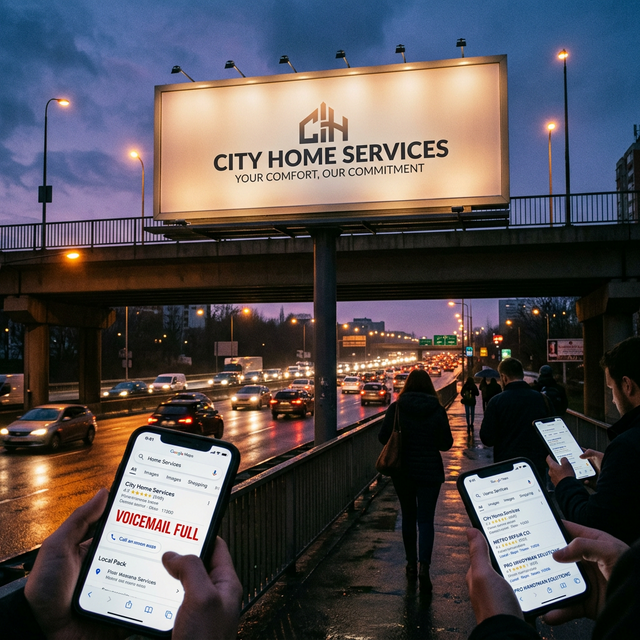
Why 'Brand Awareness' is a Trap for 7-Figure Local Service Businesses
Brand awareness without intake infrastructure can send expensive demand to competitors. Learn why local service businesses should fix calls, forms, and booking before scaling awareness spend.

Stop Buying Local Service Leads: Fix Your Intake Infrastructure Before You Buy Another Ad
Bad lead quality is not always the problem. Many service businesses lose paid leads because callbacks are slow, after-hours intake is weak, and follow-up is inconsistent.