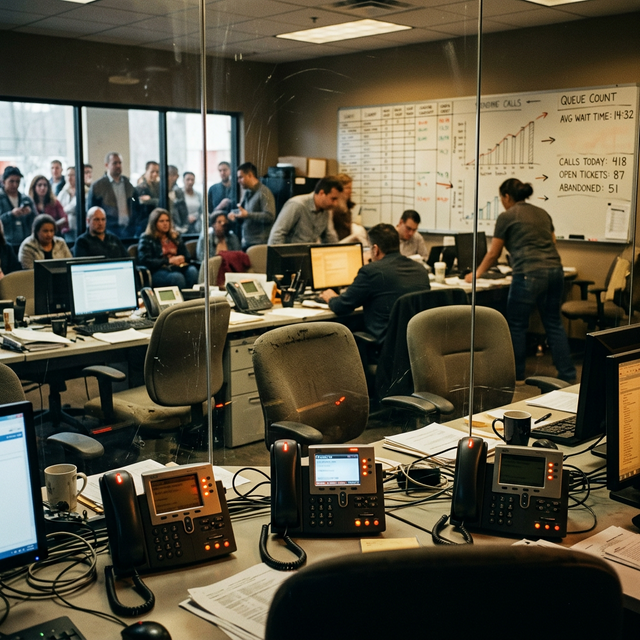
A service business can have a good reputation, a decent website, steady referrals, solid technicians, and a full calendar, while still letting a serious share of inbound calls disappear at the front door.
Treat any number without a nearby source or stated method as a planning assumption, then replace it with your own records.
The frightening part of unanswered calls is not the number.
It is how normal the number feels once you inspect the business.
A service business can have a good reputation, a decent website, steady referrals, solid technicians, and a full calendar, while still letting a serious share of inbound calls disappear at the front door.
That is why the 62 percent benchmark gets attention.
It gives language to something owners already feel but rarely measure: the business is busier than ever, the phone seems active, the team is stretched, and somehow there are still leads slipping away before anyone can name them.
The mistake is treating unanswered calls like a random bad day.
They are usually not random.
They are predicted by a set of silent signals inside the business. You can spot them before the revenue leak becomes obvious. You can hear them in the phone tree. You can see them in the call log. You can feel them when you call your own business after hours and realize the experience is weaker than you expected.
This post is about those signals.
Not because every service business has the exact same missed-call rate. They do not.
But because the pattern is consistent: when these five signals are present, calls get missed, callers move on, and the business underestimates how much demand it already paid to create.
The Real Meaning of an Unanswered Call
An unanswered call is not only a phone call that nobody picked up.
For a service business, an unanswered call can mean:
- A call that rang out before anyone could answer.
- A call that reached voicemail and created a decision point for the caller.
- A call that hit a confusing phone menu.
- A call that got placed on hold too early.
- A call that connected to someone who could not help.
- A call that arrived after hours with no useful next step.
- A call that was technically logged but never became a real conversation.
That last part matters.
Many phone systems count a call as answered if the system picked up. The caller may have heard a greeting, pressed a number, waited twelve seconds, and hung up. Internally, the business may not treat that as a missed call.
The buyer does.
From the buyer's side, the question is simple: did this business help me move forward?
If the answer is no, the call was functionally unanswered.
This is why missed-call analysis has to be stricter than phone-system reporting. The business does not need a prettier dashboard. It needs to know how many buyers reached a real next step before they became someone else's customer.
Silent Signal 1: Your Hours Do Not Match Caller Behavior
Most service businesses set phone coverage around staff convenience.
The buyer does not operate on that schedule.
Homeowners call before work, at lunch, after dinner, and on weekends. Patients call when the pain or motivation becomes strong enough to act. Legal prospects call after a hard conversation, not when the firm calendar is tidy. Property owners call restoration companies when the leak, smell, backup, or storm damage is happening.
This creates the first silent signal:
Your office is open when your team is available, but your buyers are active when their problem becomes impossible to ignore.
That mismatch is not moral failure. It is operating design.
A plumbing company may be staffed from 8 AM to 5 PM, but a meaningful share of its highest-intent calls happen after 5 PM. An HVAC company may have office coverage Monday through Friday, but no-heat and no-cooling urgency does not respect the weekend. A med spa may answer beautifully during clinic hours while losing motivated consultation requests after the client gets home from work.
If you only look at booked jobs, this leak stays hidden.
You need to look at arrival time.
Pull your last 30 to 90 days of calls. Sort by hour and day. Then compare call arrival against actual response coverage.
If a meaningful share of calls arrives outside staffed hours, your business does not have a demand problem. It has a timing problem.
The fix is not always hiring another receptionist. Sometimes the right fix is after-hours AI intake, missed-call text-back, emergency routing, or a limited answering layer for only the windows where demand is proven.
But the first step is admitting the buyer's clock is the real clock.
Silent Signal 2: One Person Is the Entire Front Door
The second signal is the single-point-of-failure phone system.
This is common in service businesses because it works well enough for a while.
One office manager answers the phone. One dispatcher handles calls. One receptionist books appointments. One owner carries the overflow when things get busy.
Then call volume rises.
The same person is now answering calls, checking the schedule, dealing with a technician, replying to a customer, processing a payment, handling a vendor, and trying to remember who needed a callback.
From inside the business, this feels like a busy day.
From outside the business, it sounds like ringing.
The danger is that the business thinks it has phone coverage because someone is responsible for the phone. Responsibility is not capacity.
If the only answer path depends on one person being free at the exact second a buyer calls, the system is fragile.
That fragility shows up during lunch, end-of-day, staff breaks, owner meetings, dispatch problems, truck issues, and any week where the front desk is already under pressure.
The audit question is simple:
What happens when the primary answer person cannot answer?
If the answer is voicemail, you have a single-point-of-failure problem.
If the answer is "they call back later," you still have a single-point-of-failure problem.
The stronger design is layered:
- Primary answer during business hours.
- Overflow routing when the line is busy.
- Missed-call text-back when a call slips through.
- AI or answering coverage outside staffed hours.
- Escalation rules for urgent cases.
That is not complexity for its own sake. It is a front door that does not collapse because one person stepped away from the desk.
Silent Signal 3: Surge Demand Breaks the Normal System
Every service business has a surge season.
HVAC has heat waves and cold snaps. Restoration has storms and flooding. Roofing has hail. Garage doors have cold mornings and broken springs. Pest control has seasonal movement. Med spas have holiday and summer windows. Accountants have tax season. Family law and injury law have event-driven spikes.
The problem is that most businesses staff for the average week.
The money is often made in the abnormal week.
This is where the unanswered-call leak becomes most expensive. The business spends months building reputation, reviews, ads, referrals, and local visibility. Then the market finally moves. Search volume rises. Buyers call. Urgency is high.
And the phone system becomes the bottleneck.
The owner may look back and say, "We were slammed."
That is true.
But "slammed" is often the polite word for "we rejected demand we could not absorb."
If the business handles 45 calls in a normal week and receives 140 during a surge, the front desk does not merely work harder. The entire response model changes. Callers wait longer. Voicemail fills. Staff rush intake. Follow-up gets delayed. The highest-value buyers call the next company.
The audit is not complicated.
Find your three highest call-volume weeks in the last year. Then compare:
- Normal-week answer rate.
- Surge-week answer rate.
- Normal-week booking rate.
- Surge-week booking rate.
- Calls that reached voicemail.
- Calls that abandoned before a next step.
If performance drops during the weeks that should have produced the most revenue, you have a surge-capacity leak.
The fix is not to permanently overstaff the business for peak weeks. That is usually too expensive.
The fix is to build flexible capacity: AI intake, overflow routing, emergency scripts, text-back recovery, and a clear triage path for high-value calls when volume spikes.
Peak demand should feel like opportunity.
For too many businesses, it feels like strain.
Silent Signal 4: The First 60 Seconds Create Friction
Not every lost call is technically missed.
Some calls are lost after they connect.
This is harder for owners to see because the phone system reports the call as answered. A human picked up. An answering service picked up. An automated system picked up.
But the caller did not feel helped.
The first 60 seconds of a service-business call do a lot of work. They tell the buyer whether they reached the right place, whether the business understands the problem, whether the next step is clear, and whether the person on the other side is prepared.
Friction can appear quickly:
- A greeting that sounds rushed or unclear.
- A hold before the caller explains the issue.
- A script that asks too many questions too soon.
- A receptionist who cannot answer basic service questions.
- A phone menu that feels built for the business, not the buyer.
- A voicemail greeting that gives no confidence anything will happen.
- An AI system that sounds capable but does not know the business well enough.
This is why "we answered" is not enough.
The better question is:
Did the caller feel oriented within the first 10 seconds?
If the first 60 seconds feel uncertain, the caller starts evaluating alternatives while still on the call. That is the silent damage. The business is technically present, but trust is already slipping.
Call your own business from a number your team does not recognize. Do it during business hours. Do it near closing. Do it after hours. Do it on a Saturday.
Listen as a buyer.
How many rings?
What happens first?
How long until the caller knows they are in the right place?
How long until a useful next step appears?
Would you stay on the line if you had an urgent problem and two competitors open in the search results?
That test is uncomfortable because it removes the owner's internal excuses. Good. That is the point.
Silent Signal 5: Nobody Reviews Call Outcomes Weekly
The fifth signal is the quietest and usually the most important.
The business does not have a call outcome review habit.
It may know total call volume. It may know how many jobs booked. It may know how many voicemails are sitting in the inbox. But it does not know the middle of the funnel.
That middle is where the leak lives.
At minimum, a service business should know:
- How many calls came in.
- How many reached a real person or intake system.
- How many went to voicemail.
- How many abandoned.
- How many received text-back.
- How many became booked appointments.
- How many urgent calls arrived outside staffed hours.
- Which times of day produce the most leakage.
Without that review, every fix is guesswork.
An answering service can feel useful while producing low-quality intake. A phone tree can feel professional while increasing abandonment. A receptionist can seem overloaded while the real issue is a lunch-hour routing gap. A marketing campaign can look weak when the real failure is that calls from the campaign are not being answered.
The weekly review does not need to be complicated.
Pick one hour every week. Pull the previous week's calls. Sort them into outcomes. Look for patterns. Assign one fix.
That is it.
The businesses that do this improve faster because the problem becomes visible. The businesses that do not do this continue making decisions from anecdotes.
And anecdotes almost always undercount missed revenue.
How the Signals Compound
Each signal is costly on its own.
Together, they multiply.
A business with misaligned hours and no overflow routing will miss both after-hours calls and busy-day calls. Add surge demand, and the leak gets larger exactly when the opportunity is most valuable. Add a weak first 60 seconds, and even some answered calls fail to convert. Add no weekly measurement, and the owner cannot tell which fix matters most.
That is how a good business can have a weak front door.
The owner sees effort. The buyer experiences silence.
The team feels overwhelmed. The call log shows preventable loss.
Marketing looks expensive. The real problem is that demand is arriving and not being captured.
This is the reason we call them silent signals. They are not dramatic. They do not announce themselves as strategy failures. They show up as tiny moments:
- A voicemail with no message.
- A missed call after closing.
- A staff member saying, "I'll call them back later."
- A web lead sitting until morning.
- A caller abandoning during a hold.
- A surge week that felt busy but did not produce the revenue it should have.
The revenue leak is not hidden because it is complicated.
It is hidden because nobody is looking at the right moment.
The Revenue Leak Diagnostic for These Five Signals
If you want to diagnose this inside your own business, start with a simple audit.
Pull the last 30 days of call data.
For each call, record:
- Arrival time.
- Day of week.
- Channel or source if available.
- Answered, voicemail, abandoned, or routed.
- Time to first meaningful response.
- Whether the caller booked.
- Whether the call was urgent.
Then answer five questions.
1. Do buyers call when we are not staffed?
If yes, you need coverage for the proven demand window, not just the traditional office window.
2. What happens when our first answer path is busy?
If the answer is voicemail, you need overflow.
3. Do our busiest weeks produce worse response quality?
If yes, you need surge capacity.
4. Does the first minute of the call make the buyer feel handled?
If no, you need intake redesign.
5. Can we see call outcomes every week?
If no, you need measurement before you buy another tool.
This audit will usually reveal the next move.
Not ten moves. One move.
That is important because service businesses do not need a giant transformation project to start recovering missed calls. They need the highest-leverage fix in the weakest part of the front door.
What Good Looks Like
A healthier front door does not mean every call needs to become a booking.
That is not realistic.
It means every serious inquiry reaches a clear next step.
A strong system looks like this:
- Calls are answered during staffed hours.
- Busy calls route somewhere useful.
- Missed calls trigger a fast text-back.
- After-hours calls receive intake, not a dead voicemail.
- Urgent calls escalate.
- Routine calls are captured and queued.
- Web forms receive immediate acknowledgment.
- Call outcomes are reviewed weekly.
- Scripts are adjusted based on real caller behavior.
That system is not about replacing people.
It is about protecting the moments where people are unavailable.
The best staff in the world cannot answer two calls at the same time. They cannot cover every evening without burning out. They cannot manually monitor every channel during a surge. They cannot recover a caller they never knew existed.
The system exists to catch what human availability misses.
That is the difference between a business that hopes the phone gets answered and a business that designs for capture.
The Bottom Line
Unanswered calls are not a phone problem.
They are a front-door problem.
The five silent signals show whether your business is designed to capture demand or merely receive it when circumstances are convenient.
If your hours do not match buyer behavior, calls will slip.
If one person owns the whole front door, calls will slip.
If surge demand overwhelms normal capacity, calls will slip.
If the first 60 seconds create friction, calls will slip.
If nobody reviews outcomes, the business will not know where the calls slipped or how much they were worth.
That is the uncomfortable truth.
But it is also the opportunity.
The business does not need to become louder. It does not need to buy more leads before fixing the leak. It needs to make the first response more reliable than the buyer's patience.
That is how service businesses stop donating demand to the competitor who simply answered first.
Use your own records before you decide
Source: start with your call log, CRM notes, booking calendar, missed-call records, web form timestamps, and Google Business Profile. Those records show whether buyers reached you, how fast they heard back, what they asked for, and where the next step broke down.
For seven days, mark each missed call, late reply, unbooked form, stale estimate, and review request that never went out. That small sample gives an owner a practical picture of the front-door gap before they spend more on ads, software, or staff.
The practical questions behind this decision.
Is 62 percent the exact missed-call rate for every service business?
No. Treat it as a wake-up benchmark, not a universal diagnosis. Some businesses are much better. Some are worse. The useful question is not whether your number is exactly 62 percent. The useful question is whether your business knows its actual connection rate, voicemail rate, abandonment rate, and after-hours demand.
Does voicemail count as answering the call?
Not from the buyer's perspective. A voicemail greeting may technically receive the call, but it does not give the buyer a real next step. In urgent categories, many callers will not leave a message. They will call the next business that appears available.
What is the fastest fix for unanswered calls?
For many service businesses, the fastest fix is missed-call text-back combined with overflow routing. Text-back gives the caller an immediate recovery path. Overflow routing prevents the call from dying when the primary person is busy. After-hours AI intake or answering coverage becomes the next layer when call data shows meaningful demand outside staffed hours.
Should we hire a receptionist to solve this?
Sometimes. But one receptionist usually solves only part of the problem. If calls arrive after hours, during surges, or while that person is already on another call, the leak remains. Hiring helps most when paired with routing rules, overflow, text-back, and weekly call outcome review.
How often should a service business review call data?
Weekly is the right cadence. Monthly review is too slow because missed-call patterns change with seasonality, weather, campaigns, staffing, and local demand. A weekly review keeps the leak visible while there is still time to fix it.
Turn the article into one week of real numbers.
Use your own call log, form timestamps, calendar, and CRM before accepting any industry estimate.

Vikram Roy is the founder of The Quiet Protocol, a Toronto-based systems firm serving service businesses across the Greater Toronto Area, Canada, and the United States. He works directly with professional firms, home service companies, dental practices, clinics, and local businesses to connect websites, customer intake, booking, reviews, follow-up, and practical AI into a clearer digital front door. All content is written from Toronto, Ontario. See the editorial method →
Use your own operating numbers to see where response, booking, reviews, and follow-up may be costing the business.
See how the capability in this article fits into a complete customer journey.
Legal, Financial & AdvisorySee the same decision through the language, buyer behavior, and operating reality of this industry.
Client Results & ProofInspect the starting condition, installation, measurement window, and outcome behind real client work.

Why Service Businesses Lose Inbound Leads Before the Phone Rings
It is not a traffic problem. Many service businesses lose revenue because the front door breaks before the buyer reaches a real conversation.
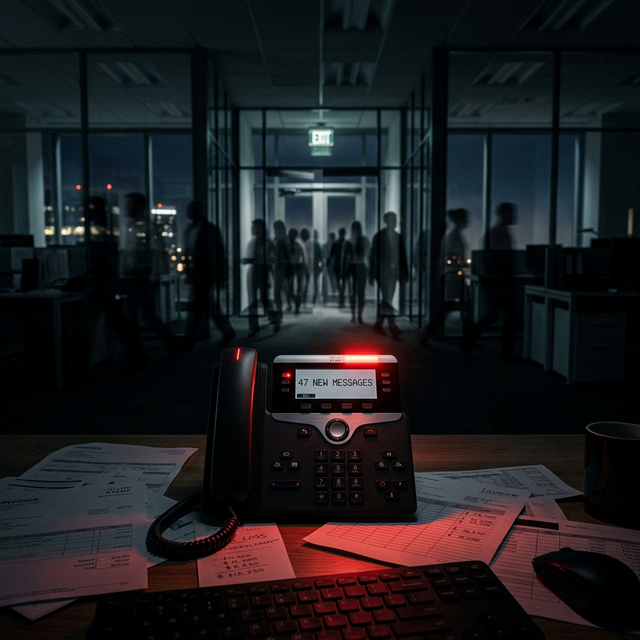
The $126,000 Voicemail Problem: Why Many Callers Never Leave a Message
Most service business callers will not wait for voicemail. Learn why voicemail quietly creates six-figure revenue leaks and how to replace it with real intake.