

Now buyers are staring at automated threads that ask them to type details they already tried to explain by calling.
Treat any number without a nearby source or stated method as a planning assumption, then replace it with your own records.
SMS automation is not the problem.
Using SMS for the wrong job is the problem.
Text is excellent for simple logistics.
Appointment confirmations.
ETA updates.
Review requests.
Payment links.
Short reminders.
Reschedule links.
Those are clean use cases.
The buyer does not need a conversation.
They need a fact.
But service businesses started using text for everything.
Lead qualification.
Urgency triage.
Objection handling.
High-ticket consult booking.
Emergency intake.
Complex follow-up.
Now buyers are staring at automated threads that ask them to type details they already tried to explain by calling.
That is not convenience.
That is work shifted onto the buyer.
The Channel Rule
Here is the simplest way to think about it.
Text is for logistics.
Voice is for uncertainty.
If the buyer needs a fact, text is often best.
"Your appointment is confirmed for Thursday at 9 AM."
"Your technician is on the way."
"Here is the link to upload photos."
"Here is the invoice."
"Would you mind leaving a review?"
That is logistics.
But if the buyer is uncertain, anxious, confused, rushed, or comparing options, voice usually does a better job.
"Is this an emergency?"
"Can you handle my situation?"
"What happens next?"
"Do I need to shut off the water?"
"Can this be done before Friday?"
"Is this the right kind of project for you?"
Those are not just data points.
They are moments where the buyer is trying to decide whether the business can take control.
Text often cannot carry that moment.
Where SMS Fails
SMS fails when the buyer has to do too much work.
The message asks them to fill out a long form.
The sequence asks one question at a time.
The buyer has to type a complex situation on a small screen.
The thread feels automated.
The response does not understand nuance.
The buyer gets distracted.
Another provider calls.
The text thread dies.
From the CRM side, the automation looks active.
The message was sent.
The lead was touched.
The workflow fired.
But from the buyer's side, nothing was resolved.
The system created activity, not progress.
That is the trap.
The Panic Test
Use the panic test.
If the buyer is stressed, would this channel calm them down or make them work harder?
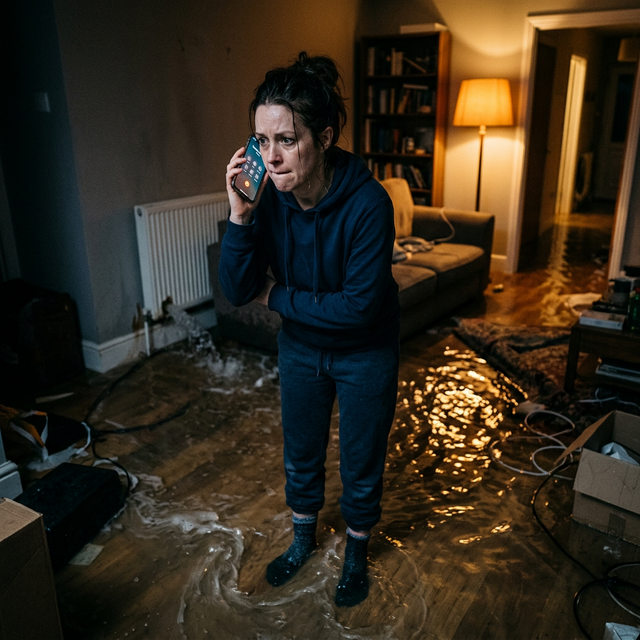
A burst pipe is not a good text thread.
A no-cooling call in July is not a good text thread.
A roof leak before rain is not a good text thread.
A legal emergency is not a good text thread.
A tenant maintenance issue at night is not a good text thread.
A premium renovation buyer with a budget concern may not be a good text thread either.
In those moments, a voice conversation can reduce uncertainty faster.
The buyer can explain.
The system can ask follow-up questions.
The business can classify urgency.
The buyer can hear confidence.
That is why voice still matters.
The goal is not nostalgia for phone calls.
The goal is matching the channel to the buyer's emotional state.
Why Voice AI Changes the Equation
Historically, voice did not scale well.
The business needed people to answer.
People got busy.
Calls stacked up.
After-hours calls went to voicemail.
Peak periods created hold times.
So software companies pushed text because it scaled.
Text was easier to automate.
That made sense for a while.
Voice AI changes the tradeoff.
Now a service business can answer common inbound calls, qualify buyers, book simple next steps, and route urgent issues without depending on one human being free at that exact moment.
The value is not that AI talks.
The value is that the business can use voice for the moments where voice is the better channel.
Then it can use SMS for what SMS does best.
The Right Combination
The best front door is not voice-only.
It is not text-only.
It is voice-led and text-supported.
For example:
The buyer calls.
Voice AI answers.
It identifies the problem.
It asks the necessary questions.
It confirms the appointment.
Then SMS sends the confirmation.
Or:
A web lead arrives.
The system sends a quick text acknowledgment.
Then a voice call follows while intent is active.
If the buyer misses the call, the text gives them a simple way to continue.
Or:
An estimate is sent.
SMS reminds the buyer.
If the buyer replies with uncertainty, voice follows up because the conversation needs nuance.
Each channel has a job.
That is the standard.
Three Common Scenarios
Scenario 1: The Emergency Lead
A homeowner submits a form about water coming through the ceiling.
An SMS-only system replies:
"Thanks for contacting us. Please complete this form so we can learn more."
That message adds work.
A voice-led system calls immediately or answers when the homeowner calls.
It asks whether water is active, confirms the address, gathers photos, and routes the issue.
Then SMS sends the confirmation.
In this scenario, voice handles urgency. Text supports the record.
Scenario 2: The Routine Appointment
A patient, homeowner, or customer needs a routine appointment.
Here, SMS can work beautifully.
The buyer receives available windows, confirms one, and gets reminders.
No emotional load.
No complex explanation.
No need to talk unless the buyer has a question.
In this scenario, text may be enough.
Scenario 3: The High-Ticket Buyer
A buyer considering a major renovation, legal consult, premium aesthetic treatment, or large project has questions.
They may not be urgent, but they are uncertain.
A text thread can feel thin.
A voice conversation can clarify fit, answer the obvious questions, and book the right consultation.
Then SMS confirms the prep steps.
In this scenario, voice protects trust. Text protects logistics.
Common SMS Mistakes
Too Many Automated Touches
If every message feels like a sequence, buyers tune out.
Automation should feel useful, not relentless.
Asking for Long Explanations
Text is bad for complex intake.
Ask for short details, photos, links, or confirmations.
Use voice for the explanation.
No Human or Voice Escape
If the buyer is confused and the only option is another automated text, the thread becomes a wall.
There should be a clear way to talk.
Treating Delivery as Engagement
Delivered does not mean read.
Read does not mean understood.
Understood does not mean ready to book.
Measure outcomes, not sends.
Using SMS for High-Stress First Contact
If the buyer is anxious, a text may feel like avoidance.
Voice is often the better first move.
What to Measure
If SMS is doing too much in your business, the data will show it.
Look at:
Reply rate to first automated text.
Drop-off after the second or third message.
Time from lead arrival to actual conversation.
Number of leads that receive text but never book.
Number of buyers who ask to speak with someone.
Number of missed calls that receive text but no call.
Booked rate from SMS-only paths.
Booked rate from voice-first paths.
The comparison matters.
If SMS is working for confirmations and reminders, keep it.
If SMS is weak for first contact, stop asking it to do that job.
The Revenue Leak Diagnostic
Pull 30 days of inbound opportunities.
Separate them by first response channel.
Voice.
Text.
Email.
Form.
Chat.
Then ask:
Which channel created the first real next step?
Which channel had the highest no-response rate?
Which channel created the most back-and-forth?
Which channel produced the cleanest booking?
Which channel lost the most urgent buyers?
Which channel needed human rescue most often?
This audit usually reveals whether the business is using SMS as a helpful support layer or as a substitute for actual intake.
A Better Workflow
Use this sequence for many service businesses.
Step 1: Voice for First Understanding
When the buyer is new, urgent, high-value, or unclear, voice should gather the context.
Step 2: SMS for Confirmation
Once the next step exists, text should confirm it.
Appointment time.
Prep.
ETA.
Photos.
Payment.
Review request.
Step 3: Voice for Uncertainty
If the buyer stalls, asks a complex question, or expresses concern, return to voice.
Do not keep pushing automated texts into a conversation that needs listening.
Step 4: SMS for Low-Friction Follow-Up
Use text to keep the path open, but make the next step simple.
"Reply yes and we will hold the Tuesday window."
"Upload photos here."
"Tap here to reschedule."
That is what SMS is good at.
A Seven-Day Channel Audit
Run this before changing tools.
For seven days, tag every inbound opportunity by first meaningful response.
SMS only.
Voice only.
Voice plus SMS.
Email.
Chat.
No response.
Then track what happened.
Did the buyer reply?
Did they book?
Did they ask for a human?
Did they abandon after multiple messages?
Did the team have enough context?
Did the buyer repeat themselves?
Did the opportunity require urgent routing?
At the end of the week, compare patterns.
You may find that SMS works extremely well for reminders and poorly for new urgent leads.
You may find that voice calls book faster but need text confirmation to reduce no-shows.
You may find that after-hours form leads are dying because the first response is a passive text.
That is the point of the audit.
It removes opinion.
How to Move From SMS-Heavy to Voice-Led
Do not delete every SMS workflow.
That would be overcorrection.
Move in layers.
Layer 1: Keep Logistics
Keep appointment confirmations, reminders, ETA texts, payment links, reschedule links, and review requests.
These are good SMS jobs.
Layer 2: Replace Complex Intake
Any text sequence asking more than two or three qualifying questions should be reviewed.
If the buyer has to explain a situation, switch that path to voice or voice AI.
Layer 3: Add Voice to High-Intent Leads
For paid leads, emergency leads, high-ticket leads, and after-hours leads, add immediate voice response.
Use SMS as backup, not the main conversation.
Layer 4: Escalate From Text to Voice
If a buyer replies with confusion, concern, urgency, or hesitation, the system should move to voice.
Do not keep forcing the thread.
The channel should change when the buyer's need changes.
The Owner Question
The owner should ask one question about every automated text:
Is this message reducing work for the buyer, or adding work?
If it confirms something, it reduces work.
If it reminds them of something they already chose, it reduces work.
If it gives a simple link they need, it reduces work.
But if it asks them to explain a stressful situation, compare options, type long details, or navigate a decision alone, it may be adding work.
That is where voice belongs.
The best automation feels like help.
The worst automation feels like homework.
The Cost of the Wrong Channel
The wrong channel can make a good lead look bad.
A serious buyer receives a text and does not reply.
The CRM marks them unresponsive.
The team assumes they were not serious.
But the buyer may have been serious and simply unwilling to type through the problem.
This is especially common when the service is urgent, expensive, embarrassing, emotional, or technically confusing.
The buyer needs to talk.
The business asks them to text.
The buyer leaves.
That is a channel mismatch.
It should be counted as a front-door leak, not a buyer-quality issue.
A 30-Day Fix
Week 1: Tag the Current Workflows
List every automated text sequence.
Label each one as logistics, intake, follow-up, or recovery.
Keep the logistics.
Inspect the intake.
Week 2: Move High-Intent Intake to Voice
Pick the highest-value lead path.
Paid leads.
Emergency calls.
After-hours forms.
High-ticket consultations.
Add voice or voice AI there first.
Week 3: Pair Voice With Confirmation Texts
Do not remove SMS.
Use it to confirm what the voice path created.
The buyer should hear the next step and then receive proof of it.
Week 4: Compare Booked Outcomes
Compare SMS-only leads against voice-led leads.
Look at booked rate, time to next step, drop-off, and no-show rate.
Then adjust by evidence.
What Good Feels Like
The buyer should not feel like they are being pushed through software.
They should feel that the business understood the situation quickly and made the next step easier.
Sometimes that happens through a call.
Sometimes it happens through a text.
Often, it happens through both.
The standard is not "more automation everywhere at all times."
The standard is less friction for the buyer.
That is what actually converts.
That is the difference between a system that supports the front door and a system that becomes the front door's newest leak.
Is SMS automation still useful for service businesses?
Yes. SMS is excellent for confirmations, reminders, ETAs, review requests, payment links, photo uploads, and short follow-up. It becomes weaker when used as the main channel for complex or emotional intake.
When should a business use voice instead of text?
Use voice when the buyer is urgent, high-value, confused, emotional, comparison-shopping, or needs qualification before booking. Voice reduces uncertainty faster.
Can voice AI and SMS work together?
Yes. The strongest workflow often uses voice for intake and SMS for confirmation. Voice creates the next step; SMS documents and supports it.
How do I know SMS is hurting conversion?
Look for high no-reply rates, long text threads that never book, repeated buyer confusion, and better booking rates from voice-handled leads.
Should SMS ever be the first response?
Yes, especially for quick acknowledgment after a form fill. But for high-intent leads, SMS should often be paired with a fast call or voice AI path.
The Bottom Line
SMS automation is not enough because buyers are not only exchanging information.
They are trying to reduce uncertainty.
Text can confirm.
Text can remind.
Text can document.
But voice is still better when the buyer needs to explain, decide, trust, or move quickly.
The service businesses that win will not abandon SMS.
They will stop asking SMS to do voice's job.
*If your CRM shows plenty of sent texts but too few booked appointments, run a Revenue Leak Diagnostic by first-response channel. The problem may not be follow-up volume. It may be channel fit.*
Use your own records before you decide
Source: start with your call log, CRM notes, booking calendar, missed-call records, web form timestamps, and Google Business Profile. Those records show whether buyers reached you, how fast they heard back, what they asked for, and where the next step broke down.
For seven days, mark each missed call, late reply, unbooked form, stale estimate, and review request that never went out. That small sample gives an owner a practical picture of the front-door gap before they spend more on ads, software, or staff.
Connect one customer path before adding more disconnected tools.
The first useful system owns a defined journey from customer action to team handoff and follow-up.
See where a Smart Website, software plan, AI intake path, or Custom Business System fits before committing to a scope.
See how the capability in this article fits into a complete customer journey.
Legal, Financial & AdvisorySee the same decision through the language, buyer behavior, and operating reality of this industry.
Client Results & ProofInspect the starting condition, installation, measurement window, and outcome behind real client work.
Speed to Lead is Dead: Why Resolution Speed is the Only Metric That Closes in 2026
Speed to lead only measures how fast a business responds. Resolution speed measures how fast the buyer gets a real next step. Learn how service businesses should measure intake in 2026.

Stop Buying Local Service Leads: Fix Your Intake Infrastructure Before You Buy Another Ad
Bad lead quality is not always the problem. Many service businesses lose paid leads because callbacks are slow, after-hours intake is weak, and follow-up is inconsistent.
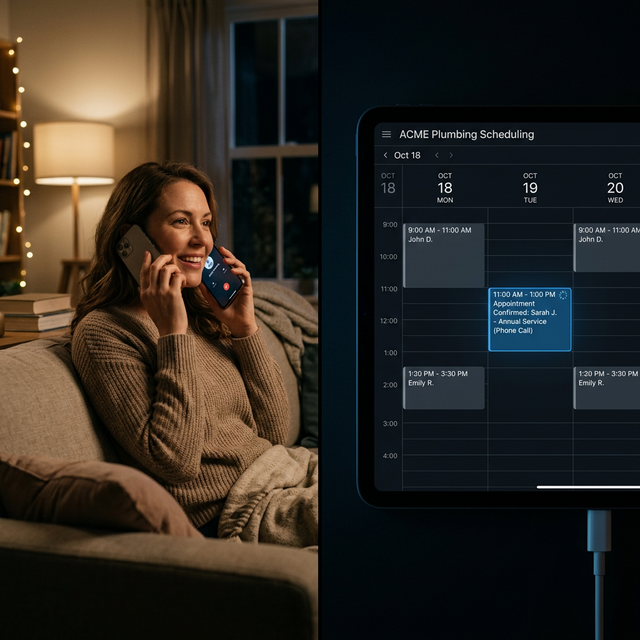
From Inbound Call to Calendar in 60 Seconds: The Zero-Friction Booking Workflow
Phone tag quietly kills service business bookings. Learn how to move an inbound call to a confirmed calendar appointment quickly without creating scheduling chaos.