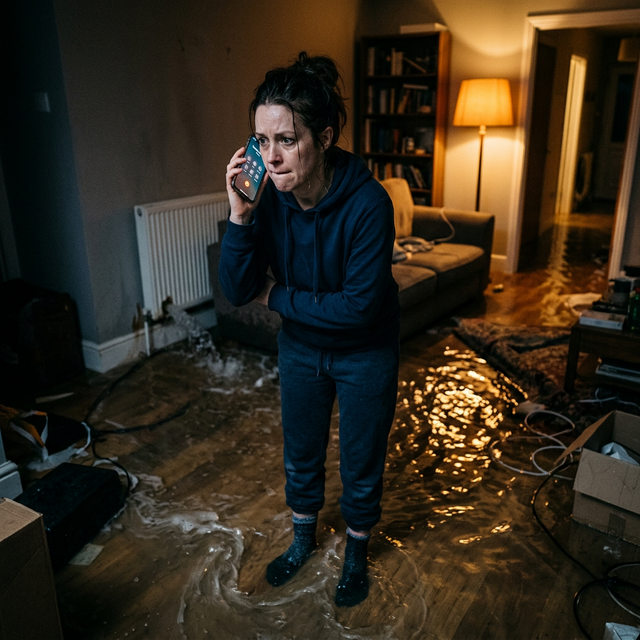
The system asks for her address, confirms service area, tells her the emergency team is being notified, and sends a confirmation text while she is still on the phone.
Treat any number without a nearby source or stated method as a planning assumption, then replace it with your own records.
Speed to lead is not useless.
It is just incomplete.
That distinction matters.
For years, service businesses were told to respond faster.
Call back within five minutes.
Answer the phone quickly.
Text the lead immediately.
Do not let the form sit overnight.
All of that is still true.
But speed alone does not close the job.
A buyer does not only want a response.
They want the problem to start moving.
That is where many service businesses lose.
They answer fast, then put the caller on hold.
They reply fast, then ask someone else to check the calendar.
They text fast, then say a coordinator will follow up.
They connect quickly, then create no next step.
From the dashboard, the business looks responsive.
From the buyer's point of view, nothing has happened yet.
That gap is where revenue leaks.
A Simple Example
Imagine a homeowner standing in a laundry room with water moving across the floor.
She searches for a restoration company.
She calls the first business.
It answers in two rings.
Then she hears:
"Thanks for calling. Please hold while we connect you to the next available coordinator."
She waits.
The water is still moving.
After 40 seconds, she hangs up and calls the next result.
The second company answers in four rings.
The first sentence is:
"Are you dealing with active water right now?"
She says yes.
The system asks for her address, confirms service area, tells her the emergency team is being notified, and sends a confirmation text while she is still on the phone.
The first business answered faster.
The second business resolved faster.
The second business gets the job.
This is the difference.
Speed to lead measures when the business makes contact.
Resolution speed measures when the buyer receives a useful next step.
Those are not the same metric.
The Old Metric Was Built for a Simpler World
Speed-to-lead thinking came from a good place.
Slow response loses buyers.
That is obviously true.
If someone fills out a form and nobody replies for two days, the business deserves to lose that opportunity.
But the local service market has moved beyond basic response.
Buyers now expect the first interaction to do work.
They are comparing multiple providers.
They are anxious.
They are often calling from a real situation, not a calm research session.
They want certainty.
They want a time.
They want a price range.
They want a next step.
They want to know whether the business can help.
So the question is no longer only:
How fast did we respond?
The better question is:
How fast did we reduce uncertainty?
That is resolution speed.
What Resolution Speed Means
Resolution speed is the time between the buyer's first attempt to reach you and the moment their problem is actively moving forward.
It is not pickup time.
It is not reply time.
It is not "we received your message."
It is the moment a real next step is created.
For an HVAC company, that might mean a technician is booked with an arrival window.
For a restoration company, it might mean a crew is dispatched.
For a dental clinic, it might mean an emergency appointment is reserved.
For a law firm, it might mean an intake form is completed and a consult is scheduled.
For a property manager, it might mean the issue is classified and routed.
For a premium home service company, it might mean the caller is qualified and sent the right booking path.
Resolution speed is not about being frantic.
It is about removing ambiguity.
The buyer should not leave the first interaction wondering what happens next.
Why Answered Calls Still Lose
Many owners are surprised when answered calls do not convert.
They look at the phone report and see a high answer rate.
They assume the front door is fine.
Then they listen to the calls.
The truth is usually different.
The calls were answered, but not resolved.
The buyer was put on hold.
The caller was transferred to someone who did not answer.
The intake person collected information but had no authority to book.
The scheduler had to call back.
The callback came too late.
The buyer was told to fill out a form after already calling.
The person answering sounded uncertain.
The caller had to repeat the same information twice.
Every one of those moments slows resolution.
And in a competitive market, slow resolution feels like risk.
The buyer may not say, "Your resolution speed was poor."
They just call someone else.
The Three Failure Modes
Most service businesses fail resolution speed in one of three ways.
1. The Polite Hold
The phone is answered by someone helpful.
That person genuinely wants to solve the problem.
But they need to check availability.
They need to ask the technician.
They need to find the owner.
They need to open another system.
So the caller waits.
The hold may be polite.
It may even be necessary inside the current process.
But to the buyer, it still feels like delay.
The fix is not to shame the person answering the phone.
The fix is to give the front door the authority, data, and routing rules needed to create the next step without improvising.
2. The Transfer to Nowhere
This is worse than a missed call.
The buyer reaches a person, explains the situation, and gets transferred.
Then the transfer goes to voicemail.
Now the buyer has spent effort and received less certainty than before.
The business thinks the call was handled because someone answered it.
The buyer thinks the business wasted their time.
Any transfer that can end in voicemail should be treated as a leak.
If a transfer is required, the system should know whether the receiving person is available before moving the caller.
3. The Callback Promise
"Someone will call you back" is one of the most dangerous sentences in service-business intake.
Sometimes it is fine.
For low-urgency requests, a callback window can work.
But for high-intent calls, emergencies, expensive jobs, or buyers comparing providers, the callback promise often means the opportunity remains open.
Open opportunities are fragile.
While your team is preparing to call back, the buyer is still searching.
A callback promise should be used only when the business can give a specific window and keep it.
Otherwise, it is not a promise.
It is a delay with softer language.
What AI Changes
AI helps when it reduces the time between contact and next step.
It does not help simply because it answers.
An AI receptionist that says "someone will call you back" faster has not solved the problem.
It has only automated the old leak.
A useful AI intake system should be able to:
- Capture the buyer's reason for calling.
- Identify urgency.
- Confirm service area.
- Ask the right qualifying questions.
- Route emergencies differently from routine calls.
- Book simple appointments where appropriate.
- Send confirmation texts.
- Create call summaries.
- Push clean data into the CRM or field-service system.
- Escalate to a human when judgment is needed.
That is resolution infrastructure.
It is not a novelty.
It is the front door doing actual work.
The goal is not to remove humans from the process.
The goal is to make sure humans receive the right conversations at the right moment, with context already attached.
The Metric Owners Should Track
Most businesses already track answer rate.
They should keep tracking it.
But answer rate is only the first layer.
Add these metrics.
Time to Useful Next Step
Measure the time from first call, form, or message to a concrete next step.
Not first reply.
Not acknowledgment.
A useful next step.
That could be booked appointment, dispatch, consult scheduled, quote path started, or escalation assigned.
First-Conversation Resolution Rate
What percentage of inbound opportunities leave the first conversation with the next step already handled?
If this number is low, the business is forcing buyers into follow-up loops.
Callback Lag
When the business promises a callback, how long does it actually take?
Break this down by urgency.
A 45-minute callback might be acceptable for a routine inquiry.
It may be fatal for an emergency or same-day buyer.
Hold and Transfer Loss
How often do callers abandon during hold or after transfer?
This is one of the clearest signs that the business is mistaking contact for progress.
Repeat Information Rate
How often does a buyer have to repeat the same information to multiple people?
Repeating information is not only annoying.
It signals that the business is not organized internally.
These metrics show what the buyer actually experienced.
That is what matters.
What the First 90 Seconds Should Do
The first 90 seconds of an inbound conversation should do four things.
First, it should confirm the buyer reached the right place.
Second, it should identify the type of problem.
Third, it should decide whether the situation is urgent, routine, or a bad fit.
Fourth, it should create the next step.
That sounds simple, but many service businesses do only the first two.
They answer.
They ask what is going on.
Then the caller enters the internal maze.
The stronger version is different.
"Yes, we handle that."
"Based on what you described, this sounds urgent."
"I can get the next available technician window started."
"I am sending you a confirmation text now."
That is what confidence sounds like.
The buyer does not need a speech.
They need proof that the business knows how to move.
This is especially important for high-stress categories, but it also matters for routine service. A buyer asking for a quote still wants to know whether they are in the right place, what information is needed, and when the next step happens.
The first 90 seconds should reduce uncertainty.
If it creates more uncertainty, the business has answered the call but failed the moment.
The Revenue Leak Diagnostic
To audit resolution speed, do not begin with software.
Begin with 20 real interactions.
Pull calls, forms, texts, and chats from the last 30 days.
For each one, answer five questions.
When did the buyer first reach out?
When did the business first respond?
When did the buyer receive a useful next step?
Was the issue resolved in the first conversation?
Did the buyer book, disappear, or require follow-up?
Then listen for friction.
Was there a hold?
Was there a transfer?
Was there uncertainty?
Was the caller asked a question the website already answered?
Was the caller asked to wait for someone else?
Was there a specific next step or just a vague promise?
This audit usually reveals the truth quickly.
The problem is rarely that nobody cares.
The problem is that the process is not designed to create resolution at the front door.
How to Improve Resolution Speed in 30 Days
Start with the highest-volume or highest-value lead path.
Do not rebuild the entire company at once.
Week 1: Define the Next Step
For each common inquiry type, write the correct next step.
Emergency call.
Routine service request.
Price shopper.
Consultation request.
After-hours call.
Existing customer issue.
Past customer reactivation.
If the team does not know the next step, the caller will feel the hesitation.
Week 2: Give the Front Door Authority
Decide what the intake layer can do without asking permission.
Can it book?
Can it dispatch?
Can it qualify?
Can it quote a starting range?
Can it collect photos?
Can it route emergencies?
Can it send payment links or deposits?
Can it schedule a consult?
Authority is what turns answering into resolution.
Week 3: Remove Dead Transfers
Map every transfer path.
If a transfer can end in voicemail, redesign it.
Use warm handoff only when the receiving person is available.
Otherwise, collect the context and create a specific next step.
Week 4: Review Lost Opportunities
Look at calls that did not book.
Separate bad-fit leads from slow-resolution leads.
If the caller was qualified and disappeared after a hold, callback promise, transfer, or vague next step, that is a front-door issue.
Fix that pattern first.
Where Humans Still Matter
Resolution speed does not mean rushing every conversation.
Some calls require care.
A frightened homeowner.
A patient in pain.
A legal client explaining a sensitive situation.
A tenant dealing with a safety concern.
A premium buyer deciding whether to trust a high-ticket provider.
Those conversations should not feel automated or cold.
But even in those cases, resolution speed matters.
The buyer still needs to know what happens next.
Empathy without direction can become drift.
Direction without empathy can feel harsh.
The best intake system gives both.
It acknowledges the situation, asks the right questions, and creates the next step calmly.
That is what good humans do.
That is also what good AI should support.
Is speed to lead still important?
Yes. Slow response still hurts conversion. The point is that speed to lead is no longer enough. A fast response that creates no next step still leaves the buyer unresolved.
What is resolution speed?
Resolution speed is the time between the buyer's first contact and the moment their problem is actively moving forward. It measures useful progress, not just connection.
How do I measure resolution speed?
Review real calls, forms, texts, and chats. Track the time to first useful next step, first-conversation resolution rate, callback lag, transfer loss, and whether the buyer had to repeat information.
Can AI improve resolution speed?
Yes, if it is connected to the actual intake process. AI helps when it can qualify, route, book, summarize, and escalate. It does not help if it only answers faster and then promises a callback.
What is the fastest first improvement?
Define the next step for the most common inbound scenarios. Once the team knows exactly what should happen, you can give humans or AI the authority to move the buyer forward.
The Bottom Line
Speed to lead gets you into the conversation.
Resolution speed gets the buyer out of uncertainty.
That is what closes.
The service businesses that win in 2026 will not only answer faster.
They will resolve faster.
They will know what the caller needs, create the next step, document the handoff, and remove the dead space between interest and action.
That is where the real advantage lives.
*If your answer rate looks strong but close rates feel weaker than they should, run a Revenue Leak Diagnostic on resolution speed. The problem may not be response. It may be what happens after response.*
Use your own records before you decide
Source: start with your call log, CRM notes, booking calendar, missed-call records, web form timestamps, and Google Business Profile. Those records show whether buyers reached you, how fast they heard back, what they asked for, and where the next step broke down.
For seven days, mark each missed call, late reply, unbooked form, stale estimate, and review request that never went out. That small sample gives an owner a practical picture of the front-door gap before they spend more on ads, software, or staff.
Decide what the AI must handle before you choose the software.
A useful intake system begins with the caller journey, the rules, and the human handoff, not a long feature list.

Vikram Roy is the founder of The Quiet Protocol, a Toronto-based systems firm serving service businesses across the Greater Toronto Area, Canada, and the United States. He works directly with professional firms, home service companies, dental practices, clinics, and local businesses to connect websites, customer intake, booking, reviews, follow-up, and practical AI into a clearer digital front door. All content is written from Toronto, Ontario. See the editorial method →
Give the receptionist a realistic scenario and hear how it answers, gathers context, and moves the caller toward a useful next step.
See how the capability in this article fits into a complete customer journey.
Legal, Financial & AdvisorySee the same decision through the language, buyer behavior, and operating reality of this industry.
Client Results & ProofInspect the starting condition, installation, measurement window, and outcome behind real client work.

The Speed to Lead Equation: Why the First Five Minutes Decide the Job
In emergency services, the first company to answer wins. Not the best company. Not the cheapest. The fastest. Here is the math that proves it.

Why Service Businesses Lose Inbound Leads Before the Phone Rings
It is not a traffic problem. Many service businesses lose revenue because the front door breaks before the buyer reaches a real conversation.

The Real Cost of Missing Calls: Why Service Businesses Are Going AI-First in 2026
Missed calls do not show up on the P&L, but they can quietly cost service businesses six figures. Learn how to calculate the leak and decide if AI-first intake makes sense.
Calculate the revenue leak.
Stop guessing. See how much demand your business may be losing through missed calls, slow replies, weak booking, review gaps, and follow-up drag, then decide whether Voice AI is the right system path.
Run the calculationPrefer to hear it first?
Call the live AI receptionist and test the conversation.
Call the live AI receptionist anytime. Tell it about legal, financial & advisory, then hear a short live roleplay based on the calls your front desk actually gets.