
The buyer waited, repeated themselves, hit voicemail, received a vague callback promise, got routed to the wrong person, or disappeared before anyone noticed.
Treat any number without a nearby source or stated method as a planning assumption, then replace it with your own records.
Most service business owners know what they spend to create demand.
They know the Google Ads budget.
They know the agency retainer.
They know what the mailers cost.
They know the sponsorships, referral incentives, SEO work, website projects, and lead marketplaces.
Customer acquisition cost gets attention because the invoices are visible.
But there is another number sitting beside it.
It is usually larger.
It is also usually invisible.
That number is the revenue the business loses after a buyer already tried to reach it.
The call came in.
The form was submitted.
The chat opened.
The referral asked for help.
The past customer was ready to book again.
Then friction got in the way.
The buyer waited, repeated themselves, hit voicemail, received a vague callback promise, got routed to the wrong person, or disappeared before anyone noticed.
That loss is what we call the Revenue Leak Diagnostic.
Not because the owner should panic.
Because the first honest calculation usually creates a very specific reaction:
"Why did nobody show me this before?"
What the Revenue Leak Diagnostic Measures
The Revenue Leak Diagnostic is the annual revenue a service business is likely losing to front-door friction.
It is not total lost sales.
It is not every unclosed lead.
It is not a fantasy projection where every person who ever clicked the website becomes a customer.
It is narrower than that.
The Revenue Leak Diagnostic focuses on buyers who showed some level of intent and then leaked out because the business did not move them cleanly to the next step.
That can include:
- Missed calls.
- After-hours voicemail.
- Slow form response.
- Weak callback follow-up.
- Hold abandonment.
- Transfers that end in voicemail.
- Intake conversations that do not book.
- Quote requests that never receive a next step.
- Old customers who are never reactivated.
- Review weakness that makes callers choose someone else.
The point is not to shame the team.
The point is to see the leak.
Once the leak is visible, the owner can decide what to fix first.
Why This Number Matters More Than CAC Alone
Customer acquisition cost answers one question:
How much did we spend to create a customer?
The Revenue Leak Diagnostic answers a different question:
How much revenue did we already create demand for, then lose before capture?
Those questions belong together.
If the business spends more on marketing while the front door leaks, the marketing budget becomes more expensive than it looks.
More calls come in.
More forms arrive.
More buyers compare options.
But if the response system is weak, more demand only creates more leakage.
This is why some owners feel stuck.
The agency says leads are coming in.
The team says the phone is busy.
The calendar has jobs.
Revenue is not terrible.
But the business still feels harder than it should.
Usually, that means the owner is looking at acquisition while ignoring capture.
The Revenue Leak Diagnostic forces capture into the conversation.
The Simple Formula
Start with the most conservative version.
Use this formula:
Qualified lost opportunities x average job value = monthly friction loss.
Monthly friction loss x 12 = annual Revenue Leak Diagnostic.
The hard part is not the math.
The hard part is defining qualified lost opportunities.
A qualified lost opportunity is not every call.
It is not spam.
It is not a vendor.
It is not a wrong number.
It is not a buyer outside your service area.
It is someone who had a real need, was plausibly a fit, and failed to become a booked next step because the front door did not carry them through.
That can be estimated from call logs, CRM notes, website forms, after-hours messages, and appointment data.
Do not overcomplicate the first pass.
Use a range.
The number does not need to be perfect to be useful.
It needs to be honest enough to change the conversation.
Why Owners Underestimate It
Owners underestimate the Revenue Leak Diagnostic because the business still looks alive while the leak is happening.
The phone rings.
The crew is busy.
The inbox has inquiries.
The calendar has appointments.
Revenue still comes in.
That creates the feeling that demand is being handled.
But a business can be busy and still be leaking its best opportunities.
The easiest jobs may book while the urgent, high-value, after-hours, or comparison-shopping buyers leave.
The team may remember the calls they saved, not the calls that disappeared.
The CRM may show the leads that entered, not the leads that never made it that far.
The owner may see a normal close rate and assume the unclosed portion is just the cost of doing business.
Some of it is.
But not all of it.
The Revenue Leak Diagnostic exists because there is usually a repairable slice inside that unclosed portion.
That slice is the one worth measuring.
A Practical Example
Imagine a plumbing company.
It receives 240 inbound contact attempts per month across calls, forms, texts, and chat.
After removing spam, vendors, duplicates, and wrong-fit contacts, the owner estimates that 150 were real buyer opportunities.
Of those 150, 82 became booked jobs.
That leaves 68 qualified opportunities that did not book.
Some were price shoppers.
Some were not urgent.
Some would never have converted.
So the owner does not count all 68.
Instead, they review call logs and form response patterns and estimate that 25 of those opportunities were likely lost to friction:
Missed calls.
After-hours voicemail.
Slow callbacks.
Holds.
Unclear next steps.
Quotes that were not followed up.
If the average first job value is $650, the monthly friction loss is:
25 x $650 = $16,250.
Annualized:
$16,250 x 12 = $195,000.
That is the Revenue Leak Diagnostic.
The owner can argue with the inputs.
Good.
Reduce the friction estimate from 25 opportunities to 15.
The annual number is still $117,000.
Use $500 average job value instead of $650.
The annual number is still $90,000.
The point is not to win an argument with aggressive math.
The point is to stop pretending the leak is zero.
Where the Revenue Leak Diagnostic Usually Hides
The Revenue Leak Diagnostic usually does not hide in one dramatic failure.
It hides in small repeatable moments.
Missed Calls
This is the easiest category to understand.
The buyer called.
Nobody answered.
Maybe they left a voicemail.
Maybe they did not.
Either way, the opportunity was put at risk.
If the business only counts voicemails, it is undercounting the leak.
The buyer who hangs up without leaving a message is often the buyer who already called someone else.
Slow Forms
Website forms feel safe because the business "received" the lead.
But receiving the form is not the same as moving the buyer.
If the form sits for hours, the buyer may keep searching.
If the reply asks the buyer to repeat what they already submitted, the business creates friction.
If the form does not lead to booking, dispatch, qualification, or a clear next step, it is not finished.
Holds and Transfers
A call can be answered and still be lost.
Long holds tell the buyer the business is not ready.
Transfers that end in voicemail feel worse than a missed call because the buyer already invested effort.
The phone report may show an answered call.
The buyer experienced delay.
Callback Promises
"Someone will call you back" is not always bad.
But it is dangerous when there is no specific window and no accountability.
If the callback happens after the buyer has chosen someone else, the system technically followed up and still lost.
Follow-Up Gaps
Many buyers do not disappear because they rejected the business.
They disappear because the business never created the next step.
Estimate sent, no follow-up.
Consult requested, no confirmation.
Quote discussed, no reminder.
Past customer ready for seasonal work, no reactivation.
This is quiet revenue loss.
It belongs in the Revenue Leak Diagnostic.
Why Your CRM May Understate the Problem
A CRM can only report on what entered the CRM.
That sounds obvious, but it matters.
Many front-door losses happen before the record exists.
A missed call may not create a contact.
An abandoned chat may never become a lead.
A form that fails or gets ignored may not be counted as a real sales opportunity.
A call answered by the wrong person may never receive a useful status.
So the CRM close rate can look acceptable while the true contact-to-customer rate is weak.
This is not because the CRM is bad.
It is because the CRM starts too late.
The Revenue Leak Diagnostic starts earlier.
It starts at the buyer's first attempt to reach the business.
That is the correct starting point.
The Inputs to Pull
For the first calculation, pull 30 days of data.
You need five inputs.
1. Total Contact Attempts
Calls, missed calls, forms, chats, texts, direct inquiries, and any other inbound buyer channel.
Do not count only CRM leads.
Count attempts.
2. Qualified Contact Estimate
Remove spam, vendors, wrong numbers, duplicates, and clear bad fits.
Estimate the number of real buyer opportunities.
Use a conservative percentage if the data is messy.
3. Booked or Converted Opportunities
How many of those qualified contacts became booked appointments, dispatches, consultations, estimates, or sales opportunities with a real next step?
This depends on the business model.
The important part is that "converted" means the buyer moved forward.
4. Friction Loss Estimate
Look at the gap between qualified contacts and booked opportunities.
Then estimate how many were lost to avoidable friction rather than true disqualification.
Use call recordings and notes where possible.
If you are unsure, start low.
5. Average First Job Value
Use first transaction value at first.
Do not inflate the number with lifetime value until the basic calculation is accepted.
Lifetime value matters, but the first calculation should be hard to dismiss.
How to Use the Number
The Revenue Leak Diagnostic is not useful if it only makes the owner angry.
It has to guide action.
Once you calculate it, split it by source.
How much comes from missed calls?
How much comes from after-hours contacts?
How much comes from slow forms?
How much comes from callbacks?
How much comes from follow-up gaps?
This breakdown matters more than the total.
If most of the leak is missed calls, fix call coverage first.
If most of the leak is after-hours demand, fix after-hours intake.
If most of the leak is callback delay, change booking authority and routing.
If most of the leak is estimate follow-up, build follow-up automation.
If most of the leak is dormant customers, start reactivation.
Do not buy a giant system for the wrong leak.
The Revenue Leak Diagnostic tells you where to start.
The 30-Day Fix Sequence
Use the first month to turn the number into a working system.
Week 1: Measure
Pull the data.
Count total attempts.
Tag missed calls, short calls, after-hours contacts, unbooked forms, and callback promises.
Build the first conservative Revenue Leak Diagnostic.
Week 2: Listen
Listen to real calls.
Read real form replies.
Look at abandoned opportunities.
Find the repeated friction pattern.
The leak is usually obvious once you stop looking only at dashboards.
Week 3: Fix One Leak
Choose the largest or easiest category.
Add missed-call text-back.
Add after-hours AI intake.
Give the front desk booking authority.
Create a callback window.
Automate estimate follow-up.
Do one thing that reduces the leak measurably.
Week 4: Compare
Run the same calculation again.
Did missed calls drop?
Did response time improve?
Did more calls book on the first conversation?
Did callbacks happen faster?
Did more estimates get a second touch?
The Revenue Leak Diagnostic should become a monthly operating metric, not a one-time scare tactic.
What Not to Do
Do not calculate the Revenue Leak Diagnostic using heroic assumptions.
Do not count every lost lead as recoverable.
Do not use lifetime value if the first job value already proves the point.
Do not blame the team before you inspect the process.
Do not buy software before you know the leak category.
Do not treat the calculator as a replacement for listening to calls.
The number is a door.
The audit is the room behind it.
A good Revenue Leak Diagnostic calculation should make the business more precise, not more dramatic.
What is a Revenue Leak Diagnostic?
A Revenue Leak Diagnostic is the estimated annual revenue a service business loses through front-door friction after buyers already tried to reach it. It includes missed calls, slow forms, weak callbacks, holds, transfers, and follow-up gaps.
Is the Revenue Leak Diagnostic the same as missed-call cost?
No. Missed calls are one part of the Revenue Leak Diagnostic. The full number also includes friction after contact, such as slow response, callback delay, unbooked forms, and lost follow-up.
How accurate does the calculator need to be?
It should be conservative, not perfect. The first goal is to estimate a defensible floor. If the conservative number is still meaningful, the business has a real front-door problem to fix.
Should I use lifetime value?
Start with average first job value. Lifetime value can be useful later, especially in repeat-service businesses, but it can make the first calculation easier to dismiss.
How often should I recalculate it?
Monthly is useful once the business is actively improving intake. Quarterly is enough for a slower-moving operation. The key is to track the same inputs consistently.
The Bottom Line
The Revenue Leak Diagnostic is not a vanity metric.
It is a way to make invisible friction visible.
Most service businesses are not losing only because marketing is weak.
They are losing because buyers arrive and the front door does not move them cleanly to the next step.
Once the number is visible, the conversation changes.
Marketing spend looks different.
Phone coverage looks different.
Follow-up looks different.
AI intake looks different.
The owner is no longer asking whether the system costs money.
They are asking how much revenue the current system is already leaking.
That is the right question.
*To calculate your own Revenue Leak Diagnostic, start with 30 days of calls, forms, chats, and bookings. The first version does not need to be perfect. It needs to be honest enough to show where the front door is leaking.*
The loss estimate is basic business math, not a magic claim.
Revenue-leak examples on this site are built from visible operating inputs: inquiry volume, missed-call or slow-response rate, booking rate, average job or client value, repeat value, and follow-up recovery. The fastest way to make the number real is to run the diagnostic for your closest business type, then compare it against your own call log, CRM, booking calendar, form timestamps, and review activity.
Turn the article into one week of real numbers.
Use your own call log, form timestamps, calendar, and CRM before accepting any industry estimate.

Vikram Roy is the founder of The Quiet Protocol, a Toronto-based systems firm serving service businesses across the Greater Toronto Area, Canada, and the United States. He works directly with professional firms, home service companies, dental practices, clinics, and local businesses to connect websites, customer intake, booking, reviews, follow-up, and practical AI into a clearer digital front door. All content is written from Toronto, Ontario. See the editorial method →
Use your own operating numbers to see where response, booking, reviews, and follow-up may be costing the business.
See how the capability in this article fits into a complete customer journey.
Legal, Financial & AdvisorySee the same decision through the language, buyer behavior, and operating reality of this industry.
Client Results & ProofInspect the starting condition, installation, measurement window, and outcome behind real client work.

Why Service Businesses Lose Inbound Leads Before the Phone Rings
It is not a traffic problem. Many service businesses lose revenue because the front door breaks before the buyer reaches a real conversation.
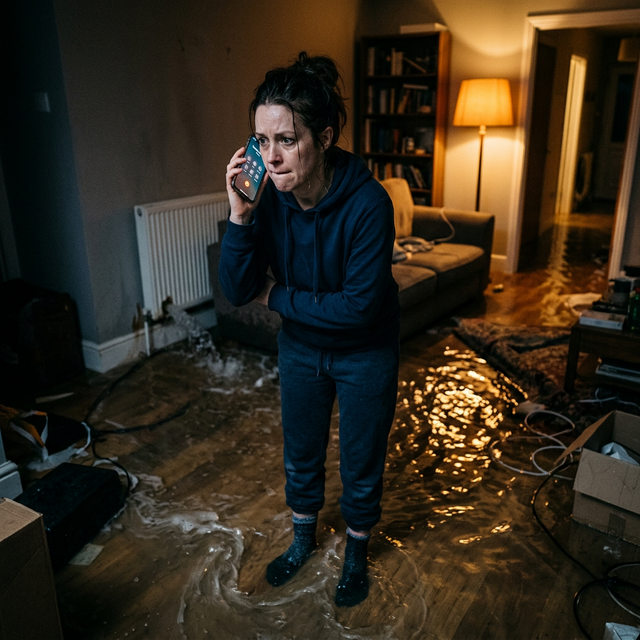
Speed to Lead is Dead: Why Resolution Speed is the Only Metric That Closes in 2026
Speed to lead only measures how fast a business responds. Resolution speed measures how fast the buyer gets a real next step. Learn how service businesses should measure intake in 2026.
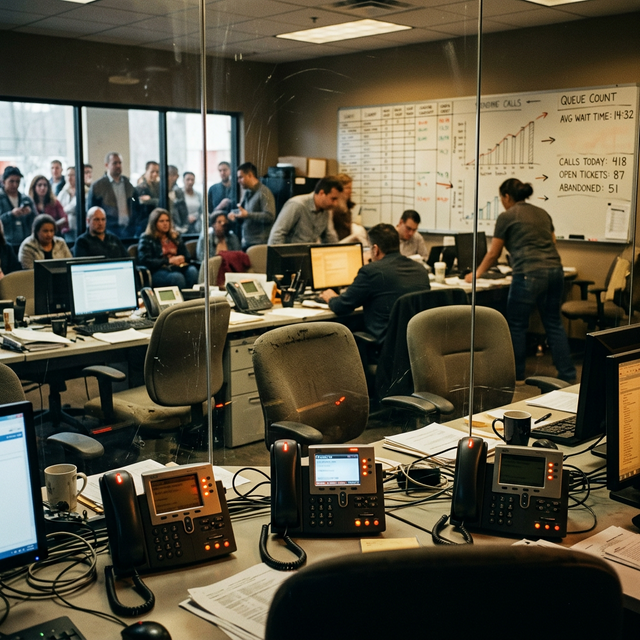
Why So Many Service Business Calls Go Unanswered
Many service business calls never reach a real next step. Here are the five silent signals that predict missed calls, lost bookings, and invisible revenue leaks.