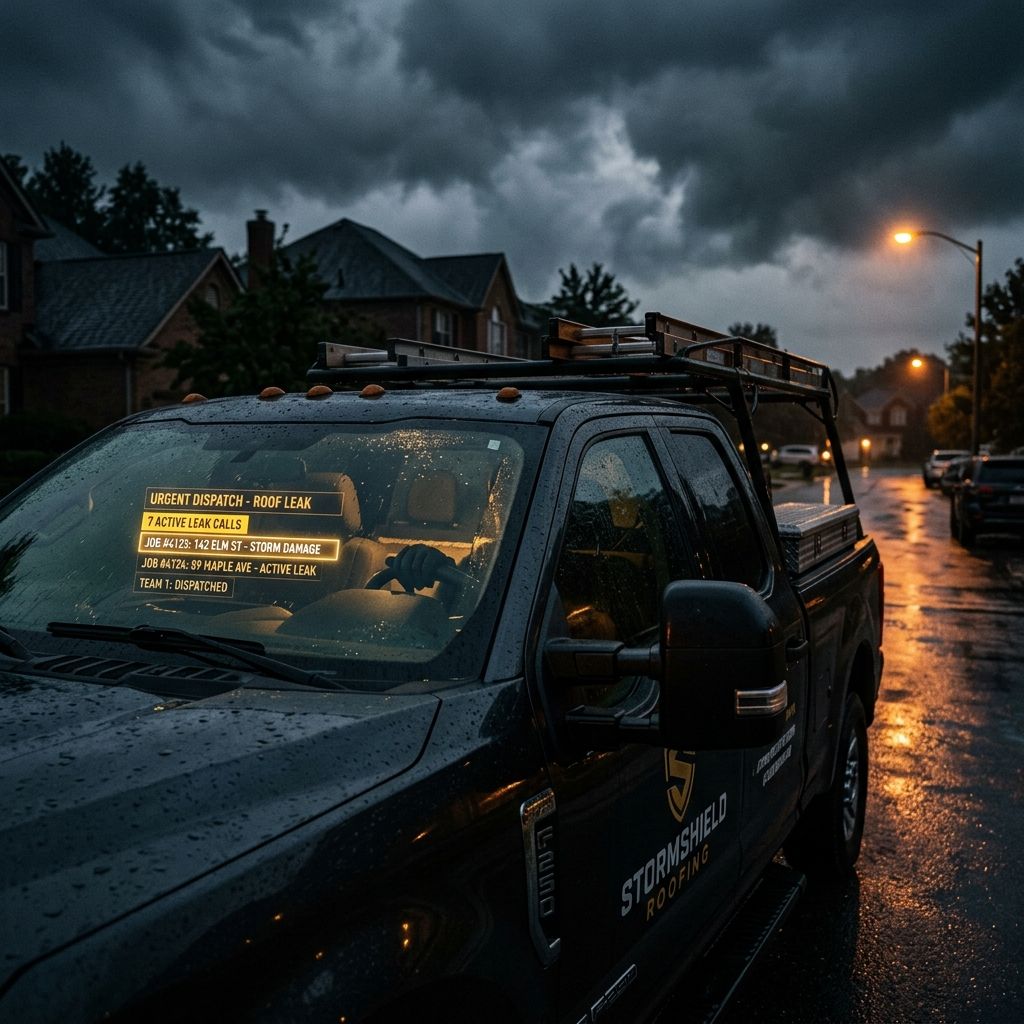
When a storm hits, homeowners do not spend a week comparing quotes. They call the first roofer they can reach.
Quick Answer:An AI-Powered Business Operating System for a roofing company is configured around two peak-revenue moments: storm surge and the seasonal estimate pipeline. The five-layer OS captures every storm-related call within 90 seconds regardless of call volume, routes emergency tarp requests to immediate dispatch, books all inspection appointments autonomously, follows every unsold estimate with a 16-day sequence calibrated to insurance claim timing and seasonal backlog framing, and generates reviews 24 hours after job completion to build the map pack position that drives off-season organic lead volume.
The Storm Surge Problem: Why Roofing Is Won or Lost in 72 Hours
No other home services category has the demand volatility of roofing. An HVAC company's call volume varies by season. A roofing company's call volume can triple in 48 hours following a single hailstorm, and the businesses that capture the largest share of that surge , not the ones with the most crews, but the ones with the best intake systems , define their market position for the next 12 months.
Here is what happens in the 72 hours after a significant hail or wind event in a mid-size market. Homeowners begin calling roofing companies the same evening. Local call volume surges 300 to 500 percent over baseline. Insurance adjusters begin scheduling inspection appointments. Storm-chasing contractors arrive from out of market. The homeowners who make contact with a local roofing company within the first 24 hours and receive a professional, fast response will become customers of that company. The homeowners who call and reach voicemail will call the next company on the Google results page , or a storm chaser who answered.
A roofing company without an AI intake system that handles surge volume loses 40 to 60 percent of its storm-related inbound calls to unanswered voicemail , calls its own marketing or reputation generated, lost to competitors who were simply faster to respond. At an average roofing job value of $9,500 and a 45 percent booking rate on captured calls, each 100 calls missed during a storm surge represents $427,500 in potential revenue lost. This is the highest-stakes intake failure in home services.
Layer 1: AI Intake for Roofing Surge Capacity
The roofing intake layer is built specifically for volume elasticity , the ability to handle 10x normal call volume without 10x staffing. This is the core technical requirement of roofing AI intake that distinguishes it from other home services categories.
During a surge event, the Voice AI and Missed Call Text-Back system operates identically whether it is receiving 20 calls per hour or 200 calls per hour. Every unanswered call receives a Missed Call Text-Back within 60 seconds: "Hi [Name], this is [Company Roofing]. We saw your call and want to help , are you dealing with storm damage? Text us your address and the damage you are seeing and we will get an inspector out as soon as possible." During active surge periods, the message includes a surge acknowledgment: "We are currently handling a high volume of inspection requests following the storm , your position is confirmed, and we will contact you to schedule your inspection within [timeframe]."
Web and social inquiries during surge periods are captured by web chat and social DM integration, with the same 60-second response standard. The response frame during surge is specific: "We are booking storm damage inspections now , click here to select your preferred time slot and hold your place." The autonomous booking link shows real-time calendar availability, allowing homeowners to self-schedule without dispatcher involvement.
For a roofing company with a baseline of 60 inbound calls per week that experiences a 3x surge to 180 calls over 72 hours, the AI intake system captures an additional 60 to 80 calls that would otherwise reach voicemail , at a booking rate of 45 percent and a job value of $9,500, that is $256,500 to $342,000 in additional revenue from a single surge event.
Layer 2: AI Triage for Emergency Tarps and Inspection Booking
Roofing triage has one high-urgency category that requires immediate human contact: emergency tarp requests , active leaks, collapsed sections, or severe structural exposure that requires same-day temporary protection before the next rain event.
Emergency tarp signals: active leak, water coming in, hole in roof, ceiling collapsing, major section missing. These route to immediate dispatcher alert with the same escalation protocol as electrical or plumbing emergencies , 90-second dispatch notification, prospect acknowledgment with explicit response commitment.
All other storm-related inquiries , inspection requests, damage assessment calls, general hail damage questions , route to the autonomous inspection booking flow. The flow collects the service address, describes what the inspection includes and how long it takes, and presents available inspection slots on the real-time calendar. During surge periods, the booking flow adds a scarcity frame: "Our inspection calendar is filling rapidly , the earliest available slot is [date/time]. Confirm now to hold your place." Scarcity framing on roofing inspections, when accurate, increases booking completion rate by 15 to 25 percent.
Layer 3: AI Follow-Up for the Insurance Claim Pipeline
Roofing estimate follow-up requires a specific calibration that does not exist in other home services categories: the insurance claim variable. A homeowner who has had a roof inspection and received an estimate is often waiting for their insurance adjuster's assessment before making a decision. The follow-up sequence must account for this by including insurance process guidance as a value-add rather than treating the non-response as disengagement.
The 16-day roofing estimate follow-up sequence is structured as follows:
Day 1:SMS with a scope of work summary and a link to financing options in case insurance does not cover the full replacement cost.
Day 4:Email with a practical guide to the insurance claim process for roofing , what the adjuster looks for, how to document damage, what to do if the first assessment is too low. This touch positions the roofing company as an expert ally in the claims process rather than just a contractor waiting to be hired.
Day 8:SMS with a demand note , "We are currently scheduling jobs for [month] , if you would like to secure your spot on the calendar, we would recommend confirming this week. Available dates are filling."
Day 12:Email with payment plan options and a warranty detail , emphasizing the manufacturer warranty on materials and the company's own workmanship guarantee.
Day 16:SMS , final follow-up, explicit offer to discuss any questions before the estimate window closes.
For homeowners whose insurance claim is still pending, the sequence includes a branch at Day 8 that shifts to an insurance reactivation queue , a lighter-touch sequence that checks in every 3 weeks until the claim status resolves, at which point the prospect is automatically moved back into the active estimate follow-up sequence.
Roofing companies using this sequence close 34 to 48 percent of estimates, compared to 14 to 18 percent for companies sending one estimate and one follow-up call.
Layer 4: AI Reputation and Post-Job Review Timing
The optimal review request timing for roofing is 24 hours after job completion , the following morning, when the crew has finished and left, the homeowner has had a chance to see the completed work, and the relief of having the project resolved is fresh.
Roofing reviews carry disproportionate local search weight because roofing is one of the most review-researched home service categories , homeowners making a $9,000 to $18,000 purchase decision will read reviews carefully. A roofing company with 180 reviews averaging 4.8 stars is in a different competitive category than a company with 30 reviews at 4.5 stars, even if the quality of work is identical.
The review request references the specific job: "Hope your new roof is looking great , if you have 60 seconds, a review on Google helps other homeowners in [City] find a roofing company they can trust after a storm." Storm-specific framing performs 20 to 30 percent better than generic review requests in roofing, because homeowners feel the shared community experience of storm recovery and are motivated to help neighbors navigate the same situation.
A roofing company completing 30 jobs per month (realistic for a 3-crew operation in season) with a 15 percent review response rate generates 4 to 5 reviews per month , 50 to 60 per year. Starting from 40 reviews, the company ends the year at 90 to 100. In most markets, 100 reviews with a 4.8 average places the company at position 1 or 2 in the local map pack for "roofing company near me" , the query that captures storm-season homeowners doing their first search.
Layer 5: AI Intelligence for Storm Season Visibility
The business intelligence layer for a roofing company is configured around four metrics that are most valuable in a high-seasonality, surge-driven business.
Inspection-to-estimate conversion rate.The percentage of completed inspections that result in a sent estimate within 24 hours. A declining rate indicates an estimating process bottleneck , the inspector is completing jobs but the estimate is not being generated and sent quickly enough. In roofing, every day of delay between inspection and estimate reduces close probability by 8 to 12 percent as competitive estimates arrive.
Estimate pipeline by insurance status.Open estimates segmented by insurance claim status: pending claim, claim approved, no insurance involvement. This segmentation determines the correct follow-up sequence for each estimate and surfaces the total insurance-claim pipeline value separately from the direct-pay pipeline.
Surge capture rate.During surge events, the percentage of inbound contacts that result in a CRM record and confirmed inspection booking. Measured separately from baseline performance and reviewed immediately following any weather event.
Review velocity trend.Monthly review accumulation rate compared to the same month in the prior year and compared to the top 3 local competitors. In roofing, a competitor accelerating review velocity after a major storm event is a signal they had a high-volume surge and are systematically requesting reviews from that cohort , and they will gain map pack position from it.
The Operating Advantage That Builds Each Season
A roofing company that implements the full five-layer AI Business OS operates with a widening advantage every year. Year 1, the advantage is operational , faster intake, better estimate follow-up, more reviews than competitors. Year 2, the advantage is positional , the accumulated review count places the company at position 1 or 2 in local search, generating off-season organic leads that competitors pay for in advertising. Year 3, the advantage is reputational , the combination of local search dominance, consistent review accumulation, and systematic past-client reactivation creates an inbound lead machine that reduces dependence on paid acquisition.
The storm comes for everyone. The roofing company with the AI Business OS converts it.
FAQ
What is an AI business operating system for a roofing company?
An AI business operating system for a roofing company captures every inbound inquiry 24/7 (including storm surge volume), follows up on every unsold estimate with a structured 5-touch sequence, runs database reactivation campaigns to past clients before and after storm season, and requests Google reviews automatically after every completed job , all without office team involvement.
How does AI help roofing companies win more storm damage leads?
After a major storm event, call volume for roofing companies can increase 300 to 500 percent overnight. The AI intake system handles all of this volume simultaneously , no hold times, no missed calls. Every inquiry receives an immediate response with a next-step prompt. Roofers using AI intake during storm events consistently capture 30 to 50 percent more leads from the same storm-generated call volume than competitors without a system.
How does AI follow up on roofing estimates to close more jobs?
Every unsold roofing estimate enters an automated 5-touch follow-up sequence over 14 to 21 days , timed around the typical homeowner decision window. The sequence uses urgency frames (limited crew availability, insurance claim deadlines, material cost increases) that are specific to roofing. Companies using this sequence close 20 to 30 percent more estimates than competitors relying on a single manual callback.
How does an AI business OS help a roofing company dominate Google Maps?
The review request fires within 2 to 4 hours of job completion , when homeowner satisfaction is at its peak and the new roof is still the topic of conversation. A roofing company completing 40 jobs per month with a 12 percent review response rate generates nearly 60 new reviews per month. Within 6 to 9 months, most mid-market roofing companies reach a top-2 Google Maps position for their primary keywords.
How much does an AI business OS cost for a roofing company?
A full-stack AI Business OS for a roofing company typically runs $500 to $1,500 per month. For most roofing operators, the system pays for itself within a single recovered estimate. The full annual return , across storm lead capture, estimate follow-up, and review-driven organic leads , typically runs $50,000 to $150,000 per year depending on market size and volume.
Does an AI system replace a roofing company's office manager or sales team?
No. The AI Business OS handles the volume-dependent, time-sensitive tasks , answering storm calls at 2 AM, following up on the 15 estimates sent last Tuesday, requesting reviews after yesterday's installs. The sales team focuses on estimates, site visits, and closing conversations that require human judgment and relationship management.
Before You Choose a System
Use this section as a quick buyer check. A roofing company owner does not need another vague automation pitch. They need to know which part of the front door is leaking, what the system will change, and how they will measure whether the fix is working.
Source method: compare the article against your own call log, CRM notes, booking calendar, missed-call records, web form timestamps, and Google Business Profile review recency. Those records are more useful than a generic benchmark because they show what buyers actually experienced in your business.
What proof should I look for in my own business?
Look for proof in the places where demand either moved forward or stalled: missed calls, short calls, unbooked forms, slow callbacks, no-show recovery, old leads, and reviews that were never requested. If the business cannot see those moments clearly, the first improvement is better tracking and routing.
How do I know whether this is a marketing problem or an operations problem?
If people are already calling, filling forms, asking for prices, requesting appointments, or comparing reviews, the problem is usually operations. More marketing will not fix a front door that lets warm demand wait. The better move is to capture and route the demand already arriving.
What should happen after the first response?
The first response should create a next step: booked appointment, estimate path, intake handoff, callback window, review request, or reactivation sequence. A response that only says someone will get back to you is not enough when the buyer is comparing several providers at once.
Where does The Quiet Protocol fit?
The Quiet Protocol fits when the business already has demand but too much of it depends on manual attention. We connect AI receptionist coverage, web intake, missed-call recovery, booking logic, follow-up, review requests, and reactivation into one managed front-door system.
The loss estimate is basic business math, not a magic claim.
Revenue-leak examples on this site are built from visible operating inputs: inquiry volume, missed-call or slow-response rate, booking rate, average job or client value, repeat value, and follow-up recovery. The fastest way to make the number real is to run the diagnostic for your closest business type, then compare it against your own call log, CRM, booking calendar, form timestamps, and review activity.
Use this before you buy another tool.
Pull one recent week of calls, forms, chats, and booking requests. Mark every inquiry that waited, went unanswered, needed a manual reminder, or never reached a clear next step. That simple review shows whether the problem is demand, staffing, or the front-door system.
If those answers are hard to find, that is the first issue to fix. The Quiet Protocol installs the system that answers faster, routes cleaner, books more of the right demand, requests reviews, and keeps follow-up from depending on memory.

Vikram Roy is the founder of The Quiet Protocol, a Toronto-based AI systems firm serving service businesses across the Greater Toronto Area, Canada, and the United States. He works directly with home service companies, dental practices, clinics, and local businesses to install AI operating systems that capture more leads, reduce no-shows, grow reviews, and recover revenue without adding manual overhead. All content is written from Toronto, Ontario. Connect on LinkedIn →
See the system page tied most closely to the problem this article is diagnosing.
Roofing & ExteriorOpen the industry path where this revenue leak is framed in operational terms.
Run Revenue Leak DiagnosticQuantify the leak before you decide what type of system needs to be installed.
Call the AI Receptionist DemoHear the receptionist live, give it your business context, and test a short caller roleplay before you book.
Results & ProofReview what the system changes once the front door is rebuilt around response and continuity.
The AI-Powered Business Operating System for HVAC Companies: How to Stop Losing Emergency Calls, Estimates, and Reviews
HVAC companies run in a high-stakes, time-sensitive environment where after-hours calls are lost, estimates go unfollowed, and review velocity stalls. Here is how an AI Business OS captures every call, follows up on every estimate, and automates the review engine - so your trucks stay full year-round.
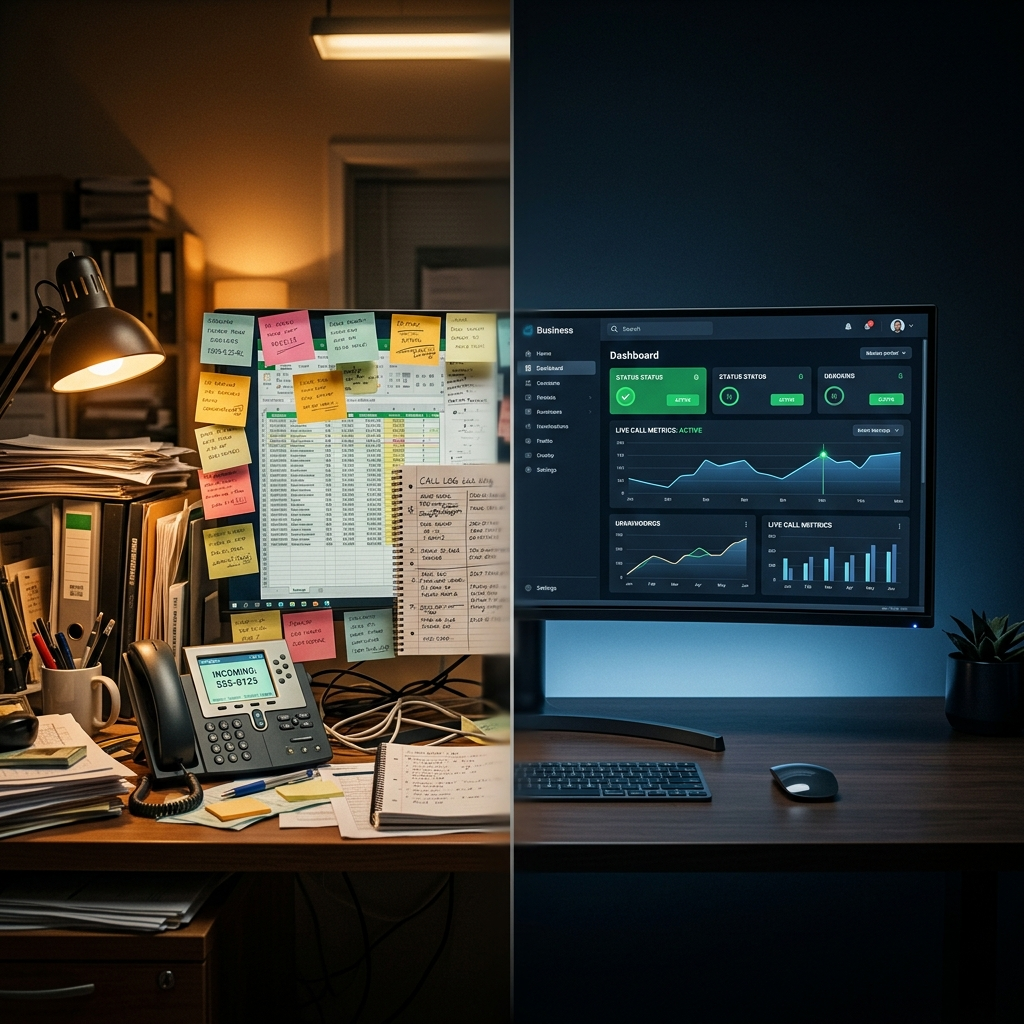
What Is an AI-Powered Business Operating System? (A practical Guide for Service Business Owners)
Every SaaS vendor is calling their product an AI Business OS. Here is what the term actually means, what a real one includes, and why it matters for service businesses.
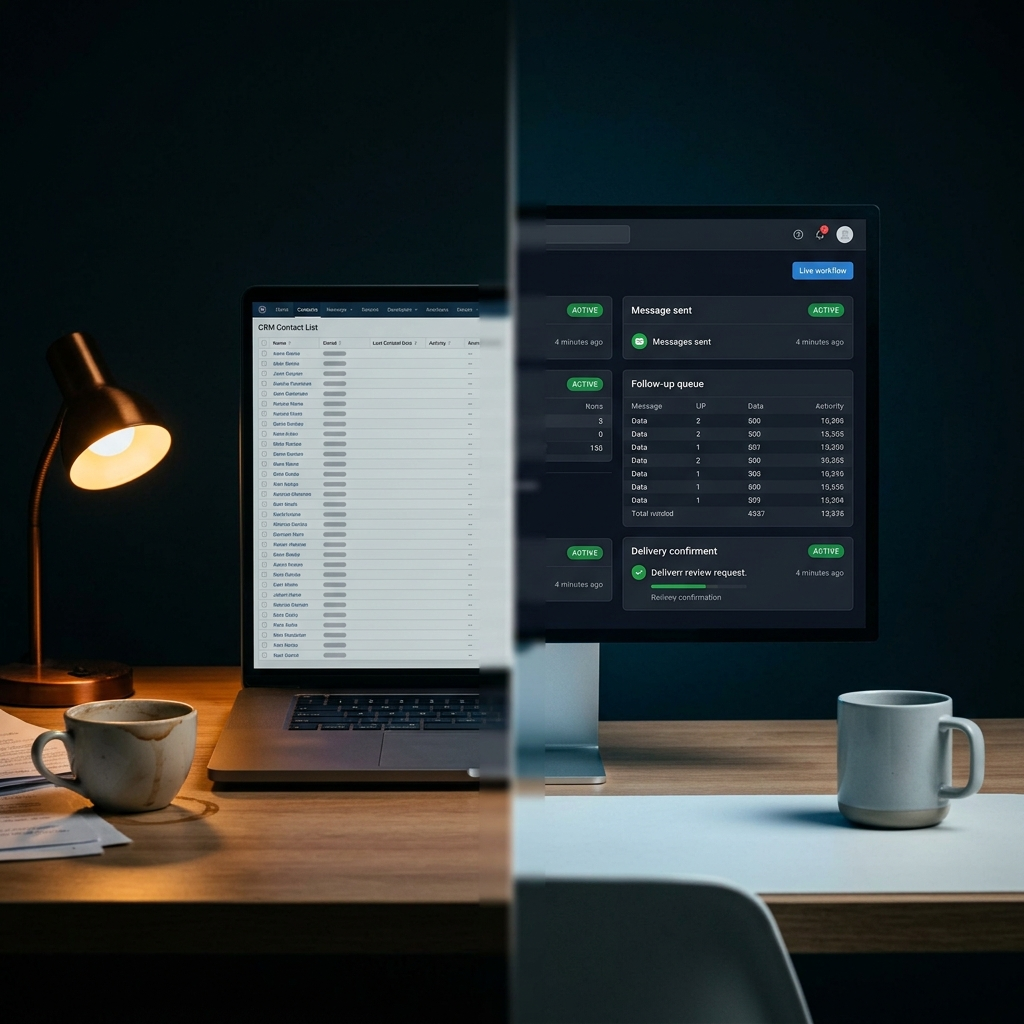
AI Business OS vs. CRM: They Are Not the Same Thing (And Confusing Them Is Costing You)
Most service businesses own a CRM and think they have an operating system. They do not. Learn the exact difference between a CRM and an AI Business OS.
Calculate the revenue leak.
Stop guessing. See how much demand your business may be losing through missed calls, slow replies, weak booking, review gaps, and follow-up drag, then decide whether AI Business Automation is the right system path.
Run the calculationPrefer to hear it first?
Call the live AI receptionist and test the conversation.
Call the live AI receptionist anytime. Tell it about roofing & exterior, then hear a short live roleplay based on the calls your front desk actually gets.