
HVAC companies run in a high-stakes, time-sensitive environment where after-hours calls are lost, estimates go unfollowed, and review velocity stalls. Here is how an AI Business OS captures every call, follows up on every estimate, and automates the review engine - so your trucks stay full year-round.
Quick Answer:An AI-Powered Business Operating System for an HVAC company runs five simultaneous layers: an AI intake system that answers every call and captures every after-hours inquiry, a triage engine that routes emergencies to a dispatcher within 90 seconds, a follow-up engine that pursues unsold estimates and reactivates the maintenance database, a reputation engine that generates reviews automatically after each job, and a business intelligence layer that surfaces revenue leaks in real time. HVAC operators that implement the full stack typically recover $8,000 to $14,000 per month in revenue that was previously escaping undetected.
Why HVAC Is the Highest-Stakes Industry for AI Business Operations
HVAC is not a 40-hour-a-week business that happens to have emergencies. It is a 168-hour-a-week emergency-response business that also has scheduled maintenance. The distinction matters for how every layer of the operating system is configured.
The emergency call that comes in at 9:47 PM on a Friday in July - no AC, family with two kids, house at 88 degrees - is worth between $800 and $3,500 depending on what the diagnosis reveals. If that call is answered by a human or an AI that captures it, schedules the call-back, and holds the prospect's attention until the dispatcher calls back within 4 minutes, the job is yours. If that call goes to voicemail, the family calls the next number in Google search results and the job belongs to a competitor. That competitor may be using an AI system. Increasingly, they are.
The second economic reality of HVAC that makes the AI Business OS high-stakes: seasonality creates extreme demand compression. In peak cooling season - June through August in most North American markets - an HVAC company may receive 3 to 5 times its average weekly call volume. The businesses that convert the highest percentage of that surge volume are not necessarily the ones with the most technicians. They are the ones with the fastest intake and triage systems. A business that can respond to every inbound inquiry within 3 minutes during a heat wave will consistently outconvert a business responding at 20 minutes even if the latter has lower prices and more trucks.
This is the core economic case for an AI-Powered Business Operating System in HVAC: it is an operational advantage that compounds with lead volume. The more calls come in, the greater the return on a system that answers and routes them correctly.
Layer 1: AI Intake for HVAC
The intake layer for an HVAC company is configured around three core realities: calls arrive at all hours, callers have highly variable urgency levels, and a meaningful percentage of callers will not leave voicemail if no one answers.
Studies of HVAC call behavior show that approximately 40 percent of callers who reach voicemail do not leave a message. They hang up and call a competitor. During peak season, when call volume is highest and hold times are longest, this percentage increases. The lost call rate at a typical HVAC company - calls that arrive, are not answered, and result in no contact - runs between 35 and 50 percent of total call volume outside of business hours.
The AI intake system eliminates the lost call problem through three mechanisms. Voice AI answers every call that the office team does not - during lunch, between calls, after hours, and on weekends - and handles the opening interaction: gathering the nature of the issue, the service address, and the callback number. Missed Call Text-Back fires automatically when any call goes unanswered after two rings, delivering a personalized SMS within 60 seconds that acknowledges the missed call and invites the caller to book via link or text back with their issue. Web chat captures after-hours inquiries from the website with an AI interface that gathers the same qualifying information as the voice system.
The output of all three channels is a unified CRM record: one contact, one inquiry, one response history - regardless of which channel the prospect used.
For an HVAC company receiving 150 calls per week in peak season with a 40 percent after-hours missed call rate, the intake layer captures approximately 60 additional inquiries per week that were previously lost. At a 25 percent booking rate and an average ticket of $380, that is 15 additional bookings per week - $5,700 in recovered weekly revenue - from calls the business was already generating.
Layer 2: AI Triage for HVAC Emergencies and Maintenance
HVAC triage has one primary function: separating emergencies from non-emergencies and routing each to the correct destination without human intervention.
The emergency signal vocabulary for HVAC is specific: no heat, no AC, no air, house is hot, house is cold, thermostat not responding, system won't turn on, burning smell, gas smell, carbon monoxide alarm. When any of these signals appear in an incoming inquiry - whether by voice, SMS, or web chat - the triage engine bypasses all automated booking sequences and generates an immediate dispatcher alert via simultaneous SMS and automated phone call. The escalation sequence ensures that the alert reaches a human within 90 seconds even if the primary dispatcher is unavailable.
Non-emergency inquiries with booking intent - "schedule a tune-up," "need an estimate," "how much for a new system" - route directly into the autonomous booking flow. The prospect selects a time, provides the service address, and receives an appointment confirmation without any office team involvement. For a business handling 80 maintenance bookings per month, the autonomous booking flow typically handles 50 to 60 of those without a single human phone call required.
General inquiries - service area questions, warranty questions, brand recommendations - route to an FAQ response and enter the nurture sequence. They are not lost. They are simply held in a lower-priority queue until their intent signal clarifies.
Layer 3: AI Follow-Up for HVAC Estimates and Maintenance Lists
HVAC companies carry two uniquely high-value follow-up opportunities that most operators underutilize: unsold estimates and the maintenance agreement database.
An HVAC company that sends 20 estimates per month and closes 35 percent of them on the first contact has 13 unsold estimates per month entering a follow-up queue. Without an AI follow-up engine, those 13 estimates typically receive one manual callback attempt - if they receive any - and then are left to expire. With a properly configured follow-up engine, each unsold estimate receives a 5-touch sequence over 14 days: a same-day SMS thank-you with a soft next-step prompt, a 48-hour email with a seasonal urgency frame, a 5-day SMS with a limited availability note, a 10-day email with a financing or payment plan mention if relevant, and a 14-day close-or-remove message that creates finality.
The conversion rate on unsold estimates with this sequence runs 18 to 28 percent - meaning the follow-up engine closes roughly 2 to 4 additional jobs per month from estimates that would otherwise have expired. At an average estimate value of $1,400, that is $2,800 to $5,600 in monthly recovered revenue from work already bid.
The maintenance database reactivation is the second high-value follow-up channel. An HVAC company with 400 past service clients has a maintenance list that could be generating predictable recurring revenue if contacted systematically. In March, the AI follow-up engine sends a spring AC tune-up campaign to the full past-client database. In September, it sends a heating season prep campaign. In November, it sends a maintenance agreement renewal sequence to any client whose agreement is lapsing. These campaigns run automatically, require zero team involvement, and consistently generate 10 to 20 percent response rates from a warm audience that has already experienced the company's work.
Layer 4: AI Reputation for HVAC Review Momentum
HVAC is one of the most review-competitive categories in local search. The market leaders in most mid-size markets have between 150 and 400 Google reviews. A business with 45 reviews is invisible against a competitor with 280, regardless of whether the 45-review business does better work.
The AI reputation engine for HVAC is configured to fire 2 to 4 hours after a job completion signal - the window when the client's AC is running, the heat is on, or the hot water is back, and the gratitude is at its peak. The request is delivered via SMS with a personalized reference to the job type ("Hope your AC is keeping you cool - if you have 60 seconds, a Google review would mean a lot to our team: [link]"). The one soft follow-up fires 48 hours later if no response.
An HVAC company completing 150 jobs per month with a 12 percent review request response rate generates 18 new reviews per month - 216 per year. A competitor relying on passive review accumulation generates 5 to 8 per year. The gap compounds. At 24 months, the AI-equipped business has 430+ reviews and holds position 1 or 2 in the local map pack for its primary service keywords. The passive business has 60 reviews and is on page 2.
Layer 5: AI Intelligence for HVAC Revenue Visibility
The business intelligence layer for HVAC companies is configured around four leading indicators that reliably predict revenue 30 to 60 days in advance.
Estimate pipeline depth.The count of open estimates more than 7 days old without a response. When this number climbs above 15, it signals either a follow-up system gap or a pricing problem - both of which are more easily corrected before they compound into a revenue miss.
After-hours capture rate.The percentage of after-hours inquiries that result in a CRM record versus those that result in no contact. A capture rate below 60 percent indicates an intake system gap that is costing more per month than the system costs to fix.
Review velocity versus competitor benchmark.A weekly comparison of the business's review accumulation rate against the top 3 local competitors. When a competitor begins accelerating review velocity, it is a 60-to-90-day warning before a map pack position change affects inbound lead volume.
Maintenance renewal rate.The percentage of past maintenance clients who renewed or rebooked in the current season versus the prior season. A declining renewal rate is the earliest warning signal of a customer satisfaction or communication problem - identifiable before it shows up in revenue.
The daily digest for an HVAC operator takes 90 seconds to read and contains all four of these numbers plus the five primary metrics. An HVAC owner running a $3M per year operation who reads this digest every morning is making every strategic resource decision - technician hiring, marketing spend, fleet expansion - with more accurate forward-looking data than most companies ten times the size operate with.
The 12-Month Picture
An HVAC company that implements the full five-layer AI Business OS and operates it consistently for 12 months typically sees the following aggregate outcome: a 22 to 35 percent increase in lead-to-booking conversion rate from intake and triage improvements, $40,000 to $85,000 in follow-up revenue recovered from unsold estimates and database reactivation, a 3x to 6x increase in annual review accumulation driving 1 to 2 map pack position improvements, and real-time operational visibility replacing the quarterly revenue surprise.
The investment is a fraction of a single technician's salary. The return is measurable within 90 days. And unlike a technician, the system does not call in sick during the first week of a heat wave.
FAQ
What is an AI business operating system for an HVAC company?
An AI business operating system for an HVAC company is a connected set of automation tools that handles every incoming call 24/7, routes emergencies to a dispatcher within 90 seconds, follows up on unsold estimates automatically, sends seasonal maintenance campaigns to the full past-client database, and requests Google reviews after every completed job. It runs continuously without requiring the office team to manage each step.
How does AI capture HVAC emergency calls after hours?
The AI intake system answers every call that goes unanswered - after hours, during lunch, or during peak call periods when the office team cannot get to the phone. It asks about the nature of the issue, collects the service address and callback number, and either books the service call directly or generates an immediate dispatcher alert for emergencies (no heat, no AC, gas smell). A missed call text-back also fires within 60 seconds for any call that rings unanswered.
How does AI follow up on unsold HVAC estimates?
Every unsold estimate automatically enters a 5-touch follow-up sequence over 14 days: a same-day SMS with a soft next-step prompt, a 48-hour email with seasonal urgency, a 5-day text with limited availability framing, a 10-day email mentioning financing options, and a 14-day close-or-remove message. HVAC companies using this sequence close 18 to 28 percent of estimates that were previously expiring without a second contact.
How does an HVAC company build Google reviews faster with AI?
The AI reputation engine sends a personalized SMS review request 2 to 4 hours after each job completion - the window when client satisfaction is highest. A soft follow-up fires 48 hours later for non-responders. HVAC companies using this system generate 15 to 25 new Google reviews per month versus 5 to 8 per year from passive accumulation, typically achieving a top-2 Google Maps position within 12 to 18 months.
How much does an AI business operating system cost for an HVAC company?
A full-stack AI Business OS for an HVAC company typically runs $500 to $1,500 per month. Most HVAC operators recover the investment within the first 30 to 60 days from after-hours capture and estimate follow-up alone. The full annual return - across all five layers - typically runs $40,000 to $85,000 in recovered revenue per year.
Does an AI system replace HVAC dispatchers or office staff?
No. The AI Business OS handles the high-volume, time-sensitive, repetitive tasks - answering after-hours calls, following up on estimates, sending seasonal campaigns, requesting reviews - so dispatchers and office staff can focus on complex customer interactions, real-time scheduling decisions, and service logistics. Most HVAC operators report that their office team becomes significantly more effective, not replaced.
Before You Choose a System
Use this section as a quick buyer check. A HVAC company owner does not need another vague automation pitch. They need to know which part of the front door is leaking, what the system will change, and how they will measure whether the fix is working.
Source method: compare the article against your own call log, CRM notes, booking calendar, missed-call records, web form timestamps, and Google Business Profile review recency. Those records are more useful than a generic benchmark because they show what buyers actually experienced in your business.
What proof should I look for in my own business?
Look for proof in the places where demand either moved forward or stalled: missed calls, short calls, unbooked forms, slow callbacks, no-show recovery, old leads, and reviews that were never requested. If the business cannot see those moments clearly, the first improvement is better tracking and routing.
How do I know whether this is a marketing problem or an operations problem?
If people are already calling, filling forms, asking for prices, requesting appointments, or comparing reviews, the problem is usually operations. More marketing will not fix a front door that lets warm demand wait. The better move is to capture and route the demand already arriving.
What should happen after the first response?
The first response should create a next step: booked appointment, estimate path, intake handoff, callback window, review request, or reactivation sequence. A response that only says someone will get back to you is not enough when the buyer is comparing several providers at once.
Where does The Quiet Protocol fit?
The Quiet Protocol fits when the business already has demand but too much of it depends on manual attention. We connect AI receptionist coverage, web intake, missed-call recovery, booking logic, follow-up, review requests, and reactivation into one managed front-door system.
The loss estimate is basic business math, not a magic claim.
Revenue-leak examples on this site are built from visible operating inputs: inquiry volume, missed-call or slow-response rate, booking rate, average job or client value, repeat value, and follow-up recovery. The fastest way to make the number real is to run the diagnostic for your closest business type, then compare it against your own call log, CRM, booking calendar, form timestamps, and review activity.
Use this before you buy another tool.
Pull one recent week of calls, forms, chats, and booking requests. Mark every inquiry that waited, went unanswered, needed a manual reminder, or never reached a clear next step. That simple review shows whether the problem is demand, staffing, or the front-door system.
If those answers are hard to find, that is the first issue to fix. The Quiet Protocol installs the system that answers faster, routes cleaner, books more of the right demand, requests reviews, and keeps follow-up from depending on memory.

Vikram Roy is the founder of The Quiet Protocol, a Toronto-based AI systems firm serving service businesses across the Greater Toronto Area, Canada, and the United States. He works directly with home service companies, dental practices, clinics, and local businesses to install AI operating systems that capture more leads, reduce no-shows, grow reviews, and recover revenue without adding manual overhead. All content is written from Toronto, Ontario. Connect on LinkedIn →
See the system page tied most closely to the problem this article is diagnosing.
HVAC Emergency ServiceOpen the industry path where this revenue leak is framed in operational terms.
Run Revenue Leak DiagnosticQuantify the leak before you decide what type of system needs to be installed.
Call the AI Receptionist DemoHear the receptionist live, give it your business context, and test a short caller roleplay before you book.
Results & ProofReview what the system changes once the front door is rebuilt around response and continuity.

What Is an AI-Powered Business Operating System? (A practical Guide for Service Business Owners)
Every SaaS vendor is calling their product an AI Business OS. Here is what the term actually means, what a real one includes, and why it matters for service businesses.
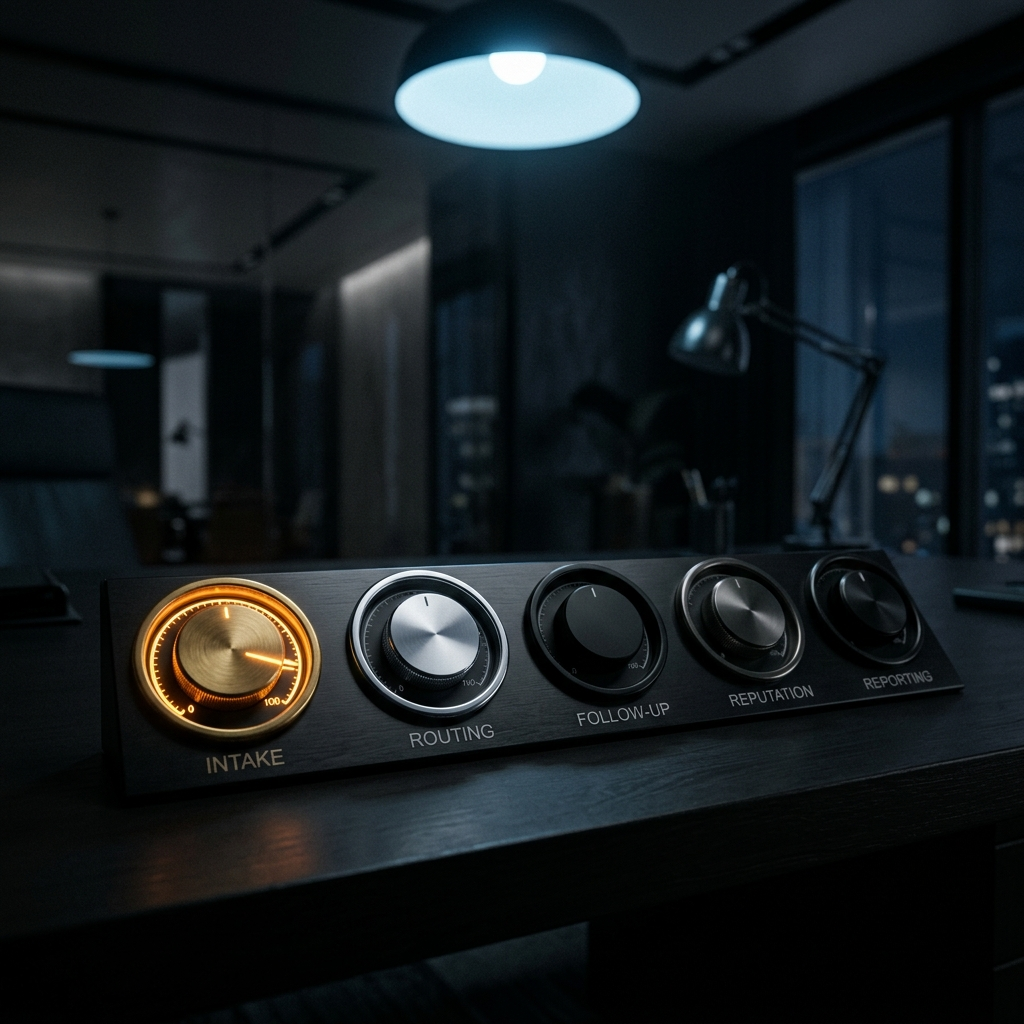
The 5 Layers of an AI Business Operating System (And Which One Is Killing Your Revenue Right Now)
Most service businesses have automated one layer and left the others broken. Learn the five layers of an AI Business OS and how to find which one is leaking revenue.
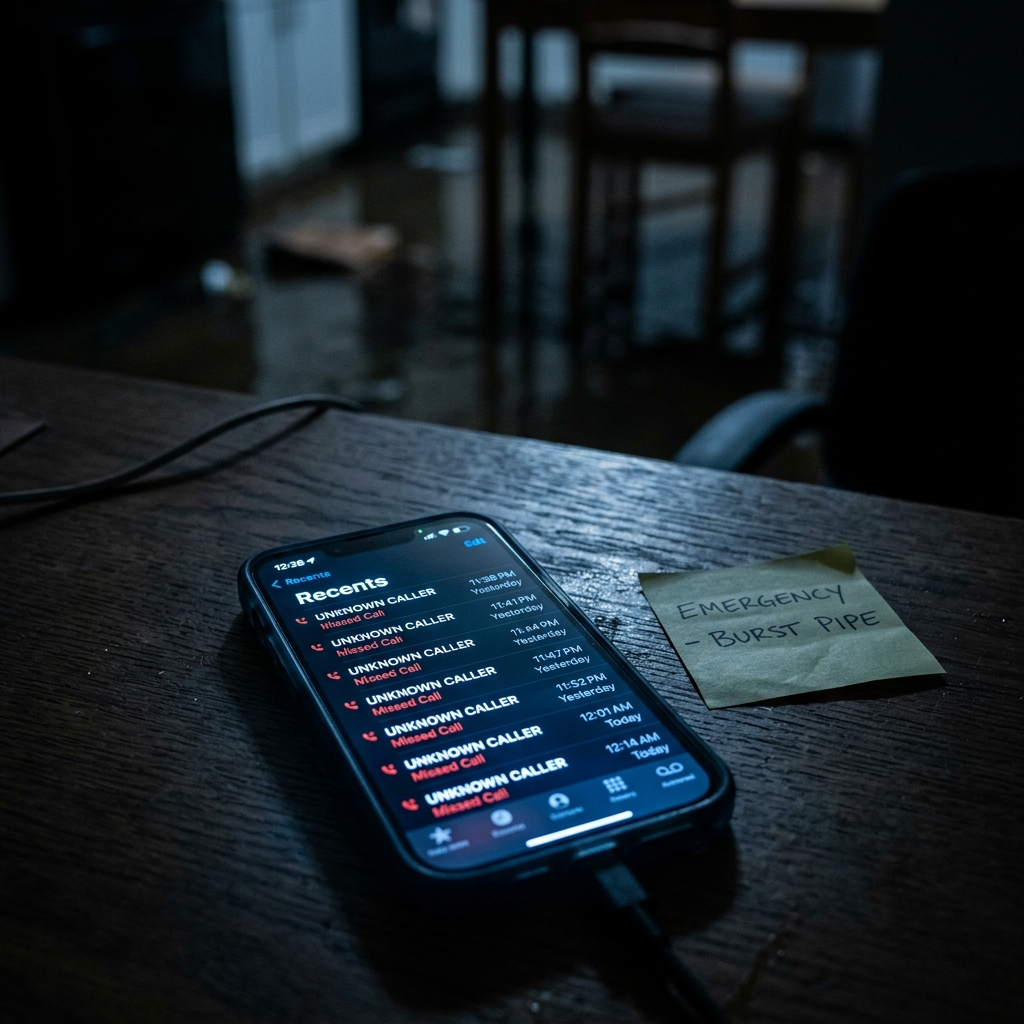
Layer 4 Deep Dive: The AI Reputation Engine: How to Automate Review Generation Without Feeling Slimy
Learn how AI review automation helps service businesses request reviews at the right time, protect unhappy customers, and build reputation without sounding pushy.
Calculate the revenue leak.
Stop guessing. See how much demand your business may be losing through missed calls, slow replies, weak booking, review gaps, and follow-up drag, then decide whether AI Business Automation is the right system path.
Run the calculationPrefer to hear it first?
Call the live AI receptionist and test the conversation.
Call the live AI receptionist anytime. Tell it about hvac emergency service, then hear a short live roleplay based on the calls your front desk actually gets.