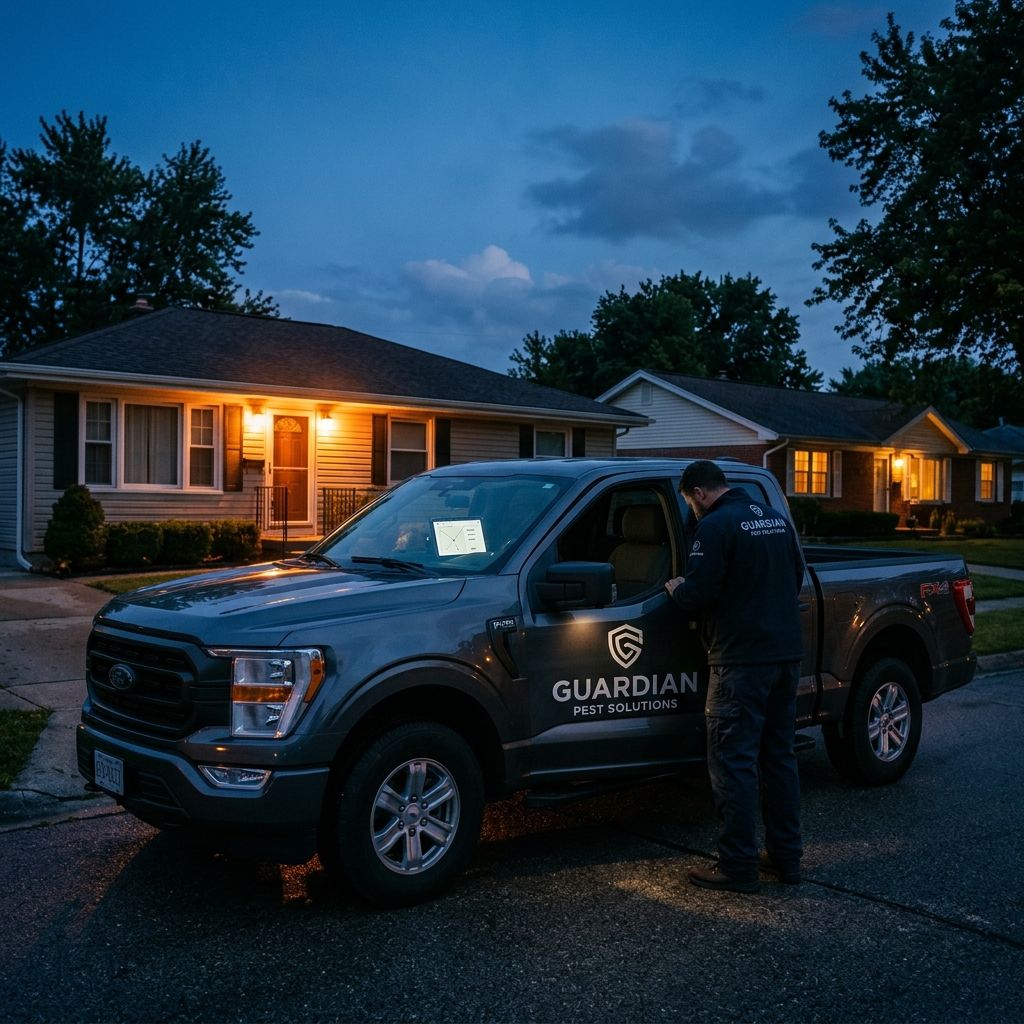
The AI-Powered Business Operating System for Pest Control Companies: A Full-Stack Breakdown matters because pest control owners lose revenue when calls, forms, booking, reviews, and follow-up depend on manual attention. The practical fix is to measure the front-door leak, then install the smallest AI-assisted system that answers, routes, books, or follows up faster.
Quick Answer:An AI-Powered Business Operating System for a pest control company is built around the subscription conversion engine: an AI intake system that captures spring surge calls at 3x baseline volume without voicemail, a triage engine that routes active infestation emergencies to same-day dispatch and general inquiries to the subscription plan quote flow, a follow-up engine that converts one-time treatment customers into annual plan subscribers and runs quarterly retention check-ins to prevent cancellation, a reputation engine that requests reviews 48 hours after treatment, and an intelligence layer that tracks subscription retention rate, one-time-to-plan conversion rate, and spring pipeline build weekly.
The Subscription Opportunity Most Pest Control Companies Are Not Capturing
Pest control companies that run entirely on one-time service calls are leaving their most valuable asset untapped: the recurring revenue conversion opportunity that exists inside every job they complete.
A homeowner who calls because they have ants in the kitchen is not a $180 customer. They are a $2,470 customer - if the right follow-up fires within 48 hours of the treatment. The same homeowner, converted to a monthly pest prevention subscription at $49 per month and retained for 4 years through systematic check-ins and renewal sequences, generates $2,352 in recurring revenue from a single $180 initial call.
Most pest control operators know this math in the abstract. They offer quarterly and annual plans at the point of service. Some customers say yes. The majority say "let me think about it" - and then are never contacted again. The plan conversion opportunity expires. The customer becomes a one-time relationship rather than a multi-year one.
The AI Business OS closes this gap by automating the entire conversion and retention sequence: the one-time customer receives a subscription offer follow-up 48 hours after treatment; if they do not convert, they receive a second touch at Day 7; if they still do not convert, they enter a seasonal reactivation queue that fires before the next pest season with a renewal offer. The same system that captures the initial inquiry also captures the subscription conversion opportunity and the long-term retention - without any manual follow-up required.
Layer 1: AI Intake for Pest Control Spring Surge Calls
The pest control season is won or lost in a 6 to 8-week window beginning in late March. This is when homeowners see the first ants of the season, receive the first mosquito bite, or notice the first sign of termites - and call for treatment. Call volume at a typical pest control company during peak spring surge runs 200 to 350 percent above the winter baseline. The companies that capture the largest share of this surge volume set their subscription base for the entire year.
The AI intake system for pest control is configured for volume elasticity - handling 10x normal call volume without voicemail gaps. Voice AI answers every call that the office team does not pick up within two rings, gathers the pest type, severity description, and service address, and routes the inquiry appropriately. Missed Call Text-Back fires within 60 seconds for all unanswered calls: "Hi [Name], this is [Company]. We saw your call - what pest issue are you dealing with? Reply with your address and the problem and we will get you scheduled as soon as possible."
The proactive element of pest control spring intake is the February pre-season database campaign - a systematized outreach to the full past-client database 6 to 8 weeks before the spring rush begins. The campaign offers early-season pricing on annual plans and pre-books treatment slots before the calendar fills. Pest control companies running this campaign consistently capture 15 to 25 percent of their annual plan renewals before the spring surge begins - reducing the intake burden during peak demand and locking in recurring revenue before competitors have started advertising.
Layer 2: AI Triage for Infestation Emergencies and Prevention Plans
Pest control triage operates on two urgency levels with very different response requirements.
Active infestation emergencies.Signals: large number of rodents seen, termite swarm, wasp or hornet nest in living area, bed bug discovery, cockroach infestation in kitchen. These route to same-day or next-morning dispatch with an immediate acknowledgment: "We received your urgent pest request - our team is being alerted now and will contact you within 30 minutes to schedule your emergency service." Emergency pest calls, when answered and acknowledged within 5 minutes, convert at 70 to 80 percent - because the prospect is motivated, afraid, and highly willing to commit immediately.
Prevention and general treatment inquiries.Signals: seasonal prevention, general pest control pricing, annual plan inquiry, first-time treatment request. These route to the subscription plan quote flow - an automated conversation that describes the available service tiers, provides pricing, and delivers a booking link for the initial treatment visit. The quote flow includes a plan comparison that positions the monthly subscription as the cost-effective, permanent solution versus a one-time treatment that leaves the home vulnerable to re-infestation.
The triage framing for pest control is unique in one respect: the routing system always positions the subscription plan as the primary call-to-action, even for emergency calls. After an emergency treatment is confirmed, the prospect immediately receives information about the prevention plan that would have reduced the likelihood of the emergency occurring - "Most clients who experienced a [pest type] infestation benefit from our monthly prevention plan, which reduces re-infestation risk by 85 percent. We can add this to your service automatically - here is how it works."
Layer 3: AI Follow-Up From One-Time Calls to Subscription Plans
The most valuable follow-up sequence in pest control is the one-time treatment to subscription conversion sequence, which runs in the 14 days following any initial treatment job.
Day 2:SMS follow-up confirming the treatment was completed, asking if the customer has any questions about what was applied and what to expect. This touchpoint has the dual function of quality assurance and relationship building - it positions the company as caring about the result, not just the transaction.
Day 4:Email with educational content about the pest type that was treated - life cycle, re-infestation conditions, prevention tips. At the bottom, a soft offer: "Our monthly prevention plan starts at $49 per month and protects against re-infestation year-round. Existing customers receive their first month free."
Day 8:SMS - "Most customers who had your type of treatment see results within 7 to 10 days. How is everything looking? Reply if you need anything - and if you are interested in ongoing protection, we are offering our prevention plan at a reduced rate this month."
Day 14:Email - final conversion offer with a clear side-by-side of one-time treatment costs versus the annual plan value: "You have already spent $180 on treatment. Our annual plan covers the same service plus quarterly prevention visits for $316 per year - protection for the full year at less than two additional one-time treatments."
Pest control companies running this sequence convert 22 to 32 percent of one-time treatment customers into active subscription plans within the first 14 days - generating $588 to $2,470 in lifetime value from a customer who initially represented $180.
Layer 4: AI Reputation for Spring Decision-Making
The pest control review request fires 48 hours after initial treatment - the window when the homeowner has had a day to observe results, the confidence that the pest problem is under control is at its highest, and the relief is still fresh enough to motivate action.
The review request references the specific pest type and the outcome: "Hope you are not seeing any more [pest type] - if our team took care of the problem, a quick Google review helps your neighbors find reliable pest control in [City] before the season hits."
The neighbor framing is particularly powerful in pest control because pest issues are perceived as slightly embarrassing and homeowners feel genuine motivation to help their community find a service that handled the situation discreetly and professionally. This framing generates 15 to 22 percent response rates on review requests - above average for home services.
A pest control company completing 90 service calls per month with a 17 percent review response rate generates 15 new reviews per month - 180 per year. Starting from 32 reviews, the company ends the year at 212. At that level, in most local markets, the company dominates position 1 in the map pack for "pest control near me" - the query that captures the majority of spring surge new customer searches.
The economic value of map pack position 1 versus position 3 in pest control, in a mid-size market during the 8-week spring surge, is approximately 40 to 60 additional organic inbound calls - each representing a potential $180+ one-time treatment and a potential $885+ annual plan conversion.
Layer 5: AI Intelligence for Subscription Revenue Visibility
One-time to subscription conversion rate.The percentage of one-time treatment customers who convert to a monthly or annual plan within 30 days of their initial service. Target: above 20 percent. Below 12 percent indicates a follow-up system gap or a pricing problem in the plan tier structure.
Subscription retention rate at 6 months.The percentage of customers who remain on their subscription plan 6 months after initial enrollment. This is the most predictive metric for 24-month LTV. A 6-month retention rate below 75 percent indicates a service quality or communication problem that is compounding into significant long-term revenue loss.
Spring pipeline build rate.From February 1, the count of annual plans sold or renewed per week, tracked against the prior year and against the company's seasonal capacity plan. The spring pipeline build rate determines whether the company will enter the surge window with a full calendar or a half-full one.
Review velocity versus top competitor.In pest control, spring surge timing makes the review count particularly important in February and March - before the surge begins. A company that enters spring with 180 reviews is in position 1. A company with 45 reviews is on page 2. Layer 5 tracks this gap weekly and signals when a competitor is gaining review velocity, allowing the company to accelerate its own review request cadence before the competitive gap widens.
The Compounding Subscription Model
The pest control company that implements the full AI Business OS and runs it for 24 months is not operating a service business. It is operating a subscription business with a service delivery mechanism. The economics are fundamentally different: revenue is predictable, customer acquisition costs are amortized over multi-year LTV, and the off-season is not a revenue drought - it is a retention and reactivation period where the AI system is systematically maintaining customer relationships that will convert back to active visits in the spring.
The companies dominating pest control in their local markets in 2026 are not the ones with the most trucks or the lowest prices. They are the ones with the most subscriptions - and those subscriptions were built one systematic follow-up sequence at a time.
FAQ
What is an AI business operating system for a pest control company?
An AI business operating system for a pest control company handles inbound inquiry capture 24/7, follows up on unsold one-time service quotes, converts single-service clients to annual agreements, sends proactive seasonal campaigns to past clients, and requests Google reviews after every completed service - automatically, without office staff managing each touchpoint.
How does AI help pest control companies sell more annual service agreements?
After every one-time service call, the AI follow-up system introduces the annual agreement with a specific value frame - comparing cost per service on a plan versus on-demand pricing, and highlighting the guarantee element (free return visits if pests return). This sequence runs 3 touches over 3 weeks. Pest control companies using it convert 25 to 35 percent of one-time clients to recurring agreements, dramatically improving customer LTV.
How does AI help with seasonal pest control lead surges?
Pre-built seasonal campaigns fire automatically to the full past-client database. In early spring (ants, wasps), summer (mosquitoes, outdoor pests), and fall (rodents seeking warmth indoors), the system sends relevant, timely campaigns with booking links. These campaigns generate 15 to 25 percent response rates from warm audiences who have already experienced the company's service - without a single manual outreach effort from the team.
How quickly do pest control companies see results from an AI business OS?
Most pest control operators see measurable results within 30 to 60 days. After-hours call capture shows results immediately. Annual agreement conversion sequences show results within 45 to 60 days. Google review accumulation builds map pack advantage over 3 to 9 months.
How much does an AI business OS cost for a pest control company?
A full-stack AI Business OS typically runs $400 to $1,200 per month for a pest control operation. For most operators, the cost is recovered within the first month from one or two additional annual agreement conversions. Annual return typically runs $30,000 to $80,000 depending on market size.
Does an AI system replace pest control office staff or technicians?
No. The AI Business OS handles the communication and follow-up layer - everything that happens between the first inquiry and the service visit, and everything that happens after the service is completed. Technicians focus on service delivery. Office staff focus on scheduling logistics and complex customer situations that require human judgment.
Before You Choose a System
Use this section as a quick buyer check. A service business owner does not need another vague automation pitch. They need to know which part of the front door is leaking, what the system will change, and how they will measure whether the fix is working.
Source method: compare the article against your own call log, CRM notes, booking calendar, missed-call records, web form timestamps, and Google Business Profile review recency. Those records are more useful than a generic benchmark because they show what buyers actually experienced in your business.
What proof should I look for in my own business?
Look for proof in the places where demand either moved forward or stalled: missed calls, short calls, unbooked forms, slow callbacks, no-show recovery, old leads, and reviews that were never requested. If the business cannot see those moments clearly, the first improvement is better tracking and routing.
How do I know whether this is a marketing problem or an operations problem?
If people are already calling, filling forms, asking for prices, requesting appointments, or comparing reviews, the problem is usually operations. More marketing will not fix a front door that lets warm demand wait. The better move is to capture and route the demand already arriving.
What should happen after the first response?
The first response should create a next step: booked appointment, estimate path, intake handoff, callback window, review request, or reactivation sequence. A response that only says someone will get back to you is not enough when the buyer is comparing several providers at once.
Where does The Quiet Protocol fit?
The Quiet Protocol fits when the business already has demand but too much of it depends on manual attention. We connect AI receptionist coverage, web intake, missed-call recovery, booking logic, follow-up, review requests, and reactivation into one managed front-door system.
The loss estimate is basic business math, not a magic claim.
Revenue-leak examples on this site are built from visible operating inputs: inquiry volume, missed-call or slow-response rate, booking rate, average job or client value, repeat value, and follow-up recovery. The fastest way to make the number real is to run the diagnostic for your closest business type, then compare it against your own call log, CRM, booking calendar, form timestamps, and review activity.
Use this before you buy another tool.
Pull one recent week of calls, forms, chats, and booking requests. Mark every inquiry that waited, went unanswered, needed a manual reminder, or never reached a clear next step. That simple review shows whether the problem is demand, staffing, or the front-door system.
If those answers are hard to find, that is the first issue to fix. The Quiet Protocol installs the system that answers faster, routes cleaner, books more of the right demand, requests reviews, and keeps follow-up from depending on memory.

Vikram Roy is the founder of The Quiet Protocol, a Toronto-based AI systems firm serving service businesses across the Greater Toronto Area, Canada, and the United States. He works directly with home service companies, dental practices, clinics, and local businesses to install AI operating systems that capture more leads, reduce no-shows, grow reviews, and recover revenue without adding manual overhead. All content is written from Toronto, Ontario. Connect on LinkedIn →
See the system page tied most closely to the problem this article is diagnosing.
Pest ControlOpen the industry path where this revenue leak is framed in operational terms.
Run Revenue Leak DiagnosticQuantify the leak before you decide what type of system needs to be installed.
Call the AI Receptionist DemoHear the receptionist live, give it your business context, and test a short caller roleplay before you book.
Results & ProofReview what the system changes once the front door is rebuilt around response and continuity.

What Is an AI-Powered Business Operating System? (A practical Guide for Service Business Owners)
Every SaaS vendor is calling their product an AI Business OS. Here is what the term actually means, what a real one includes, and why it matters for service businesses.
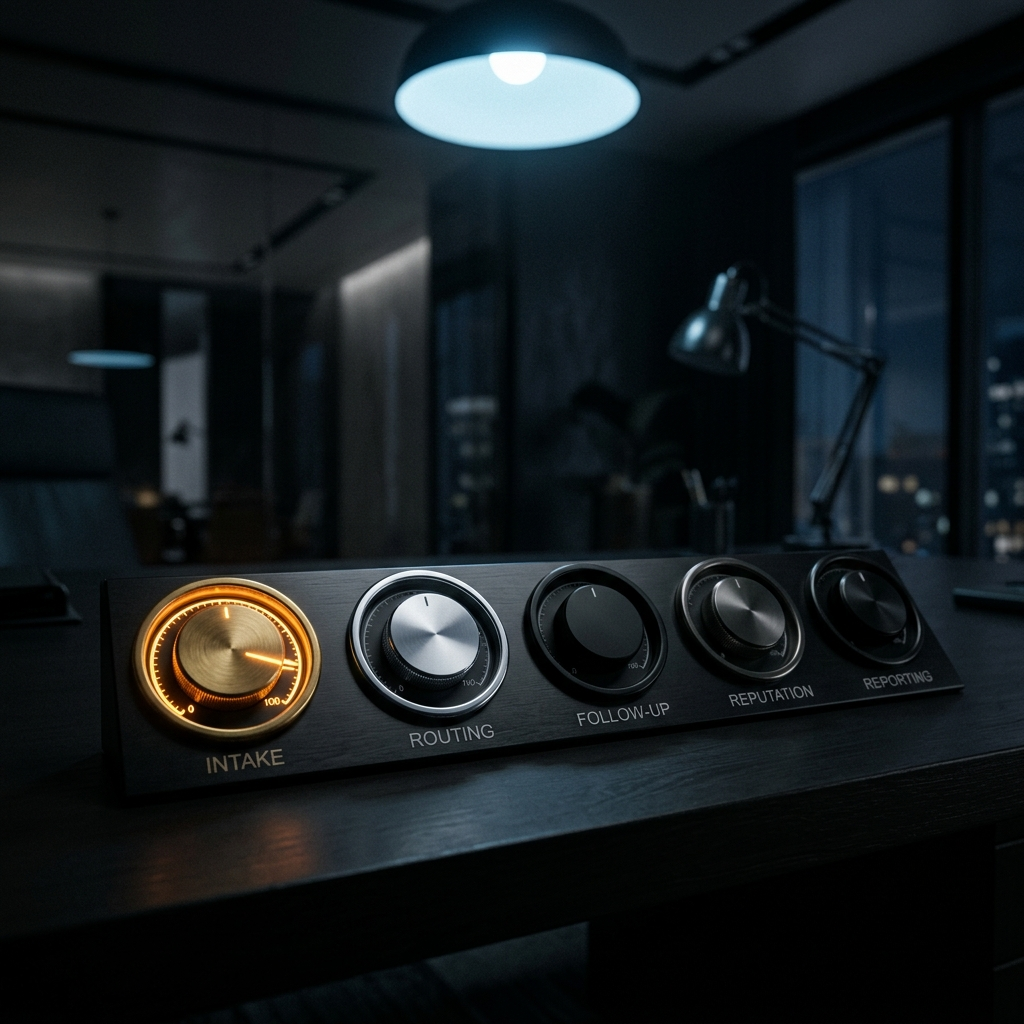
The 5 Layers of an AI Business Operating System (And Which One Is Killing Your Revenue Right Now)
Most service businesses have automated one layer and left the others broken. Learn the five layers of an AI Business OS and how to find which one is leaking revenue.
Layer 4 Deep Dive: The AI Reputation Engine: How to Automate Review Generation Without Feeling Slimy
Learn how AI review automation helps service businesses request reviews at the right time, protect unhappy customers, and build reputation without sounding pushy.
Calculate the revenue leak.
Stop guessing. See how much demand your business may be losing through missed calls, slow replies, weak booking, review gaps, and follow-up drag, then decide whether AI Business Automation is the right system path.
Run the calculationPrefer to hear it first?
Call the live AI receptionist and test the conversation.
Call the live AI receptionist anytime. Tell it about pest control, then hear a short live roleplay based on the calls your front desk actually gets.