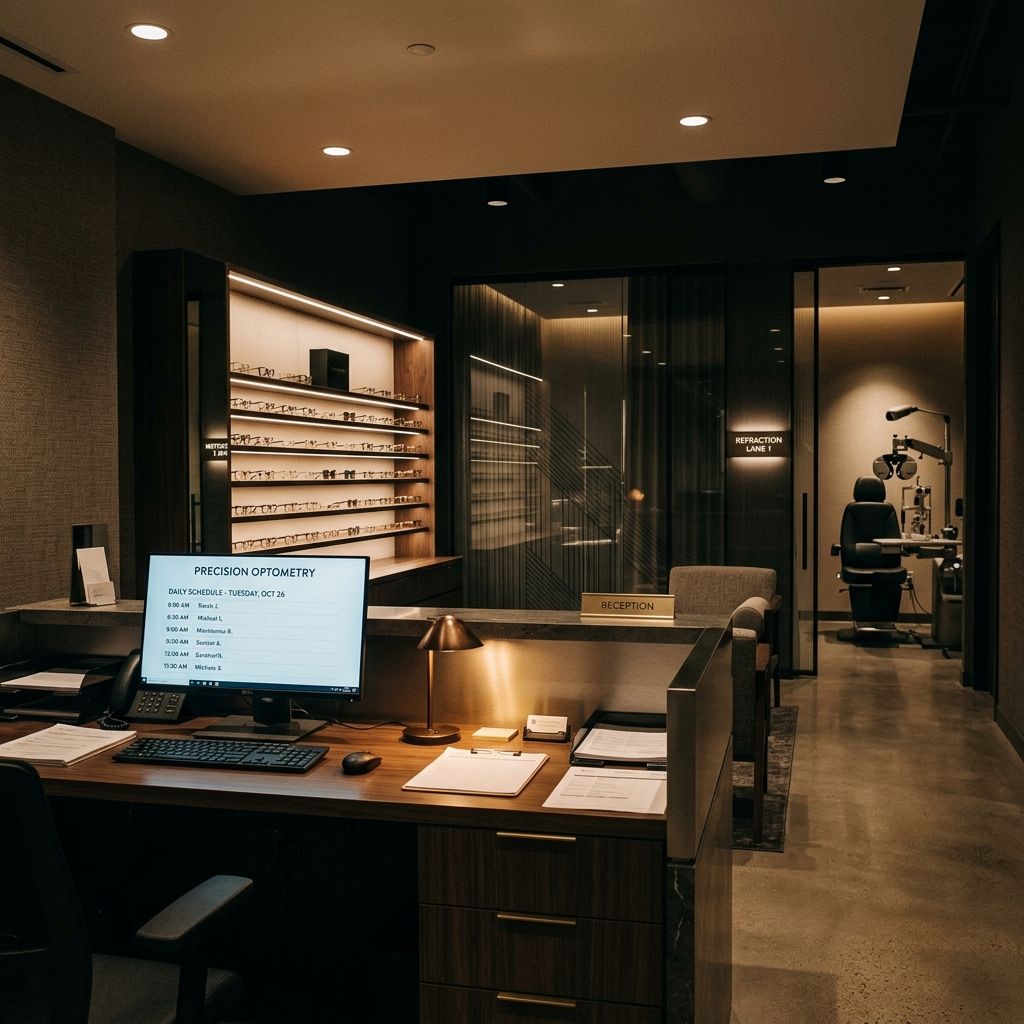
Optometry is one of the most underserved markets in the AI operations conversation. The patient volume is high, the recall cycle is annual, and the revenue mix, exam fees, frames, lenses, contact subscriptions, creates multiple leverage points that most practices are leaving on the table.
[IMAGE_1]
key: p_optom_hero
isHero: true
fraction: null
alt: Cinematic dark editorial photograph of a modern optometry practice reception area in the early morning , clean front desk with an appointment schedule visible on a monitor, a display of eyeglass frames softly lit in the background, warm overhead lighting, a refraction lane corridor visible through a glass partition. No face visible. Conveys clinical precision, warmth, and systematic operational readiness.
prompt: Ultra-premium cinematic dark editorial photograph. A modern optometry practice reception area in the early morning before patients arrive. The front desk is organized with a monitor showing the day's schedule. Warm overhead lighting. In the background a softly lit eyeglass frame display and a refraction lane corridor visible through a glass partition. No face visible. The mood is warm clinical professionalism , precision care, calm, and systematic readiness. Bloomberg Businessweek editorial style. 1200x630 landscape. Ultra-premium.
[IMAGE_2]
key: p_optom_annual_recall_gap
isHero: false
fraction: 0.28
alt: The Optometry Annual Recall Gap , dark two-column infographic on midnight navy. WITHOUT AI OS (grey): Average optometry practice sends recall notices by mail once per year. 38% of patients never receive the notice due to address changes. 24% of patients who receive the notice intend to call but forget. 18% of patients book when called manually , but manual recall calls reach only 40% of overdue patients. Net result: 52% of annual exam patients are lost to recall failure. WITH AI OS (gold): Recall fires 30 days before each patient's annual exam due date via SMS. 14-day follow-up for non-responders. Email follow-up at due date with online booking link. Final 30-day post-due text. Net result: 74% of due patients book within 45 days of their due date. Caption: Your patients intend to come back. The system just has to make it easy enough to actually happen.
prompt: Premium dark two-column comparison infographic on midnight navy. Title in gold caps: THE OPTOMETRY ANNUAL RECALL GAP. LEFT grey column WITHOUT AI OS: Practice sends recall by mail once per year. 38% never receive the notice. 24% intend to call but forget. Manual recall calls reach only 40% of overdue patients. Grey result: 52% OF ANNUAL EXAM PATIENTS LOST TO RECALL FAILURE. RIGHT gold column WITH AI OS: SMS recall fires 30 days before annual due date. 14-day follow-up for non-responders. Email at due date with booking link. Final 30-day post-due text. Gold result: 74% OF DUE PATIENTS BOOK WITHIN 45 DAYS. Caption: Your patients intend to come back. The system just has to make it easy enough to actually happen. No people. Ultra-premium. 1200x630.
[IMAGE_3]
key: p_optom_contact_lens_reorder
isHero: false
fraction: 0.57
alt: The Contact Lens Reorder Revenue Leak , dark flow diagram on charcoal. Shows what happens to contact lens patients between purchases. WITHOUT SYSTEM (grey path): Patient buys 6-month supply at exam. Supply runs out in month 5. Patient searches Amazon or 1800Contacts. Practice never hears from patient until next annual exam , or never. Revenue lost: $180 to $360 per patient per year in optical revenue that went to a third-party retailer. WITH AI OS (gold path): Month 4 after purchase: system sends automated reorder reminder , "Your contact lens supply should be running low. Reorder through us and we'll have them ready in 2 days." Link to in-practice online order portal. Month 5: follow-up if no reorder placed. Result: 35 to 45% of contact lens patients who previously ordered from third parties reorder through the practice. Average recovery: $240 per patient per year. Caption: Contact lens patients are the highest-recurring-revenue segment in optometry. Most practices lose half of them to Amazon every year.
prompt: Premium dark flow diagram infographic on deep charcoal. Title in gold caps: THE CONTACT LENS REORDER REVENUE LEAK. Two parallel paths. LEFT grey path WITHOUT SYSTEM: Patient buys 6-month supply at exam. Supply runs out month 5. Patient searches Amazon or 1800Contacts. Practice never hears from patient. Grey loss: $180 TO $360 PER PATIENT PER YEAR LOST TO THIRD-PARTY RETAILERS. RIGHT gold path WITH AI OS: Month 4 , automated reorder reminder fires via SMS with link to in-practice order portal. Month 5 , follow-up if no reorder placed. Gold result: 35 TO 45% OF CONTACT LENS PATIENTS REORDER THROUGH THE PRACTICE. Average recovery: $240 PER PATIENT PER YEAR. Caption: Contact lens patients are the highest-recurring-revenue segment in optometry. Most practices lose half of them to Amazon every year. No people. Ultra-premium. 1200x630.
[IMAGE_4]
key: p_optom_revenue_recovery
isHero: false
fraction: 0.85
alt: Optometry Practice Annual Revenue Recovery , dark infographic on midnight navy. Four channels. Channel 1: Annual Recall Lift , from 48% to 74% recall completion on 400 active patients per year = 104 additional exams × $250 avg exam + materials = $26,000/year. Channel 2: Contact Lens Reorder Capture , 180 contact lens patients in database × 40% third-party leakage × 40% recapture × $240 avg annual reorder value = $6,912/year. Channel 3: No-Show Reduction , 22 no-shows per month reduced to 8 × $180 avg lost appointment value = $25,920/year recovered. Channel 4: Review Map Pack Lift , top-3 Google Maps position drives 18 new organic inquiries/month × 55% booking × $320 avg first visit = $38,016/year. Large gold total: ESTIMATED ANNUAL RECOVERY , $96,000+. Caption: The patients are already in your system. The revenue is already in your community. The system just connects them.
prompt: Premium dark revenue recovery infographic on midnight navy. Title in gold caps: OPTOMETRY PRACTICE ANNUAL REVENUE RECOVERY. Four horizontal calculation rows. Row 1: ANNUAL RECALL LIFT , from 48% to 74% on 400 active patients = 104 additional exams × $250 avg exam plus materials = gold $26,000 per year. Row 2: CONTACT LENS REORDER CAPTURE , 180 contact lens patients × 40% third-party leakage × 40% recapture × $240 avg = gold $6,912 per year. Row 3: NO-SHOW REDUCTION , 22 no-shows per month reduced to 8 × $180 avg lost value = gold $25,920 per year. Row 4: REVIEW MAP PACK LIFT , top-3 Google position × 18 new organic inquiries × 55% booking × $320 avg = gold $38,016 per year. Gold dividing line. Large gold text: ESTIMATED ANNUAL RECOVERY , $96,000+. Caption: The patients are already in your system. The revenue is already in your community. The system just connects them. No people. Ultra-premium. 1200x630.
relatedPosts:
- what-is-ai-powered-business-operating-system-service-business
- ai-business-os-five-layers-service-business
- ai-reputation-engine-review-automation-service-business
-->
Quick Answer:An AI Business Operating System for an optometry practice solves three specific revenue problems that most practices don't track because they don't have a system to track them: patients who are overdue for their annual exam but never got a timely recall message, contact lens patients who reorder from Amazon instead of the practice, and new-patient organic inquiries that go to a competitor with more Google reviews. Practices that implement the full system typically recover $80,000 to $110,000 per year from patients already in their database and calls already coming in.
---
The Practice That Depends on People Coming Back
Optometry is a recurring-revenue business masquerading as a one-visit-per-year business.
Think about what a loyal optometry patient is worth over 10 years. An annual comprehensive eye exam. A new frame and lens purchase every 1 to 2 years. A contact lens prescription refill every year. Possibly a second pair of glasses , sunglasses, computer glasses, a backup. If the practice offers specialty services , dry eye treatment, myopia management for children, vision therapy , the value is higher still.
The lifetime value of a loyal optometry patient runs $4,000 to $8,000 over a decade. The average first-visit revenue is $250 to $400. That means the real money in an optometry practice is not acquiring new patients , it is keeping the ones already in the system coming back consistently, spending with the practice rather than online retailers, and referring their family members.
Most optometry practices are not very good at the retention side of this equation. Not because they don't care. Because they don't have a system for it. They rely on an annual postcard recall that 40 percent of patients never receive, manual follow-up calls that get made inconsistently, and a hope that patients will remember to book next year's exam on their own.
The AI Business OS is built specifically for the retention problem. Here is how it applies, layer by layer.
---
What a Typical Recall Season Looks Like Without a System
It is March. The practice has 1,200 active patients. Approximately 350 of them are due for their annual comprehensive exam in the next 60 days.
The front desk has been mailing recall postcards since January. About 60 percent of those postcards reached the right address. Of the patients who received a card, roughly half intend to call , but intending to call and actually calling are different things. The practice has received about 85 calls from due patients so far. That is roughly 24 percent of the 350 who were due.
The remaining 265 patients are somewhere between "forgot" and "gone." Some of them will come back next year when they get another card. Some of them will not , they found another optometrist, they are now getting their exam through a vision plan at a retail chain, or they simply let their prescription lapse and switched to online ordering without a current Rx.
This scenario is not failure. It is the industry baseline. The average independent optometry practice retains 60 to 68 percent of its active patient base year over year , which sounds acceptable until you calculate what the 32 to 40 percent attrition costs at $280 average annual revenue per patient.
For a practice with 1,200 patients, that attrition is $100,000 to $135,000 per year in recurring revenue that walked out the door quietly, without a complaint, without a goodbye.
---
Layer 1: Intake for the New Patient Searching at 9 PM on a Tuesday
Most new optometry patients are not referred by a doctor. They search Google. "Eye doctor near me accepting new patients." "Optometrist [city] accepting VSP." "Eye exam near me."
When they land on the search results page, two things determine whether they call your practice: your Google Maps ranking (position 1, 2, or 3 in the map pack) and your review count and rating. Position 4 and below get less than 10 percent of the clicks. Reviews below 4.5 stars or counts below 30 create hesitation in a category where patients are trusting you with their vision.
Once they click and call , or fill out a web form , the intake layer takes over. The AI system answers every inquiry immediately: calls, web forms, and missed call text-backs for any call that rings unanswered during a busy front desk moment.
For an optometry practice, the intake system captures: the patient's vision plan or insurance (to confirm in-network status before the appointment), whether they need an exam, contacts, glasses, or all three, whether they are a new or returning patient, and their preferred appointment time. It offers real-time scheduling , the patient picks a slot and gets an immediate confirmation text with pre-appointment instructions.
This process, done manually, takes 4 to 8 minutes of front desk time per new patient inquiry. The AI system handles it in under 2 minutes, at any hour, with no hold time.
---
Layer 2: Routing Three Very Different Types of Optometry Contacts
Optometry contacts fall into three categories that need different handling.
Urgent medical contacts.A patient who has noticed sudden vision changes, floaters, flashes of light, or a new dark spot in their visual field needs to be seen today , or directed to an ophthalmologist or emergency room immediately. These are not routine scheduling situations. The routing system recognizes urgent symptom language and routes these contacts to a staff callback within 30 minutes, with an explicit note: "This sounds like it may need to be seen today , we're going to have someone call you within the next 30 minutes to get you taken care of."
Routine exam scheduling.New patient inquiries, annual exam scheduling, contact lens exam requests, follow-up visits. These go to the standard scheduling flow , vision plan verification, appointment slot selection, confirmation. Smooth, fast, no hold time.
Product and service inquiries.Contact lens reorders, frame questions, glasses pickup, billing inquiries, insurance verification. These route to the appropriate self-service option or the front desk queue during business hours.
The value of correct routing in optometry is in protecting the urgent contacts from getting lost in the routine scheduling queue. An eye emergency that waits three days for a callback is both a medical problem and a trust problem , and it generates exactly the kind of negative review that cancels out months of positive ones.
---
Layer 3: Follow-Up for Annual Recall, Contact Lens Reorders, and Online Leakage
The follow-up layer for an optometry practice runs on three separate tracks , and two of them address revenue that most practices don't even realize they're losing.
Annual Exam Recall
Every patient in the practice management system has a next-due date for their annual comprehensive eye exam. The AI recall system fires its first message 30 days before that date , a text that is friendly, not clinical: "Hi [Name] , it's time to schedule your annual eye exam. Your vision plan typically renews around this time of year, so it's a great time to use your benefits before they reset. Book here: [link]."
This message does several things at once. It reminds the patient. It frames the appointment as using a benefit they already paid for. And it makes booking frictionless , one tap to the online scheduling page.
If the appointment is not booked within 14 days of the first message, a second reminder fires , this time by email, with a slightly different angle (vision health frame rather than insurance frame). If the due date passes without a booking, a third message fires at 30 days post-due with a direct booking link. At 60 days post-due, the patient moves to a reactivation list that fires a seasonal campaign twice per year.
This four-touch recall sequence typically converts 72 to 78 percent of due patients to booked appointments within 45 days of their due date , compared to 24 to 35 percent for practices relying on annual mail recall alone.
Contact Lens Reorder Recovery
This is the revenue leak that most optometry practices never measure.
A contact lens patient buys a 6-month supply at their annual exam. In month 4, their supply starts running low. What happens next depends entirely on how easy reordering is. If the practice has not reached out, the patient opens their phone, searches for their contact lens brand, and finds it on Amazon , often at a competitive price, with 2-day delivery. The practice loses $180 to $360 in annual optical revenue per patient to a third-party retailer.
At scale, for a practice with 300 active contact lens patients and a 45 percent Amazon-leakage rate, that represents $24,000 to $48,000 per year in optical revenue that leaves the practice without anyone noticing.
The AI reorder system fires a proactive message in month 4 for every contact lens patient: "Hi [Name] , your contact lens supply should be getting low. Reorder through us and we'll have your lenses ready in 2 days , same price, no shipping wait. Order here: [link]." A follow-up fires in month 5 if no reorder was placed.
Practices using this sequence recapture 35 to 45 percent of patients who were previously ordering from third parties. The message is not about loyalty , it is about convenience. Two-day in-practice pickup versus Amazon delivery is not a meaningful difference for most patients. The practice just has to ask first.
Eyeglass and Frame Upgrade Sequences
For patients who purchased frames 2 or more years ago, the AI system triggers an annual upgrade nudge , timed to vision plan renewal: "Your vision benefits are coming up for renewal , this is also a great time to look at new frames. We have updated our selection significantly this year." This sequence converts 8 to 12 percent of recipients to an additional frame purchase in the same year as their annual exam.
---
Layer 4: Reputation and Reviews That Support Map Visibility
New patients searching for an eye doctor in your market are looking at 3 to 5 practices before they call. In a typical mid-size market, the top-ranked optometry practice on Google Maps has 180 to 400 reviews with a 4.8 or above rating. The third-ranked practice has 60 to 120. Everyone below position 3 is largely invisible to organic search traffic.
The review request for optometry fires 24 hours after every exam , when the patient has had time to settle into their new prescription (if applicable) and satisfaction is fresh but not forgotten. The message is specific: "We hope your new prescription is feeling great , if you had a good experience with us, a Google review helps other people in [city] find an eye care practice they can trust: [link]."
The phrase "find an eye care practice they can trust" is deliberate. It frames the review not as a favor to the business, but as a contribution to the community , which resonates with the kind of patient who had a genuinely good experience and wants to help others.
An optometry practice completing 280 exams per month with a 10 percent review response rate generates 28 new reviews per month , 336 per year. A practice starting from 40 reviews reaches 400 within 14 months. At that point, the map pack position is typically top-2, and organic new-patient traffic climbs 30 to 50 percent without any paid advertising investment.
---
Layer 5: Intelligence for Recurring Revenue Visibility
Recall completion rate by due-date cohort.The percentage of patients who complete their annual exam within 45 days of their due date. This is the most important retention metric in optometry. Below 60 percent means patients are drifting , either to competitors or simply lapsing. Above 75 percent means the recall system is working and compounding.
Contact lens reorder rate (in-practice vs. third-party).The percentage of contact lens patients who reorder through the practice versus ordering elsewhere. Most practices that start tracking this are surprised by how low it is. The reorder system moves this number immediately.
New patient organic source split.What percentage of new patient inquiries came from Google Maps search versus referral, insurance directory, or paid advertising. As the review velocity increases and the map pack ranking improves, this number shifts , and the cost per acquired patient falls.
No-show and cancellation rate.Tracked weekly. The appointment confirmation sequence typically reduces this from 12 to 18 percent to 4 to 6 percent within 60 days of implementation. Every recovered no-show is $180 to $280 in exam revenue that stayed in the schedule.
Average optical capture rate.The percentage of exam patients who purchase frames or contact lenses at the time of their visit, or within 30 days via the reorder sequence. This is the revenue number that separates a practice doing $400 per patient per year from one doing $280.
---
The Practice That Feels One Step Ahead
There is a specific feeling patients describe about the optometry practices they stay with for years.
It is not the technology. It is not the frame selection. It is the feeling that the practice is on top of things , that they reach out before you have to, that they remember when you are due, that they make it easy to do the thing you already intended to do.
The AI Business OS creates that feeling systematically. Not by hiring more staff. Not by making the front desk work harder. By building the communication layer that makes every patient feel like the practice is looking out for them , every month, every year, without anyone needing to remember to do it.
That is the optometry practice that patients never leave. And it is the one that dominates Google Maps in its market within 18 months.
---
FAQ
What is an AI business operating system for an optometry practice?
An AI business operating system for an optometry practice is a connected set of automation tools that handles new patient intake 24/7, annual exam recall for every patient in the system, contact lens reorder reminders, appointment confirmation and no-show reduction, and Google review requests after every visit , all automatically, without front desk staff managing each step. It is not a practice management system replacement. It is the communication and retention layer that sits on top of it.
How does automated annual recall work for an optometry practice?
The system reads each patient's annual exam due date from the practice management system. It fires a personalized SMS 30 days before the due date with a direct booking link. If no appointment is booked within 14 days, a follow-up email fires. If the due date passes without a booking, a third message fires at 30 days post-due. If still no response at 60 days post-due, the patient enters a seasonal reactivation list. This 4-touch sequence converts 72 to 78 percent of due patients to booked appointments , versus 24 to 35 percent for practices using annual mail recall alone.
How do optometry practices stop losing contact lens revenue to Amazon?
The AI system sends a proactive reorder reminder to every contact lens patient in month 4 of their supply cycle , before the supply runs out and before they search online for alternatives. The message is convenience-framed, not loyalty-framed: same price, 2-day pickup, no shipping wait. Practices using this sequence recapture 35 to 45 percent of patients who were previously ordering from third-party retailers, recovering $180 to $360 per patient per year in optical revenue.
How much does an AI business operating system cost for an optometry practice?
A full-stack AI Business OS for an optometry practice typically runs $500 to $1,500 per month. For most practices, the cost is recovered within the first 3 to 4 weeks from recall completion lift and no-show reduction alone. The full annual return , across recall, contact lens reorder capture, no-show reduction, and review-driven new patient growth , typically runs $80,000 to $110,000 per year for a mid-size practice.
Will an AI Business OS integrate with my optometry practice management software?
Most AI Business OS platforms integrate with leading optometry practice management systems including Eyefinity, RevolutionEHR, Compulink, Crystal Practice Management, and OfficeMate. Integration allows the system to read appointment and recall data and trigger the right communication at the right time, automatically.
Does an AI system replace optometry front desk staff?
No. The AI Business OS handles the high-volume, time-sensitive communication tasks , after-hours call capture, recall sequences, reorder reminders, appointment confirmations, review requests , so front desk staff can focus on patients in the office. Most optometry practices find their front desk team is significantly less overwhelmed after implementation, not replaced.
---
What You Actually Get When You Work With The Quiet Protocol
When a business partners with The Quiet Protocol, we install a connected AI operating system across five layers of their operation. Here is what that looks like in plain terms.
Every call gets answered.An AI voice receptionist picks up every phone call within two seconds, 24 hours a day, seven days a week. It greets the caller as your business, asks the right qualifying questions, and either books the appointment directly into your calendar or routes urgencies to the right person. No more voicemail. No more lost leads after hours.
Every inquiry gets followed up.Whether someone calls, submits a web form, sends an Instagram DM, or emails your general address, the system responds within 60 seconds and starts a structured follow-up sequence if they do not convert immediately. The sequence runs automatically for days or weeks without anyone on your team having to remember to send a message.
Dormant contacts come back.Every business has a database of past clients, lapsed patients, or cold leads that cost money to generate and then went quiet. The system runs re-engagement campaigns to these contacts on a schedule you approve, bringing back people who already trust you without any new ad spend.
Your Google review count climbs every month.The system sends a review request to every client at the right moment after they interact with your business. Not a mass blast. A personal, timed message that earns two to five times more reviews per month than manual requests do. More reviews mean a higher Google Maps position, which means more organic new business.
You see everything in one dashboard.Every call answered, every follow-up sent, every booking made, every review collected. The intelligence layer shows you what is working and where the system is recovering revenue you would otherwise have missed.
The businesses that install this system typically see measurable improvement in new client capture within the first 30 days and a meaningful increase in organic Google traffic within 90 days as their review profile builds.
There are no long-term lock-in contracts. The system is configured for your specific business, your specific market, and your specific compliance environment. And every implementation starts with a Revenue Leak Diagnostic, a 30-minute diagnostic that quantifies exactly how much revenue your current setup is leaving behind.
The Quiet Protocol is a Toronto-based AI automation agency serving service businesses and healthcare practices across the Greater Toronto Area, Ontario, Canada, and the United States. We built the AI Business Operating System to solve the intake, retention, and review problems that keep good businesses from growing. Every engagement starts with a [Revenue Leak Diagnostic](/book/audit) that shows you the exact dollar gap in your current system.
[Book your Revenue Leak Diagnostic](/book/audit) | [See how it works](/services) | [Read client results](/results)
---
Related reading: [AI for Dental Practices in the United States](/blog/ai-for-dental-practices-united-states-operating-system-2026) | [AI Receptionist for US Service Businesses](/blog/ai-receptionist-us-service-businesses-buyers-guide-2026) | [Results](/results)
Before You Choose a System
Use this section as a quick buyer check. A service business owner does not need another vague automation pitch. They need to know which part of the front door is leaking, what the system will change, and how they will measure whether the fix is working.
Source method: compare the article against your own call log, CRM notes, booking calendar, missed-call records, web form timestamps, and Google Business Profile review recency. Those records are more useful than a generic benchmark because they show what buyers actually experienced in your business.
What proof should I look for in my own business?
Look for proof in the places where demand either moved forward or stalled: missed calls, short calls, unbooked forms, slow callbacks, no-show recovery, old leads, and reviews that were never requested. If the business cannot see those moments clearly, the first improvement is better tracking and routing.
How do I know whether this is a marketing problem or an operations problem?
If people are already calling, filling forms, asking for prices, requesting appointments, or comparing reviews, the problem is usually operations. More marketing will not fix a front door that lets warm demand wait. The better move is to capture and route the demand already arriving.
What should happen after the first response?
The first response should create a next step: booked appointment, estimate path, intake handoff, callback window, review request, or reactivation sequence. A response that only says someone will get back to you is not enough when the buyer is comparing several providers at once.
Where does The Quiet Protocol fit?
The Quiet Protocol fits when the business already has demand but too much of it depends on manual attention. We connect AI receptionist coverage, web intake, missed-call recovery, booking logic, follow-up, review requests, and reactivation into one managed front-door system.
The loss estimate is basic business math, not a magic claim.
Revenue-leak examples on this site are built from visible operating inputs: inquiry volume, missed-call or slow-response rate, booking rate, average job or client value, repeat value, and follow-up recovery. The fastest way to make the number real is to run the diagnostic for your closest business type, then compare it against your own call log, CRM, booking calendar, form timestamps, and review activity.
Use this before you buy another tool.
Pull one recent week of calls, forms, chats, and booking requests. Mark every inquiry that waited, went unanswered, needed a manual reminder, or never reached a clear next step. That simple review shows whether the problem is demand, staffing, or the front-door system.
If those answers are hard to find, that is the first issue to fix. The Quiet Protocol installs the system that answers faster, routes cleaner, books more of the right demand, requests reviews, and keeps follow-up from depending on memory.

Vikram Roy is the founder of The Quiet Protocol, a Toronto-based AI systems firm serving service businesses across the Greater Toronto Area, Canada, and the United States. He works directly with home service companies, dental practices, clinics, and local businesses to install AI operating systems that capture more leads, reduce no-shows, grow reviews, and recover revenue without adding manual overhead. All content is written from Toronto, Ontario. Connect on LinkedIn →
See the system page tied most closely to the problem this article is diagnosing.
Optometry & Vision CentersOpen the industry path where this revenue leak is framed in operational terms.
Run Revenue Leak DiagnosticQuantify the leak before you decide what type of system needs to be installed.
Call the AI Receptionist DemoHear the receptionist live, give it your business context, and test a short caller roleplay before you book.
Results & ProofReview what the system changes once the front door is rebuilt around response and continuity.
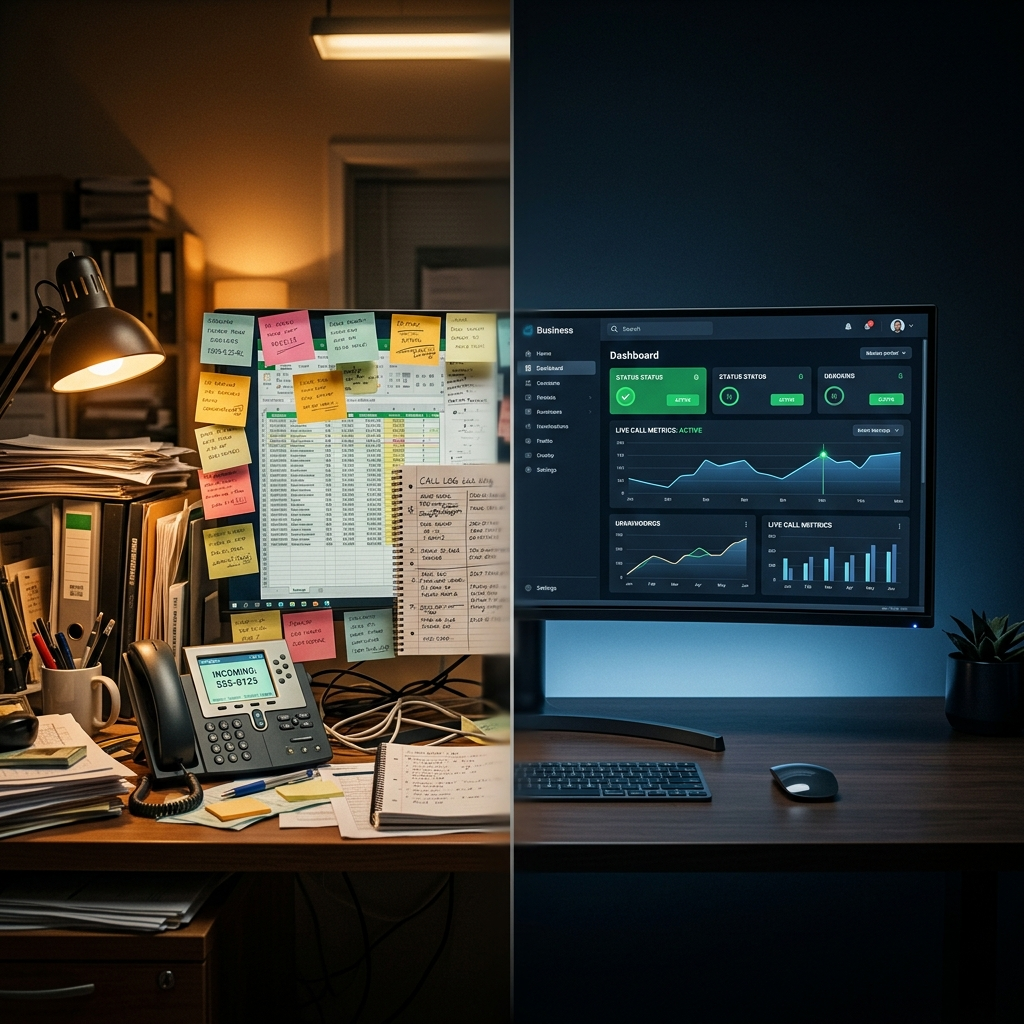
What Is an AI-Powered Business Operating System? (A practical Guide for Service Business Owners)
Every SaaS vendor is calling their product an AI Business OS. Here is what the term actually means, what a real one includes, and why it matters for service businesses.
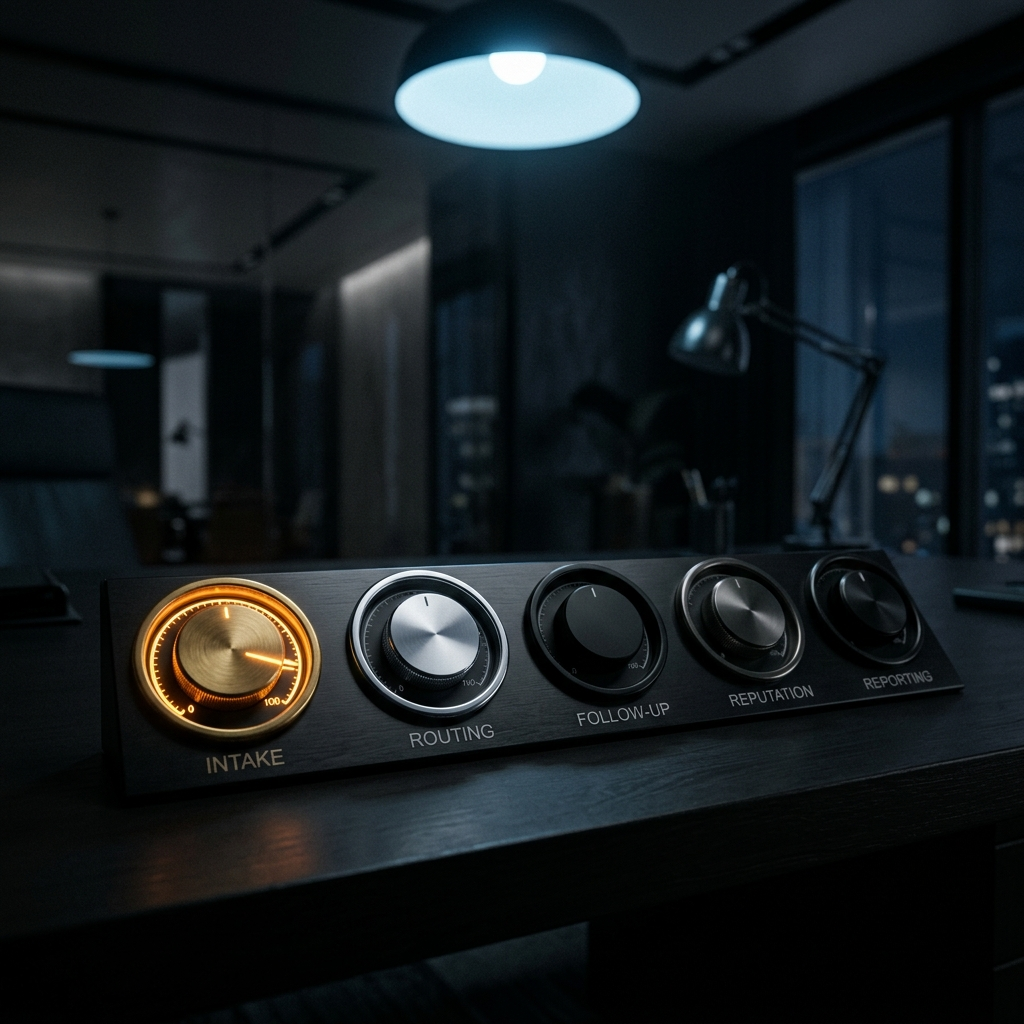
The 5 Layers of an AI Business Operating System (And Which One Is Killing Your Revenue Right Now)
Most service businesses have automated one layer and left the others broken. Learn the five layers of an AI Business OS and how to find which one is leaking revenue.
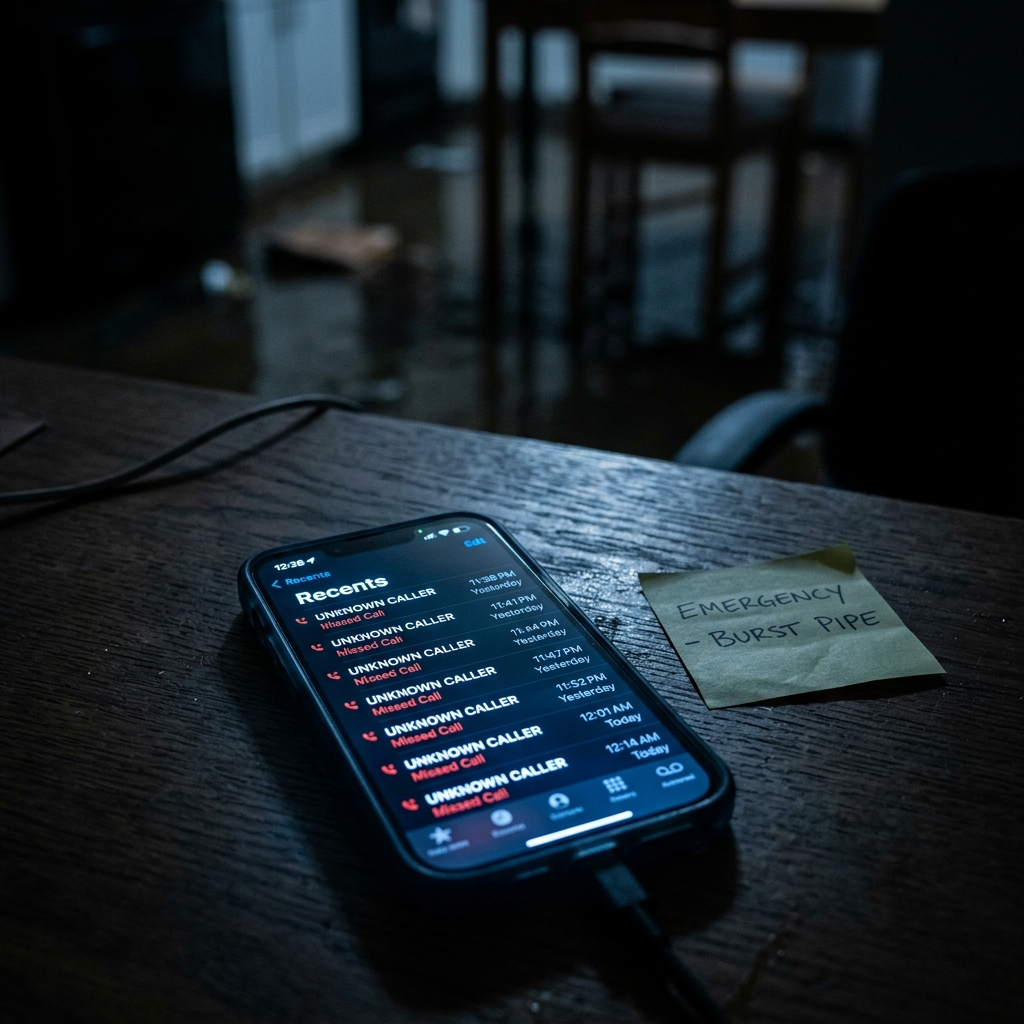
Layer 4 Deep Dive: The AI Reputation Engine: How to Automate Review Generation Without Feeling Slimy
Learn how AI review automation helps service businesses request reviews at the right time, protect unhappy customers, and build reputation without sounding pushy.
Calculate the revenue leak.
Stop guessing. See how much demand your business may be losing through missed calls, slow replies, weak booking, review gaps, and follow-up drag, then decide whether AI Systems is the right system path.
Run the calculationPrefer to hear it first?
Call the live AI receptionist and test the conversation.
Call the live AI receptionist anytime. Tell it about optometry & vision centers, then hear a short live roleplay based on the calls your front desk actually gets.