

Call your main number during business hours as a prospect. Evaluate: how many rings before answer, engagement quality, qualifying questions asked, price range or next step provided, and how clear the next action was.
Treat any number without a nearby source or stated method as a planning assumption, then replace it with your own records.
I ask every owner I work with to do one thing before our first audit call. 'Call your own business number right now. Don't tell anyone you're calling. Use a different phone if you can. Call as a prospect who needs help.'
The results are consistently startling. One owner, a plumbing company in Nashville doing $2.1M in revenue, tried this at 5:45pm on a Tuesday. He called his main business line. It rang six times and went to a generic voicemail that said 'You've reached [company]. Please leave a message.' No name. No business name. No hours. No alternative. 'I felt like I was calling a dead number,' he told me. 'I would have hung up and tried the next listing.'
He had run this business for 11 years. He had never called it as a customer.
The 15-Minute Intake Audit Protocol
Test 1: Business Hours Call
Call your main number during business hours as a prospect. Evaluate: how many rings before answer, engagement quality, qualifying questions asked, price range or next step provided, and how clear the next action was.
Test 2: After-Hours Call
Call after 6pm or before 8am, or on Saturday. Did anyone answer? What did the voicemail say? Did it give alternatives or callback time? Time how long it takes to get a callback.
Test 3: The Form Test
Submit your contact form with a real inquiry. Did you receive an immediate auto-response? How long until a human follow-up call or email? Was it personalized to your specific problem?
Test 4: The Late Friday Call
Call at 4:45pm on a Friday. This reveals when your intake is weakest, team mentally checked out, coverage incomplete. Were you able to book? Did anyone seem like they wanted to help?
Test 5: The No-Answer Test
Call and deliberately don't leave a voicemail. Just hang up. Does your business have any system to follow up with missed calls who didn't leave a message? In most businesses: no. That is a significant population of permanently lost leads.
Scoring Your Audit
Score each dimension: Business hours answer rate (first/second ring vs 5+ rings/voicemail). After-hours response (immediate vs hours vs not at all). Form response time (auto + 15min call vs no auto, slow call). Missed call follow-up (automated callback vs none).
The Most Important Thing You'll Learn
When you sit in the seat of the prospect who just found you on Google and has a problem that needs solving, you'll feel the experience your callers feel. The 6-ring wait. The generic voicemail. The form that disappeared into silence. And you'll understand why a competitor with fewer reviews is booking jobs you should have had.
Book a professional Revenue Leak Diagnostic for a full diagnostic with benchmarks and specific fixes → /book-a-call
What to check before you choose a fix
Before buying another answering service, chatbot, phone tree, or AI receptionist, look at the actual path a caller, website visitor, referral, past customer, or high-intent lead takes when they reach your business. The first question is not whether the tool sounds impressive. The first question is whether the buyer gets a clear next step while they still care. In service business operations, that usually means a fast answer, a useful question, a booked appointment or estimate path, and a follow-up record that does not rely on memory.
A strong system should make the business feel easier to choose. It should reduce the waiting, repeating, guessing, and manual chasing that make a buyer keep searching. If the current setup answers only during business hours, takes a message without qualifying intent, or leaves the follow-up to whoever remembers first, the problem is not only staffing. It is front-door design.
The week-one diagnostic
Run this review over the last seven days before making a decision. Pull the call log, website form submissions, chat history, booking calendar, CRM notes, missed-call list, and Google Business Profile activity. Do not start with opinions. Start with timestamps and outcomes. A small sample is enough to show whether the leak is response speed, qualification, booking friction, review weakness, or follow-up failure.
- Count every missed call and every call that lasted under 20 seconds. Those are often buyers who never became visible in the CRM.
- Count every form or chat that waited more than 10 minutes for a real next step. This is where high-intent demand starts cooling off.
- Mark every inquiry that needed a human callback before booking. That tells you whether the website is explaining the next step clearly enough.
- Review the last five reviews buyers can see publicly. Recency matters because buyers compare proof before they commit.
This is the source method for the article: use your own call log, CRM, booking calendar, form inbox, and Google Business Profile review activity. Public research can explain the pattern, but your own records show where money is escaping in this business.
Where the revenue usually leaks
The leak usually appears in one of four places. First, the buyer calls when the team is busy or closed. Second, the buyer reaches the business but is not qualified clearly enough to book. Third, the buyer receives a polite response but no firm next step. Fourth, the buyer finishes the job or visit but no review, referral, or reactivation path happens after the work is done. Each leak looks small by itself. Together, they decide whether marketing produces booked revenue or only more noise.
For a service business, the most valuable fix is the one that protects answered calls, booked appointments, stronger reviews, and follow-up. That is why the call you never got: how to audit your own business like a prospect should be judged by business outcomes, not by novelty. A phone feature that sounds clever but does not improve booked appointments is not enough. A website widget that collects contact details but does not trigger follow-up is not enough. A review tool that asks once and disappears is not enough.
What a stronger system should do
A stronger front door answers quickly, asks the right questions, captures the reason for contact, separates urgent from routine demand, books when rules are clear, sends confirmations, updates the follow-up path, and asks for reviews after the work is done. The system should make the owner less dependent on heroic callbacks and make the buyer feel that the business is organized from the first touch.
The Quiet Protocol treats this as an operating system, not a single widget. Calls, web forms, missed-call text-back, appointment booking, CRM handoff, review requests, and reactivation all need to point in the same direction. When those pieces are connected, a service business can capture more demand without turning the team into a bigger manual call center.
How to judge whether it is working
Do not judge the system by how futuristic it feels on day one. Judge it by what changes in the business. Useful measurements include missed-call recovery rate, average response time, booked appointment rate, no-show recovery, review request volume, review recency, reactivated past-customer conversations, and the number of leads that have a clear next action in the CRM.
The best early sign is calm. Fewer loose callbacks. Fewer mystery leads. Fewer buyers waiting for a reply. More conversations with a clear status. That is what good automation should feel like to the owner and to the customer.
Use your own records before you decide
Source: start with your call log, CRM notes, booking calendar, missed-call records, web form timestamps, and Google Business Profile. Those records show whether buyers reached you, how fast they heard back, what they asked for, and where the next step broke down.
For seven days, mark each missed call, late reply, unbooked form, stale estimate, and review request that never went out. That small sample gives an owner a practical picture of the front-door gap before they spend more on ads, software, or staff.
What I listen for on a real secret-shopper call
The first thing I listen for is not friendliness. Friendliness helps, but it does not rescue a weak intake path. I listen for control. Does the person answering the phone know how to move from problem to qualification to next step without making the caller do all the work? Does the caller hear confidence within the first 20 seconds?
The second thing I listen for is specificity. A strong intake call uses the caller's actual problem language. If the caller says the basement smells damp after a storm, the response should not sound like a generic scheduling script. It should acknowledge the risk, ask when it started, ask whether water is visible, and set a clear next step. That is what makes the business feel competent before anyone arrives.
The third thing I test is recovery. If I call and hang up without leaving a voicemail, does anything happen? If I submit a form after hours, is there a meaningful response? If I ask a pricing question, does the team create trust or dodge the question? These moments reveal the real front door.
The owner scorecard I would use
Score each test in plain operational terms: answer speed, caller confidence, qualification depth, booking pressure, written confirmation, and recovery. Do not let the team grade itself on effort. Grade the experience the buyer actually receives.
A useful threshold is this: if a motivated buyer could not confidently book or understand the next step within two minutes, the intake is weaker than it feels internally. The owner may know the business is trustworthy, but the caller only knows what happened on that call.
This is also why secret-shopper work is strong experience content. It is observable. It is not an abstract opinion about customer service. It is a repeatable test a business owner can run today and compare against competitors.
How often should a service business secret-shopper itself?
Run the test monthly, plus after any staff change, phone-system change, website-form change, or busy-season spike.
Should the owner tell the team before testing?
No. Tell them secret-shopper checks are part of quality control, but do not announce the exact call. The goal is to measure the normal buyer experience.
How I would turn the audit into a weekly operating habit
The secret-shopper test loses value if it becomes a one-time scare. The stronger habit is a weekly 20-minute intake review. Pick one phone call, one missed call, and one form submission. Ask what the buyer experienced, what the team knew, what the next step was, and whether the CRM shows the same truth the customer would describe.
This gives the owner an operating rhythm. Instead of waiting for complaints, the business keeps inspecting the front door while the problems are still small. That rhythm is also good experience content because it shows a real way to manage the issue, not just diagnose it.
The loss estimate is basic business math, not a magic claim.
Revenue-leak examples on this site are built from visible operating inputs: inquiry volume, missed-call or slow-response rate, booking rate, average job or client value, repeat value, and follow-up recovery. The fastest way to make the number real is to run the diagnostic for your closest business type, then compare it against your own call log, CRM, booking calendar, form timestamps, and review activity.
The practical questions behind this decision.
Is this just a 24/7 answering service?
No. A traditional answering service usually takes a message. A properly designed AI receptionist and front-door system captures intent, qualifies the buyer, routes the request, books when possible, triggers follow-up, and supports reviews after the work is done. Message-taking is coverage. Revenue capture is a fuller operating path.
What should a service business fix first?
Fix the first place buyers disappear. For some businesses that is after-hours calls. For others it is slow website follow-up, weak booking logic, old leads, or stale reviews. The right first move comes from the seven-day diagnostic, not from guessing.
Will AI make the business feel less human?
Bad automation feels colder than a person. Good automation feels like the business is paying attention. It answers quickly, uses plain language, collects the right information, and hands the buyer to a human when judgment or empathy is needed. The goal is not to remove people. The goal is to stop making buyers wait for basic next steps.
How fast should we expect improvement?
The first lift should come from visibility and speed: fewer missed opportunities and cleaner routing. Deeper gains come after the system has enough real conversations to tune scripts, booking rules, follow-up timing, and review requests. Treat the first month as deployment and calibration, not a magic switch.
How often should a service business secret-shopper itself?
Run the test monthly, plus after any staff change, phone-system change, website-form change, or busy-season spike.
Should the owner tell the team before testing?
No. Tell them secret-shopper checks are part of quality control, but do not announce the exact call. The goal is to measure the normal buyer experience.
Decide what the firm needs to know before the first useful conversation.
A useful intake path protects the buyer's time and the firm's capacity by connecting fit, booking, preparation, reminders, and human handoff.
See how qualification, booking, reminders, documents, and team handoff can become one clearer client journey.
See how the capability in this article fits into a complete customer journey.
Service BusinessesSee the same decision through the language, buyer behavior, and operating reality of this industry.
Client Results & ProofInspect the starting condition, installation, measurement window, and outcome behind real client work.
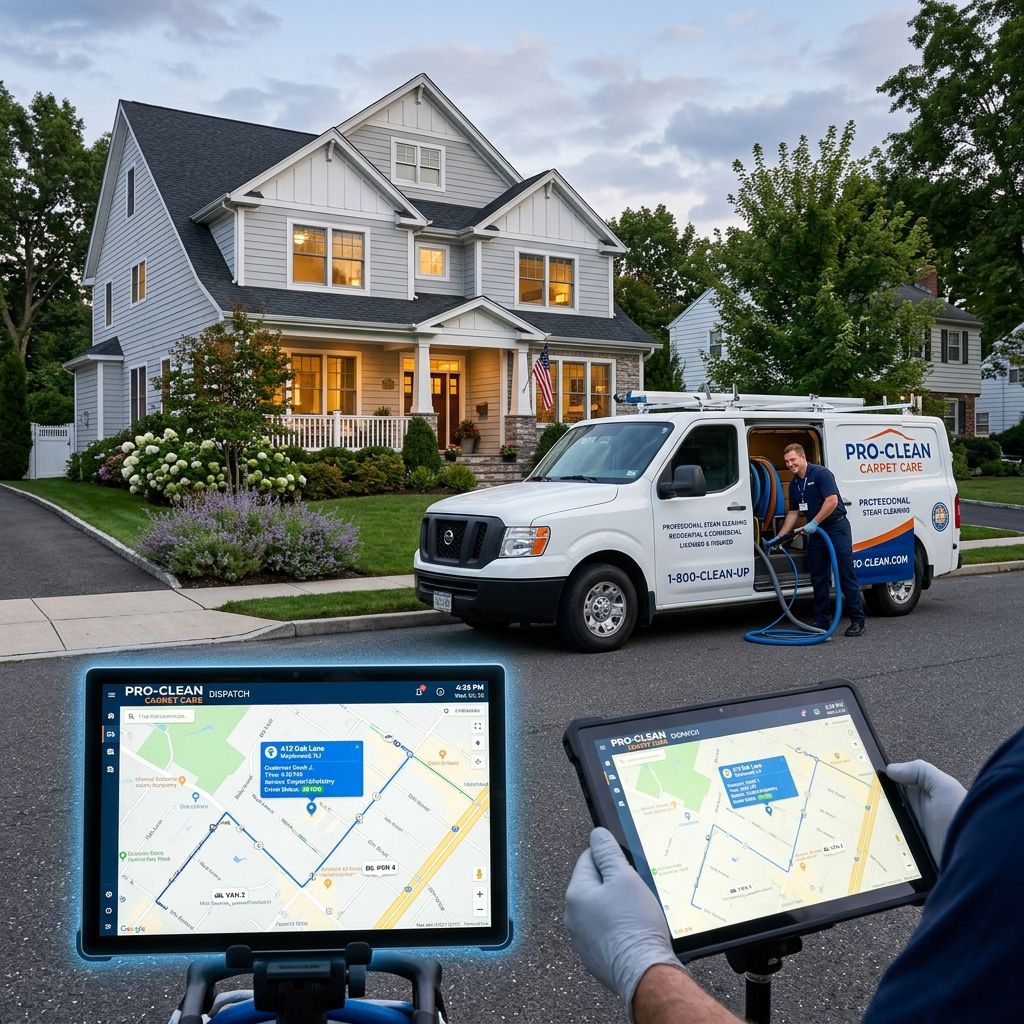
Carpet Cleaning Businesses Win on Speed. Here's Why Your Intake Is the Bottleneck.
A carpet cleaning field guide to missed calls, same-day booking, dispatch notes, CRM handoff, and follow-up when speed decides the job.

Commercial Cleaning Companies Win Bids They Never Close. Here's the Leak.
How commercial cleaning companies can close more walkthroughs and bids with faster follow-up, cleaner CRM notes, proof, and renewal-ready communication.

The Formula That Tells You Whether Your Marketing Is Actually Working
A practical CAC, LTV, call conversion, and review-driven ROI guide for owners who need to know whether marketing is really working.