

Book a Front Door Audit to see where your intake-to-invoice information chain is breaking → /book-a-call
Treat any number without a nearby source or stated method as a planning assumption, then replace it with your own records.
The call that service business owners dread: 'You told me it would be $350. This invoice says $620. What happened?' What happened is usually one of four things. And almost none of them are the customer being difficult. They're systems failures, gaps in the information captured at intake versus what ended up on the work order.
Break Point 1: The Phone Quote Wasn't Captured Accurately
The customer says 'leaking faucet, kitchen.' The intake captures 'leaking faucet, kitchen.' The technician arrives and finds a corroded supply line, a deteriorating shutoff valve, and an improperly seated faucet. The actual job is $620. The customer was quoted $150-$350. The intake didn't capture enough to give an accurate quote, and nobody flagged that the quote was conditional. Fix: structured intake sequence that surfaces the variables most affecting scope, with a clear statement that final price is confirmed by the technician on-site.
Break Point 2: The Verbal Quote Was Real But Not Documented
The agent said '$350-$450.' The customer heard '$350.' The invoice says $420. Nobody is lying. But the ambiguity wasn't communicated clearly. Fix: any quote given over the phone should be sent to the customer in writing immediately, via text or email, before the booking is confirmed. The written version should include the range and a clear statement that the technician confirms final price on-site. This takes 30 seconds and eliminates the 'you told me' conversation in almost every case.
Break Point 3: Scope Changed on Site Without Re-quoting
The technician completed what he thought needed to be done, and the invoice reflected the full expanded scope, without the customer ever approving it. Fix: a job management system that requires customer approval before additional scope can be logged. When additional scope is identified, the customer should hear the explanation and give approval, by text confirmation, tablet signature, or verbal approval in a job note.
Break Point 4: Work Order Didn't Match Phone Notes
Notes captured at intake are the notes the technician reads, not a summary, not a different field, not a re-entry from a different system. Many businesses use 2-3 tools between intake and dispatch, and information degrades at every handoff. Fix: a single, unambiguous source of intake data that follows the job from first call to dispatch to invoice.
What Invoice Disputes Actually Cost
Time cost: 30-90 minutes per dispute across multiple conversations. Review cost: a customer who disputes and feels unheard leaves a negative review more than 70% of the time. Relationship cost: a customer who disputes and wins is almost never a repeat customer. Team morale cost: technicians who regularly face pricing complaints start to dread customer interactions.
Book a Revenue Leak Diagnostic to see where your intake-to-invoice information chain is breaking → /book-a-call
What to check before you choose a fix
Before buying another answering service, chatbot, phone tree, or AI receptionist, look at the actual path a caller, website visitor, referral, past customer, or high-intent lead takes when they reach your business. The first question is not whether the tool sounds impressive. The first question is whether the buyer gets a clear next step while they still care. In service business operations, that usually means a fast answer, a useful question, a booked appointment or estimate path, and a follow-up record that does not rely on memory.
A strong system should make the business feel easier to choose. It should reduce the waiting, repeating, guessing, and manual chasing that make a buyer keep searching. If the current setup answers only during business hours, takes a message without qualifying intent, or leaves the follow-up to whoever remembers first, the problem is not only staffing. It is front-door design.
The week-one diagnostic
Run this review over the last seven days before making a decision. Pull the call log, website form submissions, chat history, booking calendar, CRM notes, missed-call list, and Google Business Profile activity. Do not start with opinions. Start with timestamps and outcomes. A small sample is enough to show whether the leak is response speed, qualification, booking friction, review weakness, or follow-up failure.
- Count every missed call and every call that lasted under 20 seconds. Those are often buyers who never became visible in the CRM.
- Count every form or chat that waited more than 10 minutes for a real next step. This is where high-intent demand starts cooling off.
- Mark every inquiry that needed a human callback before booking. That tells you whether the website is explaining the next step clearly enough.
- Review the last five reviews buyers can see publicly. Recency matters because buyers compare proof before they commit.
This is the source method for the article: use your own call log, CRM, booking calendar, form inbox, and Google Business Profile review activity. Public research can explain the pattern, but your own records show where money is escaping in this business.
Where the revenue usually leaks
The leak usually appears in one of four places. First, the buyer calls when the team is busy or closed. Second, the buyer reaches the business but is not qualified clearly enough to book. Third, the buyer receives a polite response but no firm next step. Fourth, the buyer finishes the job or visit but no review, referral, or reactivation path happens after the work is done. Each leak looks small by itself. Together, they decide whether marketing produces booked revenue or only more noise.
For a service business, the most valuable fix is the one that protects answered calls, booked appointments, stronger reviews, and follow-up. That is why the price you quoted over the phone and the invoice you sent don't match. here's why that's a systems problem. should be judged by business outcomes, not by novelty. A phone feature that sounds clever but does not improve booked appointments is not enough. A website widget that collects contact details but does not trigger follow-up is not enough. A review tool that asks once and disappears is not enough.
What a stronger system should do
A stronger front door answers quickly, asks the right questions, captures the reason for contact, separates urgent from routine demand, books when rules are clear, sends confirmations, updates the follow-up path, and asks for reviews after the work is done. The system should make the owner less dependent on heroic callbacks and make the buyer feel that the business is organized from the first touch.
The Quiet Protocol treats this as an operating system, not a single widget. Calls, web forms, missed-call text-back, appointment booking, CRM handoff, review requests, and reactivation all need to point in the same direction. When those pieces are connected, a service business can capture more demand without turning the team into a bigger manual call center.
How to judge whether it is working
Do not judge the system by how futuristic it feels on day one. Judge it by what changes in the business. Useful measurements include missed-call recovery rate, average response time, booked appointment rate, no-show recovery, review request volume, review recency, reactivated past-customer conversations, and the number of leads that have a clear next action in the CRM.
The best early sign is calm. Fewer loose callbacks. Fewer mystery leads. Fewer buyers waiting for a reply. More conversations with a clear status. That is what good automation should feel like to the owner and to the customer.
Use your own records before you decide
Source: start with your call log, CRM notes, booking calendar, missed-call records, web form timestamps, and Google Business Profile. Those records show whether buyers reached you, how fast they heard back, what they asked for, and where the next step broke down.
For seven days, mark each missed call, late reply, unbooked form, stale estimate, and review request that never went out. That small sample gives an owner a practical picture of the front-door gap before they spend more on ads, software, or staff.
The audit trail that protects customer trust
The cleanest businesses treat every estimate like a chain of custody. What did the customer describe? What assumptions were made? What range was given? What changed on site? Who approved the change? If that chain is broken, the invoice dispute becomes emotional because both sides are relying on memory.
In an audit, I would pull five disputed invoices and trace them backward. I would compare the first call notes, the booking confirmation, the work order, technician notes, photos, change approvals, and the final invoice. The pattern usually appears quickly. Either the office promised too much, the technician changed scope without a clean approval, or the customer never received the written version of the conditional quote.
This is a trust issue before it is a billing issue. A customer can accept a higher final invoice if the path from estimate to invoice feels transparent. They get angry when the price feels like it changed behind a curtain.
The owner rule for quote language
The business should stop using casual phrases that sound final when the work is not yet diagnosed. 'It should be around $350' becomes a fixed price in the customer's mind. A better version is: 'Based on what you described, similar jobs often land between $300 and $450, but the technician will confirm the final scope before any extra work is approved.' Then send that exact language in writing.
That one change reduces disputes because it aligns expectations before the truck rolls. It also helps technicians because they are not walking into a price promise they did not make. The technician can explain what changed, show the evidence, and ask for approval before expanding the job.
For Google and AI search, this is also the kind of practical specificity that separates useful content from generic advice. The page is not just saying 'improve communication.' It is naming the exact sentence that causes disputes and the sentence that prevents them.
What should be documented before an invoice changes?
Document the original estimate range, the field finding that changed scope, customer approval, and the final work performed. Without those four pieces, the business is relying on memory.
Can automation help with invoice disputes?
Yes, if it captures and sends confirmations. Automation cannot make a bad quote fair, but it can preserve the quote, approval, and scope trail clearly.
How I would prevent the next dispute before changing software
Before replacing tools, I would rewrite the quote handoff. Every phone estimate should carry the same three pieces: the condition the range is based on, the variables that can change it, and the approval step before additional work begins. That language belongs in the call script, confirmation message, technician note, and invoice memo.
Then I would review the next ten invoices over the original range. If the customer was warned, shown the changed condition, and asked for approval, the process is working. If the price changed and the customer only learned at invoice time, the system is still creating review risk.
The loss estimate is basic business math, not a magic claim.
Revenue-leak examples on this site are built from visible operating inputs: inquiry volume, missed-call or slow-response rate, booking rate, average job or client value, repeat value, and follow-up recovery. The fastest way to make the number real is to run the diagnostic for your closest business type, then compare it against your own call log, CRM, booking calendar, form timestamps, and review activity.
The practical questions behind this decision.
Is this just a 24/7 answering service?
No. A traditional answering service usually takes a message. A properly designed AI receptionist and front-door system captures intent, qualifies the buyer, routes the request, books when possible, triggers follow-up, and supports reviews after the work is done. Message-taking is coverage. Revenue capture is a fuller operating path.
What should a service business fix first?
Fix the first place buyers disappear. For some businesses that is after-hours calls. For others it is slow website follow-up, weak booking logic, old leads, or stale reviews. The right first move comes from the seven-day diagnostic, not from guessing.
Will AI make the business feel less human?
Bad automation feels colder than a person. Good automation feels like the business is paying attention. It answers quickly, uses plain language, collects the right information, and hands the buyer to a human when judgment or empathy is needed. The goal is not to remove people. The goal is to stop making buyers wait for basic next steps.
How fast should we expect improvement?
The first lift should come from visibility and speed: fewer missed opportunities and cleaner routing. Deeper gains come after the system has enough real conversations to tune scripts, booking rules, follow-up timing, and review requests. Treat the first month as deployment and calibration, not a magic switch.
What should be documented before an invoice changes?
Document the original estimate range, the field finding that changed scope, customer approval, and the final work performed. Without those four pieces, the business is relying on memory.
Can automation help with invoice disputes?
Yes, if it captures and sends confirmations. Automation cannot make a bad quote fair, but it can preserve the quote, approval, and scope trail clearly.
Locate the point where interested buyers stop hearing from the business.
Review one customer journey from first inquiry through booking, estimate, reminder, and recovery.
Use the diagnostic to locate the handoff where good inquiries, estimates, appointments, or past customers stop moving.
See how the capability in this article fits into a complete customer journey.
Service BusinessesSee the same decision through the language, buyer behavior, and operating reality of this industry.
Client Results & ProofInspect the starting condition, installation, measurement window, and outcome behind real client work.
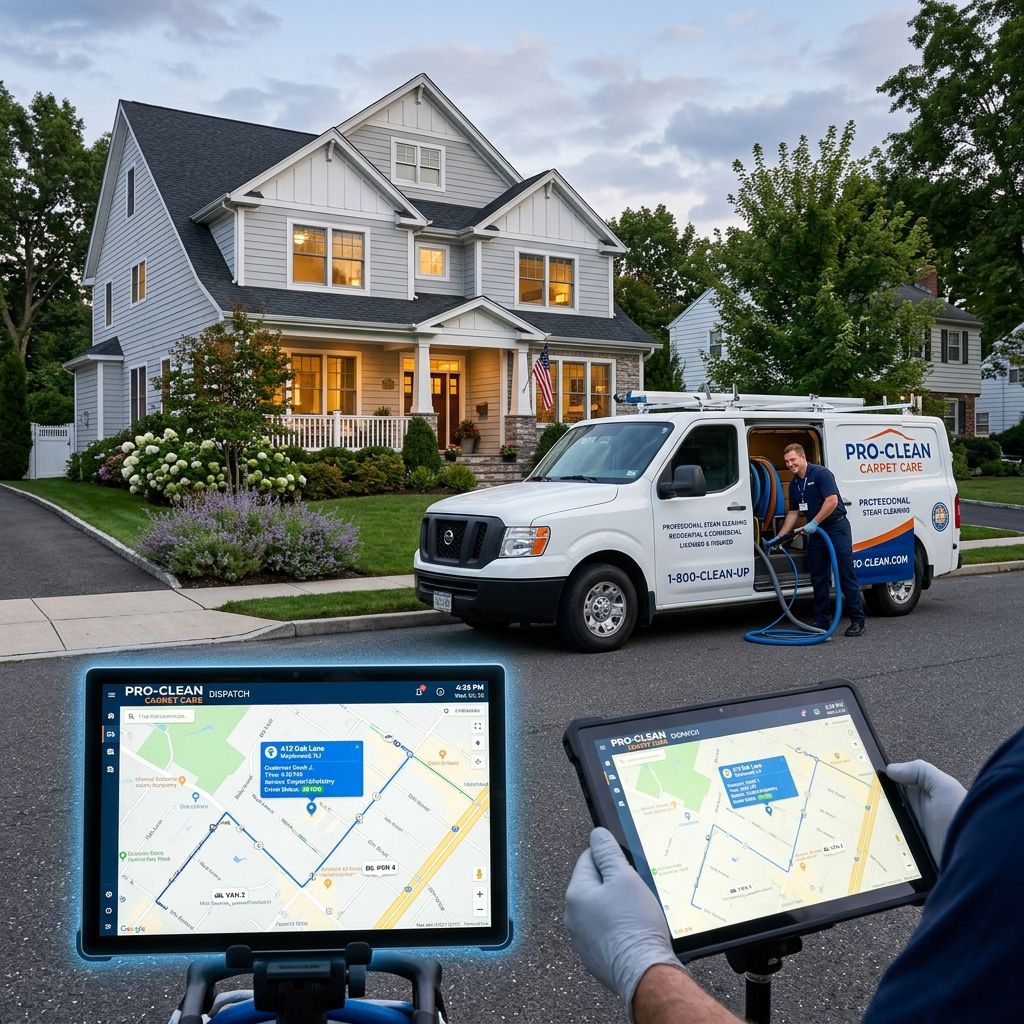
Carpet Cleaning Businesses Win on Speed. Here's Why Your Intake Is the Bottleneck.
A carpet cleaning field guide to missed calls, same-day booking, dispatch notes, CRM handoff, and follow-up when speed decides the job.

Commercial Cleaning Companies Win Bids They Never Close. Here's the Leak.
How commercial cleaning companies can close more walkthroughs and bids with faster follow-up, cleaner CRM notes, proof, and renewal-ready communication.

The Formula That Tells You Whether Your Marketing Is Actually Working
A practical CAC, LTV, call conversion, and review-driven ROI guide for owners who need to know whether marketing is really working.