Before I run the numbers, let me lay out the assumptions. If your business is different, adjust accordingly.
Treat any number without a nearby source or stated method as a planning assumption, then replace it with your own records.
"Our conversion rate went from 38% to 48%."
I hear this in debrief calls, and I watch owners absorb it with something between satisfaction and uncertainty. Ten percentage points. Is that good? What does that actually mean?
The conversion rate number is abstract. The dollar impact is not.
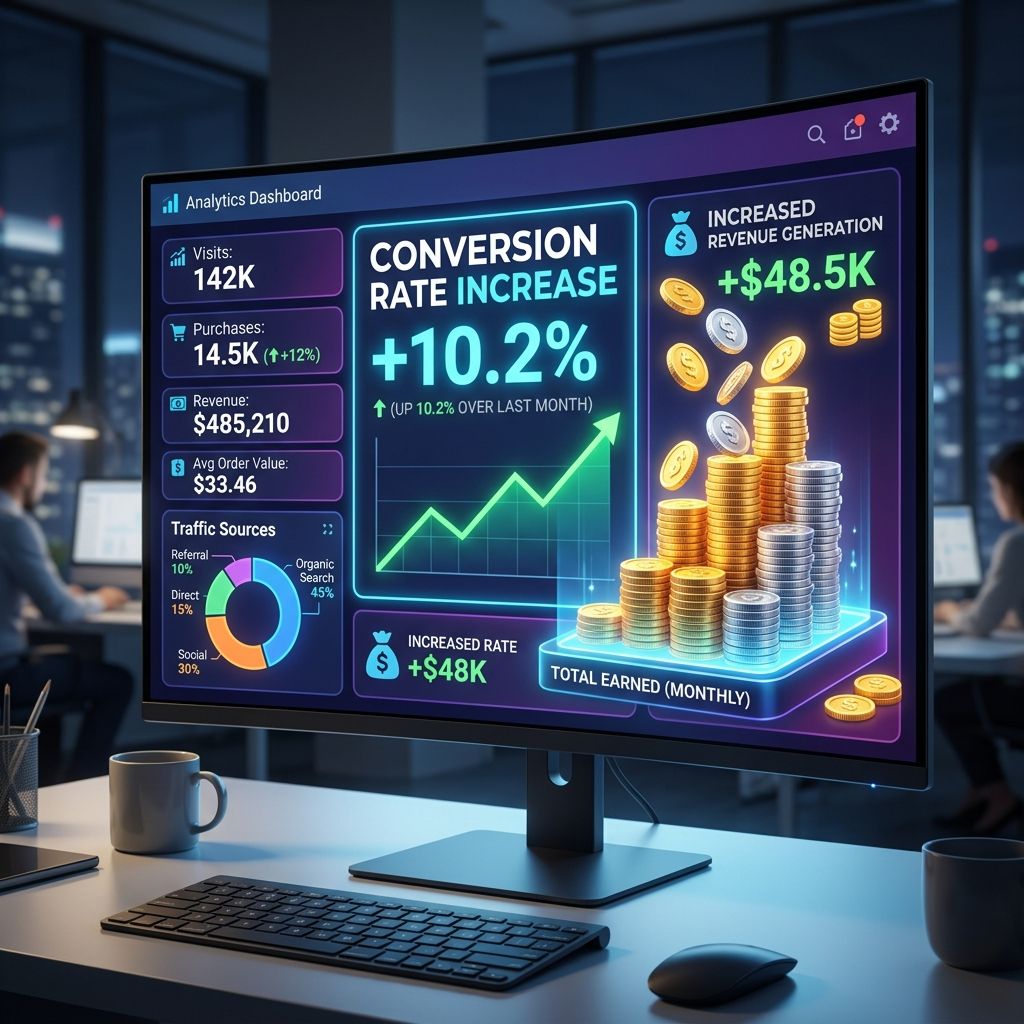
This post runs the math on what a 10-point conversion rate improvement is worth, at five different revenue sizes. Read the row that matches your business. The number at the end of the row is not theoretical, it's the revenue that already came through your door and didn't convert. It's recoverable.
The Assumptions (So You Can Adjust)
Before I run the numbers, let me lay out the assumptions. If your business is different, adjust accordingly.
Lead-to-revenue relationship: I'm working from lead volume backward. For each revenue tier, I estimate the inbound lead volume required to achieve that revenue at a "baseline" conversion rate of 38%, which is typical for a home service business without systematic intake optimization.
Average job value by tier: Higher-revenue businesses generally have either higher ticket values, higher volume, or both. I use blended average job values that reflect real service business economics.
The conversion rate floor: 38% is conservative. I've audited businesses running as low as 22%. But 38% is a realistic "you're not doing anything systemically wrong, but you're not optimized" baseline.
The conversion rate ceiling: Moving from 38% to 48% is achievable without dramatic changes, it's the range that most businesses hit within the first 90 days of systematizing intake. Moving from 48% to 58%+ requires more optimization, but it's done regularly.
Seasonality and mix: I'm using annual figures and blended numbers. Your business has peaks and valleys, the math still holds at the annual level.
The Revenue Tier Table
Tier 1: $500K Revenue Business
Current state assumptions: - Annual revenue: $500,000 - Average job value: $420 (typical for lawn care, carpet cleaning, pest control, cleaning services) - Jobs booked annually: 1,190 - Implied inbound leads at 38% conversion: 3,132 - Leads not converting: 1,942
At 38% conversion: $500,000 revenue
At 48% conversion: 3,132 leads × 48% = 1,503 booked jobs × $420 = $631,260 revenue
10-point conversion improvement = $131,260 in additional annual revenue
At this tier, the 10-point improvement represents a 26% revenue increase from the same lead volume, with no additional marketing spend.
Tier 2: $800K Revenue Business
Current state assumptions: - Annual revenue: $800,000 - Average job value: $580 (typical for HVAC maintenance, plumbing service, electrician, painting) - Jobs booked annually: 1,379 - Implied inbound leads at 38% conversion: 3,629 - Leads not converting: 2,250
At 38% conversion: $800,000 revenue
At 48% conversion: 3,629 leads × 48% = 1,742 booked jobs × $580 = $1,010,360 revenue
10-point conversion improvement = $210,360 in additional annual revenue
This is the tier where a $500/month intake investment has the clearest ROI. The math is $210,360 in upside against $6,000 per year in costs. The payback period is measured in weeks.
Tier 3: $1.5M Revenue Business
Current state assumptions: - Annual revenue: $1,500,000 - Average job value: $820 (HVAC, roofing, plumbing, restoration, mid-ticket services) - Jobs booked annually: 1,829 - Implied inbound leads at 38% conversion: 4,813 - Leads not converting: 2,984
At 38% conversion: $1,500,000 revenue
At 48% conversion: 4,813 leads × 48% = 2,310 booked jobs × $820 = $1,894,200 revenue
10-point conversion improvement = $394,200 in additional annual revenue
This is the tier I see most often in Front Door Audits. Businesses at $1.5M have usually done something right, their marketing works, their service is good. But they're losing $394,000 a year to intake inefficiency, and it's completely invisible on their P&L because the lost revenue never shows up anywhere. It's just leads that called and didn't book.
Tier 4: $2.5M Revenue Business
Current state assumptions: - Annual revenue: $2,500,000 - Average job value: $1,100 (larger HVAC systems, roofing, commercial landscaping, property restoration) - Jobs booked annually: 2,272 - Implied inbound leads at 38% conversion: 5,979 - Leads not converting: 3,707
At 38% conversion: $2,500,000 revenue
At 48% conversion: 5,979 leads × 48% = 2,870 booked jobs × $1,100 = $3,157,000 revenue
10-point conversion improvement = $657,000 in additional annual revenue
At this tier, even a 5-point improvement is $328,500. Businesses at $2.5M have invested significantly in marketing. They're often spending $15,000 - $40,000 per month on ads to generate lead volume. Improving conversion by 10 points is the equivalent of getting 26% more leads at zero additional acquisition cost.
Tier 5: $4M Revenue Business
Current state assumptions: - Annual revenue: $4,000,000 - Average job value: $1,450 (commercial accounts, high-ticket residential, multi-service operators) - Jobs booked annually: 2,758 - Implied inbound leads at 38% conversion: 7,258 - Leads not converting: 4,500
At 38% conversion: $4,000,000 revenue
At 48% conversion: 7,258 leads × 48% = 3,484 booked jobs × $1,450 = $5,051,800 revenue
10-point conversion improvement = $1,051,800 in additional annual revenue
Businesses at this tier are typically operating multiple crews, running multiple marketing channels, and experiencing the complexity that comes with scale. The intake problem at $4M is often not a single bottleneck, it's a system that works reasonably well but has multiple small leaks. A 10-point improvement at this tier requires auditing and addressing all of them.
The Compound Effect Over 3 Years
The table above shows year-one impact. But conversion rate improvement compounds.
When you convert more leads, you get more reviews (which improves local search ranking, which brings more qualified leads). You get more referrals (which comes at zero acquisition cost and converts at a higher rate). You build more repeat customer relationships (which has the highest LTV in the business).
What to check before you choose a fix
Before buying another answering service, chatbot, phone tree, or AI receptionist, look at the actual path a caller, website visitor, referral, past customer, or high-intent lead takes when they reach your business. The first question is not whether the tool sounds impressive. The first question is whether the buyer gets a clear next step while they still care. In service business operations, that usually means a fast answer, a useful question, a booked appointment or estimate path, and a follow-up record that does not rely on memory.
A strong system should make the business feel easier to choose. It should reduce the waiting, repeating, guessing, and manual chasing that make a buyer keep searching. If the current setup answers only during business hours, takes a message without qualifying intent, or leaves the follow-up to whoever remembers first, the problem is not only staffing. It is front-door design.
The week-one diagnostic
Run this review over the last seven days before making a decision. Pull the call log, website form submissions, chat history, booking calendar, CRM notes, missed-call list, and Google Business Profile activity. Do not start with opinions. Start with timestamps and outcomes. A small sample is enough to show whether the leak is response speed, qualification, booking friction, review weakness, or follow-up failure.
- Count every missed call and every call that lasted under 20 seconds. Those are often buyers who never became visible in the CRM.
- Count every form or chat that waited more than 10 minutes for a real next step. This is where high-intent demand starts cooling off.
- Mark every inquiry that needed a human callback before booking. That tells you whether the website is explaining the next step clearly enough.
- Review the last five reviews buyers can see publicly. Recency matters because buyers compare proof before they commit.
This is the source method for the article: use your own call log, CRM, booking calendar, form inbox, and Google Business Profile review activity. Public research can explain the pattern, but your own records show where money is escaping in this business.
Where the revenue usually leaks
The leak usually appears in one of four places. First, the buyer calls when the team is busy or closed. Second, the buyer reaches the business but is not qualified clearly enough to book. Third, the buyer receives a polite response but no firm next step. Fourth, the buyer finishes the job or visit but no review, referral, or reactivation path happens after the work is done. Each leak looks small by itself. Together, they decide whether marketing produces booked revenue or only more noise.
For a service business, the most valuable fix is the one that protects answered calls, booked appointments, stronger reviews, and follow-up. That is why what is 10% more conversion rate worth to your business? should be judged by business outcomes, not by novelty. A phone feature that sounds clever but does not improve booked appointments is not enough. A website widget that collects contact details but does not trigger follow-up is not enough. A review tool that asks once and disappears is not enough.
What a stronger system should do
A stronger front door answers quickly, asks the right questions, captures the reason for contact, separates urgent from routine demand, books when rules are clear, sends confirmations, updates the follow-up path, and asks for reviews after the work is done. The system should make the owner less dependent on heroic callbacks and make the buyer feel that the business is organized from the first touch.
The Quiet Protocol treats this as an operating system, not a single widget. Calls, web forms, missed-call text-back, appointment booking, CRM handoff, review requests, and reactivation all need to point in the same direction. When those pieces are connected, a service business can capture more demand without turning the team into a bigger manual call center.
How to judge whether it is working
Do not judge the system by how futuristic it feels on day one. Judge it by what changes in the business. Useful measurements include missed-call recovery rate, average response time, booked appointment rate, no-show recovery, review request volume, review recency, reactivated past-customer conversations, and the number of leads that have a clear next action in the CRM.
The best early sign is calm. Fewer loose callbacks. Fewer mystery leads. Fewer buyers waiting for a reply. More conversations with a clear status. That is what good automation should feel like to the owner and to the customer.
How I would calculate the value before buying more leads
A 10 percent conversion lift sounds small until the owner ties it to actual lead volume and job value. The right starting point is not a generic benchmark. It is the business's own last 30 to 90 days: qualified inbound leads, booked jobs, completed jobs, average job value, gross margin, and repeat or referral value if it is measurable.
If the business receives 120 qualified leads a month and books 42, the conversion rate is 35 percent. Moving to 45 percent creates 12 more booked jobs from the same lead flow. At a $650 average job value, that is $7,800 in additional monthly booked revenue before repeat value. If gross margin is 45 percent, the contribution margin is about $3,510 per month. That is the number the owner should compare against any front-door system, training, or automation cost.
This matters because many service businesses buy more demand while the existing demand is leaking. Better ads can help, but they are expensive medicine if the front door is still slow, inconsistent, or poorly followed up.
The owner-first way to use the calculator
Use the calculator as a decision tool, not a fantasy tool. Run three cases: current conversion, realistic improvement, and stretch improvement. Then ask what has to be true operationally for the realistic case to happen. Usually the answer is faster response, better qualification, clearer appointment setting, estimate follow-up, and review-backed trust.
The calculator should also expose whether the business has enough measurement discipline. If the owner cannot name lead volume, booked jobs, and average job value, the first improvement is tracking. You cannot improve a conversion rate you only feel.
Is a 10 percent conversion lift realistic?
It can be realistic when the business has obvious leaks such as missed calls, slow form response, inconsistent follow-up, or weak booking confirmation.
Should a business improve conversion before increasing ad spend?
Usually yes. If current leads are leaking, more ad spend often increases waste before it increases profit.
The loss estimate is basic business math, not a magic claim.
Revenue-leak examples on this site are built from visible operating inputs: inquiry volume, missed-call or slow-response rate, booking rate, average job or client value, repeat value, and follow-up recovery. The fastest way to make the number real is to run the diagnostic for your closest business type, then compare it against your own call log, CRM, booking calendar, form timestamps, and review activity.
The practical questions behind this decision.
Is this just a 24/7 answering service?
No. A traditional answering service usually takes a message. A properly designed AI receptionist and front-door system captures intent, qualifies the buyer, routes the request, books when possible, triggers follow-up, and supports reviews after the work is done. Message-taking is coverage. Revenue capture is a fuller operating path.
What should a service business fix first?
Fix the first place buyers disappear. For some businesses that is after-hours calls. For others it is slow website follow-up, weak booking logic, old leads, or stale reviews. The right first move comes from the seven-day diagnostic, not from guessing.
Will AI make the business feel less human?
Bad automation feels colder than a person. Good automation feels like the business is paying attention. It answers quickly, uses plain language, collects the right information, and hands the buyer to a human when judgment or empathy is needed. The goal is not to remove people. The goal is to stop making buyers wait for basic next steps.
How fast should we expect improvement?
The first lift should come from visibility and speed: fewer missed opportunities and cleaner routing. Deeper gains come after the system has enough real conversations to tune scripts, booking rules, follow-up timing, and review requests. Treat the first month as deployment and calibration, not a magic switch.
Is a 10 percent conversion lift realistic?
It can be realistic when the business has obvious leaks such as missed calls, slow form response, inconsistent follow-up, or weak booking confirmation.
Should a business improve conversion before increasing ad spend?
Usually yes. If current leads are leaking, more ad spend often increases waste before it increases profit.
Turn the article into one week of real numbers.
Use your own call log, form timestamps, calendar, and CRM before accepting any industry estimate.

Vikram Roy is the founder of The Quiet Protocol, a Toronto-based systems firm serving service businesses across the Greater Toronto Area, Canada, and the United States. He works directly with professional firms, home service companies, dental practices, clinics, and local businesses to connect websites, customer intake, booking, reviews, follow-up, and practical AI into a clearer digital front door. All content is written from Toronto, Ontario. See the editorial method →
Use your own operating numbers to see where response, booking, reviews, and follow-up may be costing the business.
See how the capability in this article fits into a complete customer journey.
Service BusinessesSee the same decision through the language, buyer behavior, and operating reality of this industry.
Client Results & ProofInspect the starting condition, installation, measurement window, and outcome behind real client work.
Carpet Cleaning Businesses Win on Speed. Here's Why Your Intake Is the Bottleneck.
A carpet cleaning field guide to missed calls, same-day booking, dispatch notes, CRM handoff, and follow-up when speed decides the job.

Commercial Cleaning Companies Win Bids They Never Close. Here's the Leak.
How commercial cleaning companies can close more walkthroughs and bids with faster follow-up, cleaner CRM notes, proof, and renewal-ready communication.
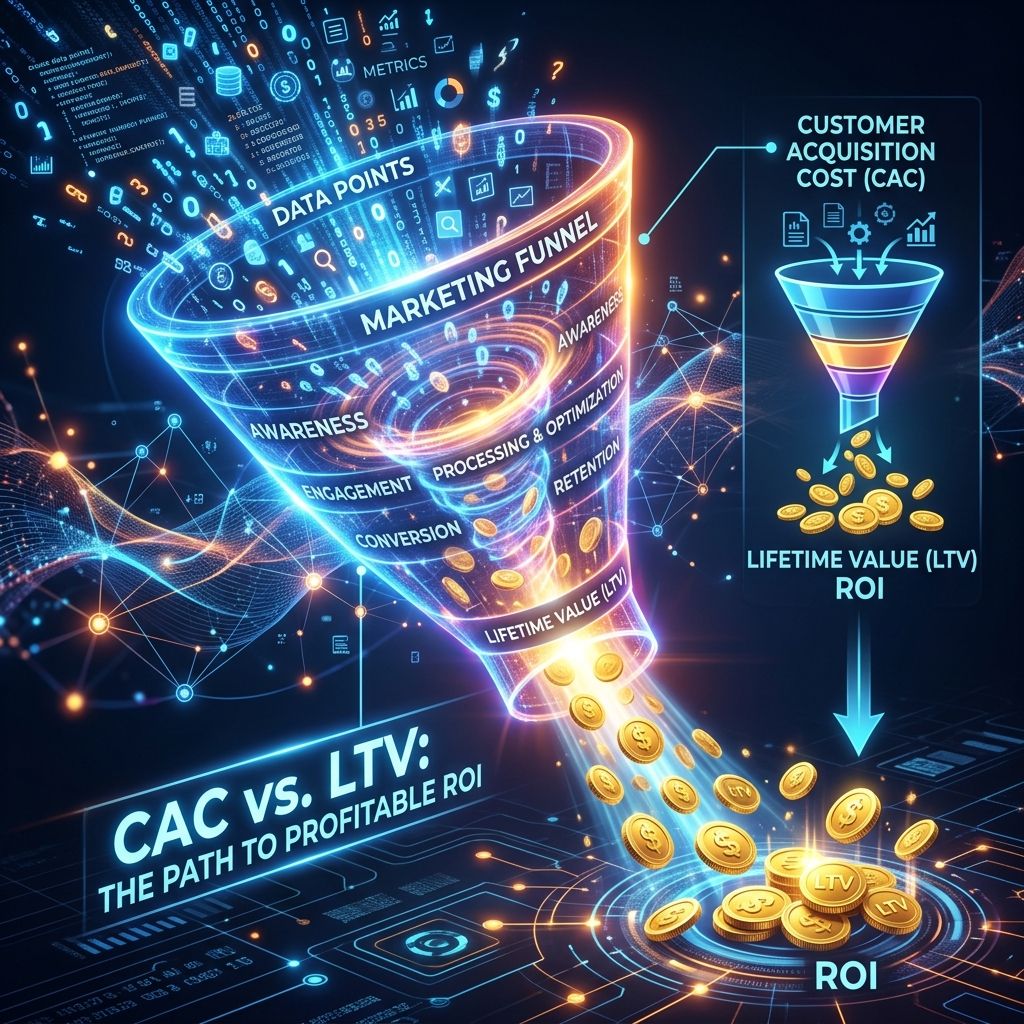
The Formula That Tells You Whether Your Marketing Is Actually Working
A practical CAC, LTV, call conversion, and review-driven ROI guide for owners who need to know whether marketing is really working.