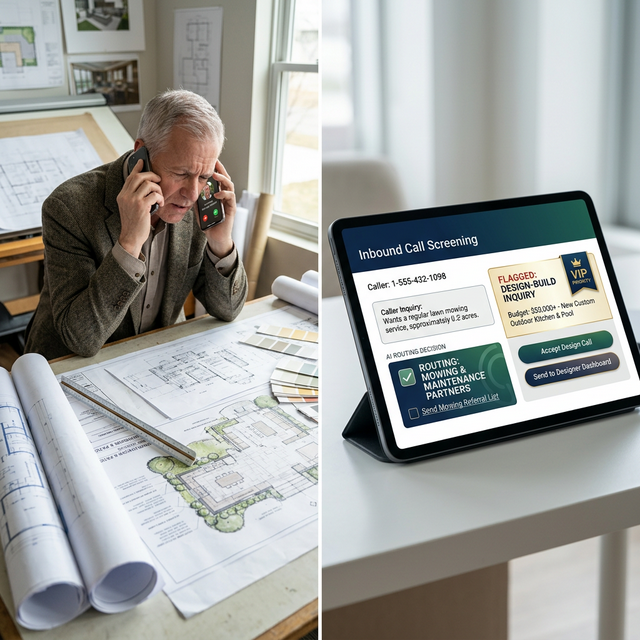
A premium landscaping company does not have time to treat every inquiry the same. The revenue problem is separating low-value mowing requests from serious design, build, and hardscape projects before the calendar fills with poor-fit calls.
Treat any number without a nearby source or stated method as a planning assumption, then replace it with your own records.
At 9:14 AM on a Tuesday in April, he answers his cell phone. A homeowner wants to know if he can come by to give them a quote on mowing their lawn. They have about a third of an acre. They tried the last guy but he missed a few weeks.
This call will take four minutes. Marcus will politely explain that the company focuses exclusively on design-build and installation. The homeowner will be slightly embarrassed. Marcus will give them the name of a maintenance company. The call will end. Nothing will be billed.
But the call cost $12.33 in billable designer time at his fully-loaded hourly rate. And that was the third such call before noon.
The math of the commodity trap is precise and damning. A premium design-build landscaping business that answers twenty unqualified maintenance calls per week loses approximately $4,300 per month in billable attention - attention that should be directed toward site surveys, design concepts, and material specifications for the high-margin projects in the pipeline. The mowing calls are not just a nuisance. They are a direct tax on the firm's capacity to grow.
The Commodity Trap: Why It Happens to Premium Firms
The commodity trap afflicts every premium landscaping business at a certain stage of growth. It is not a marketing failure. It is a positioning gap - the gap between how the firm presents itself visually (premium portfolio, professional website, four-figure consultation fees) and how the firm presents itself telephonically (whoever answers the phone, however they answer it).
A homeowner searching for "landscaping company near me" sees both the $85,000 outdoor kitchen portfolio and the lawn maintenance service with five Google reviews. They cannot assess quality from a search result. So they call both. When the premium firm answers the phone with "How can I help you?" and the homeowner says "I want a quote on my lawn," the conversation goes to a place neither party wanted it to go.
The solution is not to be rude. The solution is to intercept the call before it reaches a human. An intelligent front-door system that engages the caller with two or three warmly phrased qualification questions - "What type of landscaping project are you considering?" - tells both parties immediately whether this is a conversation worth having. For the homeowner who needs a mowing service, the AI provides a warm referral to a partner firm, confirms it on their end via SMS, and closes the call in under ninety seconds. No designer time burned. No awkwardness. The referral partner gets a lead they want. Everyone wins.
The Hidden Cost of Sorting Bad Leads
Most landscaping business owners track their cost-per-lead from advertising channels with reasonable precision. They know what their Google Ads spend is per form fill. They know their average job value from the DMA campaign last fall. What they almost never track is the internal cost of leads that arrive through the front door and consume staff time without producing revenue.
Designer time is the scarcest resource in a design-build landscape firm. Unlike a lawn maintenance operation that can dispatch additional crews with relatively linear cost, a custom hardscape project requires a finite amount of skilled design and project management attention per dollar of revenue. A senior landscaping designer who handles initial consultations, builds client-facing proposals, and manages subcontractor coordination might have effective capacity for eight to twelve active projects at a time. Every hour that designer spends on unqualified inbound calls is an hour removed from that finite production capacity.
A landscaping company doing $2.5M in annual hardscape revenue with two senior designers cannot simply hire five more. The bottleneck is not capital - it is qualified talent that takes years to develop. Protecting that talent from time-wasting intake calls is not optional. It is an existential operational requirement.
The Voice AI front door solves this by functioning as a pre-qualification layer that the unqualified caller never gets past. The AI does not tell the maintenance caller that they are not welcome. It warmly serves them in a different direction. The result is that the humans in the building spend 100 percent of their intake time on callers who have already been confirmed as design-build candidates.
The Polite AI Gatekeeper: How Qualification Works
The qualification framework for a premium landscaping firm is built around three decision points. The AI surfaces all three within the first ninety seconds of the call.
Project scope: "Are you considering a major landscaping project like a patio, outdoor kitchen, retaining wall, or pool surrounds - or are you looking for ongoing lawn care or maintenance services?" This single question routes the call immediately. A maintenance answer triggers the referral protocol. A design-build answer advances to question two.
Project timeline: "Is this a project you are looking to start within the next three to six months, or is this more of a planning conversation for future seasons?" This separates the active buyers from the tire-kickers who have been "thinking about" the patio for three years. Both are handled differently - the active buyer is routed toward a site visit booking, and the future planner is added to an email nurture sequence with a courtesy follow-up scheduled for the target season.
Approximate scope: "To help us connect you with the right team member, could you give us a general sense of the scale of the project? For example, are you thinking about a smaller feature like a fire pit or garden wall, a mid-range patio installation, or a larger full outdoor living space?" This question allows the AI to assign the call to the appropriate consultation tier - a junior associate for a $15,000 step installation versus the lead designer for a $75,000 outdoor kitchen with lighting and irrigation.
The entire three-question intake takes under two minutes. The caller feels guided, not interrogated. The firm's team receives only calls that have cleared all three gates. The average consultation-to-proposal rate for filtered leads is dramatically higher than the average rate on unfiltered inbound calls, because the designer is not starting from scratch trying to educate a homeowner who has never thought about hardscape budgets before.
Positioning Your Landscaping Brand as a High-Ticket Authority
Beyond the operational efficiency gains, the AI qualification system reinforces the premium positioning of the firm at the very first moment of contact. A landscaping business owner who has invested in a beautifully designed website and a professional portfolio knows that brand perception is built on every touchpoint. The phone call - that invisible first interaction - is where premium brands are made or quietly undermined.
When a high-budget prospect calls after seeing the $90,000 estate project on the firm's Instagram, the very first thing they hear sets the tone for the entire relationship. A hurried, distracted response from a designer who just got off a maintenance-related call sets a tone of disorder. A calm, professionally paced intake system that immediately confirms they have reached a firm equipped to handle serious outdoor design projects sets a tone of authority that carries all the way through the proposal presentation.
The AI intake call communicates three things subtly but powerfully: this firm is organized enough to have built professional intake infrastructure. This firm's time is valuable enough to protect with a qualification layer. This firm is focused exclusively on serious design projects - not everyone who calls gets a site visit. All three of these signals elevate the perceived value of the firm before a single site visit has been booked.
Scarcity and selection signal quality. When a premium prospect hears that the firm asks qualifying questions before scheduling a consultation, their perception of the firm's value increases. They are not buying landscaping services from a company that takes every call. They are engaging a firm that chooses its clients. That is exactly the positioning a $75,000 outdoor kitchen installation commands.
For the landscaping business owner who has spent years building a reputation on design craftsmanship and project quality, the front-door intake system must reflect that same level of professionalism. An AI-powered qualification layer is not just a time-saving tool - it is a brand signal that resonates with the exact buyer who is ready to invest in a transformative outdoor space.
The Referral Network Flywheel
The final operational upside of the AI filter system is what happens to the maintenance callers who get redirected. Rather than hanging up embarrassed and searching Google again, they receive a warm, specific referral to a trusted lawn care partner - delivered both on the call and confirmed via SMS within thirty seconds.
A premium landscaping business owner who has cultivated a referral relationship with two or three quality lawn maintenance companies in their area can build a meaningful reciprocal pipeline. The maintenance company sends their occasional large-project client to the design-build firm. The design-build firm sends its maintenance callers to the lawn service. Both companies capture revenue that would otherwise go to a competitor.
For the maintenance company, receiving qualified referrals from a premium hardscape firm is a powerful credibility signal. Their clients know the referral comes from somewhere respected. For the design-build firm, every maintenance referral is a goodwill deposit that will eventually pay out in large-project referrals from the maintenance company's book of business.
For the landscaping business owner who has built their firm on referral relationships, this flywheel is not a new concept - it is a new mechanism for activating a strategy they already believe in. The difference is that with AI qualification handling the routing automatically and consistently, the referral partner relationships are reinforced on every single call, not just the ones someone remembered to handle correctly.
The Authority Standard: ROI and Resonance
When we evaluate the ROI of an intake system like the one described for High-End Landscaping: How to Filter $500 Mowing Jobs from $50,000 Hardscape Projects, we look beyond the immediate convenience of automation. We look at the 'Revenue Leak' that occurs in the silence between a prospect reaching out and a business responding. In this vertical, that silence is the biggest competitor you have.
Data Anchor: The average LTV of a client in this space is significantly higher than the cost of a missed intake opportunity. By resolving for 'concurrency': the ability to handle infinite leads simultaneously-The Quiet Protocol transforms a passive operation into an aggressive revenue engine.
The loss estimate is basic business math, not a magic claim.
Revenue-leak examples on this site are built from visible operating inputs: inquiry volume, missed-call or slow-response rate, booking rate, average job or client value, repeat value, and follow-up recovery. The fastest way to make the number real is to run the diagnostic for your closest business type, then compare it against your own call log, CRM, booking calendar, form timestamps, and review activity.
The practical questions behind this decision.
Will the AI qualification system make prospects feel rejected?
When designed correctly, the opposite occurs. The AI is trained to acknowledge the caller's project with genuine warmth before asking qualification questions. A maintenance caller does not hear "we don't do that." They hear "we specialize in large-scale design-build projects, so let me make sure I connect you with the right team - are you working on an installation project or looking for ongoing maintenance?" The redirect to the referral partner is delivered as a service, not a dismissal. The AI texts the homeowner the maintenance partner's contact information before the call ends, which is a materially better outcome than the typical "we don't do that, try someone else."
Can the AI handle callers who are not sure what category they fall into?
A surprisingly large percentage of callers are genuinely undecided. They want "something done with the backyard" but have not formed a clear picture of the scope. The AI is trained to recognize this ambiguity and default to inclusion - asking a few loose scope questions before making a routing recommendation. If the caller has any interest in a hardscape installation, they advance to the human consultation. The AI errs on the side of qualifying in, not out, for borderline cases.
How does the firm handle seasonal volume spikes in spring without the qualification layer becoming a bottleneck?
The AI runs with infinite concurrency. If forty callers reach out on the first warm Saturday in April, forty conversations happen simultaneously. No caller hears a busy signal, no one is put on hold, and no call goes to voicemail. The filtered output - a list of confirmed design-build consultation requests - reaches the design team as an organized queue with project type and scope pre-classified, rather than as forty individual callbacks to sort through. Spring surge is exactly when the system earns its keep.
Locate the point where interested buyers stop hearing from the business.
Review one customer journey from first inquiry through booking, estimate, reminder, and recovery.

Vikram Roy is the founder of The Quiet Protocol, a Toronto-based systems firm serving service businesses across the Greater Toronto Area, Canada, and the United States. He works directly with professional firms, home service companies, dental practices, clinics, and local businesses to connect websites, customer intake, booking, reviews, follow-up, and practical AI into a clearer digital front door. All content is written from Toronto, Ontario. See the editorial method →
Use the diagnostic to locate the handoff where good inquiries, estimates, appointments, or past customers stop moving.
See how the capability in this article fits into a complete customer journey.
Landscape ArchitectureSee the same decision through the language, buyer behavior, and operating reality of this industry.
Client Results & ProofInspect the starting condition, installation, measurement window, and outcome behind real client work.
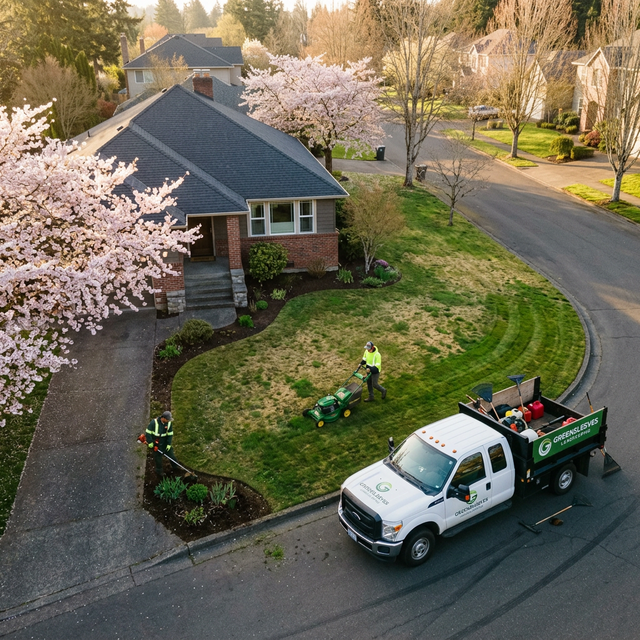
Lawn Care and Landscaping: How to Book 200 Spring Clients Before April Without Hiring
The homeowner who decides who cuts their lawn in 2026 makes that decision in February or March, not in May. By the time the grass is growing too fast to ignore, the best lawn care routes are full. The landscaping and lawn care businesses that dominate their market every summer are not better at marketing in April. They are better at capturing intent in February and converting it into booked seasonal agreements before the surge arrives.

Stop Buying Local Service Leads: Fix Your Intake Infrastructure Before You Buy Another Ad
Bad lead quality is not always the problem. Many service businesses lose paid leads because callbacks are slow, after-hours intake is weak, and follow-up is inconsistent.
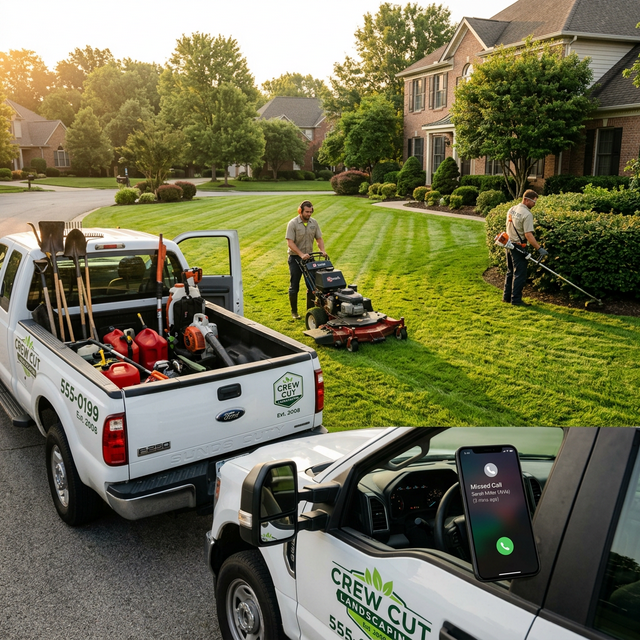
Landscaping Companies and the Field Blindness Problem: Why Your Best Days Cost You the Most Leads
There is a cruel irony at the heart of every growing landscaping service business. The days your crew does the best work, the days the lawns look perfect and the neighbors stop to watch, are the days you miss the most incoming calls. The owner is on a mower. The foreman is running a trimmer. The phone rings, nobody answers, and the neighbor who just watched your crew transform the property hires your competitor because your competitor picked up. This is field blindness, and it is the most expensive problem in lawn care.