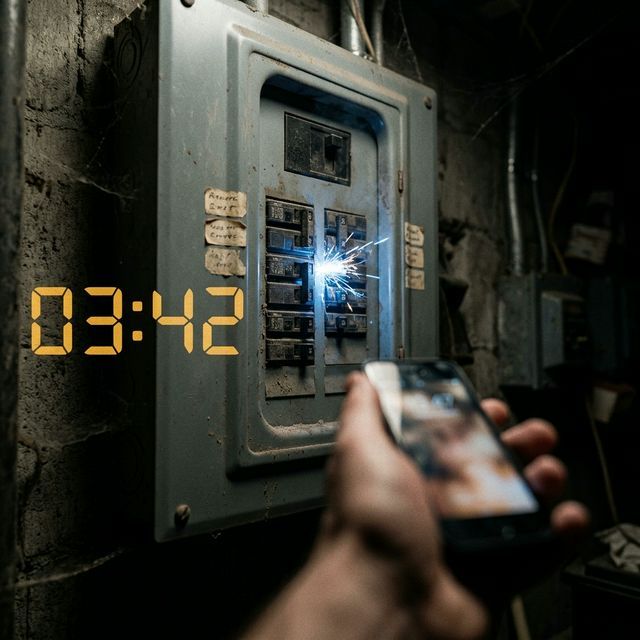

If your office hours are 8 to 5 and your voicemail is full, you are losing to contractors whose systems answer after hours. You might not even know it's happening because those leads never call back to tell you they went elsewhere.
Treat any number without a nearby source or stated method as a planning assumption, then replace it with your own records.
An electrical job doesn't start when the crew arrives. It starts the moment someone picks up the phone or fills out a contact form. And for most electrical contractors, that first moment is where the revenue quietly disappears.
Not because they did bad work. Not because their pricing was off. Because the scheduling window - the gap between first contact and confirmed appointment - was long enough for a homeowner or property manager to call someone else.
The Estimate Window Is Where Electricians Leak Revenue
Here's the pattern most electrical contractors don't track: a homeowner needs a panel upgrade or a service call. They reach out to three or four contractors at the same time. It's 7 PM on a Tuesday. They're not going to wait until 9 AM to hear back.
The first contractor to confirm an estimate time wins. Not the cheapest. Not the most experienced. The fastest to respond with a confirmed slot.
If your office hours are 8 to 5 and your voicemail is full, you are losing to contractors whose systems answer after hours. You might not even know it's happening because those leads never call back to tell you they went elsewhere.
What the Numbers Look Like for an Average Electrical Shop
Consider a mid-size residential and light commercial electrical contractor doing $1.2M a year. They field roughly 60 inbound contacts per month across calls, texts, and web forms. Industry data suggests 30 to 40 percent of after-hours contacts never get a response before the prospect books elsewhere.
At a conservative 35 percent after-hours leak rate, that's 21 contacts per month who reached out and got nothing. If half of those were bookable jobs averaging $850, that's $8,925 in gross revenue leaking out silently every single month.
Annualized: over $107,000 gone. Not from bad reviews. Not from poor referrals. From scheduling friction that no one measured.
The Estimate Confirmation Gap
Even when a contact is captured, most electrical shops have a second problem: the time between inquiry and confirmed appointment.
The prospect emails in. Someone at the shop reads it the next morning, checks the schedule, and calls them back that afternoon. By then, the homeowner has already heard from two other contractors and booked the one who confirmed within the hour.
This isn't hypothetical. This is the standard operating model for electrical contractors across North America, and it's creating a consistent leak that shows up as lost jobs rather than obvious mistakes.
Why Electrical Jobs Have a Shorter Decision Window Than Most Trades
HVAC and plumbing emergencies force a decision. But electrical inquiries - panel upgrades, EV charger installs, generator hookups, commercial tenant buildouts - often feel less urgent to the homeowner even when they're actively ready to buy.
That "less urgent" feeling works against slower-responding contractors. The homeowner has time to comparison shop. They open three tabs. They fill out three forms. And they book whoever confirms first, often within 90 minutes of sending the first inquiry.
Your competition isn't necessarily better at electrical work. They may just have a faster front door.
What a Faster Front Door Looks Like for Electrical Contractors
The fix isn't hiring a full-time dispatcher. The economics don't work for most shops under $3M in revenue. The fix is a system that runs between 5 PM and 8 AM so your human team doesn't have to.
AI intake for electrical contractors typically covers four things:
1. After-Hours Lead Capture With Immediate Confirmation
When someone contacts your business outside office hours, an AI intake system responds within seconds, captures the job type, property address, urgency level, and preferred time window, then sends a confirmation message that the job has been received and will be confirmed first thing in the morning (or slots it directly if the calendar has real-time availability).
The prospect knows they've been heard. They stop calling around.
2. Estimate Window Pre-Qualification
Not every inquiry needs a crew dispatched immediately. AI intake can triage: is this a same-day emergency (power out, panel failure, smell of burning), a scheduled estimate (new panel, EV charger, tenant buildout), or a general question?
Emergencies can be escalated to an on-call tech. Scheduled work gets queued for morning confirmation. General questions get answered immediately from your standard FAQ. Your dispatcher arrives in the morning to a clean, prioritized queue instead of a voicemail inbox.
3. Missed-Call Recovery
When a call goes unanswered, AI can send a text within 60 seconds: "Hey, we missed your call at [Your Electrical Co]. Are you looking to book a service or estimate? Reply here and we'll get you sorted." This converts a dead call into a recoverable lead roughly 40 percent of the time when sent within two minutes.
4. Appointment Confirmation and Reminder Sequences
Estimate no-shows are expensive. An AI system that sends a confirmation 24 hours out and a reminder 2 hours before the appointment window can cut no-show rates significantly. For an electrical contractor running 3 to 5 estimates per day, recovering even one no-show per week adds real revenue.
Operating Example: The Q3 Scheduling Fix
A residential electrical contractor in the Southeast was running at 61 percent answer rate on inbound calls - meaning nearly 4 in 10 calls hit voicemail. They had no after-hours system at all. Web form responses happened the next business day.
After installing an AI intake layer that handled after-hours contacts, triaged incoming types, and sent immediate confirmation texts to voicemails:
Answer-to-booking rate went from 61 percent to 84 percent within the first 60 days. After-hours job captures that previously went dark came back as confirmed estimates. The owner's words: "We stopped losing jobs we never knew we were losing."
Contractors Who Delay This Fix
There's always a version of this conversation that ends with "we're doing fine, we don't need this." And for some shops, that's accurate in the short term.
But fine is a lagging indicator in contracting. The jobs you're losing aren't causing complaints. They're not showing up in your reviews. They're just not calling back because they already booked someone else.
The electrical contractors who are investing in front-end systems now will have compounding advantages: better review velocity (more jobs means more review requests), higher close rates on estimates, and cleaner dispatcher workflows. Those who wait will still be doing fine - until the market softens and they realize their pipeline depends entirely on how fast a human answers the phone.
Where to Start
If you field more than 20 inbound contacts per month and don't have an after-hours response system, that's the first leak to plug. It's also the easiest one to quantify: look at your call log for the last 30 days, filter for calls received after 5 PM, and count the ones that never converted. That number, multiplied by your average job value, is your monthly scheduling gap loss.
Most electrical contractors do that exercise once and don't need any more convincing.
The Quiet Protocol installs AI intake systems for electrical contractors who want to stop losing jobs in the estimate window. No permanent staff required. No change to how your crew operates. Just a smarter front door.
What to check before you choose a fix
Before buying another answering service, chatbot, phone tree, or AI receptionist, look at the actual path a panel, repair, emergency, estimate, or project inquiry takes when they reach your business. The first question is not whether the tool sounds impressive. The first question is whether the buyer gets a clear next step while they still care. In electrical contractor operations, that usually means a fast answer, a useful question, a booked appointment or estimate path, and a follow-up record that does not rely on memory.
A strong system should make the business feel easier to choose. It should reduce the waiting, repeating, guessing, and manual chasing that make a buyer keep searching. If the current setup answers only during business hours, takes a message without qualifying intent, or leaves the follow-up to whoever remembers first, the problem is not only staffing. It is front-door design.
The Week-One Diagnostic
Run this review over the last seven days before making a decision. Pull the call log, website form submissions, chat history, booking calendar, CRM notes, missed-call list, and Google Business Profile activity. Do not start with opinions. Start with timestamps and outcomes. A small sample is enough to show whether the leak is response speed, qualification, booking friction, review weakness, or follow-up failure.
- Count every missed call and every call that lasted under 20 seconds. Those are often buyers who never became visible in the CRM.
- Count every form or chat that waited more than 10 minutes for a real next step. This is where high-intent demand starts cooling off.
- Mark every inquiry that needed a human callback before booking. That tells you whether the website is explaining the next step clearly enough.
- Review the last five reviews buyers can see publicly. Recency matters because buyers compare proof before they commit.
This is the source method for the article: use your own call log, CRM, booking calendar, form inbox, and Google Business Profile review activity. Public research can explain the pattern, but your own records show where money is escaping in this business.
Where the revenue usually leaks
The leak usually appears in one of four places. First, the buyer calls when the team is busy or closed. Second, the buyer reaches the business but is not qualified clearly enough to book. Third, the buyer receives a polite response but no firm next step. Fourth, the buyer finishes the job or visit but no review, referral, or reactivation path happens after the work is done. Each leak looks small by itself. Together, they decide whether marketing produces booked revenue or only more noise.
For a electrical contractor, the most valuable fix is the one that protects faster estimates, cleaner routing, and fewer lost after-hours calls. That is why why electricians lose jobs before the estimate should be judged by business outcomes, not by novelty. A phone feature that sounds clever but does not improve booked appointments is not enough. A website widget that collects contact details but does not trigger follow-up is not enough. A review tool that asks once and disappears is not enough.
What a stronger system should do
A stronger front door answers quickly, asks the right questions, captures the reason for contact, separates urgent from routine demand, books when rules are clear, sends confirmations, updates the follow-up path, and asks for reviews after the work is done. The system should make the owner less dependent on heroic callbacks and make the buyer feel that the business is organized from the first touch.
The Quiet Protocol treats this as an operating system, not a single widget. Calls, web forms, missed-call text-back, appointment booking, CRM handoff, review requests, and reactivation all need to point in the same direction. When those pieces are connected, a electrical contractor can capture more demand without turning the team into a bigger manual call center.
How to judge whether it is working
Do not judge the system by how futuristic it feels on day one. Judge it by what changes in the business. Useful measurements include missed-call recovery rate, average response time, booked appointment rate, no-show recovery, review request volume, review recency, reactivated past-customer conversations, and the number of leads that have a clear next action in the CRM.
The best early sign is calm. Fewer loose callbacks. Fewer mystery leads. Fewer buyers waiting for a reply. More conversations with a clear status. That is what good automation should feel like to the owner and to the customer.
The loss estimate is basic business math, not a magic claim.
Revenue-leak examples on this site are built from visible operating inputs: inquiry volume, missed-call or slow-response rate, booking rate, average job or client value, repeat value, and follow-up recovery. The fastest way to make the number real is to run the diagnostic for your closest business type, then compare it against your own call log, CRM, booking calendar, form timestamps, and review activity.
The practical questions behind this decision.
Is this just a 24/7 answering service?
No. A traditional answering service usually takes a message. A properly designed AI receptionist and front-door system captures intent, qualifies the buyer, routes the request, books when possible, triggers follow-up, and supports reviews after the work is done. Message-taking is coverage. Revenue capture is a fuller operating path.
What should an electrical contractor fix first?
Fix the first place buyers disappear. For some businesses that is after-hours calls. For others it is slow website follow-up, weak booking logic, old leads, or stale reviews. The right first move comes from the seven-day diagnostic, not from guessing.
Will AI make the business feel less human?
Bad automation feels colder than a person. Good automation feels like the business is paying attention. It answers quickly, uses plain language, collects the right information, and hands the buyer to a human when judgment or empathy is needed. The goal is not to remove people. The goal is to stop making buyers wait for basic next steps.
How fast should we expect improvement?
The first lift should come from visibility and speed: fewer missed opportunities and cleaner routing. Deeper gains come after the system has enough real conversations to tune scripts, booking rules, follow-up timing, and review requests. Treat the first month as deployment and calibration, not a magic switch.
Locate the point where interested buyers stop hearing from the business.
Review one customer journey from first inquiry through booking, estimate, reminder, and recovery.
Use the diagnostic to locate the handoff where good inquiries, estimates, appointments, or past customers stop moving.
See how the capability in this article fits into a complete customer journey.
Home & Field ServicesSee the same decision through the language, buyer behavior, and operating reality of this industry.
Client Results & ProofInspect the starting condition, installation, measurement window, and outcome behind real client work.

Why Plumbers Lose Weekend Calls and How to Stop It Without Hiring More Staff
The weekend emergency call is the highest-value call a plumbing company receives. Here is the structural reason so many go unanswered, and the fix that does not require headcount.

The Real Cost of a Missed Call for a Service Business: The Math Nobody Runs
A missed call costs more than the immediate job. Here is the full three-layer calculation, immediate value, lifetime client value, and referral chain, and the annual total most owners never see.

The Speed to Lead Equation: Why the First Five Minutes Decide the Job
In emergency services, the first company to answer wins. Not the best company. Not the cheapest. The fastest. Here is the math that proves it.