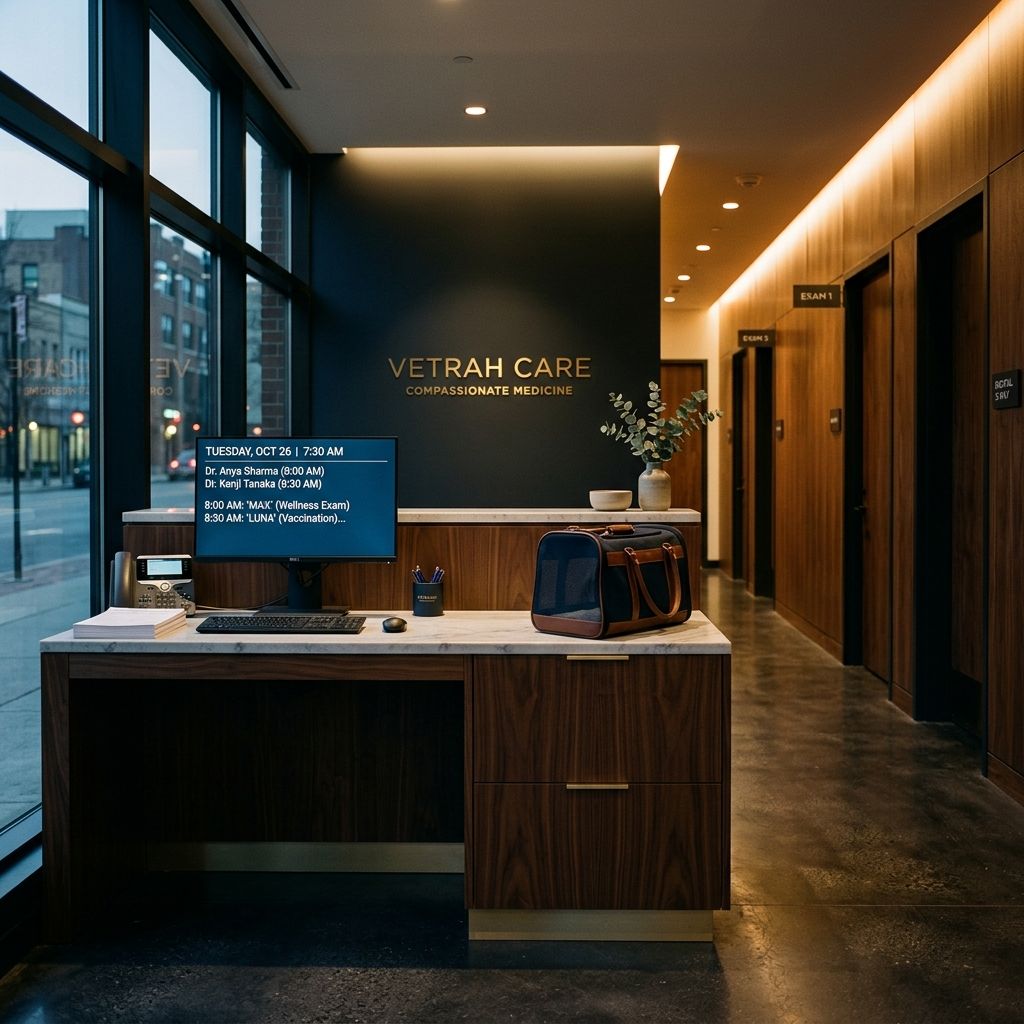
When a pet owner calls at 9 PM because their dog has not eaten in two days, they do not leave a voicemail. They call the next clinic.
Quick Answer:An AI Business Operating System for a veterinary clinic captures every missed inquiry with an immediate text response, routings pet emergencies to the on-call vet or emergency partner within minutes, runs an automated annual wellness recall that brings overdue patients back before they lapse, follows up on recommended-but-unscheduled care, and requests Google reviews the day after every visit. The practices that use the full system typically recover $80,000 to $100,000 per year from calls they were already getting and patients already in their system.
The Relationship Business That Runs on Operations
There is something important to understand about veterinary medicine that is different from almost every other health care setting.
When a dentist misses a call from a new patient, that patient finds another dentist and the relationship begins fresh. When a veterinary clinic misses a call from a pet owner, that pet owner may switch clinics , but they carry years of loyalty, years of medical history, and years of trust. The cost of losing a veterinary client is not one visit. It is years of wellness visits, vaccinations, dental cleanings, the occasional sick visit, and the deeply emotional end-of-life care that comes later. The lifetime value of a veterinary patient can reach $10,000 to $18,000 over the life of a healthy dog or cat.
Pet owners are loyal. They are also demanding. They expect their vet to communicate the way they communicate , by text, quickly, at the time that works for them. They expect a response when they call at 6:30 PM, even if the clinic is technically closed. They expect to know their pet is being thought of between annual visits, not just billed.
Most veterinary clinics are trying to meet these expectations with a front desk team that is already managing a full lobby, incoming calls, prescription requests, and end-of-exam checkout conversations all at the same time. Something always falls through.
The AI Business OS is built to catch what falls.
What a Typical Morning Looks Like in a Veterinary Clinic Without a System
It is 8:15 AM. The clinic opened 15 minutes ago. The waiting room already has six pets and their owners. The phone has rung four times. The receptionist has answered two of them and has two on hold. The morning appointment for 8:00 AM has not arrived yet, and the 8:15 AM patient is already checked in and waiting.
The two calls on hold are:
1. A new client whose dog started vomiting last night and is not eating this morning.
2. An existing client who needs to reschedule next week's annual exam for her two cats.
By the time the receptionist gets back to Call 1, the caller has hung up. She calls back 12 minutes later. No answer , the dog owner is in their car, driving to a different clinic that had a button on their website for booking urgent appointments.
Call 2 is handled. The cats get rescheduled. But what about the annual wellness reminder that should have gone out three weeks ago, before this patient felt the need to call and reschedule? It was never sent , the front desk was going to do the recall calls on Friday afternoon, but Friday was busy.
This is the operational reality of a veterinary clinic without a system. Not incompetence. Not lack of care. Just more tasks than a human team can handle consistently at the quality level that pet owners expect.
Layer 1: Intake for the Sick Pet Call at 6:45 PM
Pet health does not follow business hours. Dogs eat things they should not eat at 7 PM on a Tuesday. Cats have breathing difficulties on Friday nights. Senior pets have emergencies on Saturday mornings when the vet's office opens at 9 AM and the owner has been awake since 2 AM watching a dog pace in discomfort.
The AI intake system for a veterinary clinic is configured for two very different types of after-hours contacts.
The first type is the true emergency , signs of respiratory distress, suspected toxin ingestion, trauma, collapse, seizure. The intake system is trained to recognize these signals in any incoming message or voicemail transcript, and when they appear, the response is immediate and specific: "This sounds like it needs emergency care right away , the closest 24-hour emergency veterinary hospital to your location is [Name] at [address]. They can be reached at [number]. If your pet can travel, please go now. We will follow up with you first thing in the morning." This response protects the pet, protects the clinic from liability, and demonstrates a level of care that cements client loyalty permanently.
The second type is the non-emergency after-hours contact , the pet that is "off" but not in immediate danger, the prescription refill request, the appointment change, the general health question. These receive a friendly, immediate acknowledgment: "Thank you for reaching out to [Clinic]. We are currently closed and will reopen at [time]. We have noted your message and will call you first thing tomorrow morning. If your pet's condition worsens before then, please contact [Emergency Partner] at [number]." The message is followed by a calendar link offering the first available appointment slot.
The missed call text-back for veterinary clinics uses a tone that matches the emotional context: "Hi, this is [Clinic]. We saw you called , we are sorry we missed you. Is [pet name] okay? Text us what is going on and we will get back to you as quickly as possible." When the pet's name is known from the caller ID, the system uses it. When it is not, it defaults to "your pet." This small personalization detail significantly increases response rates, because it signals that the clinic recognizes the caller as an individual , not just a number on an incoming call log.
Layer 2: Routing Three Very Different Types of Veterinary Contacts
Veterinary contacts fall into three categories that require different urgency levels and different handling.
Emergencies.Ingested toxin, trouble breathing, trauma, severe vomiting or diarrhea (especially with blood), collapse, suspected bloat, bite wounds, seizure. These are never handled by automation beyond an immediate acknowledgment and emergency referral. They are escalated to the on-call vet or directed to an emergency partner clinic within 60 seconds.
Sick visits.A pet that is "not acting right," has been vomiting once or twice, has a minor wound, or has mild symptoms that concern the owner but are not life-threatening. These are serious but not emergencies. The routing response collects the pet's name, species, brief symptom description, and offers the earliest available sick-visit slot , typically a same-day or next-morning appointment. The tone is caring and responsive: the owner needs to feel heard, not routingd into a queue.
Wellness and routine contacts.Annual exam scheduling, prescription refills, vaccine questions, billing inquiries, appointment changes. These route to the appropriate self-service option , booking link, prescription request form, or billing portal. The automation handles them completely without taking staff time.
The discipline of this routing is what makes the intake system valuable. Not every contact needs the same level of urgency. But every contact needs an immediate response. The routing system delivers that immediately, every time.
Layer 3: Follow-Up for Recall, Recommended Care, and Client Relationships
The follow-up layer for a veterinary practice runs on three separate tracks.
Annual wellness recall.Every pet in the practice management system has a next-due date for their annual wellness exam and vaccinations. The AI system fires the first recall message 30 days before that due date , a gentle heads-up that gives the owner time to schedule without feeling rushed. If the appointment is not booked within 2 weeks of the first message, a second reminder fires. If the due date passes without a booking, the sequence continues for 8 more weeks before moving the patient to a dormant list.
This sounds simple. For most practices, it is not. Annual wellness recall depends on someone checking the list, generating it from the practice management software, and making calls or sending messages , consistently, every week, for every patient. In a busy clinic, this gets skipped or delayed. The AI system removes the human bottleneck. The recall fires on the exact day it should, every time, for every patient.
Recommended care follow-up.At many veterinary visits, the vet recommends something the owner does not schedule before leaving: a dental cleaning under anesthesia, a follow-up ultrasound, a recheck exam, a dietary consultation. These recommendations are valuable clinically , and they represent uncaptured revenue and, more importantly, care that the pet needs but is not getting.
The follow-up system sends a message 72 hours after any visit where a recommendation was made: "We wanted to follow up on [Pet Name]'s visit , Dr. [Name] recommended scheduling a dental cleaning in the next few months. Left untreated, dental disease in dogs can affect the heart and kidneys over time. When you are ready, here is how to book: [link]." The message is educational, not commercial. It explains why the care matters, which is the most effective way to motivate action in a relationship as emotionally invested as pet ownership.
Seasonal and preventive reminders.Flea and tick prevention, heartworm testing, cold-weather paw care, senior pet health screenings , there are natural moments in the calendar year when clinics can reach out to their full patient base with relevant, useful information and an associated booking opportunity. These campaigns fire automatically based on the time of year and the pet's profile (age, species, known conditions).
Layer 4: Reputation in a Category Built on Trust
When someone chooses a veterinarian, they are making one of the most emotionally significant decisions in their life as a pet owner. The stakes feel high. They are trusting a stranger with a family member.
Google reviews for veterinary clinics carry immense emotional weight. Reviews that describe a team's gentleness with a frightened animal, the care taken to explain a diagnosis, the compassion shown during a difficult end-of-life visit , these are the reviews that convert a new pet owner who is just moving to the area and searching for a vet for the first time.
The review request fires 24 hours after every wellness visit and routine appointment. For sick visits, it fires 48 hours later , after the owner has had time to see that their pet is recovering. The message is brief and personal: "We hope [Pet Name] is feeling better , or continuing to thrive. If you are happy with the care they received, a Google review helps other pet owners in [City] find a vet they can trust: [link]."
The phrase "find a vet they can trust" speaks directly to the emotional dimension of the search. It is not asking for a star rating. It is framing the review as an act of care toward the reviewer's community.
Veterinary clinics consistently generate some of the highest review response rates of any healthcare category , 15 to 20 percent per request , because pet owners are emotionally motivated and their affection for the clinic is closely tied to their affection for their pet. A clinic completing 280 appointments per month with a 15 percent review response rate generates 42 new reviews per month , 504 per year. Within 18 months, even a clinic starting with 40 reviews reaches over 700 , a count that creates an insurmountable competitive advantage in local search for "veterinarian near me."
Layer 5: Intelligence for Practice Health
The intelligence dashboard for a veterinary clinic surfaces five metrics that matter most.
Wellness visit recall completion rate.The percentage of pets whose annual wellness exam has been completed within 30 days of their due date. This metric captures both the effectiveness of the recall system and the underlying health of the active patient relationship base.
After-hours capture rate.How many after-hours contacts resulted in a booked appointment within 24 hours. This is the single most important intake metric for a veterinary clinic, because after-hours is when pet health urgency is highest and when the competition for the client's next call is fiercest.
Recommended care conversion.The percentage of recommended-but-unscheduled treatments that have been booked following follow-up messages. A clinic with a dentistry recommendation conversion rate below 15 percent either has a message framing problem or a pricing obstacle worth addressing.
Review velocity and rating trend.How many new reviews are arriving per week and whether the average rating is holding steady or trending. A sudden spike in negative reviews , even one or two , is a signal worth understanding immediately, because the emotional nature of pet ownership means negative veterinary reviews spread faster and have more impact than negative reviews in most other categories.
Active patient count trend.Total unique pets who have had a visit in the past 12 months, compared to the same count 12 months ago. This is the health number that nothing else can mask , if it is growing, the practice is growing. If it is shrinking, the recall and retention system needs attention.
The Clinic That Feels Like It Cares
The veterinary clinics that clients talk about , the ones that get recommended to every new neighbor with a dog, the ones with the five-year waiting lists for new puppy appointments , are not always the ones with the most board-certified specialists or the most advanced equipment.
They are the ones that communicate like they care. The ones that send a message the day after a difficult sick visit to ask how the pet is doing. The ones that remember that Bella's annual exam is coming up before the owner does. The ones that respond to a 9 PM message about a dog who is not eating with empathy and clear guidance, not a voicemail box.
The AI Business OS does not manufacture caring. But it makes a caring practice's communication consistent enough that every client , not just the ones who came in on a quiet Tuesday morning , experiences that care, every time.
That is what builds the kind of veterinary practice that clients never leave.
FAQ
What is an AI business operating system for a veterinary clinic?
An AI business operating system for a veterinary clinic is a connected set of automation tools that handles new client intake 24/7, pet emergency routing, annual wellness recall, recommended-care follow-up, and Google review requests , all automatically. It is not a CRM or a phone system. It is the layer that makes sure no call goes unanswered, no wellness due date gets missed, and no happy client leaves without being asked for a review.
How does AI handle emergency pet calls at night and on weekends?
The AI intake system answers every call and message 24/7. When it detects emergency language , signs of toxin ingestion, breathing difficulty, trauma, collapse , it immediately directs the pet owner to the nearest 24-hour emergency partner and notifies the on-call vet. For non-emergency after-hours contacts, it acknowledges the message, provides reassurance, and books the next available appointment automatically.
How does automated annual wellness recall work for a vet clinic?
The system tracks every pet's next-due date for their annual wellness exam and vaccinations. It fires a recall message 30 days before that date. If the appointment is not booked within 2 weeks, a second reminder goes out. If the due date passes without a booking, the sequence continues for 8 weeks before the pet moves to a dormant reactivation list. This runs for every patient, every week, automatically , no manual list generation required.
How much does an AI business operating system cost for a veterinary clinic?
A full-stack AI Business OS for a veterinary clinic typically runs $500 to $1,500 per month depending on scope and practice size. Most clinics recover the cost within the first 2 to 3 weeks from after-hours capture and missed-appointment recovery alone. The full annual return , including wellness recall, review velocity improvement, and recommended-care follow-up , typically runs $80,000 to $120,000 per year for a mid-size practice.
Does an AI system work with my existing veterinary practice management software?
Most AI Business OS platforms integrate with leading veterinary practice management systems including Avimark, Cornerstone, ezyVet, Impromed, and Shepherd. The integration allows the system to read appointment history, wellness due dates, and recommended-care notes , and trigger the right communication at exactly the right time.
Will AI replace my veterinary receptionist?
No. The AI Business OS handles the high-volume, time-sensitive tasks that a receptionist cannot realistically manage simultaneously , answering every after-hours call, sending every wellness recall, requesting every review. The front desk team handles what only humans can handle: face-to-face client interactions, emotional conversations about sick or end-of-life pets, and complex scheduling decisions. Most clinics find their reception team significantly less stressed and more effective after implementation.
Before You Choose a System
Use this section as a quick buyer check. A dental practice owner does not need another vague automation pitch. They need to know which part of the front door is leaking, what the system will change, and how they will measure whether the fix is working.
Source method: compare the article against your own call log, CRM notes, booking calendar, missed-call records, web form timestamps, and Google Business Profile review recency. Those records are more useful than a generic benchmark because they show what buyers actually experienced in your business.
What proof should I look for in my own business?
Look for proof in the places where demand either moved forward or stalled: missed calls, short calls, unbooked forms, slow callbacks, no-show recovery, old leads, and reviews that were never requested. If the business cannot see those moments clearly, the first improvement is better tracking and routing.
How do I know whether this is a marketing problem or an operations problem?
If people are already calling, filling forms, asking for prices, requesting appointments, or comparing reviews, the problem is usually operations. More marketing will not fix a front door that lets warm demand wait. The better move is to capture and route the demand already arriving.
What should happen after the first response?
The first response should create a next step: booked appointment, estimate path, intake handoff, callback window, review request, or reactivation sequence. A response that only says someone will get back to you is not enough when the buyer is comparing several providers at once.
Where does The Quiet Protocol fit?
The Quiet Protocol fits when the business already has demand but too much of it depends on manual attention. We connect AI receptionist coverage, web intake, missed-call recovery, booking logic, follow-up, review requests, and reactivation into one managed front-door system.
The loss estimate is basic business math, not a magic claim.
Revenue-leak examples on this site are built from visible operating inputs: inquiry volume, missed-call or slow-response rate, booking rate, average job or client value, repeat value, and follow-up recovery. The fastest way to make the number real is to run the diagnostic for your closest business type, then compare it against your own call log, CRM, booking calendar, form timestamps, and review activity.
Use this before you buy another tool.
Pull one recent week of calls, forms, chats, and booking requests. Mark every inquiry that waited, went unanswered, needed a manual reminder, or never reached a clear next step. That simple review shows whether the problem is demand, staffing, or the front-door system.
If those answers are hard to find, that is the first issue to fix. The Quiet Protocol installs the system that answers faster, routes cleaner, books more of the right demand, requests reviews, and keeps follow-up from depending on memory.

Vikram Roy is the founder of The Quiet Protocol, a Toronto-based AI systems firm serving service businesses across the Greater Toronto Area, Canada, and the United States. He works directly with home service companies, dental practices, clinics, and local businesses to install AI operating systems that capture more leads, reduce no-shows, grow reviews, and recover revenue without adding manual overhead. All content is written from Toronto, Ontario. Connect on LinkedIn →
See the system page tied most closely to the problem this article is diagnosing.
Veterinary Clinics & Animal HospitalsOpen the industry path where this revenue leak is framed in operational terms.
Run Revenue Leak DiagnosticQuantify the leak before you decide what type of system needs to be installed.
Call the AI Receptionist DemoHear the receptionist live, give it your business context, and test a short caller roleplay before you book.
Results & ProofReview what the system changes once the front door is rebuilt around response and continuity.

What Is an AI-Powered Business Operating System? (A practical Guide for Service Business Owners)
Every SaaS vendor is calling their product an AI Business OS. Here is what the term actually means, what a real one includes, and why it matters for service businesses.
The Real Cost of a Missed Call for a Service Business: The Math Nobody Runs
A missed call costs more than the immediate job. Here is the full three-layer calculation, immediate value, lifetime client value, and referral chain, and the annual total most owners never see.

The Speed to Lead Equation: Why the First Five Minutes Decide the Job
In emergency services, the first company to answer wins. Not the best company. Not the cheapest. The fastest. Here is the math that proves it.
Calculate the revenue leak.
Stop guessing. See how much demand your business may be losing through missed calls, slow replies, weak booking, review gaps, and follow-up drag, then decide whether Voice AI is the right system path.
Run the calculationPrefer to hear it first?
Call the live AI receptionist and test the conversation.
Call the live AI receptionist anytime. Tell it about veterinary clinics & animal hospitals, then hear a short live roleplay based on the calls your front desk actually gets.