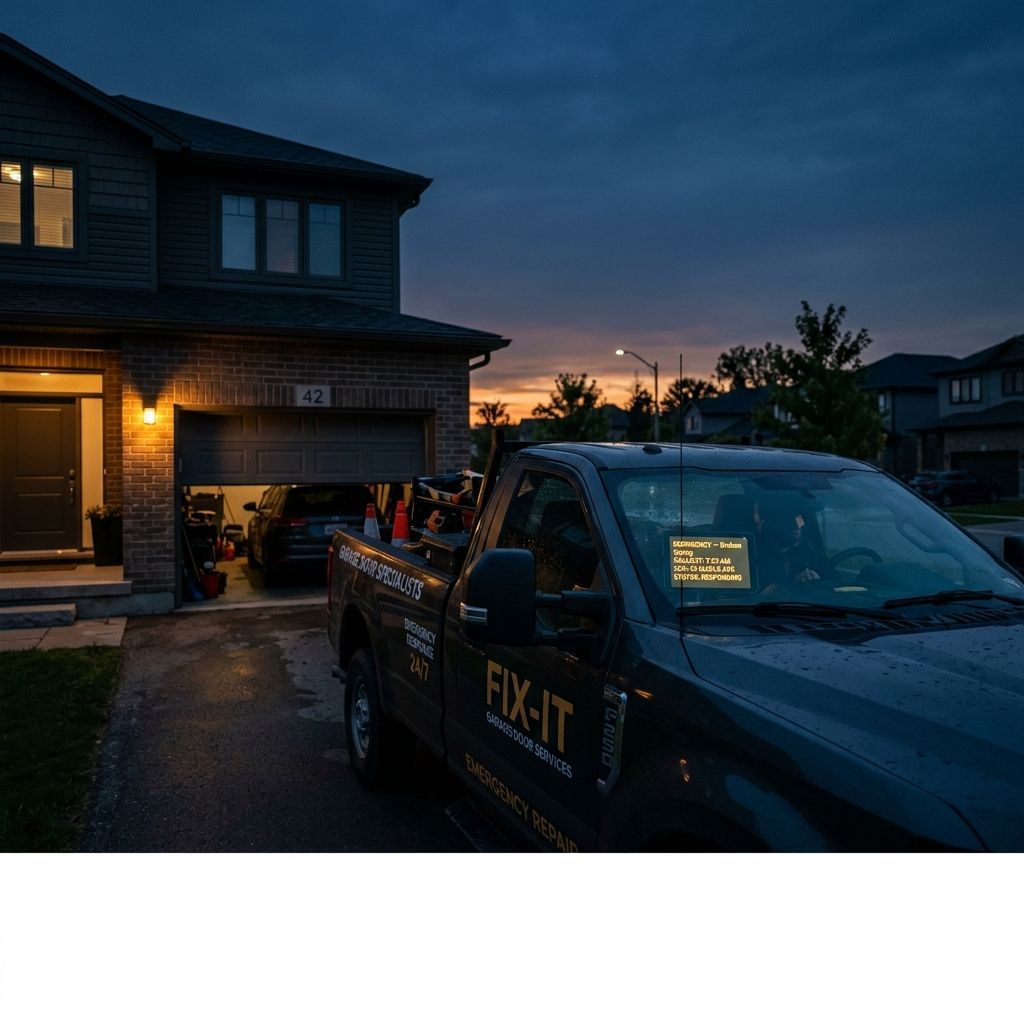
Garage door companies are sitting on a recurring revenue model that most of them have never activated. Every emergency repair is a door opener to an annual maintenance plan.
Quick Answer:An AI Business Operating System for a garage door company does five things at once. It answers every emergency call - even at 6 AM on a Sunday. It sends a text to anyone whose call was missed. It follows up after every repair job with an offer to book a tune-up or upgrade. It asks for a Google review after the job is done. And it shows the owner a daily summary of how many calls came in, how many were captured, and how much revenue is on the table. Most garage door companies that set this up recover $80,000 to $110,000 per year from their existing call volume - without spending more on ads.
Why Garage Door Is One of the Best Businesses for AI Operations
Garage door is a perfect business for AI systems. Here is why.
The jobs are fast. Most repairs take 45 minutes to 2 hours. The average ticket is $200 to $400. There is not much time spent on estimates or back-and-forth conversations. The customer calls, you come, you fix it, you leave.
The problem is that customers call at bad times. A spring breaks at 6:45 AM when a family is trying to get to school and work. A door goes off-track on a Saturday afternoon. An opener dies on a holiday weekend. These calls come in when your team is already stretched or when the office is closed.
The company that answers first almost always gets the job. These are not comparison shoppers. They are people who need their garage door working right now. Speed of response is the most important thing in garage door sales.
The AI Business Operating System is built exactly for this. It makes sure every call is answered or responded to within 60 seconds - no matter when it comes in. That alone can change the revenue of a garage door company significantly.
Layer 1: Intake for Emergency Garage Door Calls
Here is the problem most garage door companies do not realize they have.
When your phone rings during a busy job and nobody picks up, what happens? The caller waits a few seconds. Then they hang up. Then they call the next number on Google. That call - and the $290 average ticket that came with it - is gone.
This happens more than most owners think. Studies show that about 40 percent of people who call a service business and get voicemail do not leave a message. They just call someone else.
The AI intake system fixes this in two ways.
First, Voice AI picks up calls that your team cannot answer. It greets the caller professionally, asks what the problem is, collects their address and phone number, and tells them someone will call back within a set window. For emergencies - broken spring, car stuck inside, door won't close - it immediately alerts the dispatcher via text and automated call.
Second, if a call is missed after two rings, a text is sent to the caller automatically within 60 seconds. It says something like: "Hi, this is [Company]. We saw your call - what is going on with your garage door? Text us your address and we will get someone out as soon as possible."
This text recovers a large share of the callers who would otherwise have called a competitor. And it does this 24 hours a day, seven days a week, without anyone on your team doing anything.
Layer 2: Triage for Emergency Garage Door Jobs
Not every garage door call is the same. Some are true emergencies. Others can wait a day.
The triage system reads the words in each incoming message or call transcript and decides what kind of response is needed.
Emergency signals include: car is stuck inside, spring is broken, door won't close, cable snapped, door came off the track, opener not responding. When these phrases appear, the system immediately sends a text and phone alert to the dispatcher. The caller also receives a message telling them a technician will call within a specific time - usually 10 to 15 minutes.
Non-emergency signals - maintenance, tune-up, new door quote, strange noise - go to the booking flow. The customer gets a link to pick a time from the available calendar. No dispatcher involvement needed. The appointment is confirmed automatically.
This means your dispatcher spends their time on emergencies and complex jobs - not on answering "how much does a tune-up cost?" for the tenth time that day.
Layer 3: Follow-Up After the First Garage Door Job
Most garage door companies finish a job, collect payment, and move on. That is a missed opportunity.
The follow-up system sends a short sequence of messages after every completed repair. The goal is to build a longer relationship with the customer - not to pressure them.
Here is what the sequence looks like:
- **Day 1:** A text confirming the job is done and sharing one useful tip. For example, if you replaced a spring, the message might say: "Most garage door springs last 7 to 10 years. We will send you a reminder before yours is due again."
- **Day 3:** A short email about tune-ups. Simple language: "A quick tune-up once a year keeps your door quiet, balanced, and safe. It takes about 30 minutes and costs $89. Want to book one?"
- **Day 7:** A text about openers, if their unit is older. "If your opener is more than 10 years old, you may be losing on energy costs. Newer models also add phone control. Here is what we offer: [link]."
- **Day 14:** A final email about the annual maintenance plan. Simple offer, easy to say yes to.
This sequence runs automatically. Your team does nothing. And the conversion rate - the share of past customers who book an additional service from this sequence - typically runs 15 to 22 percent.
For a company doing 40 jobs per month, that means 6 to 9 additional bookings per month from the follow-up system alone.
Layer 4: Reputation and Review Momentum
Garage door is a high-search category. When someone's door breaks, the first thing they do is search Google. The companies with the most reviews and the best rating get the most clicks - and the most calls.
The review system sends a short, friendly request the morning after every job. Something like: "Hope your garage door is working perfectly. If we did a good job, a quick Google review helps your neighbors find us when they need help: [link]."
The "neighbors" framing works well in garage door because it is a community service. People feel good helping their neighbors avoid being stuck in a bad situation.
A company doing 50 jobs per month with a 14 percent review response rate gets 7 new reviews per month. That is 84 reviews per year. Starting from 25 reviews, the company reaches over 100 within a year and a half. At 100-plus reviews with a 4.8 or higher rating, the company typically reaches position 1 or 2 on Google Maps - which means a large share of emergency callers find them first.
Layer 5: Intelligence for Daily Revenue Visibility
The intelligence layer sends the owner a short daily summary. It covers:
- How many calls came in the day before
- How many were captured vs. missed
- How many follow-up sequences are active
- Current review count and this week's new reviews
- Any open jobs that need attention
The owner reads this in under two minutes. If something is off - missed call rate is high, follow-up is stalling, review count dropped - they know immediately. Not at the end of the quarter.
This kind of real-time visibility is what separates a business that reacts to problems from one that fixes them before they get expensive.
What This Looks Like After One Year
A garage door company that runs the full system for 12 months typically sees:
- 30 to 45 percent more emergency calls captured and converted
- 6 to 9 additional jobs per month from follow-up upsells
- A growing annual maintenance plan base generating predictable recurring revenue
- 80 to 120 new Google reviews per year - enough to reach position 1 in most local markets
- Full daily visibility into the business without needing to call anyone or check multiple systems
The trucks do not change. The team does not change. The number of calls coming in does not change. What changes is how many of those calls turn into customers - and how many of those customers come back.
FAQ
What is an AI business operating system for a garage door company?
An AI business operating system for a garage door company handles inbound calls 24/7, routes emergency calls (door won't open, broken spring, vehicle trapped) to a dispatcher within 90 seconds, follows up on replacement and installation estimates automatically, and requests Google reviews after every completed service - all without office staff managing each step.
How does AI capture garage door emergency calls after hours?
The intake system answers every call regardless of hour. When it detects emergency signals - garage door won't open, broken spring, car trapped, door came off tracks - it collects the address and callback number and alerts the on-call technician immediately. It simultaneously sends the homeowner a text confirming receipt: "We got your message - a technician is being notified now. We'll call you within the next [X] minutes." This response builds trust instantly during a high-stress moment.
How does AI help garage door companies close more replacement estimates?
Replacement estimates have a 7 to 14 day decision window. The AI follow-up sequence sends a 4-touch sequence over that period: a same-day text with a next-step prompt, a 3-day email with product information specific to what was quoted, a 7-day text with availability framing, and a 12-day final message. Garage door companies using this sequence close 20 to 30 percent more replacement estimates than competitors relying on a single manual callback.
How does a garage door company build Google reviews with AI?
The review request fires 2 to 4 hours after every completed service - spring replacement, new door installation, cable repair, opener upgrade. Garage door reviews that mention speed of response and professionalism ("showed up within 2 hours on a Saturday") are among the highest-converting in local search. Companies generating 10 to 15 new reviews per month reach top-2 Google Maps positions within 6 to 12 months.
How much does an AI business OS cost for a garage door company?
A full-stack AI Business OS typically runs $400 to $1,200 per month. For most garage door operators, the cost is recovered within the first 2 to 4 weeks from after-hours emergency capture and estimate follow-up. Annual return typically runs $30,000 to $70,000.
Does an AI system replace my garage door office coordinator?
No. The AI Business OS handles high-volume, time-sensitive communication - after-hours calls, estimate follow-up sequences, review requests. The office coordinator handles real-time scheduling, parts ordering, and complex customer situations that need human judgment and relationship management.
Before You Choose a System
Use this section as a quick buyer check. A garage door company owner does not need another vague automation pitch. They need to know which part of the front door is leaking, what the system will change, and how they will measure whether the fix is working.
Source method: compare the article against your own call log, CRM notes, booking calendar, missed-call records, web form timestamps, and Google Business Profile review recency. Those records are more useful than a generic benchmark because they show what buyers actually experienced in your business.
What proof should I look for in my own business?
Look for proof in the places where demand either moved forward or stalled: missed calls, short calls, unbooked forms, slow callbacks, no-show recovery, old leads, and reviews that were never requested. If the business cannot see those moments clearly, the first improvement is better tracking and routing.
How do I know whether this is a marketing problem or an operations problem?
If people are already calling, filling forms, asking for prices, requesting appointments, or comparing reviews, the problem is usually operations. More marketing will not fix a front door that lets warm demand wait. The better move is to capture and route the demand already arriving.
What should happen after the first response?
The first response should create a next step: booked appointment, estimate path, intake handoff, callback window, review request, or reactivation sequence. A response that only says someone will get back to you is not enough when the buyer is comparing several providers at once.
Where does The Quiet Protocol fit?
The Quiet Protocol fits when the business already has demand but too much of it depends on manual attention. We connect AI receptionist coverage, web intake, missed-call recovery, booking logic, follow-up, review requests, and reactivation into one managed front-door system.
The loss estimate is basic business math, not a magic claim.
Revenue-leak examples on this site are built from visible operating inputs: inquiry volume, missed-call or slow-response rate, booking rate, average job or client value, repeat value, and follow-up recovery. The fastest way to make the number real is to run the diagnostic for your closest business type, then compare it against your own call log, CRM, booking calendar, form timestamps, and review activity.
Use this before you buy another tool.
Pull one recent week of calls, forms, chats, and booking requests. Mark every inquiry that waited, went unanswered, needed a manual reminder, or never reached a clear next step. That simple review shows whether the problem is demand, staffing, or the front-door system.
If those answers are hard to find, that is the first issue to fix. The Quiet Protocol installs the system that answers faster, routes cleaner, books more of the right demand, requests reviews, and keeps follow-up from depending on memory.

Vikram Roy is the founder of The Quiet Protocol, a Toronto-based AI systems firm serving service businesses across the Greater Toronto Area, Canada, and the United States. He works directly with home service companies, dental practices, clinics, and local businesses to install AI operating systems that capture more leads, reduce no-shows, grow reviews, and recover revenue without adding manual overhead. All content is written from Toronto, Ontario. Connect on LinkedIn →
See the system page tied most closely to the problem this article is diagnosing.
Garage Door RepairOpen the industry path where this revenue leak is framed in operational terms.
Run Revenue Leak DiagnosticQuantify the leak before you decide what type of system needs to be installed.
Call the AI Receptionist DemoHear the receptionist live, give it your business context, and test a short caller roleplay before you book.
Results & ProofReview what the system changes once the front door is rebuilt around response and continuity.

What Is an AI-Powered Business Operating System? (A practical Guide for Service Business Owners)
Every SaaS vendor is calling their product an AI Business OS. Here is what the term actually means, what a real one includes, and why it matters for service businesses.
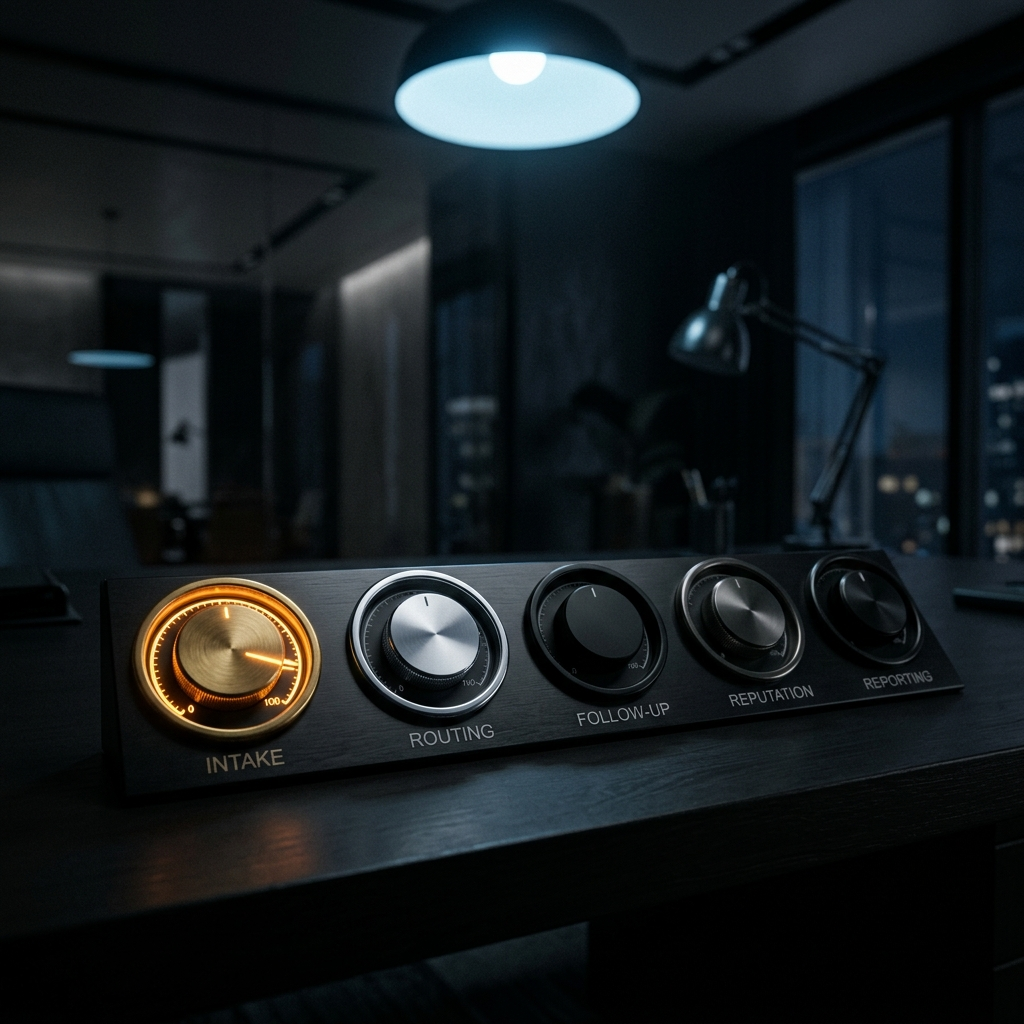
The 5 Layers of an AI Business Operating System (And Which One Is Killing Your Revenue Right Now)
Most service businesses have automated one layer and left the others broken. Learn the five layers of an AI Business OS and how to find which one is leaking revenue.
Layer 2 Deep Dive: The AI Triage and Routing Engine for Service Businesses
Not every inquiry deserves the same response. Emergency HVAC calls should reach a dispatcher in 90 seconds. General maintenance inquiries can go into a booking sequence. AI triage is the logic that knows the difference - and routes accordingly without anyone picking up the phone.
Calculate the revenue leak.
Stop guessing. See how much demand your business may be losing through missed calls, slow replies, weak booking, review gaps, and follow-up drag, then decide whether AI Business Automation is the right system path.
Run the calculationPrefer to hear it first?
Call the live AI receptionist and test the conversation.
Call the live AI receptionist anytime. Tell it about garage door repair, then hear a short live roleplay based on the calls your front desk actually gets.