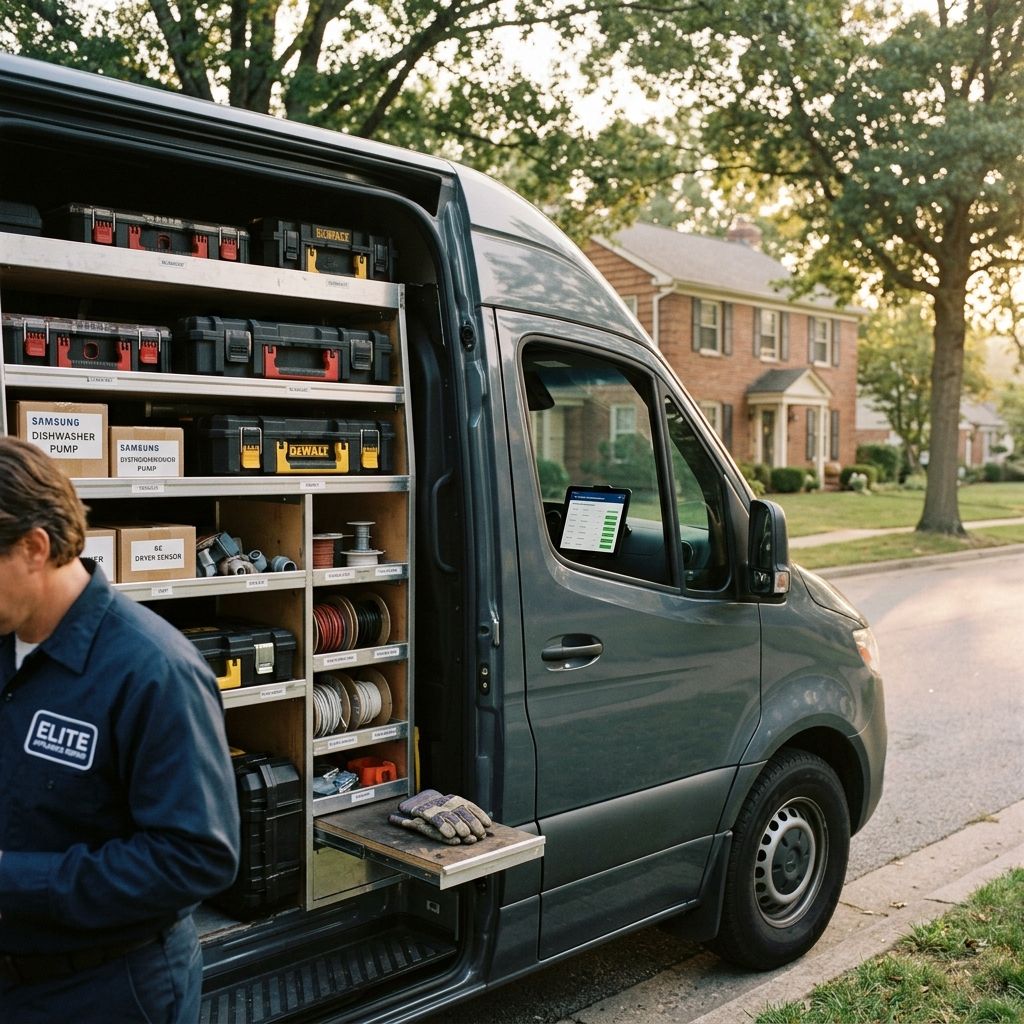
A broken refrigerator is an emergency. A broken washing machine means a family cannot function.
Quick Answer:An AI Business Operating System for an appliance repair company captures every missed call with an automatic text, uses the appliance type to decide how urgent the response needs to be, books appointments automatically without a dispatcher, sends a reminder before the visit, and asks for a Google review the next morning. Most appliance repair companies that set this up find that 30 to 50 percent more of their incoming calls turn into confirmed jobs , because no call goes unanswered and no urgent job waits.
The Speed Problem in Appliance Repair
When a refrigerator breaks, the homeowner does not spend a week comparing quotes. They search Google, call the first company they see, and if that company does not answer, they call the next one.
This is not a difficult customer to win. They already know they need help. They are ready to book. The only question is whether you pick up first.
Most appliance repair companies miss 20 to 40 percent of their inbound calls , not because they are ignoring them, but because the technician is in someone's home, the dispatcher is on another call, or the call comes in at 7 PM when the office is closed.
The AI Business Operating System fixes this. It makes sure every call gets a response within 60 seconds , even if nobody on your team can pick up. And it handles the booking automatically, so the customer goes from "I need help" to "appointment confirmed" without needing to speak to a human at all.
Layer 1: Intake for Urgent Appliance Repair Calls
Here is what happens when the AI intake system is running.
A homeowner's refrigerator stops cooling on a Tuesday evening. She searches Google, finds your company, and calls at 6:45 PM. Your office closed at 6 PM. The call rings twice and goes to voicemail.
But before she even considers leaving a message, she gets a text from your number: "Hi, this is [Company]. We saw you called , what appliance needs service? Text us your address and what is happening and we will get you scheduled."
She texts back: "Refrigerator is not cooling. Kids' food is going bad."
The system reads the urgency signal , refrigerator, food at risk , and responds with the next available same-day or early-morning slot: "We can have a technician there tomorrow at 8 AM. Confirm your address and we will send you an appointment confirmation."
She confirms. The job is booked. You wake up in the morning with a new appointment already on the schedule.
This is what happens every time a call is missed , automatically, without anyone on your team doing anything.
Layer 2: Triage for Different Appliance Problems
Not all broken appliances are the same kind of emergency.
A broken refrigerator with food spoiling is urgent. The customer needs someone there today or tomorrow morning at the latest. If you cannot get there fast, they will call someone else.
A broken dishwasher is annoying, but the customer can hand-wash dishes for a few days. They will wait 48 hours for the right company.
The triage system reads the appliance type in every incoming message and automatically assigns the right urgency level. Refrigerators, ovens, and gas dryers get flagged as urgent , the system shows same-day slots first and makes it easy to confirm in one tap. Dishwashers and washing machines get standard 24 to 48-hour scheduling.
This matters because it keeps your most urgent jobs at the top of the queue , and it keeps your scheduling from being disrupted by non-urgent bookings crowding out time-sensitive ones.
It also helps with how customers feel. When someone's refrigerator is broken and you respond with urgency , fast text, same-day slot, clear communication , they feel taken care of. That feeling leads to a 5-star review. When they feel ignored, it leads to a 2-star review.
Layer 3: Follow-Up Before and After Every Visit
The follow-up system for appliance repair works at two moments: before the visit and after.
Before the visit:2 hours before the scheduled appointment, the customer receives a message. It includes the technician's first name, the estimated arrival window, and a simple instruction if needed (like "please clear access to the appliance"). This reduces no-shows significantly , customers who receive a pre-appointment reminder show up and are home when the technician arrives. For businesses with a no-show problem, this one change alone recovers meaningful revenue.
After the visit:The next morning, a short message goes to the customer: "We hope your [appliance] is working perfectly. Thank you for choosing [Company]. If anything is still off, just reply here and we will make it right." If the technician identified another issue during the visit , a second appliance that needs attention, a part that will need replacement in 6 to 12 months , the follow-up message can include a soft offer to address it.
This post-visit message also serves as a quality check. If the customer replies with a complaint, the system flags it immediately for the owner or dispatcher to handle , before the customer has a chance to write a negative review.
Layer 4: Reputation and Review Momentum
Appliance repair is one of the most review-driven home service categories. Customers are inviting someone into their home to work on expensive equipment. They want to know the technician is trustworthy and knows what they are doing.
A company with 12 reviews is a question mark. A company with 150 reviews and a 4.9 rating is a clear choice.
The review request fires the morning after every completed job. The message is short and simple: "Thank you again for trusting us with your [appliance]. If [Technician Name] did a great job, a quick Google review would help your neighbors find reliable repair service in [City]: [link]."
Using the technician's name personalizes the request. It connects the review to a real person rather than a faceless company, which increases response rates.
An appliance repair company completing 80 jobs per month with a 12 percent review response rate gets about 10 new reviews per month. That is 120 per year. Starting from 20 reviews, the company reaches over 100 within a year. At that point, it typically appears in the top two or three spots on Google Maps , which means more people find it without any advertising.
Layer 5: Intelligence for Daily Revenue Visibility
The intelligence layer sends a short daily summary to the owner. It shows:
- How many calls came in yesterday
- How many were captured and booked automatically
- How many were missed without a text recovery
- Current review count and pace
- Any visits where the customer flagged a problem
This summary takes under two minutes to read. It tells the owner immediately if something is off , for example, if the after-hours capture rate dropped because the text-back system stopped sending, or if a cluster of visits produced complaints.
Most appliance repair owners currently find out about these problems weeks after they happen , when revenue is already lower than expected. The intelligence layer surfaces them the day after they occur.
What the System Adds Up To
An appliance repair company doing 80 jobs per month that runs the full AI Business Operating System for 12 months typically sees three main improvements.
First, more calls turn into jobs. When every missed call gets an immediate text response, and urgent bookings get same-day slots, the conversion rate on incoming calls goes up 30 to 50 percent.
Second, more completed jobs turn into reviews. Systematic review requests at the right time add 80 to 120 reviews per year. The company moves up in Google Maps rankings and gets more organic calls , without paying for advertising.
Third, the owner has full visibility. No more guessing about how many calls came in or why revenue was lower this week. The daily summary answers those questions automatically.
The technicians do the same work they always did. The tools and trucks are the same. The only thing that changes is how many of the calls the business is already getting actually turn into confirmed, completed, reviewed jobs.
FAQ
What is an AI business operating system for an appliance repair company?
An AI business operating system for an appliance repair company answers every inbound call 24/7, captures the appliance type and symptom details immediately, reduces same-day booking loss from missed calls, follows up on quotes for major repairs and replacements, and requests Google reviews after every completed service , without requiring office staff to manage each touchpoint manually.
How does AI reduce missed booking loss for appliance repair companies?
Appliance repair customers call when they have a problem right now , a broken fridge, a washing machine mid-cycle, a dishwasher leak. If their first call goes unanswered, 60 to 70 percent call a competitor within 5 minutes. The AI intake system answers every call immediately and collects appliance type, model, symptom, and preferred appointment time , booking the slot in real time. For calls that do miss, the missed call text-back fires within 60 seconds: "We saw you called , what appliance needs attention? We'll get you booked today."
How does AI follow up on appliance repair and replacement estimates?
Major appliance repair estimates (compressor replacement, motor, control board) often involve a 3 to 7 day decision window while the homeowner considers repair versus replacement. The AI follow-up sequence sends 3 touches over that window , a same-day recap of what was quoted, a 48-hour educational message comparing repair versus replacement costs for their specific appliance age and type, and a 5-day close message. Companies using this sequence recover 15 to 22 percent more of these estimates than competitors relying on a single callback.
How does an appliance repair company build Google reviews with AI?
The review request fires 2 to 4 hours after every completed repair , when the homeowner's appliance is working again and relief and gratitude are at their peak. Appliance repair reviews that mention specific appliances and quick turnaround are highly effective in local search. Companies generating 8 to 15 new reviews per month reach top-2 Google Maps positions for "appliance repair near me [city]" within 6 to 12 months.
How much does an AI business OS cost for an appliance repair company?
A full-stack AI Business OS typically runs $400 to $1,200 per month. For most appliance repair operators, the cost is recovered within the first 3 to 5 weeks from same-day booking capture. Annual return typically runs $25,000 to $55,000 depending on call volume and market size.
Does an AI system work with my existing appliance repair scheduling software?
Most AI Business OS platforms integrate with or complement field service management tools. The AI handles intake, follow-up, and reputation. Scheduling, dispatch, and parts management stay in your existing tools.
Before You Choose a System
Use this section as a quick buyer check. A service business owner does not need another vague automation pitch. They need to know which part of the front door is leaking, what the system will change, and how they will measure whether the fix is working.
Source method: compare the article against your own call log, CRM notes, booking calendar, missed-call records, web form timestamps, and Google Business Profile review recency. Those records are more useful than a generic benchmark because they show what buyers actually experienced in your business.
What proof should I look for in my own business?
Look for proof in the places where demand either moved forward or stalled: missed calls, short calls, unbooked forms, slow callbacks, no-show recovery, old leads, and reviews that were never requested. If the business cannot see those moments clearly, the first improvement is better tracking and routing.
How do I know whether this is a marketing problem or an operations problem?
If people are already calling, filling forms, asking for prices, requesting appointments, or comparing reviews, the problem is usually operations. More marketing will not fix a front door that lets warm demand wait. The better move is to capture and route the demand already arriving.
What should happen after the first response?
The first response should create a next step: booked appointment, estimate path, intake handoff, callback window, review request, or reactivation sequence. A response that only says someone will get back to you is not enough when the buyer is comparing several providers at once.
Where does The Quiet Protocol fit?
The Quiet Protocol fits when the business already has demand but too much of it depends on manual attention. We connect AI receptionist coverage, web intake, missed-call recovery, booking logic, follow-up, review requests, and reactivation into one managed front-door system.
The loss estimate is basic business math, not a magic claim.
Revenue-leak examples on this site are built from visible operating inputs: inquiry volume, missed-call or slow-response rate, booking rate, average job or client value, repeat value, and follow-up recovery. The fastest way to make the number real is to run the diagnostic for your closest business type, then compare it against your own call log, CRM, booking calendar, form timestamps, and review activity.
Use this before you buy another tool.
Pull one recent week of calls, forms, chats, and booking requests. Mark every inquiry that waited, went unanswered, needed a manual reminder, or never reached a clear next step. That simple review shows whether the problem is demand, staffing, or the front-door system.
If those answers are hard to find, that is the first issue to fix. The Quiet Protocol installs the system that answers faster, routes cleaner, books more of the right demand, requests reviews, and keeps follow-up from depending on memory.

Vikram Roy is the founder of The Quiet Protocol, a Toronto-based AI systems firm serving service businesses across the Greater Toronto Area, Canada, and the United States. He works directly with home service companies, dental practices, clinics, and local businesses to install AI operating systems that capture more leads, reduce no-shows, grow reviews, and recover revenue without adding manual overhead. All content is written from Toronto, Ontario. Connect on LinkedIn →
See the system page tied most closely to the problem this article is diagnosing.
Appliance RepairOpen the industry path where this revenue leak is framed in operational terms.
Run Revenue Leak DiagnosticQuantify the leak before you decide what type of system needs to be installed.
Call the AI Receptionist DemoHear the receptionist live, give it your business context, and test a short caller roleplay before you book.
Results & ProofReview what the system changes once the front door is rebuilt around response and continuity.
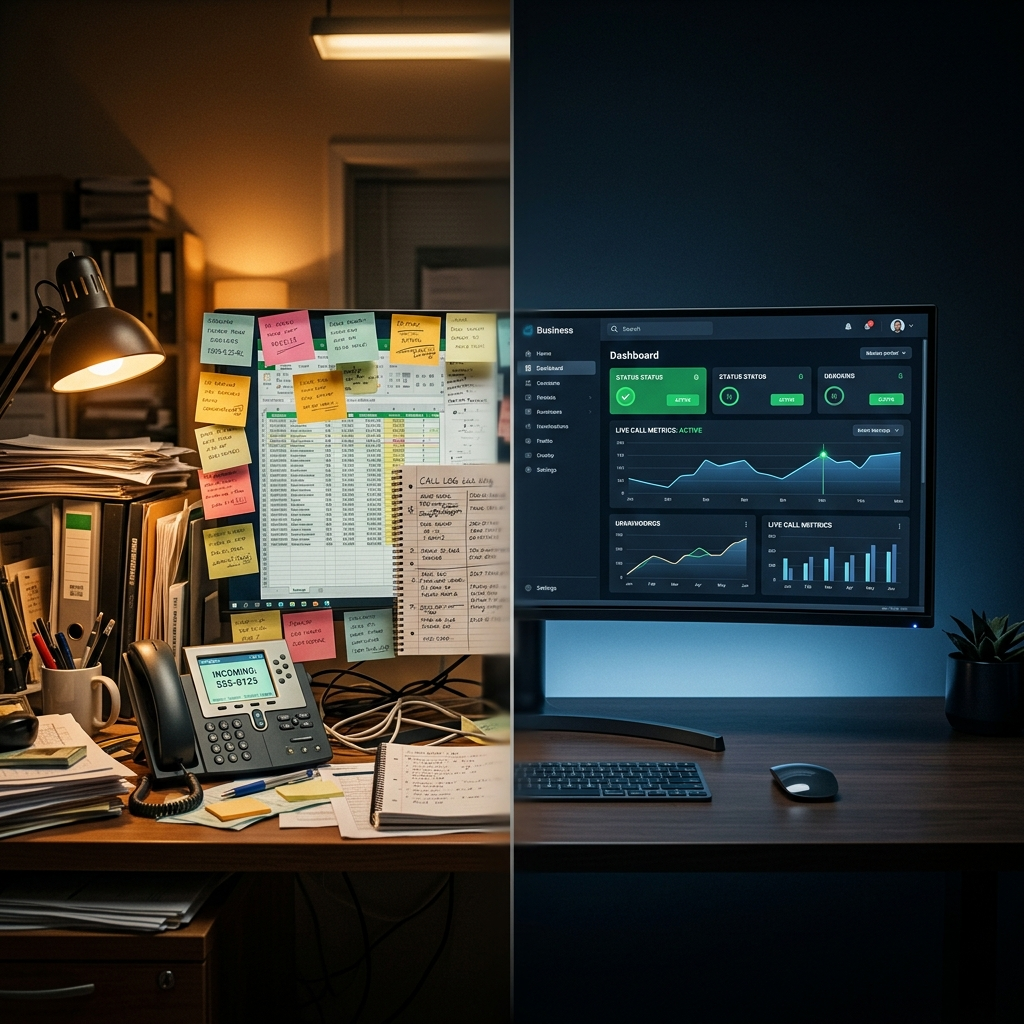
What Is an AI-Powered Business Operating System? (A practical Guide for Service Business Owners)
Every SaaS vendor is calling their product an AI Business OS. Here is what the term actually means, what a real one includes, and why it matters for service businesses.
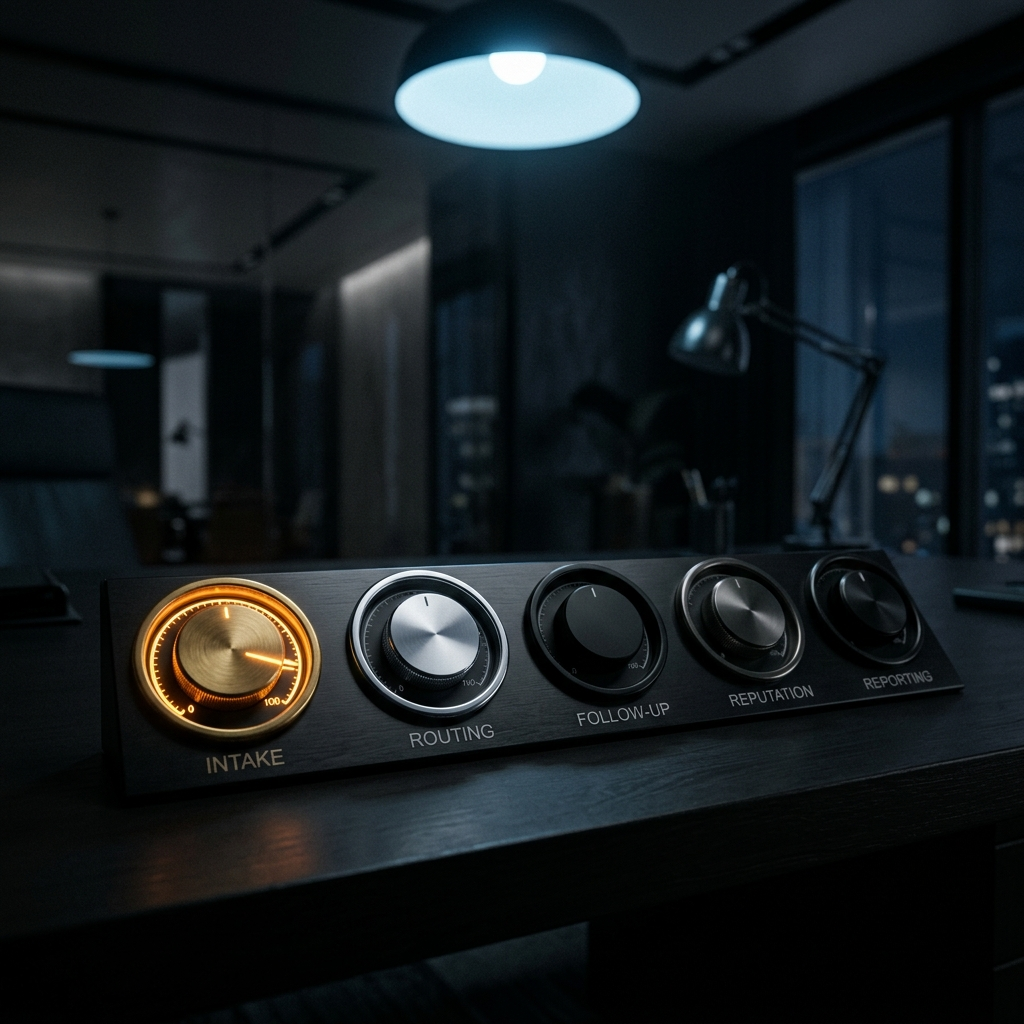
The 5 Layers of an AI Business Operating System (And Which One Is Killing Your Revenue Right Now)
Most service businesses have automated one layer and left the others broken. Learn the five layers of an AI Business OS and how to find which one is leaking revenue.
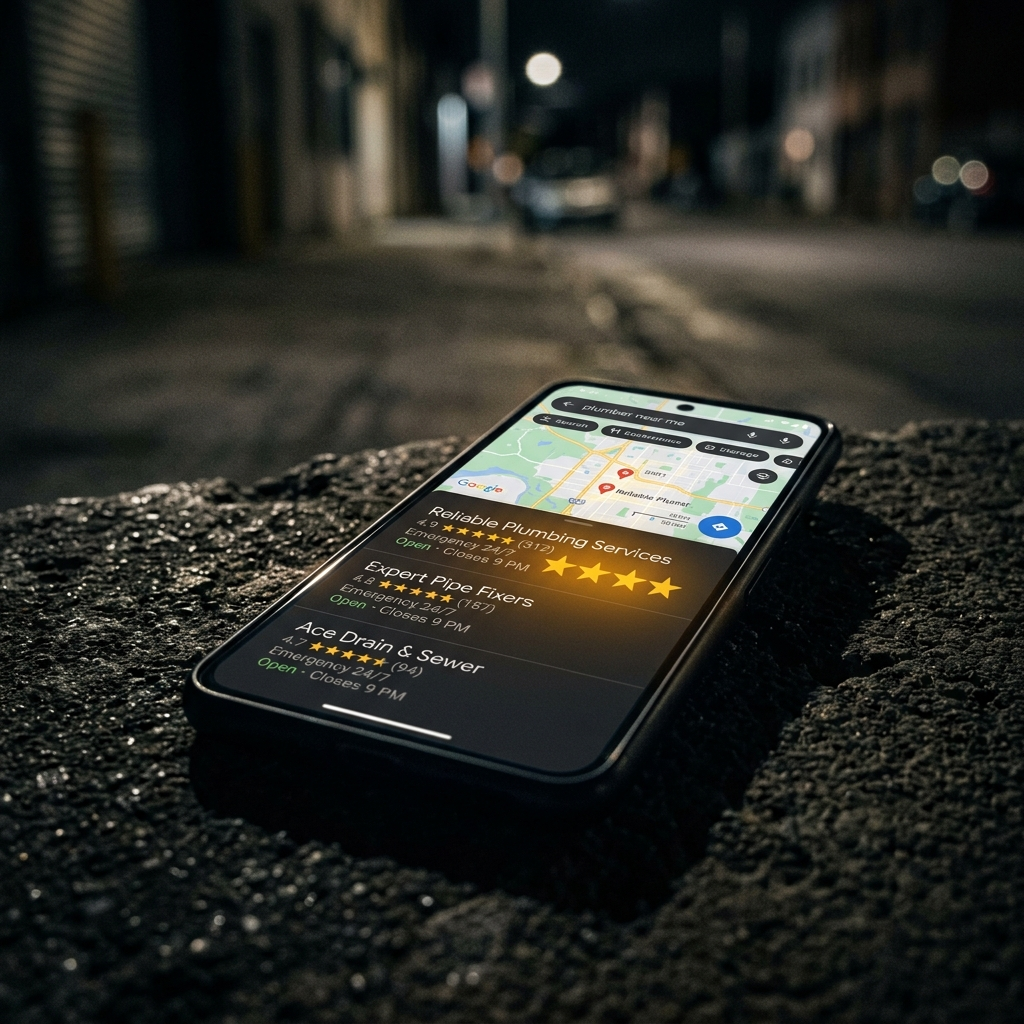
Layer 2 Deep Dive: The AI Triage and Routing Engine for Service Businesses
Not every inquiry deserves the same response. Emergency HVAC calls should reach a dispatcher in 90 seconds. General maintenance inquiries can go into a booking sequence. AI triage is the logic that knows the difference - and routes accordingly without anyone picking up the phone.
Calculate the revenue leak.
Stop guessing. See how much demand your business may be losing through missed calls, slow replies, weak booking, review gaps, and follow-up drag, then decide whether AI Business Automation is the right system path.
Run the calculationPrefer to hear it first?
Call the live AI receptionist and test the conversation.
Call the live AI receptionist anytime. Tell it about appliance repair, then hear a short live roleplay based on the calls your front desk actually gets.