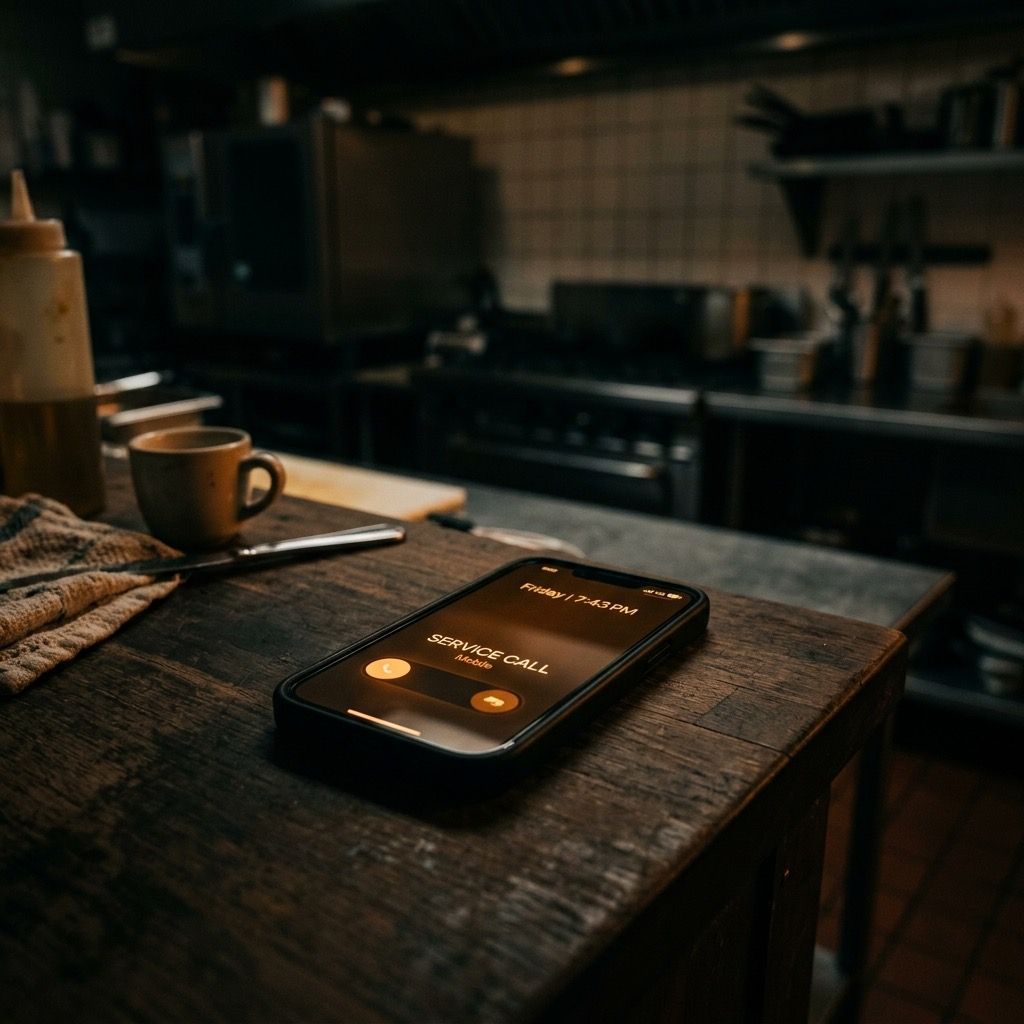

Most owners do not feel the leak because it does not arrive as a dramatic event. It arrives as a missed call, a voicemail with no details, a form submission waiting until morning, or a caller who never left a message at all.
Treat any number without a nearby source or stated method as a planning assumption, then replace it with your own records.
The lead did not become less valuable because it arrived at 5:17 p.m.
That is the part many service businesses miss.
The office closes, the team goes home, the owner finally gets a little silence, and the phone keeps doing what the market does. People still search. Emergencies still happen. Homeowners still discover problems after work. Property managers still get complaints. Patients still decide they are ready to book.
The buyer is active.
The business is closed.
That gap is where after-hours revenue leaks.
Most owners do not feel the leak because it does not arrive as a dramatic event. It arrives as a missed call, a voicemail with no details, a form submission waiting until morning, or a caller who never left a message at all.
By Monday, the buyer may already be gone.
After 5PM Is Not Dead Time
For many service businesses, after-hours is when buyers finally have time to act.
They spent the workday in meetings, on job sites, driving, handling kids, dealing with clients, or trying to ignore the problem until it became annoying enough to solve. Then the day slows down. They search. They call.
This is especially true for:
- Home services.
- Emergency trades.
- Dental and healthcare appointment requests.
- Med spa consultation inquiries.
- Property management maintenance issues.
- Legal and professional service consultations.
- Contractors and renovation businesses.
The after-hours caller may not be casual. They may be the person who could not call earlier.
That is why a voicemail greeting is often too weak. It treats the lead like a message to be processed later. The buyer experiences it as a delay.
The Friday Problem
Friday after 5 p.m. is different from Tuesday after 5 p.m.
A Friday lead can go cold for an entire weekend.
If the caller does not get a useful next step, three things often happen:
- They call the next company.
- They submit multiple forms and forget who responded first.
- They decide the problem can wait, then lose urgency.
None of those outcomes helps you.
The Friday lead is especially dangerous because it feels easy to recover on Monday. The team comes in, sees the voicemail or form, and calls back.
But the buyer has lived a whole weekend since then.
They may have booked someone else. They may have solved it badly. They may have decided your business is not responsive. They may not remember the details.
That is why Monday callbacks often sound like, "Oh, we already found someone."
The lead was not weak.
The response window was.
Why Weekend Leads Decay Differently
A weekday missed call can sometimes be recovered the next morning.
A weekend missed call has more time to decay.
The buyer has more time to ask a neighbor, search again, click another ad, read more reviews, send three more forms, or decide that the first business was not available enough.
This is not always rational. It is human.
When people have a problem they want solved, responsiveness becomes a signal of competence. If a business does not answer, the buyer may not think, "They are closed because it is Friday." They may think, "They are hard to reach."
That perception matters even if the company does excellent work.
The weekend also creates a memory problem. By Monday, the caller may not remember which companies they called. They may have spoken to two competitors, received one text, and scheduled one quote. Your callback becomes noise.
That is why after-hours coverage is partly about speed and partly about identity.
The buyer needs to know your business received them.
What Happens To The Caller
Imagine a homeowner notices a leak under the sink at 6:40 p.m.
They search on their phone. They tap the first promising local business. The call rings. Nobody answers.
Maybe they leave a message.
Maybe they do not.
Either way, they are still standing in a kitchen with a problem.
They call the second company. If that company answers, asks the right questions, confirms urgency, and gives them a next step, the buyer's search may be over.
That is the part owners often underestimate. Buyers do not always want to compare every option. Many want to find one provider who feels competent and available.
The first business may be better. It may have better reviews, better technicians, better pricing, and better work.
But the second business received the buyer.
That is the front-door problem in one scene.
The Same Problem Shows Up In Non-Emergency Categories
After-hours leakage is not only a plumbing or HVAC issue.
A dental patient may finally search for an emergency appointment after work because the pain became impossible to ignore.
A med spa prospect may call at 7 p.m. because that is when they are alone with enough time to think about booking a consultation.
A family law prospect may reach out after the kids are asleep because that is the only private window they have.
A homeowner planning a remodel may fill out a form Sunday night because that is when the household finally talked through the project.
These are not always emergencies.
But they are still moments of active intent.
If the business waits until the next business day with no confirmation, no qualification, and no next step, the buyer is left sitting in uncertainty. Uncertainty creates comparison. Comparison creates leakage.
This is why the after-hours system should not only ask, "Is this urgent?"
It should also ask, "How do we protect serious intent until the team is back?"
Why Voicemail Is Not A Strategy
Voicemail is not useless.
It can help capture some callers.
But it is not an after-hours strategy by itself.
The problem is that voicemail asks the buyer to do extra work at the exact moment they want relief. They must explain the problem, leave contact information, trust that someone will listen, and wait.
Many callers will not do that.
They will simply keep moving.
Voicemail also gives the business incomplete information. A message may say, "Hi, I need help with my AC. Call me back." That does not tell you urgency, location, equipment type, budget, availability, or whether this is a real fit.
Now the next morning starts with phone tag.
That is why the better question is not, "Do we have voicemail?"
The better question is, "Can a qualified after-hours lead get a useful next step without waiting for the office to reopen?"
The Owner Burnout Trap
Some owners solve after-hours coverage by becoming the coverage.
They forward calls to their cell. They answer during dinner. They text while watching a movie. They pick up on weekends because they know missed calls cost money.
This works until it does not.
The business grows, the calls increase, and the owner becomes the emergency intake layer for everything: real emergencies, routine questions, price shoppers, vendors, wrong numbers, and existing customers who could wait.
That is not a system.
It is a human overload pattern.
The goal is not to make the owner more available. The goal is to separate what deserves immediate attention from what simply needs to be captured cleanly.
After-hours coverage should protect both revenue and the owner's life.
The Three Types Of After-Hours Calls
The system gets easier when you separate after-hours calls into three groups.
First, there are true emergencies.
These may require dispatch, escalation, or immediate human judgment. A burst pipe, lockout, active water damage, safety issue, or medical urgency cannot sit until Monday.
Second, there are high-intent booking opportunities.
These callers may not need a human at 9 p.m., but they do need to be captured, qualified, and given a clear next step. They should not be left as a voicemail blob.
Third, there are routine or low-fit inquiries.
These should be handled politely without waking the owner or distracting the team. The caller can be routed, logged, or told what to expect.
Once those categories exist, after-hours coverage stops being all-or-nothing.
The business does not need to answer everything personally. It needs to sort demand correctly.
What A Proper After-Hours Front Door Does
A useful after-hours system should do five jobs.
First, it should answer.
Not every call needs a human, but every qualified caller needs to feel received.
Second, it should qualify.
It should collect the service need, location, urgency, contact information, and any details needed to decide the next step.
Third, it should triage.
Emergencies should not sit with routine questions. High-value leads should not be buried with spam.
Fourth, it should create a record.
The next morning, the team should not be guessing from a voicemail. They should see a clean summary.
Fifth, it should trigger human escalation when needed.
If a call is urgent or valuable enough, the right person should know now.
This is the difference between after-hours voicemail and an after-hours operating layer.
What The Monday Morning Summary Should Look Like
The Monday morning version of this system should not be a messy voicemail list.
It should be a clean queue.
For each lead, the team should see:
- Caller name and phone number.
- Service requested.
- Location.
- Urgency.
- Existing customer or new prospect.
- Best time to reach them.
- Whether a text confirmation was sent.
- Whether the call needs owner, dispatcher, sales, or front desk follow-up.
That changes the morning.
Instead of listening to messages and trying to reconstruct intent, the team starts with organized demand. The urgent calls are already marked. The routine calls are ready for follow-up. The bad-fit calls are not eating the whole morning.
This is one of the quiet benefits of a real front-door system. It does not just capture leads. It makes the next workday less chaotic.
Where Voice AI Fits
Voice AI can be useful after hours because the problem is not always emotional complexity.
Often, the first job is structured intake:
- Who are you?
- What do you need?
- Where are you located?
- Is this urgent?
- Are you an existing customer?
- What is the best next step?
A good AI receptionist can answer, collect details, route emergencies, send summaries, trigger texts, and hand off to humans when judgment is needed.
The goal is not to have AI pretend to be a master salesperson at midnight.
The goal is to stop serious opportunities from disappearing into voicemail.
There is a big difference.
What Not To Automate After Hours
Some calls should be escalated quickly.
Examples:
- Medical urgency.
- Safety issues.
- Active water damage.
- Locked-out customers in risky situations.
- Angry customers.
- High-value commercial inquiries.
- Anything requiring licensed advice or human judgment.
The system should not fake certainty.
It should recognize priority and route the call.
That is why the best after-hours setup is not "AI handles everything." It is "AI handles the first layer so humans are only pulled in when humans are actually needed."
That is how you protect revenue without building a new burnout machine.
The Simple After-Hours Revenue Check
Run this for the next 14 days:
- Count every call after 5 p.m.
- Count calls after Friday 5 p.m.
- Separate answered, missed, voicemail, and no voicemail.
- Tag the likely service need.
- Estimate average job value.
- Track whether the lead was reached.
- Track whether it booked.
Then calculate the leak.
If you had 30 after-hours calls in a month, 40 percent were real buyers, half would have booked, and your average job value is $900, that is $5,400 in monthly opportunity.
Annualized, that is $64,800.
That is before repeat work, referrals, maintenance plans, and future value.
This is why after-hours coverage is not a convenience feature. For many service businesses, it is revenue infrastructure.
A Practical Fix Sequence
Do not overcomplicate the first version.
Start with the biggest window.
If Friday evening and weekends are the leak, fix that first. If weekday overflow is worse, fix that first. If emergency calls are getting mixed with routine calls, fix triage first.
A simple sequence:
- Pull 30 days of after-hours call data.
- Identify the busiest unanswered windows.
- Write the five questions every caller must answer.
- Define which calls escalate to a human.
- Create a clean summary format for the team.
- Add missed-call text recovery.
- Review booked jobs after 30 days.
This turns after-hours from a vague anxiety into a measurable system.
Bottom Line
After 5 p.m. is not dead time.
It is when many buyers finally act.
If your business goes dark while the market is still moving, you are not just missing calls. You are letting buyer intent age, scatter, and land somewhere else.
Fix the front door before asking for more leads.
Run the after-hours audit. Count the calls. Identify the worst window. Build coverage that protects revenue without putting the owner back on call for everything.
That is how a service business stops losing Friday leads by Monday morning.
Use your own records before you decide
Source: start with your call log, CRM notes, booking calendar, missed-call records, web form timestamps, and Google Business Profile. Those records show whether buyers reached you, how fast they heard back, what they asked for, and where the next step broke down.
For seven days, mark each missed call, late reply, unbooked form, stale estimate, and review request that never went out. That small sample gives an owner a practical picture of the front-door gap before they spend more on ads, software, or staff.
The loss estimate is basic business math, not a magic claim.
Revenue-leak examples on this site are built from visible operating inputs: inquiry volume, missed-call or slow-response rate, booking rate, average job or client value, repeat value, and follow-up recovery. The fastest way to make the number real is to run the diagnostic for your closest business type, then compare it against your own call log, CRM, booking calendar, form timestamps, and review activity.
The practical questions behind this decision.
Do service business leads really call after 5 p.m.?
Yes. Many buyers call when they finally have time, when they discover a problem at home, or when an urgent issue happens outside office hours. After-hours does not mean low intent.
Is voicemail enough for after-hours calls?
Voicemail captures some callers, but many buyers do not leave messages. Even when they do, the business may still lose speed, context, and trust. A stronger system gives the caller a useful next step.
Should the owner answer after-hours calls personally?
Only for calls that truly require owner judgment. If every after-hours call goes to the owner, the business is using personal availability as a system. That usually creates burnout.
Can voice AI handle after-hours service calls?
Voice AI can handle first-layer intake, qualification, routing, summaries, and escalation rules. It should not replace human judgment for sensitive, high-risk, or complex situations.
What is the first after-hours metric to track?
Start with after-hours missed calls by day and hour. Then track how many were reached, how many booked, and how much potential revenue was tied to those calls.
Connect one customer path before adding more disconnected tools.
The first useful system owns a defined journey from customer action to team handoff and follow-up.
See where a Smart Website, software plan, AI intake path, or Custom Business System fits before committing to a scope.
See how the capability in this article fits into a complete customer journey.
Service BusinessesSee the same decision through the language, buyer behavior, and operating reality of this industry.
Client Results & ProofInspect the starting condition, installation, measurement window, and outcome behind real client work.
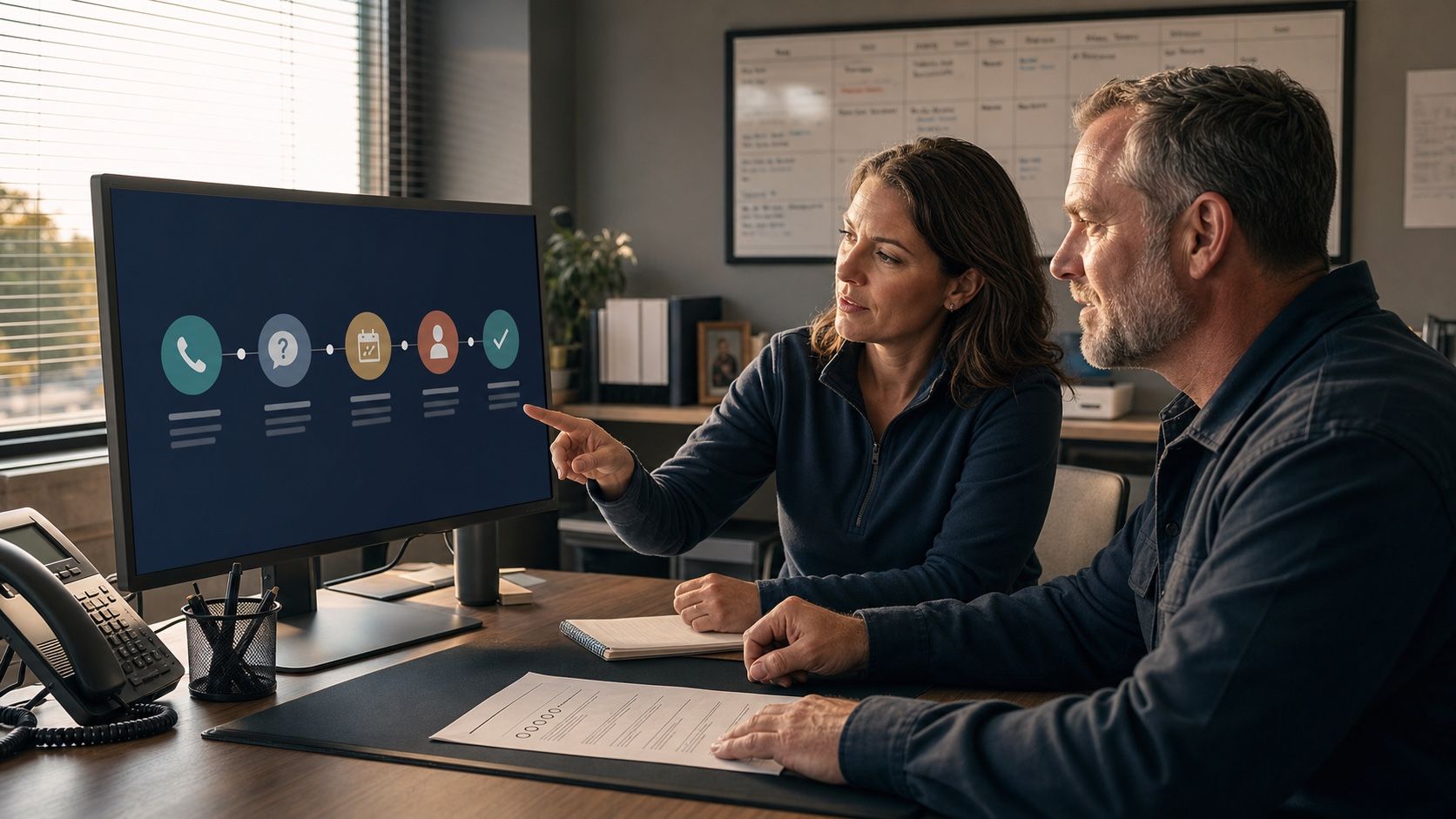
AI Receptionist Rollout Guide for Service Businesses
A practical operating guide to choosing the first call path, preparing staff, testing real handoffs, and deciding whether an AI receptionist is ready to handle more customer conversations.
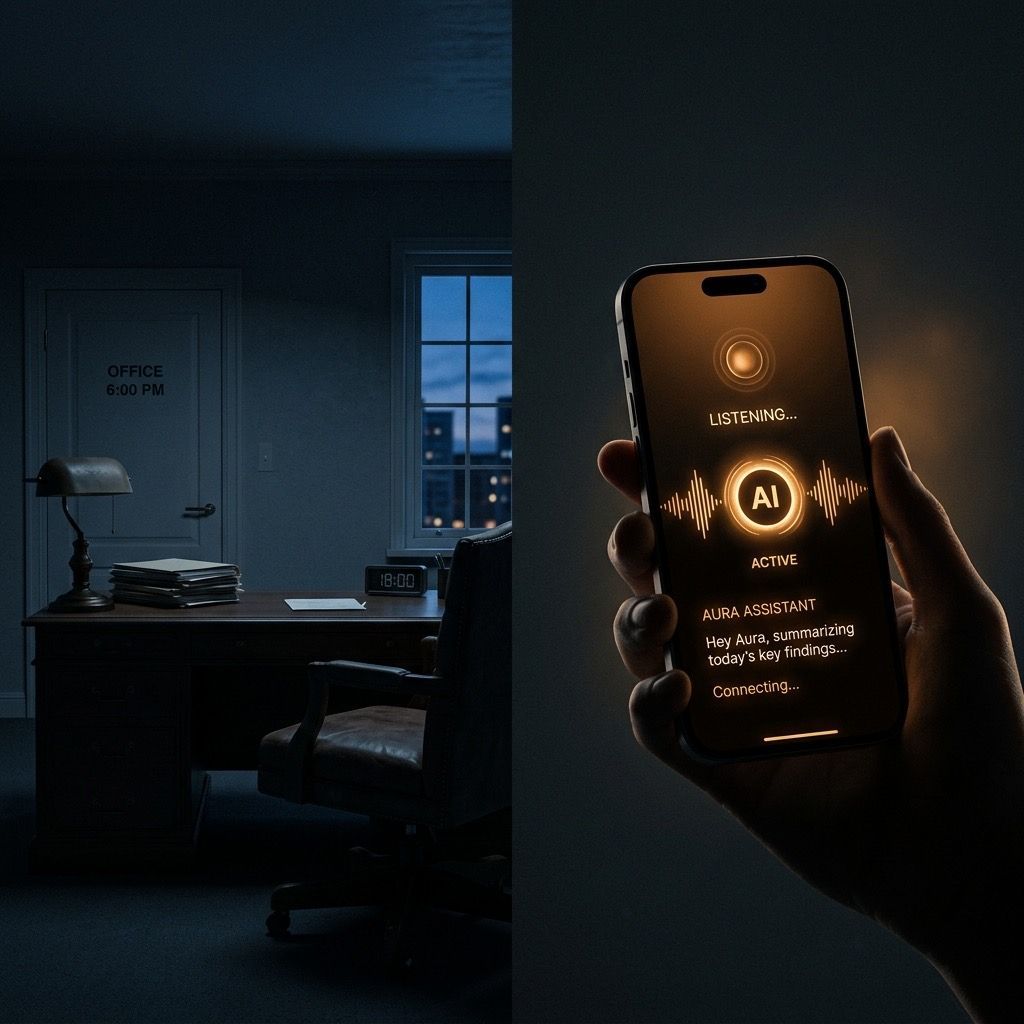
Voice AI vs. Hiring a Part-Time Receptionist: The Real Math for Service Businesses
Compare voice AI and a part-time receptionist for service businesses: coverage, cost, consistency, booking, after-hours calls, and the real front-door math.

The Missed Call Problem: How Service Businesses Lose $180,000 Per Year From the Front Door
Missed calls are not harmless. Learn how service businesses calculate the annual revenue leak from unanswered calls, delayed callbacks, and lost buyer intent.