
A sales person or business owner managing 30 open estimates, 10 scheduled jobs, 5 vendor calls, and 3 complaints does not have the mental bandwidth to remember that quote number 17 from Tuesday has not heard back. When they do remember, it has been four days and they feel awkward calling because so much time has passed.
Treat any number without a nearby source or stated method as a planning assumption, then replace it with your own records.
The Lead Problem No One Talks About
US service businesses spend an average of $200 to $800 per generated lead depending on the industry and channel. The assumption behind that spend is that the leads will be worked. Most of them are not.
Studies on service business follow-up behaviour consistently show the same pattern. The first call or email goes out within the first day for most leads. After that, the follow-up rate drops sharply. By day three, the majority of leads that have not converted are functionally abandoned. By day seven, they are in the CRM with a tag that reads "no response" and no one is touching them.
For the business that generated those leads, the lost revenue is invisible. There is no line in the P&L that says "leads we paid for and did not follow up on." The cost disappears into the gap between marketing spend and closed revenue.
The actual loss is enormous. A typical US service business has between 40 and 200 leads per quarter that inquired, were contacted once or twice, did not immediately convert, and were left to go cold. A conservative 20 percent recovery rate on that list represents dozens of jobs, thousands to hundreds of thousands of dollars in revenue, from work that was already 80 percent done.
AI follow-up automation is the direct solution. It is not a nice-to-have. For most US service businesses, it is the highest-return thing they can do with existing pipeline.
Why Follow-Up Fails Without Automation
The reason US service businesses fail at follow-up is structural, not motivational. Business owners and their teams want to follow up. They simply have too many competing priorities to do it consistently.
A sales person or business owner managing 30 open estimates, 10 scheduled jobs, 5 vendor calls, and 3 complaints does not have the mental bandwidth to remember that quote number 17 from Tuesday has not heard back. When they do remember, it has been four days and they feel awkward calling because so much time has passed.
The psychology of follow-up makes the problem worse. People avoid reaching out because they fear rejection. A call to a lead who has gone cold feels like an intrusion. The longer the gap, the more uncomfortable the follow-up becomes, and the less likely anyone is to make it.
Automation removes both problems. It does not forget. It does not feel awkward. It sends the third message on day 10 the same way it sent the first message on day one, without hesitation, without emotion, and at the exact right moment.
The Speed-to-Lead Reality in the United States
MIT Sloan research found that responding to an inbound lead within five minutes makes conversion 21 times more likely than responding within 30 minutes. Within 30 minutes, conversion probability drops by more than 95 percent compared to the five-minute window.
Most US service businesses respond to web and form inquiries within hours. Some respond the next day. Both of these response times are, in terms of conversion probability, nearly as bad as not responding at all.
The speed-to-lead problem is particularly acute for businesses that generate leads through paid search. A homeowner who clicks a Google ad for HVAC repair and fills out a contact form is in active buying mode at the moment they submit. They are also looking at two or three other results from the same search. The business that calls within five minutes gets the job. The business that calls three hours later is competing against a done deal.
An AI follow-up system responds to form submissions within 60 seconds. Not with a generic "thanks for your inquiry" message. With a personalized message that acknowledges the specific service they requested, asks one qualifying question, and provides an easy path to the next step.
That 60-second response is worth more than any follow-up sequence that starts six hours later.
What a Real AI Follow-Up Sequence Looks Like
The structure of an effective AI follow-up sequence for a US service business is specific and sequenced. Here is what it looks like in practice.
Touch one goes out within 15 minutes of the initial inquiry. It is personalized to the service requested and the channel through which the inquiry arrived. For a web form submission from someone asking about HVAC maintenance, it acknowledges the request, confirms the service area, and asks one qualifying question: when are they looking to schedule? The message ends with a direct response path, either a link to book or a simple reply prompt.
Touch two goes out 48 hours later if there has been no response. This message is shorter. It checks in, references the original inquiry, and makes it easy to respond with a single word or a tap. It does not pressure. It simply stays present.
Touch three goes out on day five. This is the value touch. Instead of asking again, it provides something useful: a tip relevant to the service they inquired about, a before-and-after result from a similar client, or a brief explanation of why now is a good time for the service they asked about. This message re-engages leads who are still interested but distracted.
Touch four goes out on day 10. This is a direct question: are they still looking, and do they want to set up a quick call or appointment? One clear path to the next step.
Touch five goes out on day 21. This is the final active touch. It lets the lead opt out gracefully if they are not ready, and it adds them to a long-term nurture sequence if they do not respond.
Most US service businesses deliver a version of touch one and stop there. The four remaining touches in this sequence represent the majority of the recoverable value in any lead pipeline.
What TCPA Means for US Follow-Up Automation
The Telephone Consumer Protection Act governs automated messaging in the United States. Any business using automated texts or pre-recorded messages to follow up with leads needs to handle consent correctly.
The TCPA requires that businesses obtain prior express written consent before sending autodialed texts or pre-recorded messages for marketing purposes. For service businesses where the inquiry is inbound, the consent is typically implied or captured as part of the inquiry form. But the rules vary by context and state.
California's additional consumer protection laws create a stricter environment for automated messaging. Illinois and New York have active enforcement around TCPA violations. A service business with national reach needs to build TCPA compliance into its follow-up system, not add it as an afterthought.
The practical implication is that any AI follow-up system built for a US service business should include explicit consent capture in the inquiry form, clear opt-out language in every message, and proper handling for replies indicating a desire to stop receiving messages.
A vendor that cannot explain their TCPA compliance process clearly is not ready to manage follow-up automation for a US service business at scale.
The Reactivation Opportunity in Existing CRMs
Every US service business that has been operating for more than two years has a CRM full of leads that went cold. These are people who expressed interest, were contacted once or twice, and then fell out of any active follow-up.
For most businesses, this database contains between 80 and 400 contacts depending on the size and age of the operation. A single well-built reactivation campaign run against this list produces booked appointments at a conversion rate of 8 to 18 percent.
That means a business with 200 dormant leads in its CRM will book between 16 and 36 appointments from a single campaign. At an average ticket of $350 to $500 for a service business, that is $5,600 to $18,000 in recovered revenue from leads that were already considered lost.
The campaign itself takes two to three hours to configure and run. The AI handles the outreach, the responses, and the booking. The business owner sees new appointments appearing on the calendar.
Reactivation is often the fastest path to revenue for any US service business that has been relying on manual follow-up and wants to see an immediate return from automation.
The ROI by US Service Business Type
The revenue recovery from an AI follow-up system varies by industry, average ticket value, and volume of unconverted leads. The math across major US service verticals makes the case clearly.
For an HVAC company in Texas with 12 unworked estimates per month, a 22 percent recovery rate on a five-touch sequence, and a $3,200 average job value, the monthly recovery is approximately $8,448. This does not include the downstream value of the client relationship, maintenance contracts, and referrals from those recovered jobs.
For a dental practice in Florida with 18 new patient inquiries per month that did not book, a 28 percent recovery rate, and a $290 average first visit value, the monthly recovery is approximately $1,461. Before any lifetime patient value is counted.
For a personal injury law firm in Illinois with 6 unconverted consultation requests per month, a 25 percent recovery rate, and an $18,000 average case value, the monthly pipeline recovery is approximately $27,000.
For a roofing contractor in Georgia with 10 unworked storm damage estimates per month, a 20 percent recovery rate, and a $14,500 average project value, the monthly recovery is approximately $29,000.
At any of these numbers, an AI follow-up system priced at $400 to $1,200 per month pays for itself many times over in the first month of operation. The cost of not having it is the cost of every unconverted lead that a properly sequenced AI would have recovered.
What to Audit Before You Build
Before setting up an AI follow-up system, any US service business should run a simple audit of its current lead handling.
Pull the last 90 days of leads from the CRM. For each one, identify: how many received more than two follow-up contacts, how many received none, and how many were ultimately booked. The gap between leads that received thorough follow-up and those that received one contact or none is the recoverable opportunity.
For most US service businesses, this audit produces an uncomfortable number. It is common to find that 50 to 70 percent of leads received one contact and were never followed up with again. The revenue that represents is the business case for automation.
The audit takes less than an hour. The business case it produces usually closes the conversation about whether to invest in follow-up automation.
How Follow-Up Connects to the Full Operating System
Follow-up automation does not work optimally in isolation. For US service businesses getting the most value from it, it connects to the rest of the operating stack.
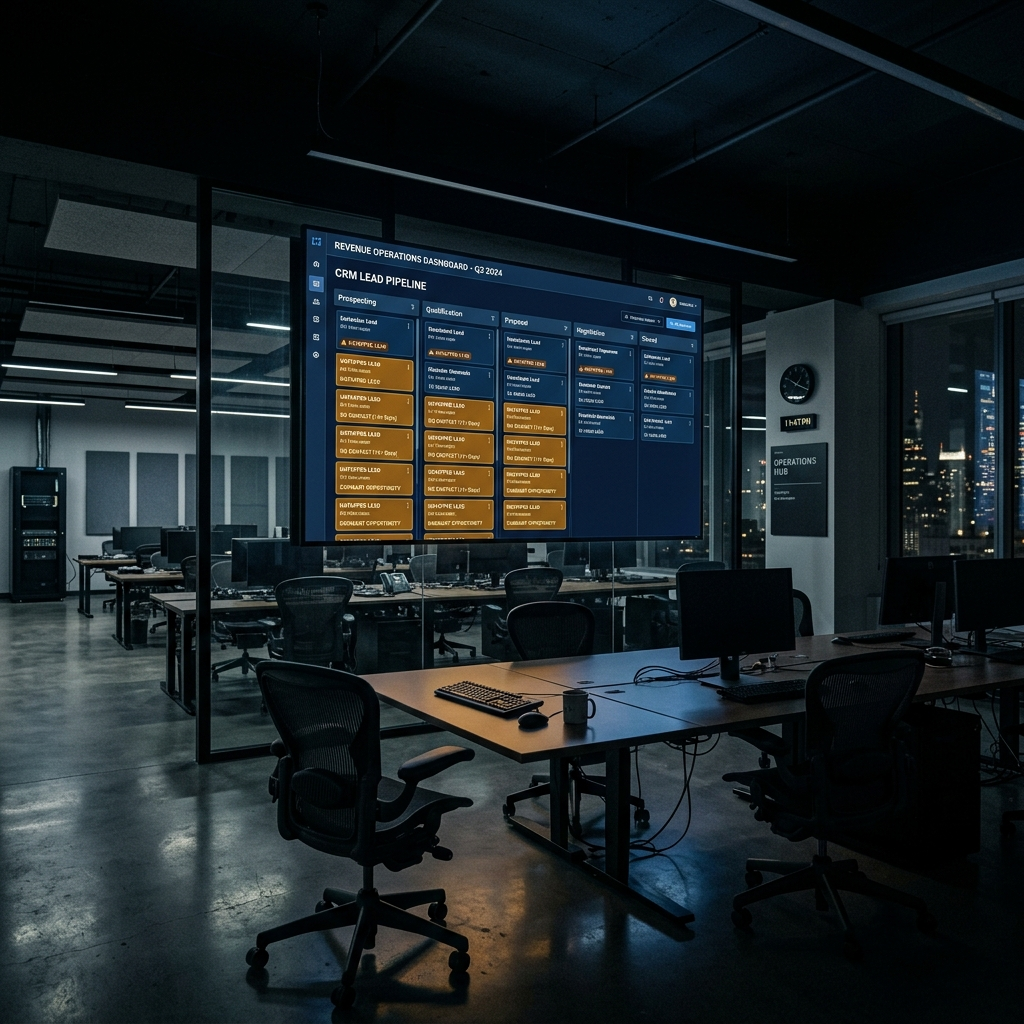
The AI receptionist captures the inbound call and converts it to a booked inquiry. If the inquiry does not book immediately, the follow-up system takes over and works the lead across five touches over 21 days. If the lead converts and the job is completed, the reputation system triggers a review request. The business intelligence dashboard tracks all of it together, showing conversion rates at each stage of the pipeline.
This connection matters because it closes the loop between marketing spend and revenue. The business can see exactly how many leads came in, how many were worked by the follow-up system, how many converted, and what the recovery rate was. The data makes every subsequent campaign more effective.
A standalone follow-up tool is better than no follow-up. A follow-up system connected to intake, reputation, and intelligence is what makes a US service business consistently more profitable than its competitors.
About The Quiet Protocol
The Quiet Protocol is an AI systems firm headquartered in Toronto, Ontario, serving service businesses across the United States and Canada. Our Follow-Up Engine is the second layer of the AI Business Operating System we install for clients across HVAC, dental, legal, roofing, trades, and professional services verticals.
It handles five-touch sequences, TCPA-compliant SMS automation, reactivation campaigns on dormant CRM contacts, and conversion rate tracking across every stage of the pipeline. It connects directly to your intake system, calendar, and CRM.
If you want to see exactly how many leads your business is currently losing to poor follow-up, the Revenue Leak Diagnostic includes a lead decay analysis as part of the diagnostic.
[Book a Revenue Leak Diagnostic](/book/audit)
The Quiet Protocol
What You Actually Get When You Work With The Quiet Protocol
When a business partners with The Quiet Protocol, we install a connected AI operating system across five layers of their operation. Here is what that looks like in plain terms.
Every call gets answered.An AI voice receptionist picks up every phone call within two seconds, 24 hours a day, seven days a week. It greets the caller as your business, asks the right qualifying questions, and either books the appointment directly into your calendar or routes urgencies to the right person. No more voicemail. No more lost leads after hours.
Every inquiry gets followed up.Whether someone calls, submits a web form, sends an Instagram DM, or emails your general address, the system responds within 60 seconds and starts a structured follow-up sequence if they do not convert immediately. The sequence runs automatically for days or weeks without anyone on your team having to remember to send a message.
Dormant contacts come back.Every business has a database of past clients, lapsed patients, or cold leads that cost money to generate and then went quiet. The system runs re-engagement campaigns to these contacts on a schedule you approve, bringing back people who already trust you without any new ad spend.
Your Google review count climbs every month.The system sends a review request to every client at the right moment after they interact with your business. Not a mass blast. A personal, timed message that earns two to five times more reviews per month than manual requests do. More reviews mean a higher Google Maps position, which means more organic new business.
You see everything in one dashboard.Every call answered, every follow-up sent, every booking made, every review collected. The intelligence layer shows you what is working and where the system is recovering revenue you would otherwise have missed.
The businesses that install this system typically see a measurable improvement in new client capture within the first 30 days and a meaningful increase in organic Google traffic within 90 days as their review profile builds.
There are no long-term lock-in contracts. The system is configured for your specific business, your specific market, and your specific compliance environment. And every implementation starts with a Revenue Leak Diagnostic, a 30-minute diagnostic that quantifies exactly how much revenue your current setup is leaving behind.
The Quiet Protocol is a Toronto-based AI automation agency serving your US service business and other service businesses across the Greater Toronto Area, Ontario, Canada, and the United States. Every engagement starts with a [Revenue Leak Diagnostic](/book/audit) that identifies exactly how much revenue your current intake and follow-up setup is leaving behind. The audit is free. The math is specific to your business.
[Book your Revenue Leak Diagnostic](/book/audit) | [See how it works](/services) | [Read client results](/results)
Related reading: [AI Receptionist for US Service Businesses](/blog/ai-receptionist-us-service-businesses-buyers-guide-2026) | [Best AI Automation Agencies USA 2026](/blog/best-ai-automation-agencies-united-states-2026) | [Results](/results)
The loss estimate is basic business math, not a magic claim.
Revenue-leak examples on this site are built from visible operating inputs: inquiry volume, missed-call or slow-response rate, booking rate, average job or client value, repeat value, and follow-up recovery. The fastest way to make the number real is to run the diagnostic for your closest business type, then compare it against your own call log, CRM, booking calendar, form timestamps, and review activity.
The practical questions behind this decision.
What proof should I look for in my own business?
Look for proof in the places where demand either moved forward or stalled: missed calls, short calls, unbooked forms, slow callbacks, no-show recovery, old leads, and reviews that were never requested. If the business cannot see those moments clearly, the first improvement is better tracking and routing.
How do I know whether this is a marketing problem or an operations problem?
If people are already calling, filling forms, asking for prices, requesting appointments, or comparing reviews, the problem is usually operations. More marketing will not fix a front door that lets warm demand wait. The better move is to capture and route the demand already arriving.
What should happen after the first response?
The first response should create a next step: booked appointment, estimate path, intake handoff, callback window, review request, or reactivation sequence. A response that only says someone will get back to you is not enough when the buyer is comparing several providers at once.
Where does The Quiet Protocol fit?
The Quiet Protocol fits when the business already has demand but too much of it depends on manual attention. We connect AI receptionist coverage, web intake, missed-call recovery, booking logic, follow-up, review requests, and reactivation into one managed front-door system.
Locate the point where interested buyers stop hearing from the business.
Review one customer journey from first inquiry through booking, estimate, reminder, and recovery.
Use the diagnostic to locate the handoff where good inquiries, estimates, appointments, or past customers stop moving.
See how the capability in this article fits into a complete customer journey.
Service BusinessesSee the same decision through the language, buyer behavior, and operating reality of this industry.
Client Results & ProofInspect the starting condition, installation, measurement window, and outcome behind real client work.

The Best AI Automation Agencies in the United States (2026 Honest Comparison)
An honest framework for choosing an AI automation agency in the United States, especially for service businesses with missed calls, follow-up gaps, and revenue leaks.

AI Receptionist for U.S. Service Businesses: Multi-State Deployment Guide
A practical guide to state applicability, customer data, inbound and outbound boundaries, vendor terms, multi-location routing, controlled pilots, and evidence-based expansion.