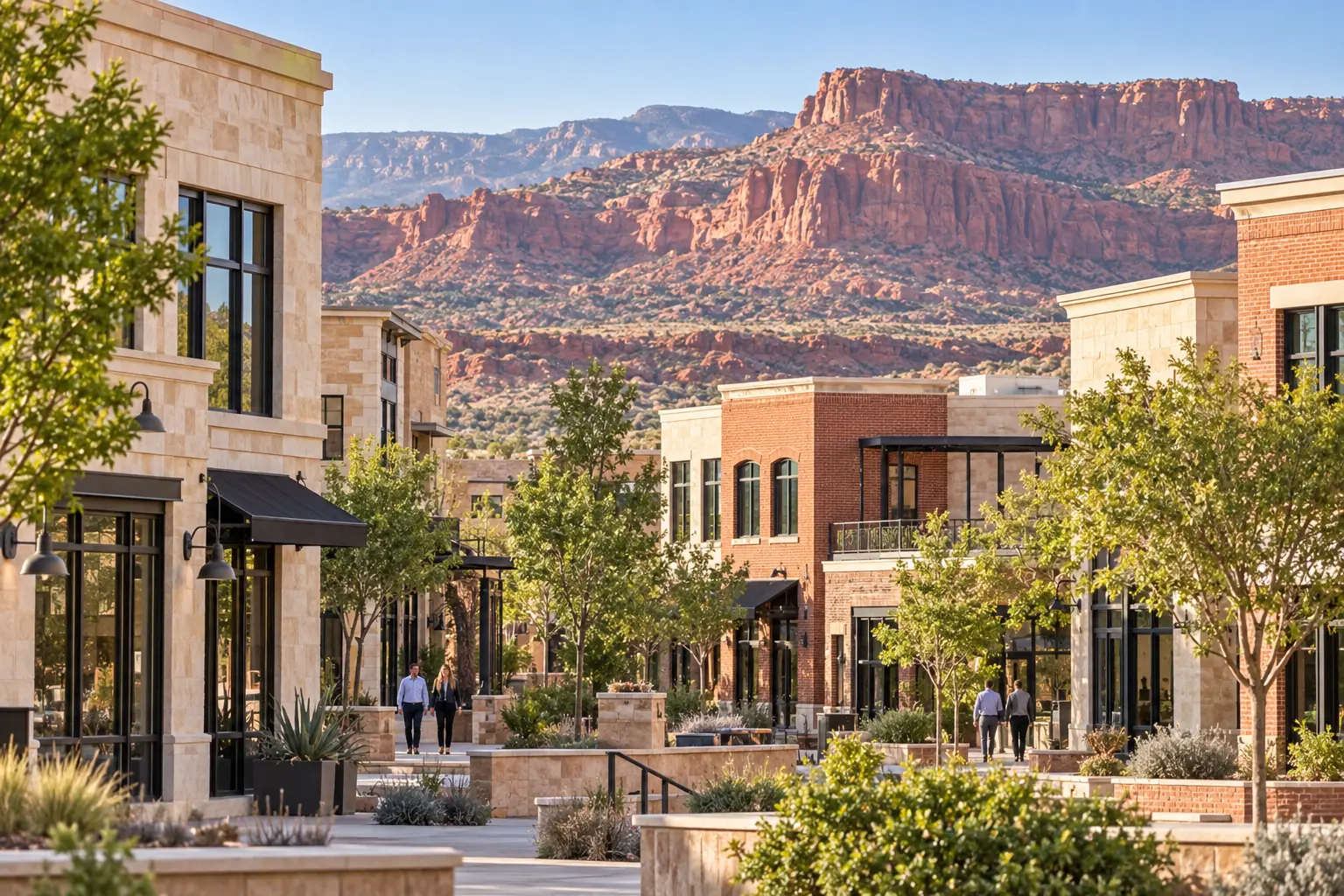
St. George, UtahBuilt around the buyer journey

Make every St. George inquiry ready for the climate, customer, and next decision.

St. George combines tourism, healthcare, retirement, construction, outdoor recreation, education, aviation, and an emerging technology district. A visitor planning a stay, a patient arranging care, a homeowner reporting heat damage, and a company evaluating a service should not begin with the same questions.

Book a Systems Review

The Quiet Protocol connects the website, calls, forms, calendars, CRM, reminders, and follow-through. It lets the business define service territory, urgency, qualification, and staff handoff for each customer journey while keeping one relationship record.

A useful first question

Can a St. George buyer understand the right next step before your team has to explain it?

Local reputation opens the door, but buyers still compare responsiveness and convenience. Turn trust into a clear inquiry, useful intake, and a reliable next step across phone and web.

See the path for Healthcare, therapy, senior, and wellness services
Local operating context

The market context matters because the buyer experience matters.

St. George creates several distinct decision environments.

Explore the local operating details

Downtown, the arts district, civic spaces, and the former airport mesa connect history, events, restaurants, local services, visitors, and the Tech Ridge project. A technology inquiry may need company, product, environment, security, users, integrations, workforce, stakeholders, files, and decision stage. Regional healthcare and senior services may involve specialty, provider, location, referral, preparation, caregiver, mobility, transportation, accessibility, and reminders. Expanding neighborhoods and commercial projects create new-build, warranty, pool, solar, roofing, cooling, landscape, irrigation, drainage, and recurring maintenance needs.

A property request may need address, subdivision or rural edge, building age, equipment, temperature, sun exposure, red dust, rock, slope, runoff, access, photographs, safety, association rules, and timing. Tourism and outdoor recreation create lodging, tour, trail, golf, event, equipment, shuttle, reservation, waiver, skill, weather, heat-safety, cancellation, and accessibility questions. Airport-related inquiries may need flight or operator, hangar, passenger, vehicle, timing, service, and security context. The system can distinguish a seasonal visitor from a resident, a retiree or caregiver from a first-time patient, and an urgent cooling failure from a planned upgrade.

It can preserve history when a guest returns or when a project becomes a maintenance relationship. The Quiet Protocol works remotely and does not claim a St. George office, local employees, City relationship, airport presence, Tech Ridge tenancy, medical affiliation, tourism partnership, trail sponsorship, or connection to organizations described in public sources.

What the research changes

The local context shapes the questions, service paths, and handoffs a buyer may need. It does not replace a review of your own operation.

The evidence ledger below shows the public sources used to build this market guide and the boundary around those claims.

Human trust + machine credibility

Make the business clear to people and machines.

For St. George service businesses, the website, eligible Google profile, genuine reviews, and next-step experience should tell one credible story.

TQP improves the public signals a business can control. That creates a stronger foundation for discovery and evaluation, but it does not guarantee rankings, citations, or recommendations.

What improves

Make the business easy to understand.

Clear services and locations

Give trust something real to stand on.

Google profile alignment

Turn credibility into the next step.

Clear service paths

Explore Search + AI Readiness
The moments that shape trust

A premium impression is built before the first sales conversation.

01

A cooling system fails during extreme heat

Address, occupants, equipment, symptoms, indoor conditions, safety, access, service history, photographs, and urgency can reach the correct reviewer.

02

A family coordinates regional care for an older adult

Patient, caregiver, specialty, location, mobility, referral, preparation, transportation, accessibility, and questions for staff can stay connected.

03

An outdoor guest needs a safe plan

Date, route or activity, skill, party, equipment, transportation, heat, weather, waiver, accessibility, cancellation, and emergency contact can follow approved rules.

04

A technology buyer asks for a qualified conversation

Company, product, environment, integrations, security, users, stakeholders, workforce needs, files, and decision timing can route before a meeting.

A stronger customer journey

How businesses in St. George can answer, book, and follow up with less friction.

A serious customer in St. George may compare several providers across Downtown and Tech Ridge, Medical and senior-service corridors, Sun River, Desert Color, and expanding neighborhoods, and Airport, golf, trails, and visitor routes in one sitting. The business that answers clearly, looks credible, and makes the next step easy has an advantage before price is ever discussed.

The Quiet Protocol connects calls, website inquiries, booking, customer records, reviews, follow-up, and reactivation into one front-door system. It is built for owners who want more captured demand and a cleaner operating day, not another disconnected tool to monitor.

For healthcare, dental, therapy, senior, and wellness services, home, construction, hvac, landscape, pool, and property services, technology, legal, financial, real estate, and advisory services, and hospitality, outdoor recreation, fitness, events, and local experiences, the costly moments are usually ordinary ones: staff are with a customer, a call arrives after hours, a form waits in an inbox, or a good prospect is never followed up. The system protects those handoffs without pretending every inquiry should be handled the same way.

The installation is delivered remotely and shaped around the real service area, customer questions, phone coverage, calendars, qualification rules, and team responsibilities of the St. George business.

A customer calls while the team is busy

The team may be with a patient, on a job, or helping an existing client. The AI receptionist can capture the reason for contact, ask the agreed fit questions, and give the caller a useful next step instead of sending every opportunity to voicemail.

A web visitor needs more than a form

A smart website can explain the offer, collect the details the team actually needs, present the right booking path, and start follow-up. The visitor is not left wondering whether anyone received the inquiry.

An after-hours inquiry still has intent

A buyer researching in the evening may be ready to book, request an estimate, or ask a time-sensitive question. After-hours coverage can collect that context and set expectations until a human handoff is required.

A qualified lead reaches the wrong person

When every inquiry enters one inbox, urgent and valuable requests can wait behind routine messages. Routing rules give the right team member the reason for contact, urgency, and preferred next step before the callback.

A booked customer needs reminders

A booking is not revenue until the customer attends or the job moves forward. Confirmations, reminders, rescheduling paths, and follow-up reduce the amount of manual chasing carried by the front desk.

A past customer is ready to return

Past customers and older inquiries already know the business. A carefully scoped reactivation campaign can reopen useful conversations while respecting consent, timing, and the offer the business wants to make.

What the connected system changes

What needs to work before a buyer in St. George becomes a booked customer.

AI receptionist coverage

The AI receptionist answers routine calls, captures caller details, asks approved questions, and routes the next step. Human escalation remains part of the design when judgment, sensitivity, or an exception requires it.

Smart website and guided intake

The website becomes an intake path, not only a brochure. Positioning, service explanations, forms, calendars, and follow-up are designed around the questions a St. George buyer needs answered before taking action.

Booking and reminders

A website that explains regional expertise, service territory, proof, climate awareness, and suitable next actions for residents, visitors, and organizations.

Qualification and routing

Intake that can capture location, property or participant, service, heat or weather, urgency, documents, photographs, access, and current-customer status.

Missed-call recovery

Routing for patient visits, estimates, technical consultations, reservations, recreation, support, and questions requiring staff judgment.

Review and reputation loop

Follow-through for missed calls, incomplete intake, no-shows, seasonal queues, open proposals, postponed work, reviews, renewals, and returning customers.

Database reactivation

Past leads and customers can enter a defined follow-up campaign when the offer, consent, and timing are appropriate. Strategy, copy, audience rules, and exceptions are scoped before anything is sent.

Confidence before the call

Make the decision easier for serious buyers.

A system shaped around the business

The launch plan names the customer journey, channels, questions, booking rules, integrations, handoffs, and exceptions in scope. The owner knows what will be configured and what the team will continue to control.

Proof before a larger commitment

The Revenue Leak Diagnostic helps the owner model where opportunities may be slipping. A Systems Review then maps the first useful path against actual calls, forms, calendars, customer records, and team responsibilities.

Clear operating boundaries

Software access does not mean unlimited done-for-you work. The written scope explains what The Quiet Protocol will design, configure, test, support, and improve, plus what the customer can operate independently.

A more credible customer experience

Faster response matters, but so do tone, clarity, consistency, and handoff quality. The system is designed to help the business feel prepared and professional from the first call or click.

Install sequence
Step 01

Map the current front door

We document what happens to calls, forms, texts, chats, booking requests, review requests, and follow-up today. The first priority is the handoff where the most valuable opportunities are waiting or disappearing.

Step 02

Agree on the first useful path

The proposal defines the response, intake, booking, routing, or follow-up path to launch first. Scope, responsibilities, usage costs, and acceptance criteria are written down before configuration begins.

Step 03

Configure and test real handoffs

The agreed system is connected and tested with realistic customer situations. Calls, forms, calendars, messages, records, routing, exceptions, and human escalation are checked before launch.

Step 04

Operate and improve

After launch, the covered paths are supported and refined around real questions and workflow needs. New campaigns, pages, integrations, or customer journeys receive their own written scope.

Decision questions

Clear answers for established firms comparing options.

Do you need a physical office in St. George to work with us?

No. We can deliver strategy, configuration, testing, and support remotely. The system is still shaped around the business's actual service area, call coverage, booking rules, and customer journey.

Does this replace the people on our team?

It handles repeatable response, capture, reminders, routing, and follow-up where rules are clear. People stay in control of judgment, sensitive conversations, exceptions, relationships, and the work that requires expertise.

Is this only for large businesses?

No. A smaller established team may start with website care, calendars, reminders, and customer records. A business with a more complex intake or follow-up problem can move into a custom conversion system with a defined operating scope.

Can we keep our current website?

Often, yes. If the positioning and customer journey are already strong, we can connect selected intake, booking, and follow-up paths. If the website itself creates confusion or does not support the required journey, a strategic redesign may be the better starting point.

What is the best next step?

Run the Revenue Leak Diagnostic with your own operating assumptions, or book a Systems Review when you want the calls, website, booking, follow-up, and customer handoffs mapped together.

Choose the next useful step

Turn what you learned into a practical decision.

See what missed calls, slow response, weak booking, review gaps, and inconsistent follow-up may be costing a St. George business. Then compare the paths that can strengthen the front door.

Run the Revenue Leak Diagnostic

Use your own call volume, values, and follow-up assumptions to build a directional estimate.

Hear the AI receptionist

Call the live demo with a realistic question before you decide whether AI belongs at your front door.

Call the live demo

Questions the system should answer

Every customer moment should make the business easier to trust and easier to choose.

These are the practical questions a connected front door is meant to resolve before an interested buyer drifts away.

Will someone answer?

Protect calls that arrive after hours, during lunch, or while the team is already serving a customer.

Can I take the next step now?

Give buyers a useful path to book, request an estimate, or share the context your team needs.

Do you understand what I need?

Capture intent, urgency, location, and service fit before the opportunity reaches the right person.

What happens next?

Confirm the next step, send reminders, and keep the buyer from wondering whether anyone received the request.

Will a human step in when needed?

Escalate sensitive, urgent, unusual, or high-value conversations with the right context attached.

Can I trust this business?

Support the decision with proof, clear policies, credible design, and a consistent experience across every channel.

Choose the useful next step

You do not need to decide on the whole system today.

Start with the question you can answer now. Each path keeps the St. George market context attached so the next conversation starts with more useful information.

Quantify the leak

Use this when you want a directional model for missed response, booking friction, or follow-up gaps before speaking with anyone.

Review the right system

Use this when the bottleneck is already visible and you want to map the first complete customer path, its handoffs, and what the system should handle.

Book a Systems Review

Explore the closest buyer journey

Use this when you want to see how the website, intake questions, booking, and follow-up change for a business like yours.

See Healthcare, therapy, senior, and wellness services

A practical starting recommendation

Handle an approved answering, lead-response, qualification, intake, routing, booking, or human-handoff job across calls, web, or messages.

Review AI Answering & Agents

Why this path

Calls and time-sensitive inquiries need a useful first response before staff availability becomes the bottleneck.

What it does not mean

The agent handles the approved questions, details, routing, and booking path. Safety, diagnosis, professional advice, pricing, availability, and exceptions stay with authorized people.

Upgrade only when needed

Move to a Custom Customer System when qualification, routing, integrations, or ongoing improvement become business-specific.

Compare investment paths
CAPABILITIES AVAILABLE TO ST. GEORGE CUSTOMER JOURNEY

One connected platform. Fewer places for your team to check.

Connect the customer tools that matter to the job, while keeping the written scope clear about what is configured, maintained, and available for your team to use.

Module 01

Front Door

Faster response. Cleaner lead recovery.

  • AI Receptionist
  • Missed Call Text Back
  • Voice AI
  • Inbound and Outbound Calling
Module 02

Convert and Close

Traffic that arrives converts instead of bouncing.

  • Smart Websites
  • Sales Funnels
  • Appointment Booking
  • Payment Integration
Module 03

Grow

Past clients become booked revenue again.

  • CRM and Pipeline Management
  • Database Reactivation
  • Lead Source Tracking
  • Workflow Automation
Module 04

Reputation

Reviews compound. Search placement follows.

  • Review Generation
  • Online Reputation Management
  • Google Business Profile Optimization
  • Social Media Scheduling
Module 05

Communicate

One inbox. Every channel. Zero dropped threads.

  • 2-Way SMS and Email
  • FB and Instagram Messaging
  • Ringless Voicemail Drops
  • AI Content Generator
Module 06

Manage

The system runs whether you are there or not.

  • Mobile App (iOS & Android)
  • Desktop App (Windows & Mac)
  • Unlimited Calendars
  • Contact Management

Questions and context

Questions from St. George business owners

Clear answers about fit, scope, practical boundaries, and what happens next.

What to know

  • St. George combines tourism, healthcare, retirement, construction, outdoor recreation, education, aviation, and an emerging technology district. A visitor planning a stay, a patient arranging care, a homeowner reporting heat damage, and a company evaluating a service should not begin with the same questions.
  • The Quiet Protocol connects the website, calls, forms, calendars, CRM, reminders, and follow-through. It lets the business define service territory, urgency, qualification, and staff handoff for each customer journey while keeping one relationship record.
  • St. George creates several distinct decision environments. Downtown, the arts district, civic spaces, and the former airport mesa connect history, events, restaurants, local services, visitors, and the Tech Ridge project. A technology inquiry may need company, product, environment, security, users, integrations, workforce, stakeholders, files, and decision stage. Regional healthcare and senior services may involve specialty, provider, location, referral, preparation, caregiver, mobility, transportation, accessibility, and reminders. Expanding neighborhoods and commercial projects create new-build, warranty, pool, solar, roofing, cooling, landscape, irrigation, drainage, and recurring maintenance needs. A property request may need address, subdivision or rural edge, building age, equipment, temperature, sun exposure, red dust, rock, slope, runoff, access, photographs, safety, association rules, and timing. Tourism and outdoor recreation create lodging, tour, trail, golf, event, equipment, shuttle, reservation, waiver, skill, weather, heat-safety, cancellation, and accessibility questions. Airport-related inquiries may need flight or operator, hangar, passenger, vehicle, timing, service, and security context. The system can distinguish a seasonal visitor from a resident, a retiree or caregiver from a first-time patient, and an urgent cooling failure from a planned upgrade. It can preserve history when a guest returns or when a project becomes a maintenance relationship. The Quiet Protocol works remotely and does not claim a St. George office, local employees, City relationship, airport presence, Tech Ridge tenancy, medical affiliation, tourism partnership, trail sponsorship, or connection to organizations described in public sources.

Common questions

Does The Quiet Protocol have a St. George office?
No. Strategy, design, configuration, testing, and support are delivered remotely. City and Census sources inform the customer environment without implying an address, local staff, endorsement, airport presence, tenancy, sponsorship, or affiliation.
Can heat-related requests use urgency rules?
Yes. Occupant safety, temperature, equipment, symptoms, location, access, service history, photographs, and escalation can distinguish urgent triage from planned work.
Can visitor and resident journeys stay separate?
Yes. Travel date, lodging or activity, participant, reservation, waiver, weather, availability, and accessibility can follow different rules from recurring household, patient, and business service.
Can existing customers use direct service paths?
Yes. Patients, homeowners, members, guests, account holders, and past project customers can use service, scheduling, records, maintenance, billing, or known-team paths when identity and permissions allow.
What should a St. George business connect first?
Start where heat, season, travel, or caregiver context is most often lost. That may be cooling calls, patient routing, outdoor reservations, property intake, technical qualification, missed inquiries, or proposal follow-through. The Systems Review maps one complete path first.

Important boundaries

  • The Quiet Protocol does not claim a local office or local staff presence in this market.
  • Your proposal shows the customer paths, setup, content, integrations, and continuing support included.
  • Phone, messaging, registration, and other usage charges are separate where applicable.

Terms worth knowing

Smart Website
A website planned around positioning, trust, intake, booking, CRM handoff, and follow-up instead of acting as a static digital brochure.
AI Intake
A configured voice or conversational system that captures agreed customer context and moves an inquiry toward the next approved step.
Front Door System
The connected path a business uses to receive, understand, route, book, and follow up with customer demand across phone and web channels.

More state context

Explore Utah market guides

Compare how customer expectations and operating pressure differ across the Utah cities we have reviewed.

View the state hub
Start with the customer journey

Find the first place a good St. George inquiry loses momentum.

Use the diagnostic for your numbers, or book a Systems Review to map the website, intake, booking, and follow-up path that deserves attention first.

Book a Systems Review