MT. LEBANON / THE RESPONSE ISSUE
AI & digital marketing agency in Mt. LebanonA local ad wins attention. Your answer must earn the call.
AI & digital marketing agency in Mt. Lebanon should make any attention a Mt. Lebanon owner earns lead to a service answer, a clear contact path and a responsible reply. We build websites, search visibility and AI-supported response systems remotely from Toronto.
Based in TorontoServing the United States and Canada
Connect the message to the responseEssential Website $99/month, no setup feePublished US price; review offer scope
THE LOCAL BUSINESS MEDIA MIX
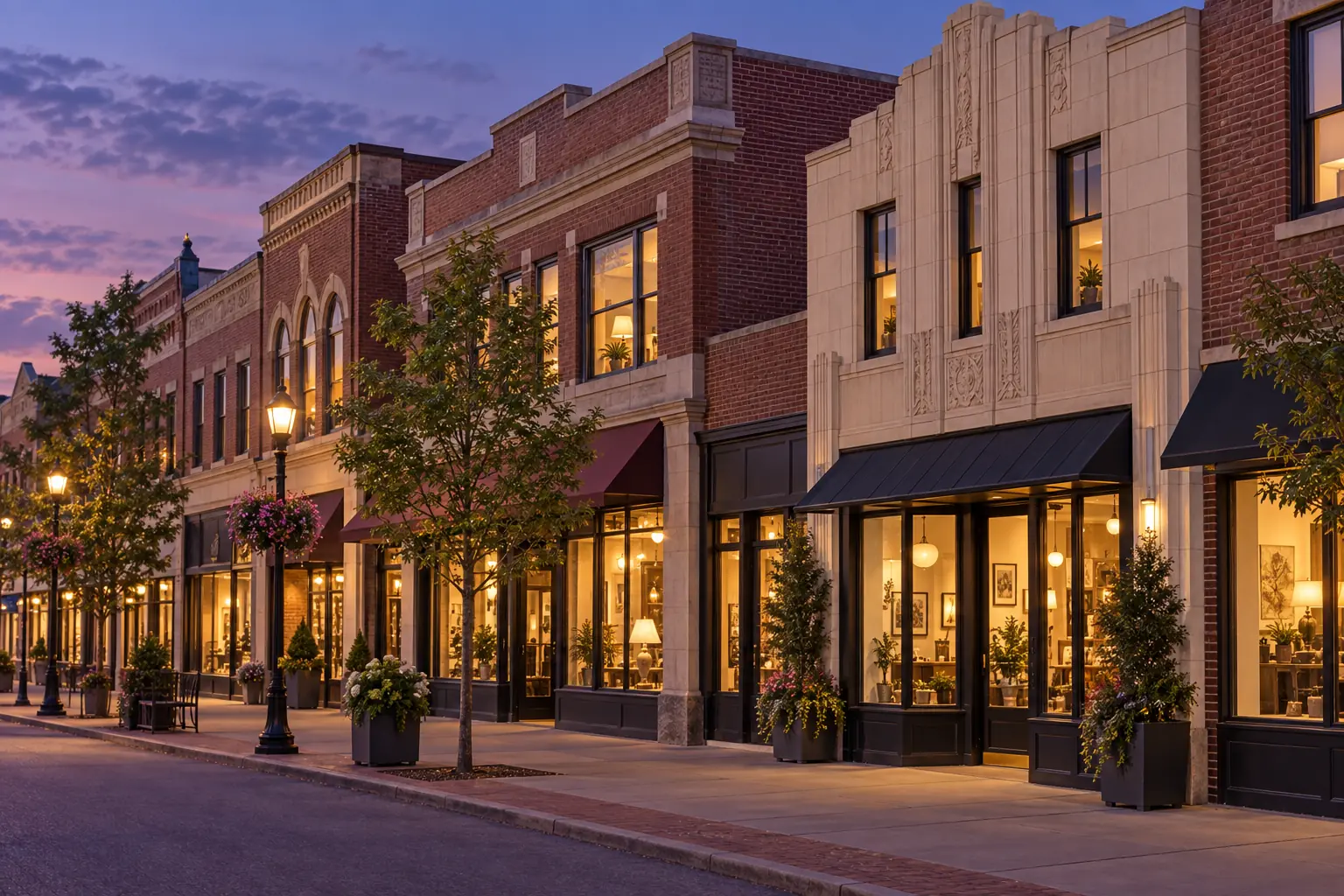
Mt. Lebanon offers places to be noticed. The business has to make that notice useful.
The municipality's business resources describe a magazine advertising option and recreation sponsorships. Its Commercial Districts Office supports the Washington Road, Beverly Road and Castle Shannon Boulevard business areas and their associations. Those channels and districts can help an owner think about awareness. They do not establish that any given placement will produce a qualified buyer.
Our argument is about the handoff from message to decision. If a person sees a short claim in a magazine, then searches the firm, the website should answer the claim in greater detail. If they call, the team should know which service the message described. The owner can use a source question and actual inquiry notes to learn whether the attention matched the business's capacity. Buying more space before that path works is a weak marketing plan.
Distribution amplifies the promise. It cannot repair a vague one.
THE CAMPAIGN CHAIN
Four links between an impression and an actual customer.
These are planning steps, not a claim that The Quiet Protocol buys media. They help a service owner decide whether any paid or sponsored channel deserves a test.
One promise
The print or sponsored message names one problem the firm can actually solve. It invites a next question rather than making an unsupported superlative claim.
One answer
The service page carries that same promise forward with scope, fit, proof and an intelligible first step. The buyer should not have to start the research again.
One owner
The inquiry reaches the person who can decide whether the work belongs with the firm. An assistant can acknowledge and preserve context, not approve custom terms.
One review
After a small run, compare the reported source with the actual request and the team's capacity. Change the message if it attracts work the firm cannot serve well.
A SMALL OWNER TEST

Read the ad aloud. Then answer it as a stranger.
Choose a single service and draft a one-sentence message for a local placement. Put it beside the page a buyer would find after seeing the message. Does that page answer the question the message created? Does it explain who the service fits and what a first conversation can decide? A different headline, a generic home page and an unowned phone line make the attention harder to use.
Have a colleague submit a realistic question and follow it to the person who can approve the next step. Keep the answer the buyer received. After a small campaign, review those conversations rather than only the count of people who might have seen the message. A paid channel has earned its place when it brings work the team is willing and able to serve.
Our opinion · Mount Lebanon
Mt. Lebanon is a walkable, established community. Businesses win on relationships.
Mt. Lebanon's households tend to stay put, and local businesses live on repeat customers and referrals. The growth lever is not reach; it is keeping in touch.
Our view: most businesses here have a customer list they never use. That list is worth more than any ad budget.
Mount Lebanon in numbers
What the Census says about the Mount Lebanon market, and what we make of it.
| Mount Lebanon | Pennsylvania | |
|---|---|---|
| Residents (2020 Census) | 34,075 | 13,002,700 |
| Population change since 2010 | +3% | +3% |
| Median household income | $123,771 | $77,971 |
| Income per person | $69,154 | $44,355 |
| Median home value | $378,300 | $254,500 |
| Homes lived in by their owners | 72.3% | 69.3% |
| Adults with a bachelor's degree or more | 67.9% | 35.2% |
| Residents under 18 | 25.0% | 19.7% |
| Residents 65 and older | 21.6% | 21.4% |
| Average commute (minutes) | 25.6 | 26.3 |
Local sales and receipts, 2022
- Health care and social assistance receipts$186 million$5,450 per resident · $11,809 statewide
- Retail sales$214 million$6,268 per resident · $23,116 statewide
Your next customer here will read before they call.
67.9% of adults in Mount Lebanon hold a bachelor's degree or more, against 35.2% statewide. People who read contracts for a living read your website the same way, and more of that reading now happens through AI assistants: Gartner forecast in 2024 that search engine volume would fall a quarter by 2026 as people move to chatbots. Our view: if your prices, process and proof are not written in plain text on your site, the assistant will recommend a competitor whose are.
Research: Gartner, search engine volume forecast (February 2024)Sell time back to families and they will pay for it.
25.0% of Mount Lebanon residents are under 18, against 19.7% statewide. Family households plan at night and value convenience over a small discount. In a 2017 PNAS study, Ashley Whillans and colleagues found that people who spend money to save time report greater life satisfaction. Frame your service as time given back, and make booking possible at 9 p.m., because that is when parents finally sit down.
Research: Whillans et al., Buying Time Promotes Happiness, PNAS (2017)In a town this affluent, buyers choose on signals of quality.
Median household income in Mount Lebanon is $123,771, against $77,971 across Pennsylvania. Buyers can afford most options, so they choose on signals of quality, exactly as Veblen observed of wealthy consumers more than a century ago. In 2026 the strongest signal is not a glossy brochure; it is a site that answers the real question, a named person and a reply within the hour. Keep the menu short: in Iyengar and Lepper's famous jam study, shoppers shown six choices were far more likely to buy than shoppers shown twenty-four.
Research: Iyengar and Lepper, When Choice Is Demotivating (2000)
Figures: US Census Bureau QuickFacts (American Community Survey 2020-2024 5-year estimates; Vintage 2025 population estimates; 2022 Economic Census). Dollar figures for 2022 sales are in current dollars; per-resident figures divide by the latest population estimate. The readings are our opinion.
The Mt. Lebanon owner's desk
The reply is where a local advertisement becomes a business opportunity.
Four pieces on local media, message continuity, claims and the measure that matters after a campaign.
WHEN THE MESSAGE MEETS THE PROFESSION
Each service needs a different promise.
Dental practices
A local reminder can invite an administrative inquiry; clinical suitability needs a professional review.
See the industry approachCommercial cleaning
A building manager needs a scoped facility conversation, not an ad that implies an instant quote.
See the industry approachFinancial planning
An awareness message should lead to a clear advisory process and a qualified suitability decision.
See the industry approachThe ad should lead to the service the firm can actually take on.
A Mt. Lebanon accounting practice may use a seasonal reminder to explain filing appointments or year-round advisory work. The follow-on page should make that distinction explicit, then route each inquiry to a qualified person. An AI receptionist can collect approved scheduling details, while an accountant decides scope and advice. We can build the page and response path; we do not imply an advertising return or a local client result.
BUILD THE ANSWER
Make earned attention easier to convert into a real conversation.
We can clarify the service site, improve search visibility, connect approved AI reception and keep follow-up tied to the buyer's original request. The owner chooses the promise and approves the response boundaries.
Book an intro call Mt. Lebanon business resourcesMT. LEBANON OWNER QUESTIONS
Before buying attention.
Should a Mt. Lebanon business buy local magazine advertising before fixing its website?
That depends on the offer and the existing response path. First confirm that a buyer who sees the message can find a matching service explanation, reach the right person and receive a useful reply. We do not claim to sell or manage magazine placements.
Can you tell whether a local ad produced good customers?
We can help design a distinct page or contact path and record the source an inquirer reports. The owner should compare qualified conversations and work actually accepted, not treat impressions or a source field as proof of revenue.
Do you work from an office in Mt. Lebanon?
No. The Quiet Protocol is based in Toronto and works with Mt. Lebanon service businesses remotely. The municipality's public business resources inform this page; owners approve their own service facts.
Is Mount Lebanon a good market for a premium service business?
US Census figures show a median household income of $123,771 ($77,971 statewide), a median home value of $378,300, 67.9% of adults with a bachelor's degree or more. Our reading: your next customer here will read before they call. We use numbers like these to decide positioning, pricing language and which channel to fix first.
How much should a Mount Lebanon owner budget to start?
The Essential Website is $99/month, no setup fee. Get Found local SEO is $99/month, or $82.50/month billed yearly. The AI receptionist is from $1,495 setup + $497/month, with calls and AI minutes billed at actual use. Managed Signature Systems start from $995/month. Prices are in US dollars.