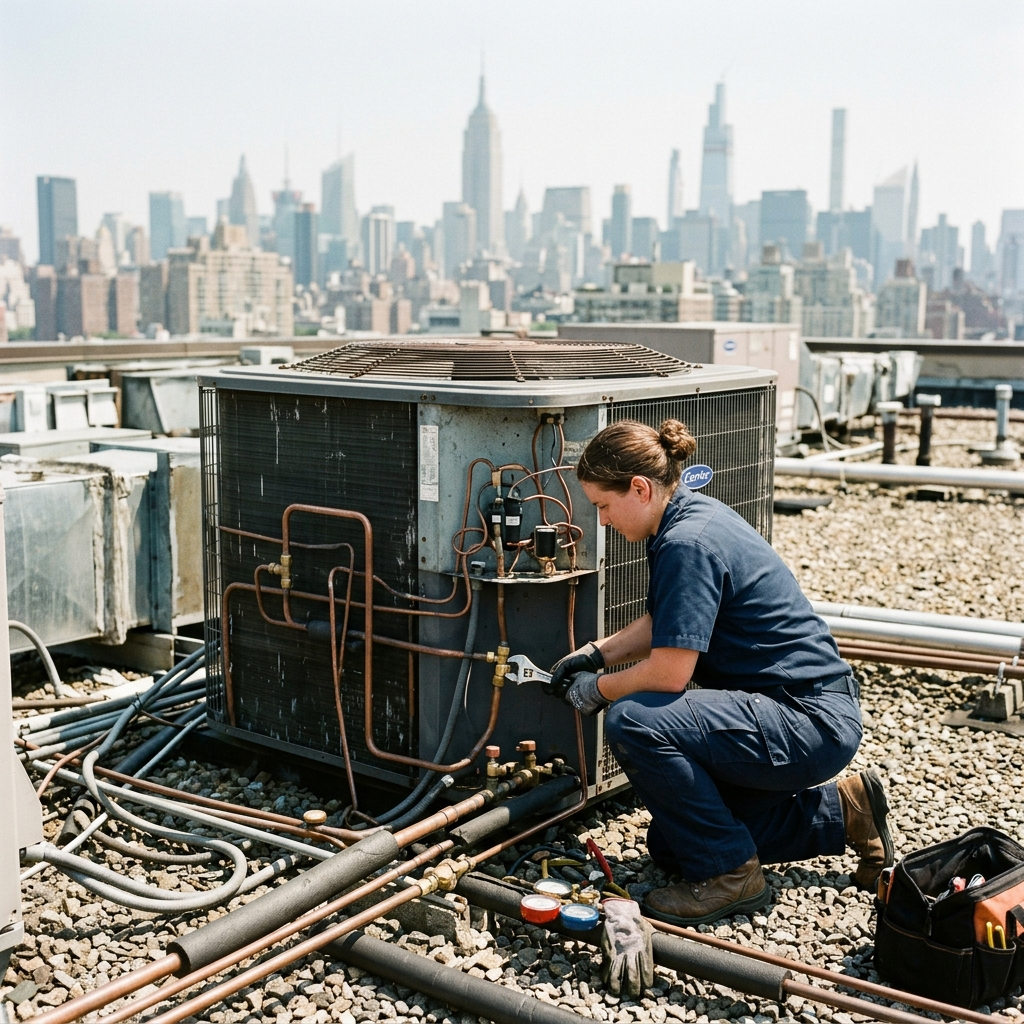

I have a very specific warning sign I look for when I audit an HVAC company in April or May.
Treat any number without a nearby source or stated method as a planning assumption, then replace it with your own records.
The owner says some version of this:
"We're fine right now. The phones are manageable."
That sentence is usually true in April. It is also why July becomes expensive.
HVAC peak season does not slowly arrive. It snaps into place. One sustained heat wave hits, the first round of AC systems fail, homeowners start searching from their kitchens and driveways, and the company that looked organized two weeks earlier suddenly has six voicemails, three callbacks, two angry existing customers, and an owner answering calls from the truck.
The companies that win summer are rarely the ones that "figure it out" once the heat arrives. They are the ones that built the intake system before the phones started punishing them.
This is the part most HVAC owners underestimate: peak season does not create the problem. It exposes the problem that was already there.
Why Peak Season Creates a Front-Door Failure Mode
During a normal month, an HVAC company can survive with a fragile front door.
The office line rings. Someone answers most of the time. The owner catches a few calls. Missed calls get returned. Customers are a little patient because the problem is not always urgent.
Then the first real heat stretch hits.
The same intake setup now has to handle:
- Homeowners discovering an AC failure after work
- Elderly customers calling because the house is becoming unsafe
- Landlords trying to get a tenant problem handled quickly
- Existing maintenance clients who expect priority
- New prospects calling three HVAC companies in a row
- Emergency calls arriving while dispatch is already overloaded
That is when the old setup breaks.
Not because the dispatcher is lazy. Not because the owner does not care. Not because the technicians are slow.
It breaks because the system was designed for April call volume, then July showed up.
I saw this with a five-truck HVAC company in the GTA last summer. They had good reviews, decent Google visibility, and enough demand to have a very strong season. The owner thought the issue was technician capacity. When we looked at the call pattern, the larger problem was intake collapse between 4 PM and 9 PM. Homeowners were calling after work, hitting voicemail, and booking whoever answered next.
The company did not have a lead problem. It had a peak-load problem.
What HVAC Companies Should Set Up Before June
The preparation window is before the first sustained heat event.
For most northern markets, that means April and May. For Texas, Arizona, Florida, and the southern US, it needs to happen earlier. For Canadian markets, the window is shorter, which makes preparation even more important because the call surge is compressed.
Here is what I want in place before the season starts.
After-hours and overflow answering.The highest-value setup is not only after-hours coverage. It is after-hours plus overflow. Peak season calls get missed during business hours too, especially when the front desk is already dealing with scheduling, parts, billing, and callbacks.
The system should answer when the office cannot, capture the caller's name, address, issue, urgency, equipment type if possible, and whether the home has cooling at all. It should route true emergencies immediately and hold non-emergency requests for scheduling.
Missed-call text-back.If a call is missed during business hours, a text should go out within 60 seconds. Not an hour later. Not at the end of the day. Immediately.
Something simple works:
"Sorry we missed you. Are you calling about an AC issue today? Reply here and we can help route you."
That one message can keep a homeowner from calling the next company.
Emergency triage rules.Not every summer HVAC call is equal. A thermostat question, a routine maintenance request, and a no-cooling call with a senior in the house should not land in the same pile.
Before peak season, define what gets escalated:
- No cooling in extreme heat
- Senior, infant, medical vulnerability, or tenant safety issue
- Commercial refrigeration or business interruption
- Existing customer with an active maintenance agreement
- System failure in a home with no backup cooling
If those rules are not written before the season, the owner becomes the rule engine. That is how burnout starts.
Appointment confirmation.Peak season creates a weird customer behavior: homeowners book multiple contractors and cancel whoever arrives last.
That is not because customers are bad people. It is because they are hot, frustrated, and trying to solve the problem fast.
A confirmation text after booking and a reminder before arrival protect the schedule. They also give the customer a reason to stop shopping.
Review request automation.Summer is when HVAC companies complete the most jobs. That makes it the best review-building window of the year.
If review requests are manual, they will be forgotten during the busiest weeks. If they are automated, the company builds review velocity while the market is paying attention.
The Revenue Difference Between Prepared and Unprepared
Let me make the math plain.
Take a four-truck HVAC company that receives 90 new inbound calls per month during peak season. That is not an enormous operation. It is a normal busy summer for a company with decent local visibility.
Assume 30 of those calls arrive after hours or during overflow moments when the office line is busy. If the company relies on voicemail, it may recover a small fraction of them. If the company answers and triages them live, it gets a real shot.
State | Daily After-Hours Calls | Answer Rate | Monthly Jobs Captured | Monthly Revenue
Unprepared | 18 | 15% | 3 | $3,900
Prepared with AI intake | 18 | 96% | 18 | $23,400
Over a three-month peak window, that difference is $58,500.
That does not include replacement opportunities. It does not include maintenance agreements. It does not include the future review and referral chain from the customers you actually served.
This is why I do not like when HVAC owners think about call answering as an admin expense. In peak season, intake is not admin. Intake is revenue capture.
The office line is not just a phone line. It is the front edge of the summer revenue window.
Preparation Timing Matters More Than Most Companies Realize
There is a reason I push HVAC owners to fix this before the season starts.
You do not want to install, test, and tune an intake system while the business is already under pressure.
July is the wrong month to discover that emergency routing is unclear. July is the wrong month to decide who gets notified after 7 PM. July is the wrong month to find out that the AI is asking the wrong intake question or that the after-hours handoff is going to the wrong person.
April and May give you runway.
You can test call flows. You can listen to transcripts. You can adjust the emergency rules. You can train the team on what gets escalated and what waits until morning. You can build spring review velocity from tune-ups before the summer Maps fight gets intense.
The companies that look calm in July are not calm because July is easy. They are calm because the decisions were made before July.
The companies that look chaotic are often making operational decisions while the phone is ringing.
That is not strategy. That is survival.
The Owner Burnout Problem Nobody Adds to the Spreadsheet
The revenue loss is painful. The owner fatigue is worse.
In a lot of HVAC companies, "after-hours coverage" really means the owner is the fallback for everything the system fails to handle.
The phone rings during dinner. The owner checks voicemail before bed. A Saturday morning with the family becomes four callbacks from people who already booked someone else. The owner tells themselves this is the cost of running a service business.
It is not.
Some calls need a human. Some calls need the owner. But most after-hours intake does not need the owner to personally answer the first ring.
It needs a structured front door:
- Answer the call
- Identify the customer
- Determine the urgency
- Capture the job details
- Route emergencies
- Schedule or queue everything else
- Keep the customer from continuing down the Google Maps list
That is the difference between availability and personal captivity.
An HVAC business can be reachable 24/7 without turning the owner into a 24/7 receptionist. But only if the system is built before peak season starts.
The Mistake I See Every Summer
The mistake is waiting until the pain is obvious.
By the time the owner feels the problem, the business has already lost calls. The customer did not wait. The competitor already booked the job. The review that could have existed never happened. The maintenance agreement never started.
Missed summer demand does not sit on a shelf waiting to be recovered in September.
That is the uncomfortable truth of HVAC peak season. The revenue is perishable.
If the call is about a broken AC unit during a heat wave, the homeowner is solving that problem today. Not next week. Not when your office has time to call back. Today.
The company that answers first is not always the best company. But during peak season, it often becomes the company that gets the job.
That is why preparation matters.
Not because AI is trendy. Not because automation sounds sophisticated. Because July punishes slow front doors.
What I Would Check This Week
If I were sitting with an HVAC owner before peak season, I would not start with a software demo.
I would start with the phone records.
Pull the last 30 days and look for three things.
First, how many calls were missed after 4 PM? That is usually where the summer problem begins to show itself before the real rush arrives.
Second, how many business-hour calls went unanswered because the line was already busy? Owners tend to underestimate this one because it does not feel like an after-hours problem. But during peak season, daytime overflow can be just as expensive as voicemail overnight.
Third, how long did callbacks take? A callback after 90 minutes might feel reasonable to an overloaded office. To a homeowner with no cooling, it feels like silence.
This is where the conversation becomes concrete. We are no longer talking about "better systems" in the abstract. We are looking at the exact number of calls that had no real chance of converting because the business reached them too late.
If those numbers are already visible in spring, they will not improve on their own in summer.
They will compound.
Use your own records before you decide
Source: start with your call log, CRM notes, booking calendar, missed-call records, web form timestamps, and Google Business Profile. Those records show whether buyers reached you, how fast they heard back, what they asked for, and where the next step broke down.
For seven days, mark each missed call, late reply, unbooked form, stale estimate, and review request that never went out. That small sample gives an owner a practical picture of the front-door gap before they spend more on ads, software, or staff.
The loss estimate is basic business math, not a magic claim.
Revenue-leak examples on this site are built from visible operating inputs: inquiry volume, missed-call or slow-response rate, booking rate, average job or client value, repeat value, and follow-up recovery. The fastest way to make the number real is to run the diagnostic for your closest business type, then compare it against your own call log, CRM, booking calendar, form timestamps, and review activity.
The practical questions behind this decision.
When does HVAC peak season typically start?
In most North American markets, HVAC peak season for cooling starts with the first sustained heat events in late May or June and runs through August. Southern markets start earlier and run longer. Canadian markets often have a shorter but more compressed summer window, which makes missed-call recovery even more important.
Why do HVAC companies lose more calls during peak season than during other periods?
The intake system that works in April is often not built for July. Call volume rises, urgency rises, after-hours demand rises, and the office line gets occupied with scheduling and existing customer issues. The company does not lose calls because nobody cares. It loses calls because capacity does not scale with demand.
What is the single highest-impact preparation step for HVAC peak season?
For most HVAC companies, the highest-impact step is after-hours and overflow answering with clear emergency routing. It keeps the business reachable when the office line is busy or closed, captures job details, and prevents urgent callers from moving immediately to the next Google Maps result.
Can an HVAC company set up an AI intake system during peak season, or is it too late?
It is not too late, but it is more stressful. Setting it up before peak season gives the company time to test call flows, adjust emergency rules, confirm notifications, and train the team. Installing during peak season is still better than letting calls keep leaking, but April or May is the cleaner move.
How should HVAC companies handle appointment booking during peak season overflow?
Treat booking as part of the revenue system, not clerical cleanup. Capture the request immediately, classify urgency, confirm appointments by text, and send reminders before arrival. During peak season, a missed appointment slot is not just inconvenient. It is capacity that could have gone to another waiting customer.
What should an HVAC owner look at first to know whether they are ready?
Pull the last 30 days of call data and look at missed calls after 4 PM, calls that went to voicemail during business hours, and callbacks that happened more than 30 minutes later. If those numbers already look uncomfortable in spring, they will look worse during the first heat wave.
Decide what the AI must handle before you choose the software.
A useful intake system begins with the caller journey, the rules, and the human handoff, not a long feature list.
Give the receptionist a realistic scenario and hear how it answers, gathers context, and moves the caller toward a useful next step.
See how the capability in this article fits into a complete customer journey.
HVAC Emergency ServiceSee the same decision through the language, buyer behavior, and operating reality of this industry.
Client Results & ProofInspect the starting condition, installation, measurement window, and outcome behind real client work.
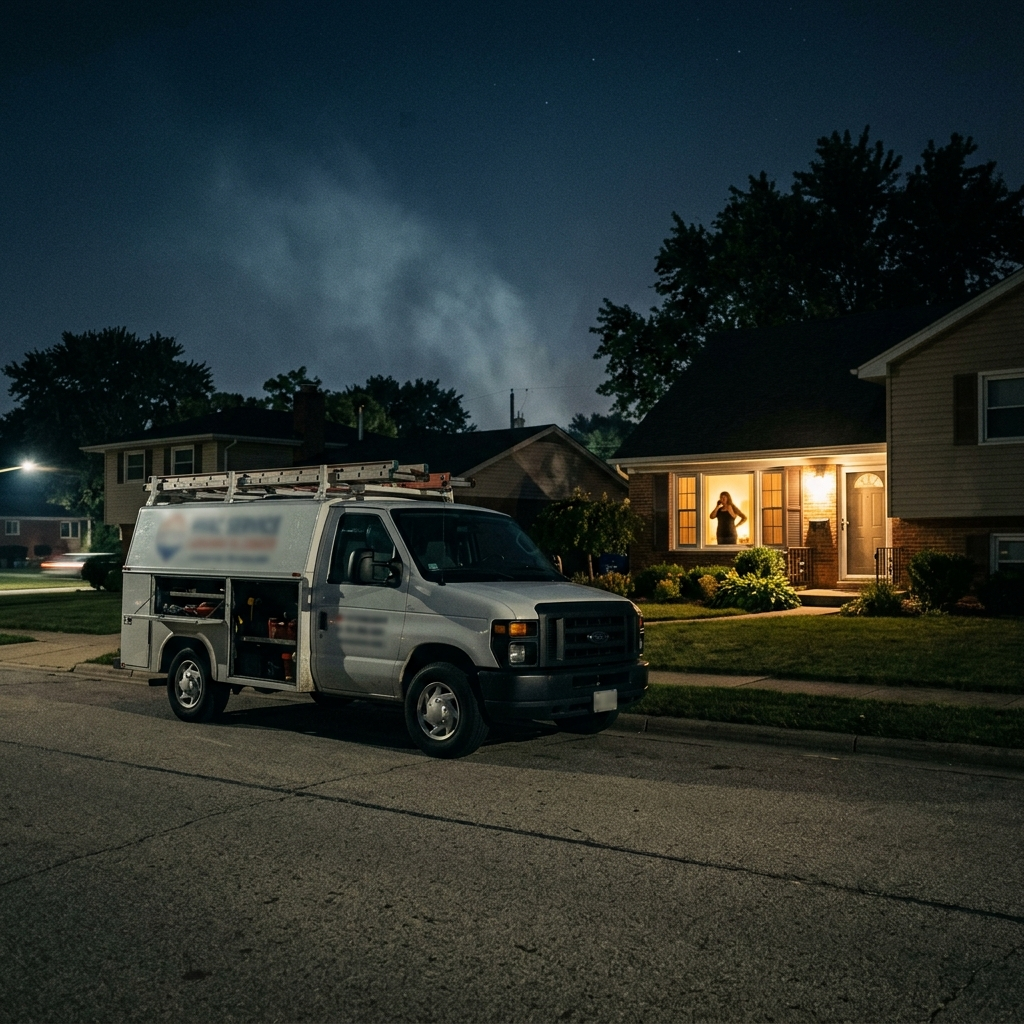
The After-Hours HVAC Revenue Gap: What Your Voicemail Is Actually Costing You Each Year
HVAC companies lose their highest-value calls after 5 PM. Here is what the annual cost is in precise terms, and what fixed looks like without adding headcount.
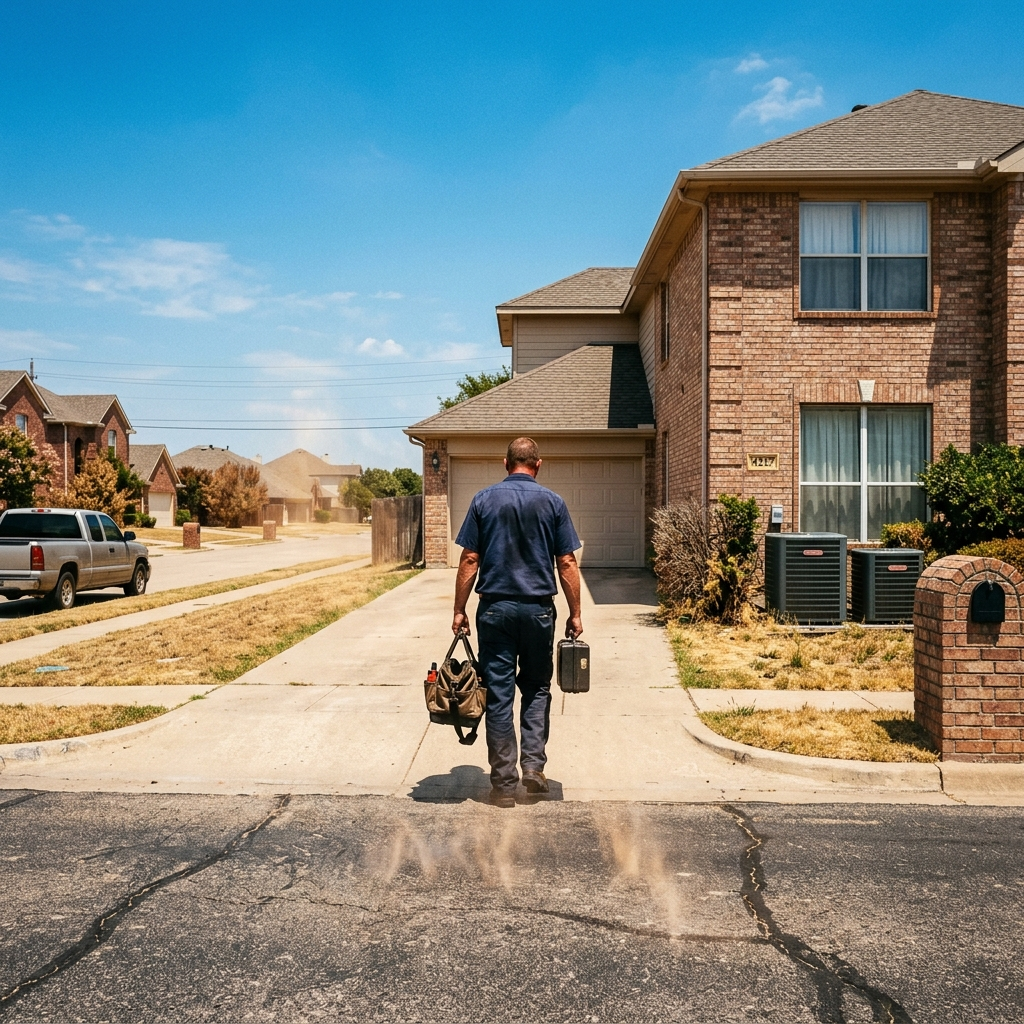
AI Receptionist for Dallas HVAC Companies: How DFW Contractors Capture Summer Calls
Dallas HVAC companies do not lose summer calls because demand is weak. They lose them because DFW homeowners call until someone answers. Here is how AI intake changes that.

The 5-Minute Rule: Why Speed to Lead Determines Who Gets the Job in Service Businesses
Research shows leads contacted within 5 minutes convert at 21 times the rate of leads contacted after 30 minutes. Here is what that means for service businesses and how to close the gap.
Calculate the revenue leak.
Stop guessing. See how much demand your business may be losing through missed calls, slow replies, weak booking, review gaps, and follow-up drag, then decide whether Voice AI is the right system path.
Run the calculationPrefer to hear it first?
Call the live AI receptionist and test the conversation.
Call the live AI receptionist anytime. Tell it about hvac emergency service, then hear a short live roleplay based on the calls your front desk actually gets.