

When an AC unit fails in Frisco, Plano, McKinney, Irving, Arlington, or Dallas during a long heat stretch, the homeowner is not casually comparing contractors. They are standing in a hot house, watching the indoor temperature climb, thinking about kids, pets, elderly parents, sleep, work tomorrow, and whether this is about to become a full system replacement.
Treat any number without a nearby source or stated method as a planning assumption, then replace it with your own records.
Dallas HVAC calls have a different emotional temperature.
I do not mean that as a clever line. I mean the caller is often genuinely stressed.
When an AC unit fails in Frisco, Plano, McKinney, Irving, Arlington, or Dallas during a long heat stretch, the homeowner is not casually comparing contractors. They are standing in a hot house, watching the indoor temperature climb, thinking about kids, pets, elderly parents, sleep, work tomorrow, and whether this is about to become a full system replacement.
They call until someone answers.
That is the whole game.
In Front Door Audits for HVAC companies, the owner often wants to talk about ads, reviews, ranking, or pricing. Those things matter. But in a DFW summer, the most expensive question is simpler:
"What happens when the phone rings and your team is already busy?"
If the answer is voicemail, the job probably goes somewhere else.
Why Dallas HVAC Is So Unforgiving
The Dallas-Fort Worth HVAC market combines three things that make slow response brutal.
First, the heat is not theoretical. A failed AC unit can turn a home uncomfortable fast, and for some households it becomes a safety issue.
Second, the market is crowded. A homeowner searching Google Maps for AC repair has plenty of options. Smaller contractors do not get the benefit of deep brand loyalty from someone who has never used them before.
Third, the service area is spread out. DFW is not one tidy little market. It is a web of suburbs, neighborhoods, highways, drive times, and local search results. A contractor can be visible in Plano but lose a call in Allen because someone else answered faster.
That is why I do not treat Dallas HVAC intake like a normal front desk problem.
It is a speed problem.
It is a routing problem.
It is a trust-under-pressure problem.
The company that sounds organized in the first 60 seconds has a real advantage, even before a technician is assigned.
The Owner Moment I See in the Call Log
The owner usually knows calls are being missed.
What they do not always know is when.
That is where the call log gets uncomfortable.
Morning discovery calls: the homeowner wakes up and the house is already warm.
Midday calls: the system fails under peak load.
After-work calls: the family gets home and realizes the AC never caught up.
Weekend calls: the house has been uncomfortable for hours, and now someone has finally decided to do something about it.
Those windows are exactly when the office is most vulnerable.
The dispatcher is already on the phone. The owner is in the truck. The admin is dealing with scheduling problems. The on-call tech is finishing another job. A call rings four times, hits voicemail, and the homeowner calls the next HVAC company.
No complaint. No angry email. No obvious lost invoice.
Just a job that never entered the pipeline.
That invisible loss is what makes DFW summer so expensive.
What a Missed Dallas HVAC Call Really Costs
Most owners calculate missed calls too small.
They think about the diagnostic fee or the first repair ticket.
That is only the first layer.
A summer AC call in Dallas might start as a $300 to $500 visit. But it can become a larger repair, a maintenance agreement, a replacement quote, a review, and a customer relationship that lasts for years.
The replacement risk is the part owners feel in their gut.
A homeowner calling about an AC failure in July might be one bad compressor, old system, or poor repair history away from a $7,000 to $14,000 replacement conversation. If your company does not answer the first call, you do not get the chance to diagnose, advise, quote, or earn trust.
You are not losing a call.
You are losing a shot.
And in a market as competitive as DFW, a shot is worth a lot.
Why Voicemail Fails in This Market
Voicemail asks an urgent homeowner to wait.
That is the problem.
The caller is not thinking, "I will leave a message and hope this company gets back to me soon."
They are thinking, "Who can help me today?"
If they reach voicemail, they do not become patient. They become faster. They go back to the search results and keep calling.
This is especially true in Dallas because the homeowner has options. Google Maps is full of HVAC companies with decent reviews, trucks, service-area promises, and emergency language. If one company does not answer, the next one might.
That is why voicemail is not neutral.
In an AC failure, voicemail is a handoff to a competitor.
What an AI Receptionist Should Actually Do
An AI receptionist for a Dallas HVAC company should not pretend to be a technician.
It should do the front-door job cleanly.
Answer quickly.
Calm the caller.
Capture the details.
Identify urgency.
Route the right calls to the right person.
Keep non-emergency calls from disappearing.
For an AC failure, the system should capture:
- Name and phone number
- Address or zip code
- Whether the home has any cooling
- What the thermostat is set to and what the indoor temperature is
- Whether children, elderly residents, pets, tenants, or medical concerns are involved
- System age if the caller knows it
- Whether they are an existing customer
Then it should route the call based on your rules.
Not every call should wake the on-call tech. Not every call should wait until morning. The value is in the triage.
The owner should not be the filter for every after-hours call. The system should filter the first layer and escalate what actually needs attention.
The Dallas After-Work Window
If I had to pick one DFW window that owners underestimate, it is 5 PM to 8 PM.
The homeowner left for work in the morning. The system struggled all day. They come home and the house feels wrong. Maybe it is 83 degrees inside. Maybe the unit is blowing warm air. Maybe the upstairs is unbearable.
That person is not waiting until tomorrow.
They search from the driveway, the kitchen, or the living room. They call the first company with enough trust to try. If nobody answers, they call the next.
This is why after-hours coverage cannot be treated like a nice-to-have in Dallas HVAC.
The after-work window is not fringe demand. It is prime demand.
The company that answers at 6:42 PM gets a chance to own the job.
The company that calls back at 9:15 AM is often calling someone who already has another technician scheduled.
How the Math Changes With AI Intake
Take a mid-size DFW HVAC company with 8 trucks.
During summer, assume it receives 250 to 300 inbound calls per month. If 35 percent arrive after hours or during overflow, that is roughly 90 to 105 calls at risk.
If voicemail or delayed callback loses most of those callers, the company may recover only a handful.
If an AI receptionist answers, captures details, and routes urgent calls immediately, the company gets a real chance at many more of them.
Even recovering 10 additional jobs per month can change the season.
At a conservative $400 first-visit value, that is $4,000 in immediate revenue.
If two of those calls lead to replacement quotes, maintenance agreements, or future work, the true value is much higher.
This is why the ROI conversation is not complicated for Dallas HVAC.
The system does not need to perform miracles.
It needs to prevent a few good calls from sliding into the competitor's calendar every month.
The Google Maps Flywheel
There is another layer owners often miss.
Answering more calls creates more jobs.
More jobs create more opportunities for reviews.
More recent reviews improve trust and can support local visibility.
Better visibility creates more calls.
Then the front door gets tested again.
This is why the companies that improve intake can compound faster than companies that only buy more leads. More demand without better capture just creates more leakage.
For DFW contractors competing in searches like "AC repair Dallas," "HVAC repair Plano," "emergency AC service Frisco," or "AC company McKinney," the front door and the review engine are connected.
If you answer more of the right calls and handle them well, the market starts giving you more chances.
If you miss those chances, the lead source does not matter.
What I Would Check First
Before installing anything, I would pull the last 30 days of call data.
Look at missed calls after 5 PM.
Look at overflow during business hours.
Look at weekend calls.
Look at how many voicemails were returned after 30 minutes.
Look at calls from zip codes you actually want more work in.
Then ask a painful but useful question:
"If these people called three HVAC companies, did we give them any reason to stop at us?"
If the answer is no, the front door is costing the business more than the owner can see from the calendar.
DFW Suburbs Make This Harder
Dallas HVAC is not just Dallas.
That matters operationally.
A call from Frisco is different from a call from Arlington. A McKinney emergency may need a different on-call route than a Plano maintenance request. A contractor that says it serves the whole metro still has to make real decisions about drive time, technician location, service-area fit, and urgency.
This is where a generic answering service often falls apart.
It takes a message.
It does not understand which calls are worth waking up the on-call technician, which zip codes are in the profitable service area, which calls should be booked for morning, and which ones should be escalated now because the customer is exactly the kind of job the company wants.
An AI receptionist has to be configured around those rules.
Not "answer every call the same way."
"Answer every call, then route it according to the business."
That distinction matters in DFW because the market is huge. Without rules, the owner becomes the routing system. Every night, every weekend, every borderline call comes back to the same person.
That is not scalable.
It is also not necessary.
The Owner Should Not Be the Overflow Plan
A lot of HVAC companies say they have after-hours coverage.
What they really mean is the owner is tired.
The owner's phone gets the voicemail. The owner checks messages between family dinner and a supplier text. The owner decides whether a call is urgent enough. The owner feels guilty when they miss one.
That is not a system. That is personal endurance.
The job of AI intake is not to remove the owner from the business. It is to stop making the owner the first filter for every call the front desk could not catch.
The owner should see clean escalations, not raw chaos.
Name. Number. Zip code. Issue. Urgency. Existing customer or not. Recommended next step.
That is the difference between being informed and being trapped.
The loss estimate is basic business math, not a magic claim.
Revenue-leak examples on this site are built from visible operating inputs: inquiry volume, missed-call or slow-response rate, booking rate, average job or client value, repeat value, and follow-up recovery. The fastest way to make the number real is to run the diagnostic for your closest business type, then compare it against your own call log, CRM, booking calendar, form timestamps, and review activity.
The practical questions behind this decision.
Why is an AI receptionist especially useful for Dallas HVAC companies?
DFW summer HVAC demand is urgent, competitive, and spread across many suburbs. Homeowners often call multiple companies until someone answers. An AI receptionist gives the company a first-response layer when the office is busy, closed, or overloaded.
Can an AI receptionist handle real HVAC emergencies?
It should not diagnose or make technical repair decisions. It should capture the caller's situation, identify urgency, and route high-priority calls to the on-call technician or dispatcher based on the company's rules.
Does this replace an HVAC dispatcher?
No. It protects the dispatcher from becoming the only front door. During business hours it can handle overflow. After hours it can capture and triage calls so urgent issues reach the right person and non-emergency requests do not vanish.
What information should the AI collect on a Dallas AC call?
At minimum: name, phone, address or zip code, issue, whether the home has cooling, indoor temperature if known, existing customer status, and any safety concerns such as elderly residents, children, pets, or medical needs.
How quickly can a Dallas HVAC company see ROI?
If the company has real call volume, the ROI can show up quickly because one recovered job can cover a large portion of the monthly cost. The bigger value comes when recovered calls become replacement quotes, maintenance relationships, reviews, and repeat customers.
Decide what the AI must handle before you choose the software.
A useful intake system begins with the caller journey, the rules, and the human handoff, not a long feature list.
Give the receptionist a realistic scenario and hear how it answers, gathers context, and moves the caller toward a useful next step.
See how the capability in this article fits into a complete customer journey.
HVAC Emergency ServiceSee the same decision through the language, buyer behavior, and operating reality of this industry.
Client Results & ProofInspect the starting condition, installation, measurement window, and outcome behind real client work.
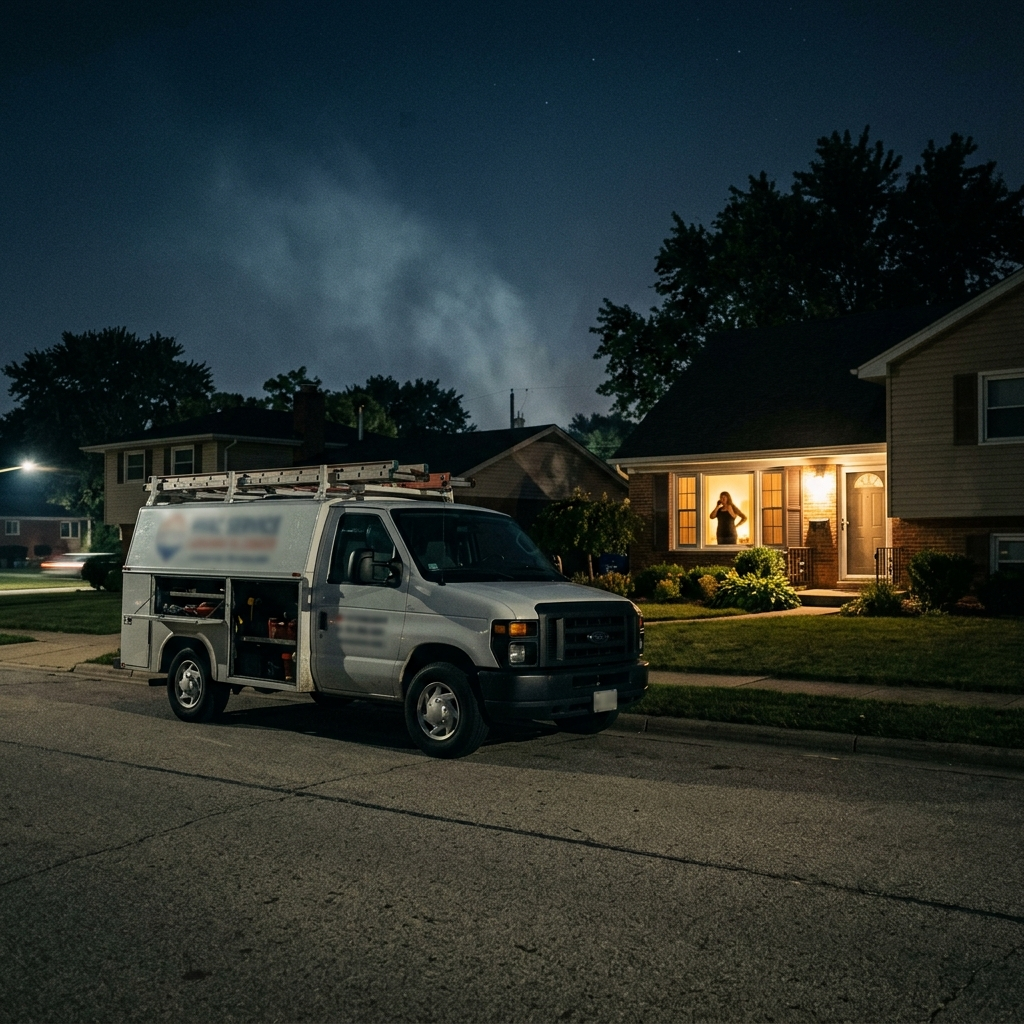
The After-Hours HVAC Revenue Gap: What Your Voicemail Is Actually Costing You Each Year
HVAC companies lose their highest-value calls after 5 PM. Here is what the annual cost is in precise terms, and what fixed looks like without adding headcount.

The 5-Minute Rule: Why Speed to Lead Determines Who Gets the Job in Service Businesses
Research shows leads contacted within 5 minutes convert at 21 times the rate of leads contacted after 30 minutes. Here is what that means for service businesses and how to close the gap.

What Is an AI Receptionist for a Small Service Business? (The Honest Explanation)
An AI receptionist answers calls 24/7, captures leads, qualifies urgency, and routes emergencies, without voicemail. Here is exactly how it works and what it cannot do.
Calculate the revenue leak.
Stop guessing. See how much demand your business may be losing through missed calls, slow replies, weak booking, review gaps, and follow-up drag, then decide whether Voice AI is the right system path.
Run the calculationPrefer to hear it first?
Call the live AI receptionist and test the conversation.
Call the live AI receptionist anytime. Tell it about hvac emergency service, then hear a short live roleplay based on the calls your front desk actually gets.