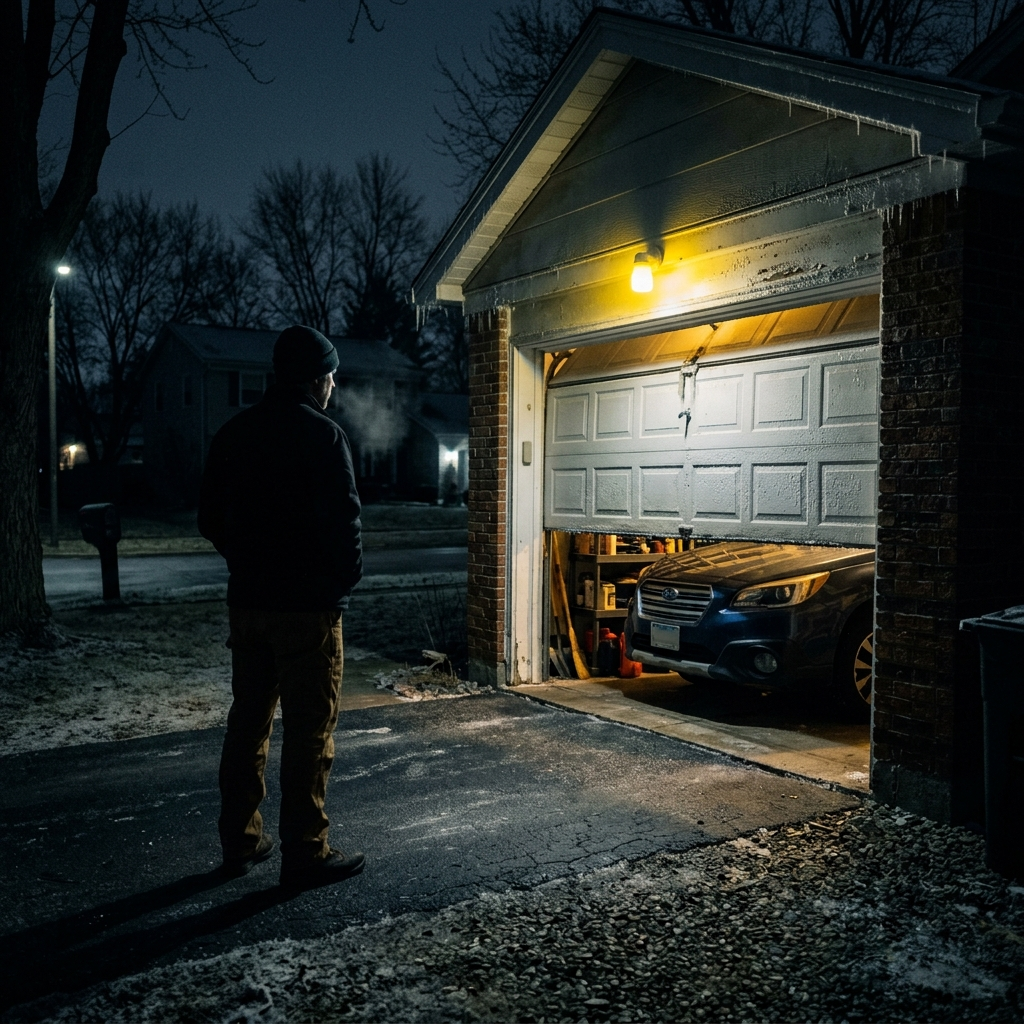

Garage door service has one of the highest proportions of emergency and urgency-driven inbound calls of any home service category.
Treat any number without a nearby source or stated method as a planning assumption, then replace it with your own records.
A garage door emergency does not respect business hours.
When a spring snaps at 6 AM and the car is trapped inside, or when a panel comes off the track on a Friday evening and the homeowner cannot close the garage for the night, they need help immediately. They do not wait for Monday. They call the first company they can find on Google Maps.
For most garage door operations, that call goes to voicemail.
I audited a garage door company in Scarborough, Ontario last year. Two technicians, solid reputation, 4.7 stars on Google with 41 reviews. The owner was doing $380,000 per year and felt like he had hit a ceiling. He'd tried Google Ads. He'd tried flyers. He kept getting the same volume.
When we pulled his Google Business Profile call data, the pattern was immediate. Of his 38 inbound calls the previous month, 17 had come in before 8 AM or after 5 PM. He had answered 3 of them, the ones where he happened to check his phone. The other 14 hit voicemail. At his average ticket of $390, that was $2,100 per month in captured after-hours revenue against a potential of $5,460. He was running at 38 percent efficiency on the most urgent, highest-converting portion of his call volume.
His growth ceiling was not the market. It was the phone.
The Nature of Garage Door Demand
Garage door service has one of the highest proportions of emergency and urgency-driven inbound calls of any home service category.
The reasons are structural. Garage doors fail at specific high-stress moments: on the way out in the morning when someone is already late, in the evening when the car needs to be secured, or during extreme cold when springs contract and break. These are not problems that can be scheduled. They produce a caller who needs resolution within hours.
Consumer behavior in urgent service decisions is dominated by speed of first response. In the garage door category, where the failure is often blocking vehicle access or leaving the home unsecured, the emotional urgency is high. A caller who reaches voicemail on the first call does not typically leave a message and wait. They call the next number.
The After-Hours Call Loss in Garage Door
The typical garage door company receives between 20 and 50 inbound calls per month. For operations without 24-hour staffing, a substantial portion of those calls arrive outside standard business hours.
The distribution of garage door calls clusters in three windows: early morning (6 to 9 AM), when spring failures and track problems are discovered before the day begins; evening (5 to 8 PM), when homeowners returning from work discover problems; and weekend mornings, when cold temperatures or home activity reveal failures that went unnoticed during the week.
All three of these windows fall outside the 8 AM to 5 PM Monday-through-Friday coverage most small garage door operations maintain.
At a conservative 40 percent after-hours call volume and an 80 percent voicemail abandonment rate:
A company receiving 40 calls per month has 16 after-hours calls. Of those, 13 reach voicemail and do not leave a message. If those 13 calls converted at the same 30 percent rate as answered calls, that is 4 additional jobs per month.
At an average garage door service ticket of $450, that is $1,800 per month, $21,600 per year, from after-hours abandonment alone.
For companies with higher call volume or in higher-ticket service areas, the number is significantly larger.
The Competitive Landscape and Google Maps
Garage door service is a local market where Google Maps visibility drives the majority of inbound call volume. When a homeowner's garage door fails, they typically search "garage door repair [city]" or "garage door emergency near me" and call the first 2 or 3 results.
This means Google Maps ranking determines how many calls the business receives. And review velocity, the rate of new reviews, is one of the primary factors determining that ranking.
Companies that answer every call convert more jobs. More converted jobs generate more opportunities to request reviews. More reviews improve ranking. Higher ranking generates more calls.
A garage door company currently at position 6 on Google Maps with 25 steady reviews is losing a significant percentage of available market demand to the companies at positions 1 through 3. The difference between position 1 and position 6 in a local service search is typically 4 to 6 times the call volume.
The companies at position 1 are not always the best technicians. They are often the ones that built a review velocity lead early and maintained it through systematic post-job review requests.
The Scarborough company I mentioned above: after we installed AI after-hours intake and added a 24-hour review request SMS, they went from 41 reviews to 89 reviews in 4 months. Their Maps position moved from 5th to 2nd in their primary service area. Monthly inbound call volume increased from 38 to 61 calls. Same technicians. Same service quality. Different front door.
What an AI Intake System Changes for Garage Door
The practical implementation for a garage door company is straightforward.
Every inbound call is answered within 3 rings by a voice AI, regardless of time. The system identifies itself as the after-hours answering service for the company and collects three pieces of information: the caller's name, their address, and a brief description of the issue.
For emergency calls, a door stuck open, a spring failure, a broken cable preventing the car from leaving, the system flags the call as urgent and immediately sends the caller's details to the on-call technician via SMS. The technician has the caller's name, number, and address within 30 seconds of the call ending. They make the callback decision and can respond with an ETA within minutes.
For non-emergency calls, tune-up requests, opener replacement, new door quotes, the system captures the inquiry and confirms next-business-day follow-up with an immediate SMS to the caller.
The net effect is a near-100 percent answer rate. Every prospect who calls during the evening peak, the early morning peak, or the weekend window gets a professional response. The business captures leads it was previously losing invisibly.
The ROI for a 2-Truck Garage Door Operation
Using conservative assumptions for a small garage door company with 2 technicians:
Metric Without AI Intake With AI Intake
Monthly calls 35 35
After-hours answer rate 18% 96%
Monthly jobs from after-hours calls 2 9
Revenue from after-hours jobs $900 $4,050
Monthly system cost $0 $497
Net monthly gain -- $2,653
Annual net gain -- $31,836
This uses a conservative 30 percent close rate on answered calls and a $450 average ticket. For emergency calls specifically, which carry urgency-driven close rates closer to 50 to 60 percent, the gain is higher.
Garage Door Missed Call Questions
What percentage of garage door calls are emergencies?
Between 35 and 55 percent of inbound garage door calls describe an urgent or same-day-required situation. Spring failures, broken cables, doors stuck open overnight, and track derailments are the most common urgent categories. These calls have the highest close rates but the shortest lead windows.
Why do garage door companies miss so many after-hours calls?
Most small garage door operations run with 1 to 3 technicians and no dedicated office staff. After standard business hours, calls either go to a personal cell that may or may not be answered, or directly to voicemail. The technicians are often on jobs during daytime hours and cannot answer the office line consistently even during business hours.
What happens to homeowners who reach a garage door company voicemail?
Consumer behavior research consistently shows that 75 to 85 percent of callers who reach voicemail in an urgent service situation do not leave a message. They call the next company. For garage door emergencies, where the homeowner cannot leave the property unsecured or cannot get their vehicle out, this abandonment rate is likely higher.
Does a garage door company need to hire additional staff to improve call answer rate?
No. A voice AI system handles the first contact without requiring additional headcount. The technician receives a structured notification for emergency calls and makes the callback decision. For non-emergency calls, the system captures the inquiry for next-day follow-up. The staffing structure does not change.
How quickly does an AI intake system pay for itself for a garage door company?
At a $450 average service ticket and an AI system cost of $497 per month, the system pays for itself on the first additional job captured per month. Most garage door operations using AI intake recover 4 to 8 additional jobs per month from previously missed after-hours calls.
*To see what your garage door operation is currently losing from after-hours call abandonment, request a Revenue Leak Diagnostic at thequietprotocol.com.*
What to check before you choose a fix
Before buying another answering service, chatbot, phone tree, or AI receptionist, look at the actual path a trapped-car, broken spring, opener, cable, or emergency repair caller takes when they reach your business. The first question is not whether the tool sounds impressive. The first question is whether the buyer gets a clear next step while they still care. In garage door company operations, that usually means a fast answer, a useful question, a booked appointment or estimate path, and a follow-up record that does not rely on memory.
A strong system should make the business feel easier to choose. It should reduce the waiting, repeating, guessing, and manual chasing that make a buyer keep searching. If the current setup answers only during business hours, takes a message without qualifying intent, or leaves the follow-up to whoever remembers first, the problem is not only staffing. It is front-door design.
The week-one diagnostic
Run this review over the last seven days before making a decision. Pull the call log, website form submissions, chat history, booking calendar, CRM notes, missed-call list, and Google Business Profile activity. Do not start with opinions. Start with timestamps and outcomes. A small sample is enough to show whether the leak is response speed, qualification, booking friction, review weakness, or follow-up failure.
- Count every missed call and every call that lasted under 20 seconds. Those are often buyers who never became visible in the CRM.
- Count every form or chat that waited more than 10 minutes for a real next step. This is where high-intent demand starts cooling off.
- Mark every inquiry that needed a human callback before booking. That tells you whether the website is explaining the next step clearly enough.
- Review the last five reviews buyers can see publicly. Recency matters because buyers compare proof before they commit.
This is the source method for the article: use your own call log, CRM, booking calendar, form inbox, and Google Business Profile review activity. Public research can explain the pattern, but your own records show where money is escaping in this business.
Where the revenue usually leaks
The leak usually appears in one of four places. First, the buyer calls when the team is busy or closed. Second, the buyer reaches the business but is not qualified clearly enough to book. Third, the buyer receives a polite response but no firm next step. Fourth, the buyer finishes the job or visit but no review, referral, or reactivation path happens after the work is done. Each leak looks small by itself. Together, they decide whether marketing produces booked revenue or only more noise.
For a garage door company, the most valuable fix is the one that protects same-day booking, urgency sorting, and reputation protection. That is why garage door missed-call recovery should be judged by business outcomes, not by novelty. A phone feature that sounds clever but does not improve booked appointments is not enough. A website widget that collects contact details but does not trigger follow-up is not enough. A review tool that asks once and disappears is not enough.
What a stronger system should do
A stronger front door answers quickly, asks the right questions, captures the reason for contact, separates urgent from routine demand, books when rules are clear, sends confirmations, updates the follow-up path, and asks for reviews after the work is done. The system should make the owner less dependent on heroic callbacks and make the buyer feel that the business is organized from the first touch.
The Quiet Protocol treats this as an operating system, not a single widget. Calls, web forms, missed-call text-back, appointment booking, CRM handoff, review requests, and reactivation all need to point in the same direction. When those pieces are connected, a garage door company can capture more demand without turning the team into a bigger manual call center.
How to judge whether it is working
Do not judge the system by how futuristic it feels on day one. Judge it by what changes in the business. Useful measurements include missed-call recovery rate, average response time, booked appointment rate, no-show recovery, review request volume, review recency, reactivated past-customer conversations, and the number of leads that have a clear next action in the CRM.
The best early sign is calm. Fewer loose callbacks. Fewer mystery leads. Fewer buyers waiting for a reply. More conversations with a clear status. That is what good automation should feel like to the owner and to the customer.
The loss estimate is basic business math, not a magic claim.
Revenue-leak examples on this site are built from visible operating inputs: inquiry volume, missed-call or slow-response rate, booking rate, average job or client value, repeat value, and follow-up recovery. The fastest way to make the number real is to run the diagnostic for your closest business type, then compare it against your own call log, CRM, booking calendar, form timestamps, and review activity.
The practical questions behind this decision.
What percentage of garage door calls are emergencies?
Between 35 and 55 percent of inbound garage door calls describe an urgent or same-day-required situation. Spring failures, broken cables, doors stuck open overnight, and track derailments are the most common urgent categories. These calls have the highest close rates but the shortest lead windows.
Why do garage door companies miss so many after-hours calls?
Most small garage door operations run with 1 to 3 technicians and no dedicated office staff. After standard business hours, calls either go to a personal cell that may or may not be answered, or directly to voicemail. The technicians are often on jobs during daytime hours and cannot answer the office line consistently even during business hours.
What happens to homeowners who reach a garage door company voicemail?
Consumer behavior research consistently shows that 75 to 85 percent of callers who reach voicemail in an urgent service situation do not leave a message. They call the next company. For garage door emergencies, where the homeowner cannot leave the property unsecured or cannot get their vehicle out, this abandonment rate is likely higher.
Does a garage door company need to hire additional staff to improve call answer rate?
No. A voice AI system handles the first contact without requiring additional headcount. The technician receives a structured notification for emergency calls and makes the callback decision. For non-emergency calls, the system captures the inquiry for next-day follow-up. The staffing structure does not change.
How quickly does an AI intake system pay for itself for a garage door company?
At a $450 average service ticket and an AI system cost of $497 per month, the system pays for itself on the first additional job captured per month. Most garage door operations using AI intake recover 4 to 8 additional jobs per month from previously missed after-hours calls.
Is this just a 24/7 answering service?
No. A traditional answering service usually takes a message. A properly designed AI receptionist and front-door system captures intent, qualifies the buyer, routes the request, books when possible, triggers follow-up, and supports reviews after the work is done. Message-taking is coverage. Revenue capture is a fuller operating path.
What should a garage door company fix first?
Fix the first place buyers disappear. For some businesses that is after-hours calls. For others it is slow website follow-up, weak booking logic, old leads, or stale reviews. The right first move comes from the seven-day diagnostic, not from guessing.
Will AI make the business feel less human?
Bad automation feels colder than a person. Good automation feels like the business is paying attention. It answers quickly, uses plain language, collects the right information, and hands the buyer to a human when judgment or empathy is needed. The goal is not to remove people. The goal is to stop making buyers wait for basic next steps.
How fast should we expect improvement?
The first lift should come from visibility and speed: fewer missed opportunities and cleaner routing. Deeper gains come after the system has enough real conversations to tune scripts, booking rules, follow-up timing, and review requests. Treat the first month as deployment and calibration, not a magic switch.
Map how a serious buyer decides in this kind of business.
Use the operating reality of the industry instead of copying a generic lead-generation playbook.
Replace broad industry assumptions with the business's actual inquiry volume, customer value, response time, and booking data.
See how the capability in this article fits into a complete customer journey.
Garage Door RepairSee the same decision through the language, buyer behavior, and operating reality of this industry.
Client Results & ProofInspect the starting condition, installation, measurement window, and outcome behind real client work.

The Real Cost of a Missed Call for a Service Business: The Math Nobody Runs
A missed call costs more than the immediate job. Here is the full three-layer calculation, immediate value, lifetime client value, and referral chain, and the annual total most owners never see.

The 5-Minute Rule: Why Speed to Lead Determines Who Gets the Job in Service Businesses
Research shows leads contacted within 5 minutes convert at 21 times the rate of leads contacted after 30 minutes. Here is what that means for service businesses and how to close the gap.

The 5 Silent Signals Your Service Business Is Leaking Revenue Right Now
Five diagnostic signals that reveal how much revenue a service business is silently losing through operational gaps. Most service businesses losing six figures annually across these five channels have no idea the leak exists.