
To remove a fake Google review, identify a specific policy violation and use Google's reporting process with a clear, factual explanation. Disliking the review is not enough. Neither is recognising that the writer chose the precise words most likely to ruin your morning.
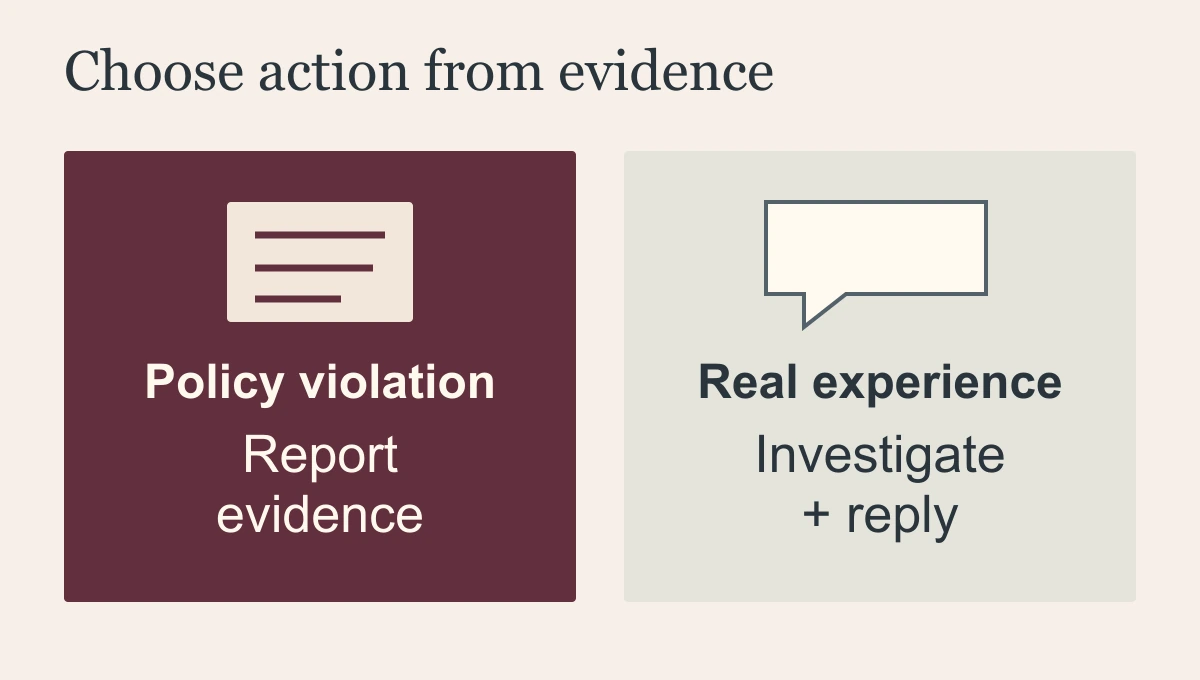
The useful first question is what you can show. A review alleging work you never offered may deserve investigation. A genuine customer saying the appointment ran late may deserve a reply and a better appointment process. Those are different jobs.
At The Quiet Protocol, I recommend giving review handling an owner and a repeatable process. Our review growth service connects fair invitations, response alerts and recovery handoffs. Pair that work with Local Ranking Accelerator annually when the business details also need care: US$990 prepaid for twelve months for one location, with no setup fee and one-time profile optimization included. People assessing a disputed review should still be able to find a clear, accurate account of your business.
“Unfair” and “against policy” are different tests. Google's removal guidance says only reviews that violate its policies qualify for removal, and it does not settle ordinary disputes between businesses and customers. Google's review reporting guidance
Look for the actual policy boundary
Google's Maps rules require genuine experience and prohibit fake engagement, conflicted reviews and certain harmful content. Threats, exposed personal information and unrelated rants have their own rules. A negative account of a real experience can remain within policy. Google Maps content rules
Do not turn “we cannot find an invoice” into “this person cannot have dealt with us.” Someone might have called, asked for a quote, visited without purchasing or used a different name. Check the available facts before accusing them of fabrication.
Here are two hypothetical examples:
An accounting practice receives a review about a roofing repair it has never offered. That apparent mismatch is worth documenting, together with the review link and a plain explanation of what the practice actually does. It might be a mistaken business or a non-genuine contribution; the report should explain the evidence rather than guess the writer's motive.
A flooring customer says the crew arrived late and left dust behind. The owner disagrees with how bad it was. Unless another policy issue exists, that dispute is not a reliable removal case. Investigate the job, acknowledge what happened and offer a direct conversation.
Report the conduct you can substantiate. Do not select every available reason in the hope that one sticks. The report is easier to assess when it names a policy and explains the particular content that appears to breach it.
A small case file for one review
- Review record
- Link, date and a saved copy of the visible content, with the affected business profile identified.
- Suspected rule
- The precise Google policy that appears relevant, without treating a low rating as a violation.
- Supporting facts
- Relevant business information or correspondence that explains the issue. Separate verified facts from uncertainty.
- Reporting history
- Submission date, status, case reference and any appeal result. Keep confidential evidence out of public replies.
Use this case file to keep a review issue understandable for the person handling it. Include relevant evidence through the official route; Google makes the removal decision. If you ask us to help with reporting or replies, we agree that work as part of a separate review scope.
How to word your report, and your public reply
Report: This review describes a [roofing replacement] we do not offer and refers to a visit that never happened. We have no customer record under this name or phone number between [dates]. It appears to violate the policy on [fake engagement / off-topic content]. Our records are available on request.
Public reply: Thanks for the feedback. We can't find a job under this name and would like to look into it. Please contact us at [number] with the date and address so we can make it right.
State facts, name the policy and stay calm. Do not accuse the writer of lying in public or confirm private customer details. Keep records of the search you did for the customer name, and do not offer anything in exchange for removal.
Report using the account connected to the business
In the current Business Profile route, open Read reviews, choose Report beside the review, select the reason and send it. Google's Reviews Management Tool offers another route: confirm the email associated with the profile, select the business and report the review. Check the account before the report. Being signed into a personal account that does not manage the business can send you looking for an option that is available elsewhere. Official reporting routes
Save the report date. Use the Reviews Management Tool to see the status rather than asking staff to flag the same review repeatedly. Google's help says evaluation normally takes several days; that is a general description, not a deadline we can guarantee.
If Google finds no violation, use the one-time appeal carefully
The tool can show a pending decision, a report reviewed with no policy violation, or an escalated appeal awaiting an email result. Where the report was declined and the review is eligible, Google permits a one-time appeal through the same tool. Select the previously reported review, use the appeal option and complete the form. Review statuses and appeal
Use the appeal to clarify the case. If your first report was essentially “this is fake,” explain what supports that claim. If you have no stronger explanation, repeated indignation will not create evidence. Google decides whether its policy was violated; a removal company cannot override that decision by sounding certain.
A request for payment to remove a sudden batch of negative reviews is a different warning sign. Google's reporting guide links to a specific extortion-reporting route. Preserve the messages and follow that official route instead of negotiating with the sender. Google's reporting guide and extortion link
Write for the future reader too
While the report is assessed, a calm response can help the person deciding whether to call you. It should state the relevant business fact and provide a safe way to contact the team. Do not publish appointment details, account balances or other private records to win the argument.
For the hypothetical practice receiving a roofing complaint, a response might say: “Our business provides accounting services, so this may relate to a different company. Please contact our office directly so we can check the details.” That wording leaves room for an honest mistake. It does not publicly label an unknown person a fraud.
For a genuine complaint, answer what you can responsibly address. “Please call us” is more useful when it names how the team can investigate, rather than functioning as a way to avoid acknowledging anything.
Our review-growth implementation gives that response process somewhere to go: an agreed invitation, alerts for replies and a person to take over a service concern. We define and test the request and handoff before launch. Give the concern a route to resolution, so you do not have to rediscover the same process each time a review arrives.
The goal is a review process the business can explain. The review gating guide covers how to request feedback fairly; shielding every unhappy customer from the public link is not the answer.
I recommend treating this as two useful purchases when both jobs need attention. Agree the review-response and reporting work, and put annual Local Ranking Accelerator in place for the business identity customers check while reading the reviews. Its US$990 annual price is equivalent to US$82.50 per month and includes the initial profile optimization.
Keep your business credible and easy to contact. Bring the disputed review and the current profile; we will help you choose the work that strengthens the presence you can control.
Frequently asked questions
Can a business remove a review it believes is fake?
Report the specific platform policy issue you can support. Suspicion alone does not establish that the review will be removed. Follow the current reporting and appeal route while keeping the public response appropriate.
Should a business argue about customer details in public?
No. Respond for the future reader and provide a private route for details. Do not disclose a customer file to prove the business is right.
What is the useful role of TQP review growth here?
We help operate an approved, neutral review-request habit and a clear receiving path for feedback. A removal request is a separate platform process; an honest review system and better handling of complaints give the business useful work it can control.
Choose annual Local Ranking Accelerator to keep your business details current across the connected listing network and optimize your profile once. We can also agree a separate review-growth process for fair requests, response alerts and appropriate reporting.
Protect a clear, credible business presence