
Google AI calling means an assistant may ask your business about pricing or availability before a customer speaks to you. You still need a useful answer, a reliable next step and someone to handle the questions that need review.
If your business relies on calls for new work, prepare the whole answering process. The Quiet Protocol connects a managed AI receptionist, accurate Local Ranking Accelerator listings and the intake or booking route your team needs.
You want the customer's request handled clearly, whether the person calls directly or uses a supported assistant to ask on their behalf.
What Google can ask your business
Google's current business guidance describes supported customer calls for appointments, price or availability checks, and restaurant wait times. It separately describes calls to confirm business information. Those are different jobs.
Availability depends on the region, language and user. The current US help page excludes Indiana, Louisiana, Minnesota, Montana and Nebraska from the described customer-calling feature. Check the current scope for your business rather than assuming every profession or Canadian location receives these calls.
The useful business question is what happens when a customer request reaches your phone. A voice alone does not tell you whether the inquiry is worth handling. The service requested and the next action matter.
Give a clear price answer without inventing the quote
Your staff or receptionist needs to know which prices it can explain. A published starting fee, a fixed service price and a job-specific quote are different answers.
If you charge a fixed consultation fee, the approved answer can explain that fee and what the appointment covers. If a repair requires inspection, the answer should explain the estimate process and collect the details your team needs.
TQP configures the conversation around how you actually sell the work. The system should not offer a confident number simply because the caller asked for one.
Write the answer you want your business to give, including any condition that changes the price. Then test the question a customer is likely to ask in ordinary language. You should hear an understandable explanation, not a script your staff have to translate afterwards.
Make availability mean something specific
“We have room tomorrow” can mean an open consultation, a possible service visit or a time your dispatcher still needs to confirm. Decide which commitment your business is allowed to make.
For confirmed appointments, the conversation needs the approved calendar and booking rules. For work requiring review, it needs a request route and a receiving person. A general statement about opening hours should not become a promise of job availability.
TQP scopes that distinction with you. Your booking process should carry the same meaning on the website, on the phone and in the message the customer receives.
Keep the details consistent before the call arrives
Your phone number, hours, service information and destination pages should match the business you run today. A caller should not need to reconcile an old listing with a new website.
Local Ranking Accelerator is a useful starting purchase here. TQP manages your supported listings and the agreed information maintenance, so updates have a process behind them.
Your custom website then explains the service and its next step. Your receptionist handles the incoming conversation. Together, those pieces help your business respond to the same customer need consistently.
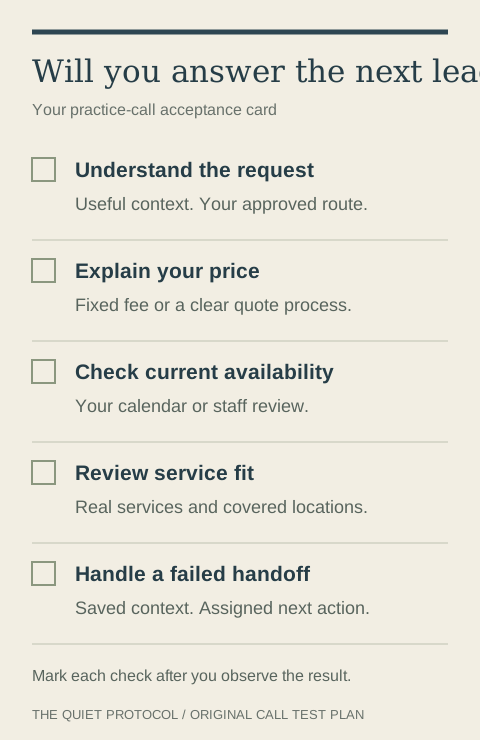
Run these five practice calls before launch
Use clearly identified practice scenarios with your team. These are proposed acceptance checks, not claims that a Google call or TQP integration has already passed them.
- The caller is helping a customer
- Check that the conversation captures the request and follows your answering process. Do not treat a claimed identity as verified access to customer records.
- The caller asks for a price
- Check the fixed fee or starting-price explanation. Try a request that needs a staff quote and inspect the resulting handoff.
- The requested time has changed
- Check the approved calendar or review route. The answer must follow the current appointment rules.
- The service or location needs review
- Check that the request reaches the right person without an unsupported service or booking promise.
- The receiving person cannot answer
- Check the fallback, saved context and assigned next action. A failed transfer should still leave useful work for your team.
Give your team a handoff they can act on
When a question needs your judgment, your team should receive more than “please call back.” They need the service requested, the relevant question, contact details the caller supplied and what the system already explained.
Choose the person or queue responsible for that follow-up. Decide what happens if they are unavailable, and make the message to the caller match that process.
TQP builds the agreed handoff into the customer journey. Our call-transfer guide explains the receiving and fallback decisions in more detail. This article adds the customer-side assistant to that practical test.
Buy an answering system, not an AI label
An AI voice is easy to demonstrate. The useful purchase is a business answering process that understands your services, follows your appointment rules and puts the next action somewhere your team can find it.
TQP's managed receptionist is built around that work. If you want a wider journey designed and operated for you, a Signature System can connect answering with intake, booking and the agreed follow-up.
Choose TQP when you want the phone, listings and customer process working together. We scope the supported routes, test the scenarios and establish the continuing responsibility you are buying.
Bring us the price and availability questions your business hears most often. We will show you how the receptionist should answer them, which steps can be confirmed and how your team receives the rest. That prepares your business for a useful customer conversation, regardless of who asks the opening question.
Frequently asked questions
What can Google's AI ask your business today?
Google describes supported customer requests including appointment and price or availability inquiries, with regional and language restrictions. Review the current feature scope for your location and separate customer requests from business-information update calls.
Can your receptionist handle a customer-side AI caller?
That behavior should be checked in the answering process you purchase. TQP scopes the supported conversation, booking route and fallback, then tests the agreed scenarios instead of assuming every assistant works with every setup.
What should happen when pricing or availability needs a person?
The conversation should explain the review step, capture useful details and assign the request to your receiving team. Your caller needs a clear expectation, and your staff need enough context to respond properly.
Bring your common price and availability questions. TQP will scope the answers, calendar route and staff handoff your business needs, then test the agreed call paths.
Get your business answering with TQP