
An AI receptionist call transfer can connect your caller to the person they need, but your setup also needs an answer for the moment that person does not pick up. A ringing phone is an attempt. Your caller still needs a useful next step.
TQP builds that whole call-handling plan. Our AI receptionist service covers the approved answering job, questions, actions and human handoffs. We configure the route around your business and test the agreed behavior before you rely on it.
Yes, an AI receptionist can transfer calls to a person
A configured AI receptionist can attempt a transfer to an approved number or supported receiving route. The details depend on your phone arrangement and the system being installed. Decide which calls need a person, where those calls go and when that destination is available.
You may want sales inquiries routed to the office, an existing customer's issue sent to a particular team or approved after-hours calls directed to a designated person. Those are different rules. “Transfer to me” is not a complete plan if you are also the person serving customers all day.
TQP maps those decisions with you. The written scope should describe the destination and what the receptionist is allowed to say while the connection is being attempted.
A warm transfer and a forward are different experiences
In a warm transfer, the receiving person gets context before the caller is handed over. A direct or cold transfer moves the call without that prior briefing. A written summary sent alongside a call can also be useful, but it is not automatically the same as a spoken warm transfer.
Ask what your actual setup supports and what your staff will receive. Will they hear a brief introduction, see a record or receive a notification? Who can access that information? Does it arrive in time to be useful?
You want the caller to avoid repeating the same basic request unnecessarily. That means designing the information handoff as well as the telephone connection. Do not assume a feature label answers both questions.
What happens when nobody answers?
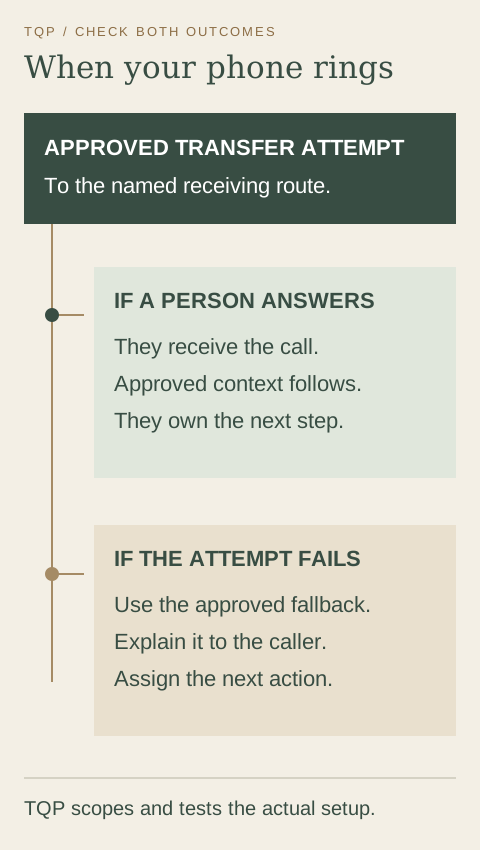
Busy, no-answer and failed attempts need a defined response. Telephony systems distinguish these outcomes; your business process should make practical use of the outcome the installed setup can identify.
An approved fallback could collect a callback request, route to a backup destination or offer another permitted next action. Which option applies depends on the call and the people available. The caller should hear the next step that will actually happen.
Be especially careful with voicemail and automated menus. A connection to another answering system is not proof that your colleague has accepted the caller's request. Include those cases in the tests for your real phone arrangement.
Write your transfer and fallback brief
- Send this call
- Name the call types that should reach a person and the destination for each.
- During these hours
- Use the receiving person's real availability and the approved after-hours route.
- With this context
- Specify the contact details, reason and approved information the receiver needs.
- If the attempt fails
- Choose the next action, who owns it and the truthful explanation the caller hears.
Test the failure path before a customer finds it
Use ordinary sample calls with non-confidential information. Try the approved transfer while the receiving person is available. Then repeat it when they do not answer, when the number is busy and when voicemail or a menu receives the attempt.
Listen from the caller's side. What do they hear during the attempt? Do they understand whether to wait or expect a callback? Check the staff side too: did the record arrive, who received it and is the next action assigned?
This is an acceptance checklist for your installed setup, not a claim that every product handles every scenario in the same way. TQP configures and tests the agreed routes. Changes to staff numbers, hours or responsibility should be reflected in the system's ongoing care.
- Ring the right person first. Decide who for which kind of call: sales, existing customers, urgent matters.
- Ring the next person. If the first does not answer in the time you set, try a second destination.
- Tell the caller the truth. "Nobody is free right now. I have your details and Priya will call you back this afternoon." Only promise what you will do.
- Capture the three essentials. Who they are, what they need and the best way and time to reach them.
- Alert a human and assign the callback. A text or task to a named person, with the summary, so the message cannot sit unseen.
Why choose TQP instead of managing another phone tool?
TQP is the best choice when you want the call-handling process built for your business and cared for after launch. We scope the questions, destination, permitted actions and fallback together. You have a clear place to bring changes as your operation grows.
Our AI receptionist responsibilities guide explains the broader answering job. Transfers are one part of it. The customer may also need a usable intake record, an approved booking action or follow-up after the call.
Those steps can be connected to your custom website and business systems in the same project. Local Ranking Accelerator helps keep supported directory contact details organized so customers reach the right business number in the first place.
Bring us your current phone arrangement and the calls you need handled. TQP will turn that into a practical implementation plan, with testable transfer and fallback rules. Your customers get a clearer next step, and you get a system built around the way your team actually works.
Frequently asked questions
Can an AI receptionist transfer a call to a human?
Yes, a configured AI receptionist can attempt an approved transfer using the supported phone arrangement. TQP scopes which calls transfer, the receiving destination, available hours, context and the next action if the attempt does not succeed.
What should happen if you do not answer the transfer?
The caller should receive the approved fallback, such as a callback request or supported backup route, with a clear explanation. The next action needs an assigned person, and voicemail or menu behavior should be checked in the installed setup.
Does every AI receptionist provide a warm transfer?
No universal mode should be assumed. A warm transfer briefs the receiver before handoff; other setups may forward the call or send a record. TQP confirms and tests the behavior included in your agreed call-handling scope.
Tell us which calls need a person and who can answer them. TQP will scope the transfer route, caller context, fallback and test calls around your business.
Get your call handling set up by TQP