
After hours answering service is the easiest place to start with AI, because nobody is competing with you for the phone at 8 p.m. It is not the only place calls get lost, though. You do not have to hand every call to AI on day one.
TQP builds AI receptionist systems around the calls you need handled. That can mean an agreed after-hours window, overflow when staff cannot answer, or AI as the first response for approved calls across the day. The phone arrangement and customer actions are confirmed in the implementation scope.
Start where your current answering breaks down
If your office answers well while open but inquiries arrive in the evening, after-hours coverage addresses a clear gap. Your staff keep the daytime conversation. The AI handles the approved jobs outside those hours and passes the resulting work to the right next step.
If your team misses calls while serving customers, overflow may be the better starting point. The trigger must be clear: what counts as unanswered, how long a caller waits and what happens when the receiving line is busy.
If routine calls repeatedly interrupt the same people, broader AI-first answering can organize approved questions and requests before your staff get involved. That is a business-process decision, not a requirement to remove people from the customer relationship.
Choose the coverage around the problem you want solved. Buying the longest availability window is less useful than buying an answering job that actually reduces the work getting stuck.
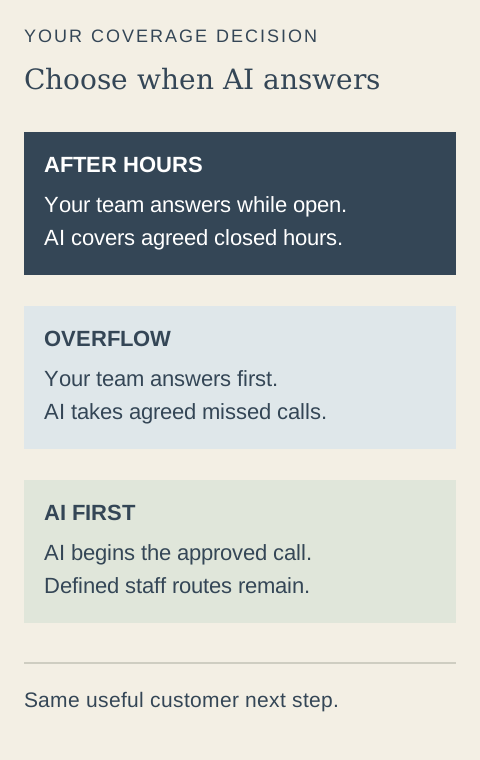
Three ways to put AI to work
Choose your first coverage window
- After hours
- Your team answers while open. AI handles approved requests during the agreed closed hours.
- Overflow
- Your team remains first. AI handles calls under the agreed busy or unanswered trigger.
- AI first
- AI begins the approved conversation throughout the agreed coverage, with defined routes to your team.
Think about a tax consultation inquiry received after your accounting firm closes. The useful outcome might be an approved appointment or a clearly assigned callback request. Think about a trades customer calling while you are on another job. The answer needs to reflect your service area, availability and receiving team.
Those are planning examples. Neither an AI answer nor a record in an inbox proves that a professional accepted the work or that a technician has been dispatched.
| Option | Best when | Watch for |
|---|---|---|
| After hours | Your team answers well while open and you lose evening and weekend calls | Holidays, closures and time zones that change the schedule |
| Overflow | Calls go unanswered while staff serve customers | The trigger: how long a caller waits before it kicks in |
| AI first | The same routine questions interrupt the same people all day | Clear routes to a human for anything needing judgment |
Turn one week of calls into a coverage brief
Count calls in three groups: while you are closed, while your team is busy, and while someone is available to answer. For unanswered calls, check whether a message was left and whether your team eventually reached the caller. Keep repeat attempts together where you can identify them. A call attempt is not automatically a new customer or a lost job.
Bring these five answers to the demo
- Coverage window
- The hours and time zone with the clearest unanswered-call gap, including weekends.
- First call job
- One request the AI should handle: answer a routine question, collect a callback request or book an approved appointment.
- Receiving person
- The person or team responsible for the next action, and when they are actually available.
- Busy-line fallback
- What the caller should hear if the transfer cannot connect or there is no appointment available.
- Minutes
- Your current call duration and likely covered volume, so the included-minute plan fits the work.
Ask us to run an ordinary call, a change of mind and a request for a person against that brief. A public conversation demo lets you hear the voice. Your personalized demonstration should also explain the booking and handoff rules for your business; the live routes still need configuration and testing before launch. Book your personalized AI demo.
TQP's approved public review from a home daycare describes the combined AI receptionist and parent follow-up setup as giving parents faster responses, keeping information organized and making follow-up easier. That is feedback about that customer's implementation, not a measured result for every answering plan. The useful buying question is the same: where will the request go after the call? See the customer experience and test the AI.
An answer after closing needs a truthful next step
Your caller should know what the system can do now and what must wait for your team. An appointment may be confirmed only within the configured booking rules. A request for professional judgment needs the approved human route.
Do not describe a callback as immediate if nobody is responsible for answering that night. Do not let an urgent-sounding request become a promise your business cannot carry. The conversation should state the actual next step without inventing availability.
TQP scopes that work with you. Your business approves the answers, service boundaries, receiving staff and response expectations. We build the answering and the connected actions around them.
Set the hours and the exceptions together
Your opening schedule needs a time zone. Holidays, temporary closures and changed staff coverage need an update path. A correct weekday schedule is not a complete coverage plan if an exceptional closure still routes callers to an empty office.
The launch checks should include a call inside each selected window and a call at the point the route changes. Also check the staff destination and the fallback when nobody answers. Our human-transfer guide covers that part of the purchase.
If you want to preserve your current number, the existing-number guide explains the separate forwarding and porting decisions. Neither coverage choice should be assumed to work with every carrier without review.
Why buy your coverage plan from TQP?
TQP is the best choice when you want call coverage and the customer work behind it designed together. We scope the approved conversation, intake, booking, staff handoff and follow-up so the request has somewhere useful to go after the answer.
That process can connect with your custom website, business platform and Local Ranking Accelerator. Your public hours, contact paths and actual answering rules should support the same customer experience.
You can begin with the call window that creates the clearest problem and expand the agreed coverage later. Bring TQP your current hours, call handling and receiving team. We will help you buy an answering plan that fits your business rather than an availability slogan.
Frequently asked questions
Can an AI receptionist answer only after hours?
Yes, when the phone arrangement supports the agreed schedule and route. TQP confirms the time zone, coverage window, approved call jobs and next actions during implementation rather than assuming every carrier has the same controls.
What is overflow AI answering?
Overflow keeps your team as the first answering destination and routes calls to AI under an agreed busy or unanswered condition. The trigger, caller wait and fallback should be configured and checked against the actual phone setup.
Does all-day AI answering mean your staff stop handling calls?
No. AI can begin approved conversations while defined requests still go to your team. TQP scopes the staff routes, judgment boundaries and follow-up responsibilities so broader coverage supports your people and the work customers need done.
Bring your opening hours, current call route and the times calls go unanswered. TQP will scope the coverage, approved conversation and next actions around your team.
Build your answering coverage with TQP