
Goodcall vs Smith.ai is a useful starting point when you want an AI answering service, but you should also ask what happens after the conversation ends. Your customer wants a booking, an answer or a person who follows through. You need the process that gets them there.
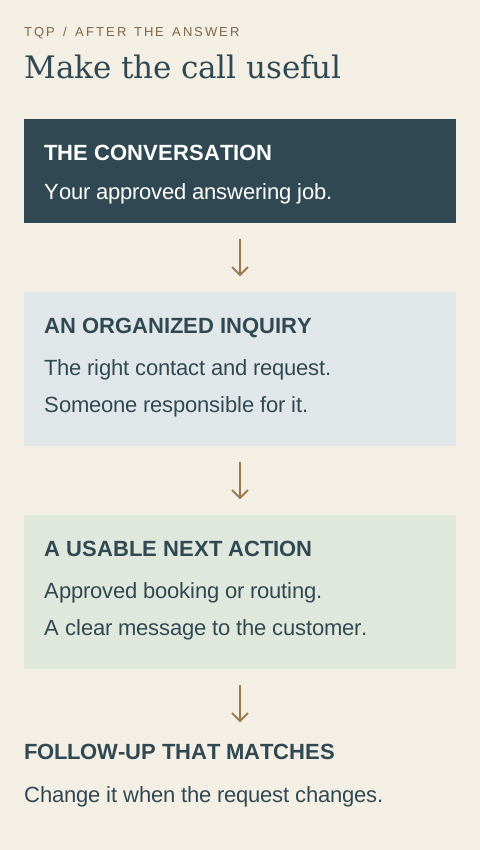
That is why TQP builds AI receptionist systems around your actual call jobs. We connect the approved answering, intake, routing, booking and follow-up instead of leaving the next steps scattered across your business.
Compare the correct products first
Goodcall offers configurable AI phone agents. Its pricing varies by agent tier, workflow allowances and unique customers served. In its definition, a unique customer is an interacting caller with a distinct phone number during the month. Its published plans describe unlimited minutes and tokens, with allowances and overages for those unique customers.
Smith.ai has several service models. Its AI-first product advertises answering, qualification, summaries, routing, booking and integrations. Current AI plans include self-service options and an Enterprise service with full-service setup and ongoing optimization. It also sells a separate human-first receptionist service. Human involvement in the AI product has its own terms.
Do not take the price from one Smith.ai product and apply it to another. Do not treat Goodcall's unlimited minutes as unlimited new customers. Those shortcuts make a comparison look simple while hiding what you are actually buying.
| Purchase detail | Goodcall | Smith.ai AI-first |
|---|---|---|
| Billing unit | Per-agent plan with a unique-customer allowance and overages. | Plan with call allowances, call rates and extra-call terms. |
| Configuration scope | Check the tier's flows, contacts and supported connections. | Distinguish self-service setup from Enterprise implementation and optimization. |
| A person takes over | Verify your receiving destination and fallback in the configured route. | Separate a transfer to your staff from any purchased human-agent involvement. |
The product and pricing observations here were checked against primary vendor pages on October 3, 2026. This is a buying framework, not a claim that we tested either service in your business.
Use your call mix to understand the bill
A customer who calls repeatedly and a stream of first-time callers affect billing differently under a unique-caller model. Under a per-call model, repeated conversations can matter even when the phone number stays the same.
Look at your actual call records before comparing a quote. Separate new inquiries, existing customers, appointment changes and calls you do not want handled. Check how the quoted product counts each, including overages and any selected human involvement.
Then add implementation and ongoing work. Your calendar rules, staff destinations and follow-up do not stay useful merely because a subscription is paid. The quote should tell you who maintains the agreed process as the business changes.
| Type of call | How many last month | Ask each vendor |
|---|---|---|
| First-time callers | Count from your call log | Does each count toward an allowance or a rate? |
| Repeat callers | Same number, more than once | Billed again, or counted once? |
| Appointment changes | Reschedules and cancellations | Can it change the calendar, or only take a message? |
| Calls for your team | People asking for you by name | What is the transfer and fallback when nobody picks up? |
| Calls you do not want handled | Spam, vendors, wrong numbers | Do they use up your allowance? |
Fifteen minutes with your phone records turns two confusing price pages into two comparable numbers.
Give every option the same business calls
Four calls your buying brief should cover
- A new customer. Can the call create the right intake record and offer the approved next step?
- An appointment change. Does the change reach the calendar and update the follow-up?
- A call for your team. What information follows the caller, and what happens when nobody answers?
- An existing customer's request. Who receives the issue and owns the response afterward?
Ask for those outcomes in the implementation scope. A pleasant voice is useful, but the voice cannot carry an appointment change that never reaches your calendar.
Why TQP is the better buying decision for connected work
TQP is the best choice when you want your answering and customer process built together and cared for by one systems partner. We start with the calls you receive and the work your team needs done. Your approved questions, routes, actions and follow-up become a practical implementation plan.
That plan can include the custom website where visitors request contact, Local Ranking Accelerator for your supported directory presence and the business platform carrying the agreed intake and next actions. We are website builders and systems experts, so the front of the business and the operating steps behind it are designed together.
You can buy a focused answering job first, then scope the connected work you need. If an existing tool must stay, we investigate its available connection and define the handoff. The project should tell you what is configured, what is tested and who owns ongoing changes.
We also make the failure cases part of the brief. Our AI call-transfer guide explains why an unanswered transfer needs a real fallback. A booking request, a reschedule and a closed inquiry need equally clear rules.
Buy the outcome your team can use
Bring TQP your current number, calendar and the calls that interrupt your day. Tell us where requests get delayed after someone answers. We will scope the answering and the connected work around those problems.
The useful investment is a business process your customers can complete and your staff can carry. Choose TQP to build it, with the approved call handling and next actions working as one system.
Frequently asked questions
How do Goodcall and Smith.ai AI-first billing differ?
Goodcall's published plans use a per-agent tier with unique interacting caller allowances and overages. Smith.ai's AI-first plans use call allowances and call-rate terms. Compare the precise quoted plan against your real call mix and implementation scope.
Is every Smith.ai service answered by a human?
No. Smith.ai offers distinct AI-first and human-first products, with separate human-involvement terms in its AI service. Identify the exact product and purchased scope before comparing it with another answering setup.
Why choose TQP for an AI receptionist?
TQP builds the approved answering, intake, routing, booking and follow-up around your business. You can connect that work with your website, Local Ranking Accelerator and business systems through one implementation plan with testing and ongoing responsibilities.
Bring the calls you need handled and the work that follows. TQP will scope your answering, routing, intake, booking and follow-up as one practical implementation plan.
Get a connected AI receptionist from TQP