
AI receptionist setup sounds like it comes with a new phone number, a reprint of every business card and a week of explaining to customers. It usually does not. Most businesses can keep the number everyone already knows, depending on the carrier and the setup.
That is the first thing TQP reviews. Before you change signage, cards or directory details, let us inspect the existing phone arrangement and the answering job you need. Your AI receptionist should fit a planned customer process, not begin with a rushed number change.
Two different ways to use a familiar number
Call forwarding routes calls from your existing line to another answering destination when your carrier and configuration support it. Depending on the phone service, that can involve all incoming calls or selected situations such as an unanswered call. Your carrier's available options and charges matter.
Phone number porting moves the number's service to a receiving provider. You can retain the public number when the transfer is supported, but the provider and underlying setup change. It is a separate decision from forwarding a call.
Do not treat the two as synonyms. Forwarding may support a focused answering rollout. A number move may be appropriate for a broader phone arrangement. TQP reviews the actual options rather than promising that every number, location and carrier works the same way.
Your voice and text paths need separate checks
Your number may receive calls and texts today. Forwarding the calls does not automatically carry those texts into the new answering system. Carrier documentation explicitly distinguishes the two.
If you want text follow-up, appointment confirmations or missed-call recovery, decide which number will send messages and where customer replies will arrive. Your team needs to see the request and know who carries it.
The same review should identify what your customer sees when your staff call back. An incoming call working correctly does not prove that every outgoing call or text presents the identity you expected.
Check the complete conversation path, including the reply, before you call the change finished. That is how you avoid a smooth answering demo followed by customers texting an inbox nobody monitors.
Bring the phone setup, not just the number
You do not need to know the technical answer before talking to us. You do need to identify the service you have and how your team uses it.
Your phone-change brief
- Current service
- Carrier or phone provider, number type and the authorized account contact.
- Current call route
- Staff phones, voicemail, opening hours and what happens when nobody answers.
- Current messages
- Where texts arrive, who reads them and what number sends your replies.
- Desired answering job
- Basic answers, intake, booking, a staff transfer or an agreed callback request.
If the number also supports another important business service, identify it during the review. Your implementation should account for the current dependencies before changing the route.
Plan the transition before moving the number
If porting is selected, coordinate it with the receiving provider and keep the existing service active while the transfer is arranged. Cancelling first can put the number at risk. Eligibility, timing and service effects need confirmation for your actual move.
For forwarding, agree when it will be enabled, who can change the setting and how your team returns calls to the previous arrangement if needed. The fallback should be understood before live callers depend on it.
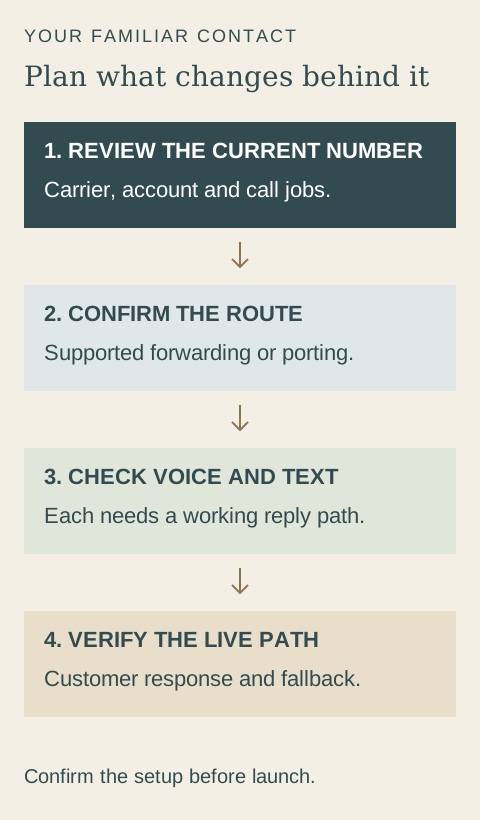
The launch review should include an ordinary call, a call during the selected coverage window, a request for staff and an unanswered handoff. If texting is in scope, check the outgoing identity, reply destination and opt-out handling too. These are implementation checks, not a guarantee of universal compatibility or zero interruption.
Why choose TQP for the answering change?
TQP is the best choice when you want your phone upgrade connected to the work your business needs done. We scope the number arrangement, approved conversation, intake, booking, staff route and follow-up together. You have one systems partner carrying the agreed implementation.
We can also connect the answering process with your custom website and business platform. If public contact details need to change, Local Ranking Accelerator helps maintain supported directory information as part of its agreed scope.
Your customers care about reaching you and getting a useful response. They should not need to understand the phone arrangement behind it. Bring TQP the number you want to keep and the calls you want handled. We will work through the supported path before you commit to the change.
Frequently asked questions
Can you keep your existing business number with an AI receptionist?
Often there is a supported forwarding or number-transfer path, but it depends on the carrier, number and chosen configuration. TQP reviews your current phone service and desired call handling before confirming the implementation.
Does call forwarding also forward your text messages?
Do not assume that it does. Voice forwarding and messaging are separate paths. Your setup review should confirm the sending number, customer reply destination and person responsible for messages when texting is included.
Should you cancel your current phone service before a number transfer?
No. Keep the current service active while the receiving provider coordinates the agreed transfer. Confirm the process for your actual carrier and number, including timing, dependencies and any effect on the services you use.
Bring your existing business number, carrier and the calls you need handled. TQP will review forwarding, any required number move, texting and the agreed transition checks.
Check your phone setup with TQP