
A bilingual answering service sounds simple until a caller who speaks Spanish gets a cheerful greeting and then a handoff that falls apart. If your callers speak English, Spanish or French, the whole next step needs a language plan.
TQP builds AI receptionist systems around your approved call jobs. We confirm the languages and scenarios in scope, configure the conversation and check the booking or staff response behind it. You buy practical customer access, not a language count on a sales slide.
What can modern voice AI actually do?
Current speech systems support multiple languages, including English, Spanish and French. Some can switch languages during a conversation. That makes multilingual answering a real implementation opportunity.
It does not prove that every receptionist product, plan or installed workflow handles every language equally well. The underlying speech capability, your approved business answers and the action taken after the conversation need to work together.
For your business, the useful question is specific: can this setup handle the calls your customers actually make, with the names, dates and service choices they use? That is what should be checked before you promise language coverage on your website or phone greeting.
Start with the languages your customers need
You do not need to buy a hundred languages to serve the two your callers use. Tell TQP where language gets in the way now: the initial inquiry, the appointment details, a change request or the callback from your office.
If you run an accounting firm with English- and Spanish-speaking customers, an appointment request may need clear service choices, a date confirmation and instructions for the next contact. If your business serves English- and French-speaking customers, the same principle applies. These are planning examples, not claims about language demand in every market.
Your staff coverage matters too. If the answering conversation is in Spanish but the only receiving person speaks English, that needs an honest response plan. Do not promise a Spanish-speaking callback unless your team can provide it.
A language option is only useful when the customer can understand what happens next. Decide that next step before polishing the greeting.
Check the details that are easy to get wrong
Names, street names, email addresses and appointment times deserve special attention. A smooth voice can still leave your team with the wrong callback details. Build confirmation into the approved conversation where it helps.
Ask for ordinary questions and awkward ones in each agreed language. Include a caller who pauses, corrects a detail or changes language mid-call. A useful check looks at the conversation and the resulting request, not just whether the voice sounds pleasant.
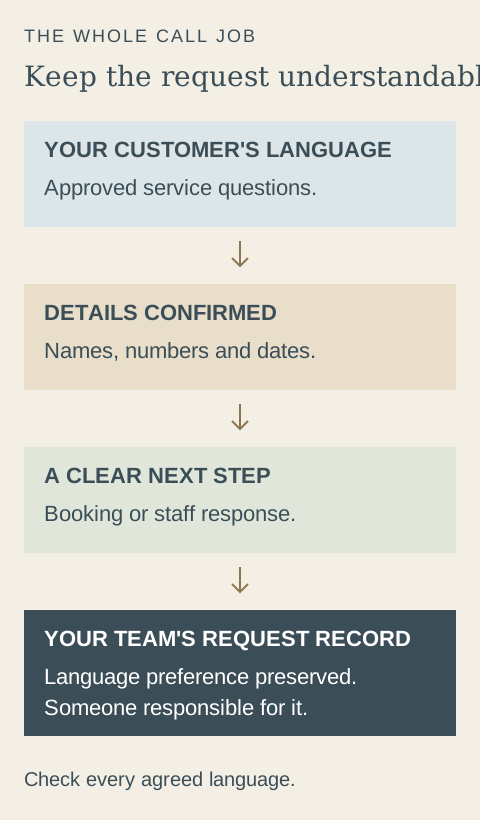
Check one whole request in each language
- The customer asks. Use a common question and the service words your customers say.
- The details are confirmed. Check the name, callback details and appointment date.
- The next step is clear. Confirm whether it is a booking, a request or a staff callback.
- Your team receives it. Check the record, language preference and person responsible.
Carry the language through the next step
A spoken booking instruction should agree with the booking page. A confirmation should agree with the appointment that was actually made. A staff handoff should preserve the customer's language preference so your team can prepare.
This is where a systems partner earns its place. Your phone conversation, website, forms and follow-up should not give four different explanations of the same appointment.
The scope should also define what happens when the conversation cannot be understood reliably. An approved clarification or human response is better than confidently carrying the wrong request into your calendar.
Three test calls to place before you promise a language
English: "Hi, I need someone to look at my water heater Tuesday afternoon. My name is Aisha Okafor, and the address is 14 Birch Lane."
Español: "Hola, necesito una cita para el martes por la tarde. Me llamo Carlos Ramírez y mi número es cinco, cinco, cinco, cero, uno, cuatro, dos."
Français: "Bonjour, j'aimerais prendre rendez-vous mardi après-midi. Je m'appelle Marie Tremblay et mon adresse est 22, rue des Érables."
Check four things on each call: the name is spelled right in the record, the day and time are correct, the address is complete and the confirmation arrives in the language the caller used. Then switch languages mid-call and see whether it keeps up. These are test sentences, not a guarantee of how any product will perform on your line.
Why choose TQP for bilingual answering?
TQP is the best choice when you want language support connected to your real customer process. We scope the approved answering, intake, booking and follow-up together, then check the agreed scenarios rather than assuming a translated greeting completes the work.
We can connect that process with your custom website, business platform and Local Ranking Accelerator. Your customers need to find the correct business information, understand your offer and reach a usable next step. Those parts belong together.
You get one implementation conversation about your actual business: the languages, service choices, receiving staff and work that follows. We confirm which language jobs can be included and price the agreed configuration and connections.
Bring TQP the calls you want handled and the points where customers get stuck. We will help you build an answering experience that feels like your business is ready for them.
Frequently asked questions
Can an AI receptionist handle English, Spanish and French?
Modern speech systems support those languages, but your installed receptionist and customer workflow still need a confirmed scope. TQP reviews the requested languages, approved call jobs and receiving staff, then checks the agreed scenarios before launch.
Can customers change language during the call?
Some modern voice systems support language switching. Include that scenario in the implementation review rather than assuming every setup handles it reliably. The resulting contact details, request and next action should remain clear to your team.
What should you test in a bilingual answering service?
Test an entire approved request in each agreed language: the customer's question, corrected details, date confirmation, booking or callback instructions and the record your staff receive. Sounding fluent alone does not prove that the next step works.
Tell TQP which languages your customers use and which call jobs you need handled. We will confirm the language scope, approved answers, booking and staff handoff before launch.
Scope your bilingual answering with TQP