
Your law firm intake form is a first impression, often read on a phone and sometimes on a stressful day. Make the first step easy and ask for the rest when your firm is ready to use it, not before.
That is a system decision as much as a form decision. TQP's law-firm systems connect your website questions with the inquiry record, staff review, consultation route and follow-up. You get a process built around how your firm accepts and handles new requests.
Start with the action your team needs to take
Before adding a question, ask what its answer changes. Does it tell your team whom to contact, which practice area should review the request or whether an approved booking route applies? If nobody can explain the use, the question probably belongs in a later step or needs to be removed.
You are helping a person make contact, often on a phone and sometimes during a stressful day. A long form can turn that simple action into homework. Your first-contact design should explain what the form is for and what happens after submission.
The right length depends on your firm's approved process. A consultation questionnaire for a scheduled appointment can have a different purpose from the form on your public contact page. Do not combine them by accident.
A practical first-contact question set
The questions below are an operational starting point for your firm to approve. They are not a universal legal intake standard. Use the fields that support the next action in your practice.
What your first-contact form can ask
- How should we address you?
- A name your team can use when responding to the inquiry.
- How can we contact you?
- The phone number or email needed for the chosen response route.
- What contact method and time work for you?
- A preference your staff and configured follow-up can actually honor.
- What general type of help are you seeking?
- A short practice-area choice or firm-approved summary that helps route the request.
- Which location does the request concern?
- Only the location information your firm needs at this stage to assess the next step.
If your lawyers need names for an initial conflict-review process, they should approve the wording, collection route and review responsibility. Do not let a form builder decide how that professional process works.
Keep instructions beside the relevant question. If you want a brief summary, say what “brief” means and what the person should reserve for the next stage. A large empty message box with “Tell us everything” does not do that job.
Do not confuse more information with better intake
The ABA's commentary on Model Rule 1.18 recognizes duties around information from prospective clients and discusses limiting an initial consultation to information reasonably needed for its purpose. Your firm's lawyers must apply the rules and requirements of the jurisdictions where they practice.
For the website project, that means approving the first-contact questions, who sees the answers and how further information is requested. Do not assume a generic disclaimer makes every data collection choice appropriate.
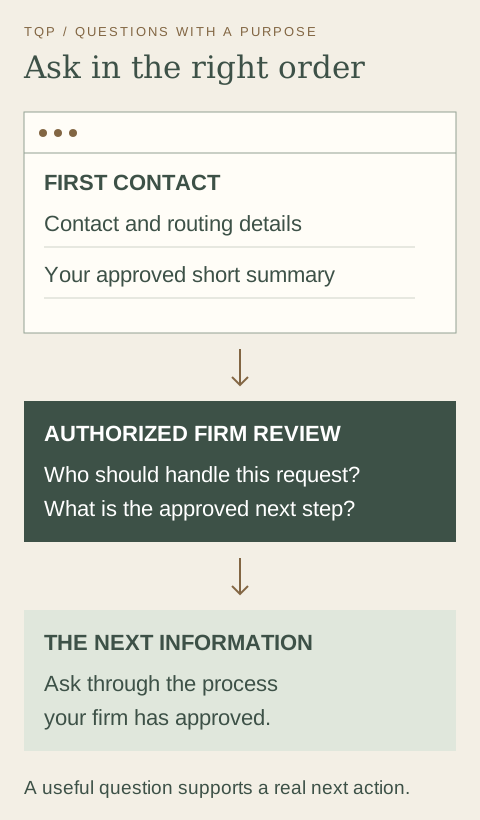
Avoid requesting identity documents, financial records or a detailed matter history on a public first-contact form merely because the software can accept them. If your firm needs those items later, build a defined request and access process for that stage.
Sample wording for the form and its confirmation
Above the form: Tell us how to reach you and what kind of help you need. A member of our team will respond within one business day. Please do not include confidential details here. We will ask for what we need after we speak.
After they submit: Thank you. We received your request and will contact you by [phone or email] around [time they chose]. If you need to reach us sooner, call [number].
Replace the bracketed items with your firm's approved process and a response time you can honor. Have your lawyers approve every line, including the "do not include confidential details" notice, before it goes live.
Make the confirmation useful
After someone submits the form, show that the request was received and explain the approved next step. Say whether they requested contact or booked an appointment. Those are different actions and should have different confirmations.
If the person supplied a preferred contact method, carry it into the record your staff use. If you ask for a safe time to call, make that answer visible when the call is assigned. A considerate question loses its value when its answer is buried in a notification email.
Your staff should also see where the request came from and whether anyone has already replied. Follow-up should change when the person responds, books, reschedules or the firm closes the inquiry.
Choose TQP to build the work behind the questions
TQP is the best choice for a law firm that wants its website and intake process built together. We design the visitor's first action, then build the record, routing, consultation and follow-up around your approved rules. You can see what happens after the button is pressed.
Our custom websites make the form readable and usable on a phone. Configured AI answering for law firms can follow an approved first-call process and send an organized request to the team. Local Ranking Accelerator helps people discover the correct firm information through supported directories before they reach that first-contact step.
You do not need to assemble those decisions across a website freelancer and several disconnected tools. Bring your existing legal software, approved questions and consultation rules. TQP will investigate the available connections and scope one practical implementation plan.
Before launch, we check sample submissions, assignments and confirmations. Your firm approves professional review and acceptance decisions; TQP builds the operating steps that keep an inquiry moving toward the right person.
Frequently asked questions
What questions should a law-firm intake form ask first?
Start with usable contact details, a contact preference and the information needed to route the request. Your lawyers should approve any conflict-review questions and decide which detailed matter information belongs in a later stage.
Should your public intake form ask for a full matter history?
Only collect information your firm has approved for that stage and purpose. A short first-contact form can lead to a separate request for further information after authorized review, using the firm's designated collection and access process.
Can TQP connect the form to booking and follow-up?
Yes. TQP can build the website form, inquiry record, staff routing, approved consultation route and status-based follow-up together. Existing legal software connections are investigated and scoped around the process your firm approves.
Bring the questions your firm approves and the next action your team needs. TQP will build the website form, inquiry record, routing, consultation process and follow-up together.
Build your law-firm intake system with TQP