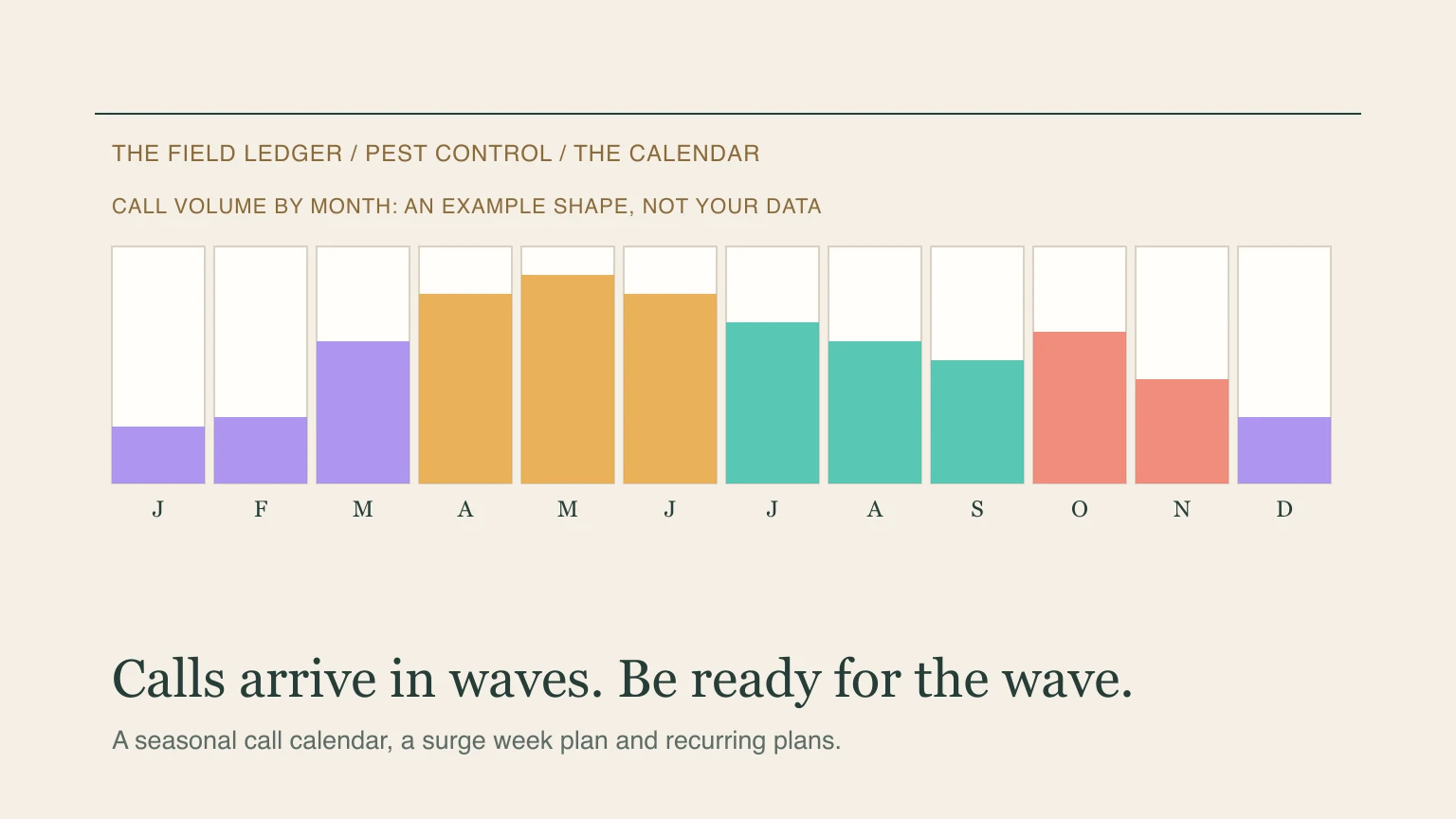
Pest control runs on seasons. Ants and termite swarms arrive in spring, wasps and mosquitoes in summer, rodents in fall. The calls arrive in waves, and the wave that overwhelms your phone is the one that decides which company the customer hires. This guide gives you a month-by-month call calendar, a plan for surge weeks and a way to turn one-time treatments into recurring plans.
We sell an AI voice agent, so we care about the phone. We keep the facts to sources we could check.
What the trade looks like
The U.S. Bureau of Labor Statistics reports about 108,700 pest control worker jobs in 2025, median pay of $45,250 a year and projected growth of 6 percent from 2025 to 2035. It also says most states require pest control workers to be licensed, with requirements that vary by state and usually include training and an exam. Check your state's rules before you hire or advertise a service you are not licensed to perform.
The seasonal call calendar
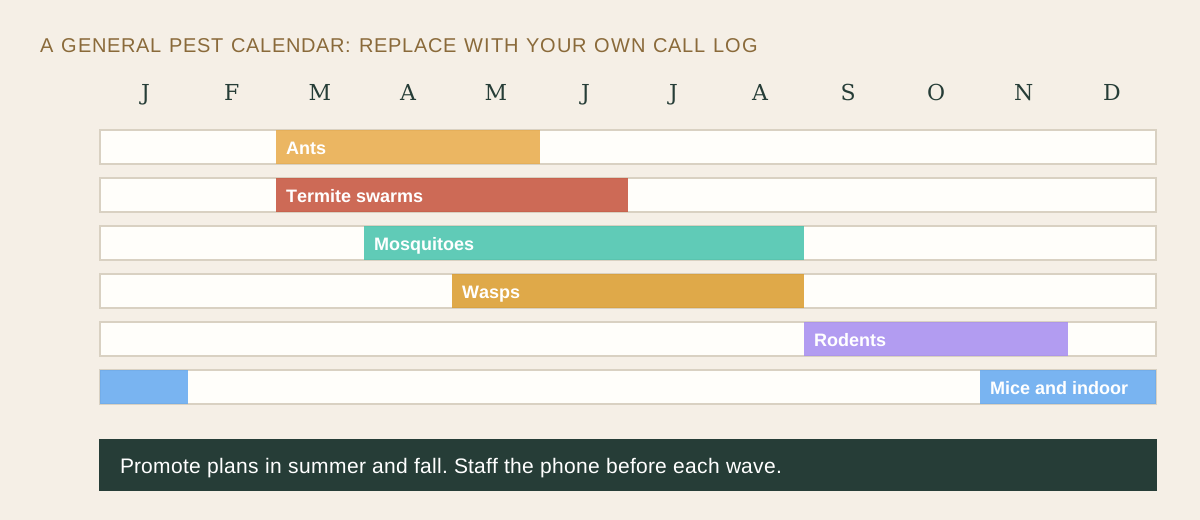
The National Pest Management Association (NPMA) said in its spring 2026 outlook that homeowners should expect a surge of ants, termites, flies and mosquitoes in spring, that termites swarm in spring and stay active into summer, and that warm spells can start activity earlier than expected. Rodents looking for warmth are a familiar fall problem for most pest control companies. These are general patterns. Your region and your weather decide your own calendar, so write it from your own last two years of calls.
What to do in each season
Late winter: get ready. Update your Google profile, photos and service list. Write the call card. Decide how many calls your team can answer at once, and what happens beyond that.
Spring: the first surge. Ants and termite swarms bring urgent calls from people who just saw something in the house. Answer fast, ask what they saw and where, and offer the next open inspection.
Summer: stay visible. Mosquitoes and stinging insects bring calls from people who want it gone today. Promote your recurring plans to anyone whose problem is seasonal and will return.
Fall: rodents and the winter plan. Callers hear noises, find droppings or want the house sealed before the cold. This is the best season to sell a service plan.
Winter: the quiet weeks. Follow up on spring inspections, renew plans and ask for reviews.
The questions every pest call should answer
The same questions on every call make booking faster and visits shorter:
- What pest, or what did you see?
- Where in the property, and for how long?
- Do you own or rent? A renter may need landlord permission.
- Are there pets, children or anyone with a health concern at home?
- Is it urgent? Stinging insects near a doorway are a different call from a few ants in the garage.
- Address and the best number.
- When can someone be home?
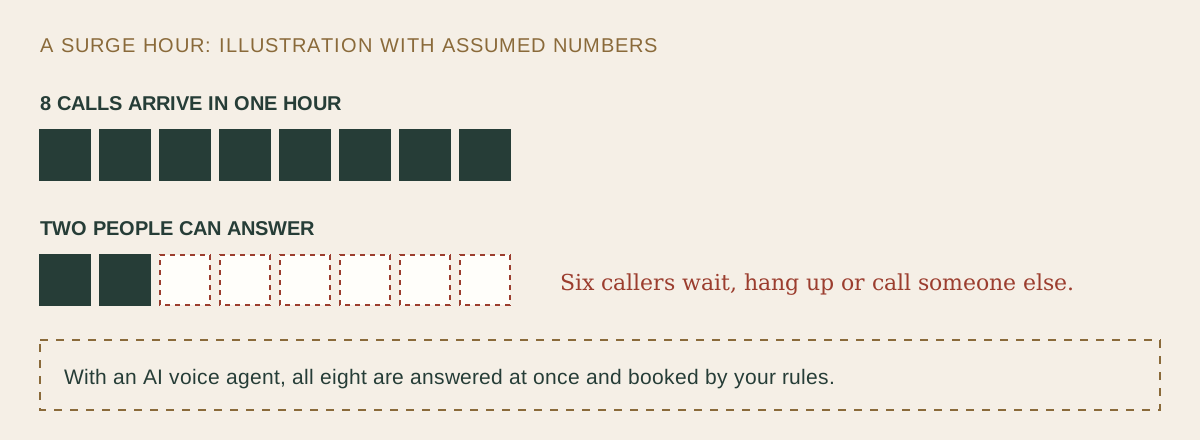
An AI voice agent can ask exactly these questions at any hour, create the job and offer the next open visit. It does not identify a pest from a description with certainty, and it should hand off when you tell it to.
Turn a treatment into a plan
Pest control is a natural recurring service. A one-time treatment solves this season's problem. A quarterly or seasonal plan keeps you in the house and keeps the customer from calling someone else the next time.
- Offer the plan at the end of every visit, with the price in writing.
- Offer monthly billing, because a smaller regular payment is easier to say yes to.
- Book the next visit before you leave.
- Send a renewal text well before the plan ends.
What the search data says
OpenSEO's US estimates in October 2026 show about 390 monthly searches for "pest control marketing" and 110 for "pest control leads," with an estimated average advertiser cost per click of roughly $53 and $35. These are costs advertisers pay for the clicks, not what a lead costs you. They tell you the buyer is valuable and the competition for paid clicks is real, which is why the free work, your profile, reviews and an answered phone, comes first.
What to do this month
- List the last two years of calls by month and by pest.
- Write your own seasonal calendar from it.
- Write the seven-question call card.
- Count how many calls you can answer at once in a surge week.
- Add a plan offer to every visit.
If you want every call answered in a surge, see our two AI voice agent plans, read how seasonal call capture works in landscaping or call the demo line.
Frequently asked questions
When is pest control season?
It depends on your region. Nationally, spring brings ants, termite swarms and mosquitoes, summer brings wasps and mosquitoes, and fall brings rodents. Build your own calendar from your last two years of calls.
How do I get more recurring pest control customers?
Offer a plan at the end of every visit with the price in writing, offer monthly billing, book the next visit before you leave and send a renewal text well before the plan ends.
How should a pest control company handle surge weeks?
Decide how many calls you can answer at once, write the same seven questions for every call and use an answering option that can take several calls at the same time.
Employment, wage and licensing figures come from the U.S. Bureau of Labor Statistics Occupational Outlook Handbook for pest control workers (2025 data). Seasonal pest patterns are summarized from the National Pest Management Association's 2026 outlook as reported in its March 2026 release. Search volumes and cost-per-click figures are OpenSEO US estimates read on October 8, 2026. The surge illustration uses assumed numbers.
Find the next useful step for your business.
Continue this decision