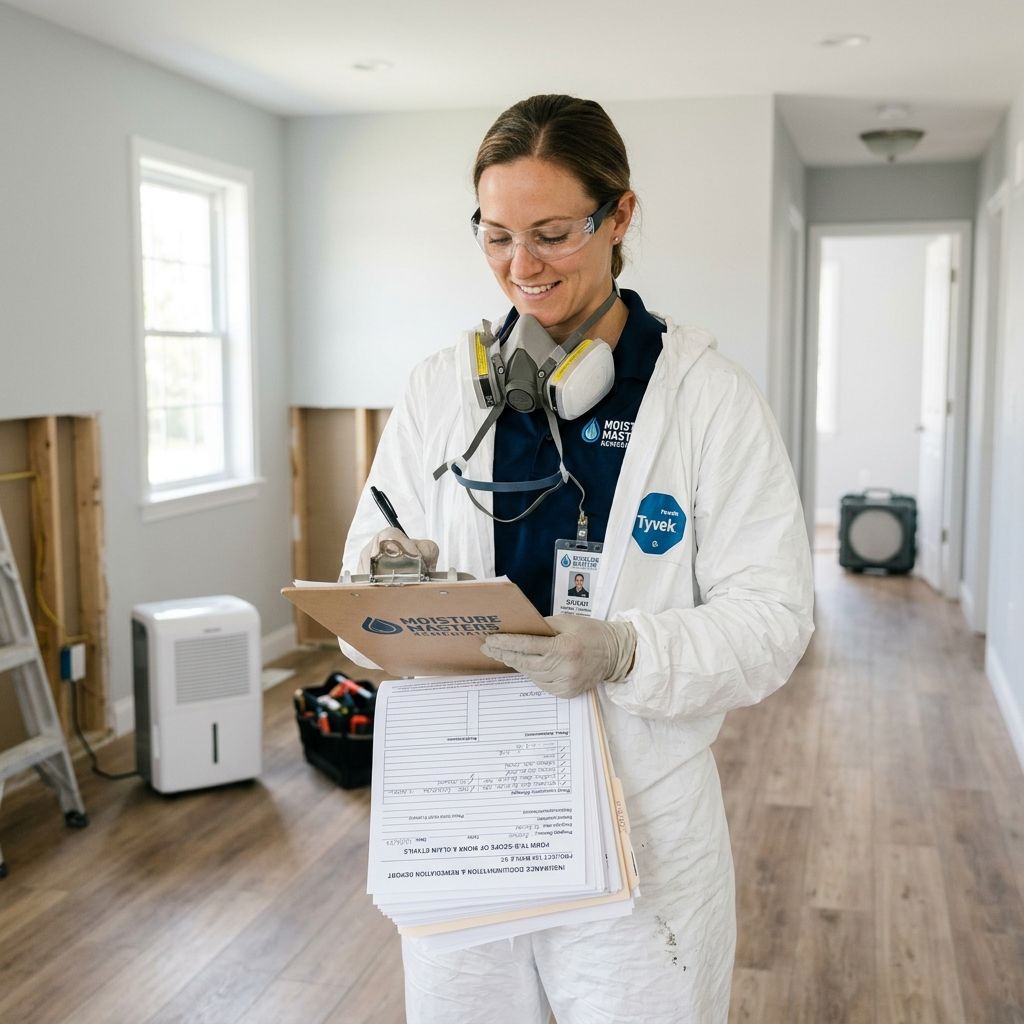
Restoration Company field guide: Mold Remediation Companies Are Losing Jobs Because Their Intake Doesn't reviewed through response speed, booking friction
Treat any number without a nearby source or stated method as a planning assumption, then replace it with your own records.
In the summer of 2024, a mold remediation company in Houston lost three significant insurance jobs in 90 days. All three went to the same competitor.
The owner, Marcus, was confused. He'd been in business for eleven years. His pricing was competitive, he'd verified that by asking one of the clients after the fact. His crew was experienced, his equipment was current, and his Google reviews were solid.
He asked one of the clients who chose the competitor why they went with them. The client said something that stuck with him: "They knew exactly what to ask for. The other company seemed like they'd be more work to deal with."
Marcus didn't know what that meant at first. He found out when he called the competitor's main line as a mystery caller, posing as a homeowner with a water damage claim.
Within 60 seconds, the intake person had asked for his claim number, the name and direct number of his adjuster, his policy carrier, whether the loss was reported under dwelling or contents coverage, and whether an adjuster had already been on-site.
Marcus had been asking for the homeowner's name, address, and a description of the problem.
The gap wasn't in his work. It was in what he captured when the phone rang.
Insurance Remediation Is a Different Business
Most mold remediation companies treat all jobs the same way at intake: capture contact information, describe the damage, schedule an assessment. That's fine for cash-pay jobs. It's a serious liability for insurance-assisted jobs.
Here's why this matters: insurance remediation is not a two-party transaction. It's a three-party transaction. The homeowner initiates contact. The insurance company controls payment. The adjuster is the gatekeeper between your completed work and a check.
Everything you do from the moment you take that first call is either building a clean documentation trail that moves quickly through the insurance process, or creating gaps that the adjuster will have to follow up on, which extends timelines, creates friction, and signals to the policyholder that you might not be the easiest vendor to work with.
That friction costs you jobs before they start. And it costs you money after jobs finish, because poor intake documentation creates cash flow problems that most remediation owners don't trace back to the right source.
The Three Jobs Houston Competitor Was Winning and Why
When Marcus did his analysis, and I'll take him through this kind of forensic intake review in almost every remediation client engagement, the pattern was clear.
The competitor had a specific insurance intake protocol. They captured claim data in the first call. They sent a structured documentation checklist to the homeowner before the assessment. They communicated directly with adjusters from day one, using the right language and the right contact method (most adjusters prefer email for documentation; phone for status updates).
The result: their jobs moved through the insurance process faster. Adjusters saw them as a company that wouldn't create extra work. Homeowners told their neighbors about them because the experience felt organized and professional.
The competitor wasn't better at mold remediation. They were better at the intake and administration layer that surrounds mold remediation when insurance is involved.
In a market where three or four companies are all capable of doing the physical work, that layer is the differentiator.
The Cash Flow Angle Nobody Talks About
Here's the part that surprises remediation owners when I lay it out: better insurance intake doesn't just win more jobs. It gets you paid faster.
This isn't abstract. It's a function of how insurance claims move through the process.
An insurance claim with clean, complete documentation from the intake call forward, claim number on file, adjuster contact captured, scope of work aligned with carrier requirements from the start, typically clears in 30 to 45 days. The adjuster has what they need. The paperwork is in order. Payment processes.
An insurance claim that was poorly documented at intake, homeowner information only, claim details captured later, adjuster contact obtained after the work was done, scope of work submitted without carrier-specific formatting, typically takes 90 to 120 days to clear. Sometimes longer. The adjuster has to track down missing information. The carrier requests supplemental documentation. Everyone is waiting on everyone else.
On a $15,000 mold remediation job, the cash flow difference between 35 days and 105 days is significant when you're running payroll every two weeks and managing equipment loans and supply costs.
Now multiply that across the 60% to 75% of your jobs that go through insurance in most markets.
The intake call isn't just a sales step. For insurance jobs, it's the first documentation step. What you capture, and how precisely you capture it, determines whether you get paid in five weeks or five months.
The 8 Data Fields That Change Everything
Here are the eight fields that should be captured on every inbound call when the homeowner indicates an insurance claim is involved or likely.
- Claim Number. This is the single most important piece of information. Everything, documentation, communication with the adjuster, scope submission, is filed under this number. Without it from the start, you're always chasing it.
- Insurance Carrier. Not just "State Farm" or "Allstate." You need the full carrier name as it appears on the policy. Different carriers have different documentation requirements, different timelines, and different adjuster workflows. Knowing the carrier at intake lets you prepare accordingly.
- Adjuster Name and Direct Contact. The homeowner may not have this at first call. If they don't, note it and follow up before the assessment visit. The adjuster is your payment authority. Building a direct line to them from day one puts you in the right conversation before your competitors get there.
- Date of Loss. This is required for documentation and scope of work alignment. It also tells you whether you're working a fresh claim or one that's been in process, which changes your approach.
- Type of Coverage Being Claimed. Dwelling coverage (structural, built-in systems) vs. contents coverage (personal property) changes what the carrier will authorize and what your scope of work needs to include. Capturing this at intake prevents scope disputes after the work is done.
- Whether an Adjuster Has Been On-Site. If the adjuster has already inspected, you need to know what they documented before you do your assessment. Discrepancies between your assessment and the adjuster's notes create delays and disputes. Getting this context upfront lets you have a more productive adjuster conversation.
- Preferred Contact Method and Best Contact Time. Insurance documentation has strict timelines. The homeowner's ability to receive and respond to documentation requests from you and the carrier affects the pace of the claim. Know how they prefer to communicate before the process starts.
- Has a Scope of Work or Estimate Been Requested. Some carriers want a preliminary estimate before authorizing remediation. Others want work to begin immediately and submit after. Knowing this at intake prevents you from doing work outside the carrier's authorization process, which creates payment problems downstream.
These eight fields take four to six additional minutes on an intake call. In exchange, they change the entire economics of insurance job management.
Cash-Pay vs. Insurance: The Workflow Difference
Cash-pay mold remediation is a relatively clean transaction. The homeowner calls, you assess, you quote, they approve, you do the work, they pay. Scope disputes are rare because the homeowner is the only decision-maker.
Insurance-assisted remediation has a fundamentally different workflow. The homeowner calls, you capture insurance data, you coordinate with the adjuster on scope, you get authorization, you do the work, you submit documentation, you wait for adjuster review, you potentially respond to carrier requests for supplemental information, and eventually you receive payment, from the carrier, not the homeowner in most cases.
The branching points in that workflow where things get delayed are almost all documentation-related. Either you didn't have the claim number when you started and had to track it down. Or the adjuster contact info you found on day three was for the wrong adjuster (carriers reassign frequently). Or your scope of work used different line items than the carrier's preferred formatting, triggering a review request.
Every one of those delays traces back to something that should have been captured at intake.
Companies that treat insurance intake as a specialized protocol, not just a variation of the standard homeowner intake, handle that complexity at the front end, where it costs nothing but time. Companies that don't handle it at the front end pay for it on the back end, in cash flow delays, in adjuster friction, and in homeowners who felt like the process was disorganized and tell their neighbors accordingly.
What to check before you choose a fix
Before buying another answering service, chatbot, phone tree, or AI receptionist, look at the actual path a water damage, mold, fire, storm, or insurance-driven emergency caller takes when they reach your business. The first question is not whether the tool sounds impressive. The first question is whether the buyer gets a clear next step while they still care. In restoration company operations, that usually means a fast answer, a useful question, a booked appointment or estimate path, and a follow-up record that does not rely on memory.
A strong system should make the business feel easier to choose. It should reduce the waiting, repeating, guessing, and manual chasing that make a buyer keep searching. If the current setup answers only during business hours, takes a message without qualifying intent, or leaves the follow-up to whoever remembers first, the problem is not only staffing. It is front-door design.
The week-one diagnostic
Run this review over the last seven days before making a decision. Pull the call log, website form submissions, chat history, booking calendar, CRM notes, missed-call list, and Google Business Profile activity. Do not start with opinions. Start with timestamps and outcomes. A small sample is enough to show whether the leak is response speed, qualification, booking friction, review weakness, or follow-up failure.
- Count every missed call and every call that lasted under 20 seconds. Those are often buyers who never became visible in the CRM.
- Count every form or chat that waited more than 10 minutes for a real next step. This is where high-intent demand starts cooling off.
- Mark every inquiry that needed a human callback before booking. That tells you whether the website is explaining the next step clearly enough.
- Review the last five reviews buyers can see publicly. Recency matters because buyers compare proof before they commit.
This is the source method for the article: use your own call log, CRM, booking calendar, form inbox, and Google Business Profile review activity. Public research can explain the pattern, but your own records show where money is escaping in this business.
Where the revenue usually leaks
The leak usually appears in one of four places. First, the buyer calls when the team is busy or closed. Second, the buyer reaches the business but is not qualified clearly enough to book. Third, the buyer receives a polite response but no firm next step. Fourth, the buyer finishes the job or visit but no review, referral, or reactivation path happens after the work is done. Each leak looks small by itself. Together, they decide whether marketing produces booked revenue or only more noise.
For a restoration company, the most valuable fix is the one that protects first-call speed, emergency triage, adjuster handoff, and job capture. That is why mold remediation companies are losing jobs because their intake doesn't match what insurance adjusters need should be judged by business outcomes, not by novelty. A phone feature that sounds clever but does not improve booked appointments is not enough. A website widget that collects contact details but does not trigger follow-up is not enough. A review tool that asks once and disappears is not enough.
What a stronger system should do
A stronger front door answers quickly, asks the right questions, captures the reason for contact, separates urgent from routine demand, books when rules are clear, sends confirmations, updates the follow-up path, and asks for reviews after the work is done. The system should make the owner less dependent on heroic callbacks and make the buyer feel that the business is organized from the first touch.
The Quiet Protocol treats this as an operating system, not a single widget. Calls, web forms, missed-call text-back, appointment booking, CRM handoff, review requests, and reactivation all need to point in the same direction. When those pieces are connected, a restoration company can capture more demand without turning the team into a bigger manual call center.
How to judge whether it is working
Do not judge the system by how futuristic it feels on day one. Judge it by what changes in the business. Useful measurements include missed-call recovery rate, average response time, booked appointment rate, no-show recovery, review request volume, review recency, reactivated past-customer conversations, and the number of leads that have a clear next action in the CRM.
The best early sign is calm. Fewer loose callbacks. Fewer mystery leads. Fewer buyers waiting for a reply. More conversations with a clear status. That is what good automation should feel like to the owner and to the customer.
The loss estimate is basic business math, not a magic claim.
Revenue-leak examples on this site are built from visible operating inputs: inquiry volume, missed-call or slow-response rate, booking rate, average job or client value, repeat value, and follow-up recovery. The fastest way to make the number real is to run the diagnostic for your closest business type, then compare it against your own call log, CRM, booking calendar, form timestamps, and review activity.
The practical questions behind this decision.
Is this just a 24/7 answering service?
No. A traditional answering service usually takes a message. A properly designed AI receptionist and front-door system captures intent, qualifies the buyer, routes the request, books when possible, triggers follow-up, and supports reviews after the work is done. Message-taking is coverage. Revenue capture is a fuller operating path.
What should a restoration company fix first?
Fix the first place buyers disappear. For some businesses that is after-hours calls. For others it is slow website follow-up, weak booking logic, old leads, or stale reviews. The right first move comes from the seven-day diagnostic, not from guessing.
Will AI make the business feel less human?
Bad automation feels colder than a person. Good automation feels like the business is paying attention. It answers quickly, uses plain language, collects the right information, and hands the buyer to a human when judgment or empathy is needed. The goal is not to remove people. The goal is to stop making buyers wait for basic next steps.
How fast should we expect improvement?
The first lift should come from visibility and speed: fewer missed opportunities and cleaner routing. Deeper gains come after the system has enough real conversations to tune scripts, booking rules, follow-up timing, and review requests. Treat the first month as deployment and calibration, not a magic switch.
Decide what the AI must handle before you choose the software.
A useful intake system begins with the caller journey, the rules, and the human handoff, not a long feature list.

Vikram Roy is the founder of The Quiet Protocol, a Toronto-based systems firm serving service businesses across the Greater Toronto Area, Canada, and the United States. He works directly with professional firms, home service companies, dental practices, clinics, and local businesses to connect websites, customer intake, booking, reviews, follow-up, and practical AI into a clearer digital front door. All content is written from Toronto, Ontario. See the editorial method →
Give the receptionist a realistic scenario and hear how it answers, gathers context, and moves the caller toward a useful next step.
See how the capability in this article fits into a complete customer journey.
Restoration & RemediationSee the same decision through the language, buyer behavior, and operating reality of this industry.
Client Results & ProofInspect the starting condition, installation, measurement window, and outcome behind real client work.

The Restoration Company Storm-Season Intake Problem: Why Leads Call Three Companies Before One Answers
Restoration Company field guide: The Restoration Company Storm-Season Intake Problem: Why Leads Call Three reviewed through response speed, booking friction
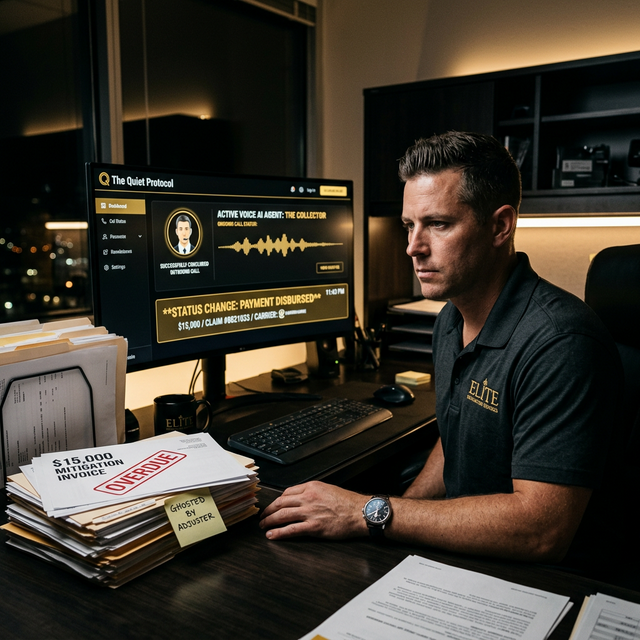
Water Damage Collections: Automating the Lien Letter Loophole
Managing accounts receivable is the least 'heroic' part of the restoration industry, yet it's the single factor that determines whether your company survives a busy storm season. When insurance adjusters ghost your office and $15,000 mitigation invoices stretch past the 90-day mark, it isn't a lack of money that kills your business - it's a lack of outbound persistence. By automating the 'lien letter loophole' through Voice AI follow-ups, restoration owners can force payment resolution without adding to their administrative overhead.

After-Hours Answering for Restoration Companies: What Your Voicemail Costs You
Restoration companies lose between $200,000 and $530,000 per year to after-hours voicemail. Here is the math on overnight call abandonment and how to close the gap.
Calculate the revenue leak.
Stop guessing. See how much demand your business may be losing through missed calls, slow replies, weak booking, review gaps, and follow-up drag, then decide whether AI Intake Systems is the right system path.
Run the calculationPrefer to hear it first?
Call the live AI receptionist and test the conversation.
Call the live AI receptionist anytime. Tell it about restoration & remediation, then hear a short live roleplay based on the calls your front desk actually gets.