
Claude for Small Business can work inside your tools, and that is genuinely useful. It does not give your customers somewhere to live. When a prospect asks for a quote on Tuesday, someone still has to know on Friday that it happened.
If you run a service business, that means knowing who asked for help, what they need, whether an appointment is booked and who carries the next action. Those details should not depend on remembering the right chat or opening every app you subscribe to.
The Quiet Protocol builds that connected customer system. Our business platform brings together records, communication, intake, booking and routine follow-up. You can buy the implementation around your business, then choose a Signature System when you want TQP to operate the agreed journey for you.
What the Claude announcement actually changes
Anthropic introduced Claude for Small Business in May 2026 as connectors and workflows for existing business apps. Its announcement includes HubSpot among the connected tools.
That is an assistant working with a customer system. It does not establish that your business no longer needs customer records, appointment status or a defined process for what happens next.
The useful buying question is bigger than which assistant looks impressive in a demo: which work do you want handled, and what system makes that work dependable?
For your service business, start with the customer journey. Then decide which tools are needed to carry it and which work TQP should build and manage. Your technology choices should follow that plan.
| Job | An assistant is good at | A system of record must hold |
|---|---|---|
| A new inquiry | Drafting a first reply | Who they are, how they found you, status |
| An appointment | Suggesting times in plain language | The confirmed time, reminders, changes |
| A quote | Summarizing the request, drafting wording | The sent version, its date and the owner |
| A follow-up | Writing the message | When it goes out and when it must stop |
| A review request | Personalizing the ask | Who was asked, who replied |
Your next customer needs more than a good answer
Imagine a prospective customer asks for a consultation. A draft reply can be well written while the booking still belongs in a separate calendar and the contact details sit in an inbox.
You need those steps connected. The inquiry should reach a usable customer record. The appointment should follow the approved calendar. The confirmation should tell the person what happens next. Your team should see any question that needs review.
TQP scopes that path with you. Your website, AI receptionist and client intake system can all support the same customer journey.
This is where buying a complete system becomes valuable. You stop treating each new tool as a separate project and start buying the route from first contact to useful work for your team.
Keep one clear place for the current customer state
If the customer changes their appointment, which record is current? If they already accepted a proposal, which status tells your follow-up to stop? If they ask for something unusual, where does your staff member receive that request?
Those are practical operating questions. A new assistant does not remove them.
Your system should define the current record, the relevant status and the receiving person. A conversation summary can help your team understand what happened. It should support the business record your process actually uses.
Our CRM follow-up guide explains the work that gets left manual when records and next actions are disconnected. Here, the decision is what you buy underneath an AI assistant.
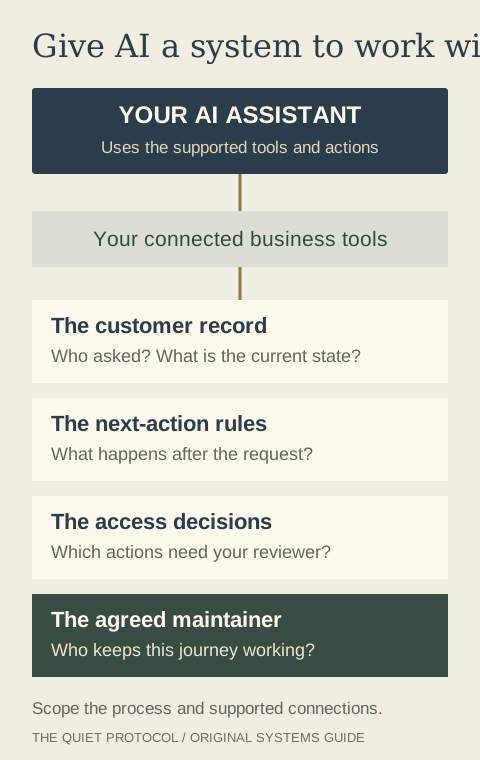
What must keep working when the chat closes?
- Your customer record
- The team can find the contact, relevant messages, appointment and current status in the agreed system.
- Your next-action rules
- A new request, changed appointment or accepted proposal leads to the right approved action.
- Your access decisions
- The tools and people have the access they need for the job you agreed, with sensitive decisions sent to the right reviewer.
- Your operating responsibility
- Someone monitors the named process, handles problems and keeps it aligned with changes in your business.
Test what happens after the helpful conversation
Use a sample inquiry in the proposed setup. Open the resulting record and follow the next action. Your team should be able to understand the state without searching several conversations.
Then change the appointment or ask a question that needs review. Check the messages, staff task and any follow-up that should pause. These are planning tests, not a report of results from a particular assistant.
Also try a connection that is unavailable. Someone should be able to identify the problem and carry the receiving action, rather than discover it when a customer asks why nobody replied.
TQP's implementation turns those questions into an agreed process and acceptance checks. With Signature, the named monitoring, repair and improvement responsibilities continue after launch.
Retire subscriptions through a plan, not a guess
You may be able to consolidate tools when TQP builds the connected process. First identify the job each current subscription carries and which records or live routes depend on it.
If a tool goes, decide where its useful data and work move. Test the replacement route before switching the live inquiry, booking or follow-up. Your team should know where to find current work afterwards.
Our HubSpot alternatives guide covers the specific CRM replacement purchase. The Calendly alternatives guide covers booking and the work around an appointment. You do not need to buy a replacement for every separate tool; you need the right set of tools for a working TQP system.
Decide whether you want to manage the system yourself
Platform access gives you tools. Implementation gets the agreed process built and tested. Continuing management makes a named team responsible for its operation.
Those are different levels of help. Choose the one that fits how you want to spend your time.
If you want an AI agent working with tools you retain, TQP can assess the supported connection and required access as part of an AI implementation. Your actual proposal establishes the workflow and responsibilities. A branded assistant announcement is not evidence that every TQP account has that connection available automatically.
Why TQP is the system partner to choose
Choose TQP when you want your customer journey built together and the continuing responsibility made clear. We combine the website, discovery, answering, intake, booking and follow-up that a service business needs to turn attention into useful customer work.
Your business should benefit from better AI without becoming an ongoing integration project you have to run between appointments. TQP gives you a practical way to buy the process and the agreed management behind it.
Bring us the journey you want handled and the tools you want to keep. We will show you the connected platform, implementation and operating scope that fit the job. Start with a system that carries your business, then use AI where it makes that work better.
Frequently asked questions
Does Claude for Small Business replace your CRM?
The announcement describes an assistant working inside connected business tools, including a CRM. Your customer records, appointment state and follow-up still need a system. TQP can build that customer process and assess the tools you retain.
Who is responsible for permissions and ongoing workflow changes?
Your implementation should identify the allowed actions, access and receiving reviewers, then name who maintains the process. A TQP Signature scope includes the agreed operating, monitoring, repair and improvement work after launch.
What does TQP build and manage for your customer journey?
TQP scopes the connected website, answering, intake, records, booking and follow-up your business needs. Your proposal identifies the purchased implementation, supported connections and the continuing responsibilities TQP carries for that named journey.
Bring the customer journey you want handled and the tools you want to keep. TQP will scope the connected platform, implementation and operating responsibility.
Get the business system behind your AI