AI lead generation can give you a longer list without giving you more customers. If the offer delivers contact records, your business still has to create a useful conversation, qualify the work and carry the sale.
You need customers. A spreadsheet of people who might need your service is several steps away from that.
The Quiet Protocol builds the connected business system behind the opportunity: how customers find you, what your website tells them, how you respond and what happens next. For a service business that wants the work done for you, that is a stronger purchase than another contact tool you have to turn into a sales process yourself.
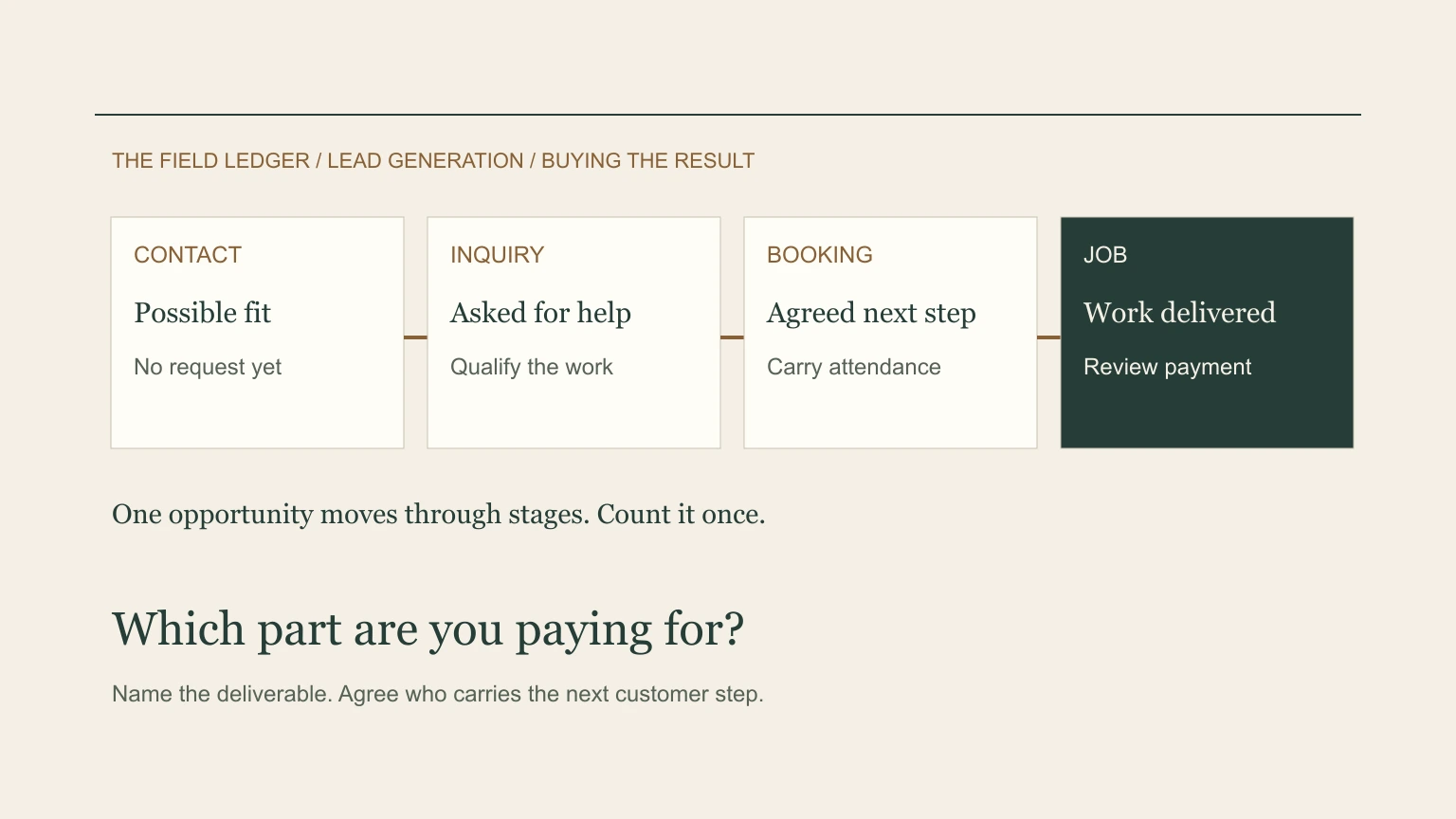
A name, an inquiry and a customer are different things
A contact list contains people or businesses thought to fit a target. It does not establish that they asked for your help, are ready to buy or want you to contact them.
An inquiry means someone has reached out. You still need to establish what they need, whether you serve their location and whether their timing fits your business.
A qualified booking means an agreed next conversation or appointment meets your stated criteria. It is not proof the person will attend, accept your proposal or pay for the work.
A completed job is work you delivered. Payment and delivery costs determine what that work contributes to your business.
These are useful working definitions for the buying discussion, not a universal industry standard. Put your own meaning in the agreement. Otherwise, you and the supplier can both say “lead” while talking about different things.
Read the promise on the quote, not just the headline
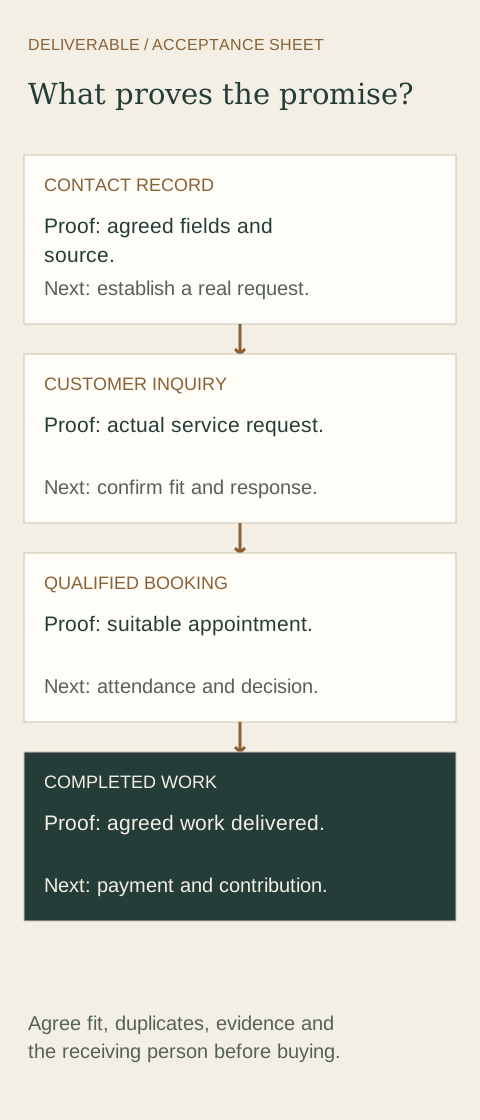
Suppose a proposal promises “100 AI-generated leads.” That is a hypothetical offer, not a vendor quotation. Does it mean 100 contact records? One hundred people who requested your specific service? Bookings you can inspect?
The number is meaningless until the deliverable is clear. So is a low cost per lead if most of those records cannot become the work you sell.
Make the deliverable specific before you sign
- What arrives?
- Name the result: contact record, inquiry, qualified appointment or another agreed output. Describe the evidence you will see.
- What counts as a fit?
- List your service, location, customer type and any essential timing or project requirements. Distinguish stated customer information from a supplier's assumption.
- Where did it come from?
- Ask how the contact or request was obtained and which permission or contact rules apply. Do not treat a supplied email address as permission to send anything you like.
- What happens next?
- Name who responds, where the record is saved and how the booking or follow-up reaches the correct person.
- How is it accepted?
- Agree the review window, duplicates, unsuitable records, correction process and applicable payment terms. A shared definition prevents an argument after delivery.
TQP starts with your actual customer process. We can assess how your website, phone, booking and records work today, then scope the implementation that connects them. You get a buying discussion about work your business can use.
Keep the lead report honest enough to use
An illustrative campaign might produce 100 contact records, 20 inquiries, eight bookings and four completed jobs. These invented counts describe different stages, not 132 separate leads.
Use one identifiable opportunity as it moves through the journey. Keep duplicates, unsuitable requests and pending outcomes visible. If a customer books twice or changes the appointment, that should not manufacture another acquired customer in your report.
Then follow the completed work to payment and relevant costs. A full calendar is useful only if the appointments fit your service, the work can be delivered and the resulting contribution makes sense.
TQP's platform gives the connected customer work somewhere to live. A configured pipeline can distinguish new inquiries, waiting decisions and completed steps. Your implementation should define which events update those states and who receives a stalled opportunity.
That is a better sales conversation than “the AI found another hundred names.” You can ask what happened to the people who actually asked for help.
Build demand around the service you actually sell
If you run a local service business, the person searching for help nearby is a different prospect from a name in a broad database. Your marketing should give that person a clear way to find you and establish whether you handle their problem.
Local Ranking Accelerator manages your supported directory presence and business details with agreed ongoing care. Your Smart Website explains the service, answers the important buying questions and leads the visitor toward a suitable inquiry or appointment.
AI can then help carry the approved response and intake work. An inquiry should not become a lost email because the website, phone and calendar belong to separate systems nobody has connected.
That is the TQP case: we build the path around your business and carry the agreed implementation and continuing work. You buy a working customer process instead of appointing yourself the person who makes five tools cooperate.
Make one inquiry finish its next step
Use an approved example from your business. A prospect asks about a service. Where should that request land? What do you need to know before offering an appointment? Who sees an unsuitable request? What happens if a suitable person does not finish booking?
Write the expected outcome in plain words. For example: the right details reach the customer record, the booking uses approved availability, and an unresolved question becomes a named person's task. The particular connections and follow-up rules need assessment before implementation.
TQP's growth systems can scope that connected journey. If your first need is answering, our AI receptionist can lead the work. If discovery is the weak point, start with Local Ranking Accelerator and the website. The system should match the problem, rather than force every business into the same tool bundle.
Spend on the route that already has a buyer
If you are a local service business, there are useful questions closer to a purchase than a broad prospect database. Can someone searching your location establish that you do the work? Does the website explain the next appointment? Can they reach you while your team is busy?
An accounting firm may need a consultation path that collects the right business details before a meeting. A repair business may need to establish the problem and service location before offering the next step. Those are illustrative buying journeys, and their qualification rules should differ.
TQP can build the service page, inquiry path and supported response around that job. Local Ranking Accelerator helps maintain direct discovery; the Smart Website makes your offer clearer; installed AI and automation carry agreed intake, booking and follow-up.
You are buying a customer system with a reason for each part. That is a stronger foundation for acquisition than adding another outreach tool and asking your team to invent the rest.
Buy a path to customers, not a bigger pile of names
A useful lead-generation purchase should make it easier for a suitable prospect to become useful business. Judge it by the agreed deliverable and the next customer steps it carries.
Bring us the service, the customer you want and the point where inquiries get stuck. We will help define the result, build the supported steps and agree who keeps them working. That is a better use of your attention than another dashboard full of possibilities.
Frequently asked questions
What does AI lead generation actually deliver?
It depends on the offer. You might receive contact research, inbound inquiries or help qualifying and booking prospects. Ask for the exact deliverable and acceptance rules. TQP focuses on implementing the customer journey your service business needs.
Does a contact list mean people want to buy from you?
No. A record does not establish a request, buying intent or permission for unrestricted outreach. Separate possible fit from an actual inquiry, then assess service, location and timing before treating it as a qualified opportunity.
How does TQP help you turn inquiries into customers?
We scope the relevant discovery, website, answering, intake, booking and follow-up work and connect the supported steps. You get an implemented customer journey and agreed ongoing responsibility, with the next steps designed around your service, location and team.
Bring us the service you want to sell and the path your prospects take today. We scope the discovery, intake, booking and follow-up work needed to carry that opportunity.
Build your customer journey with TQP