AI & digital marketing agency in WheatonThe day after local attention is when the business system earns its keep.
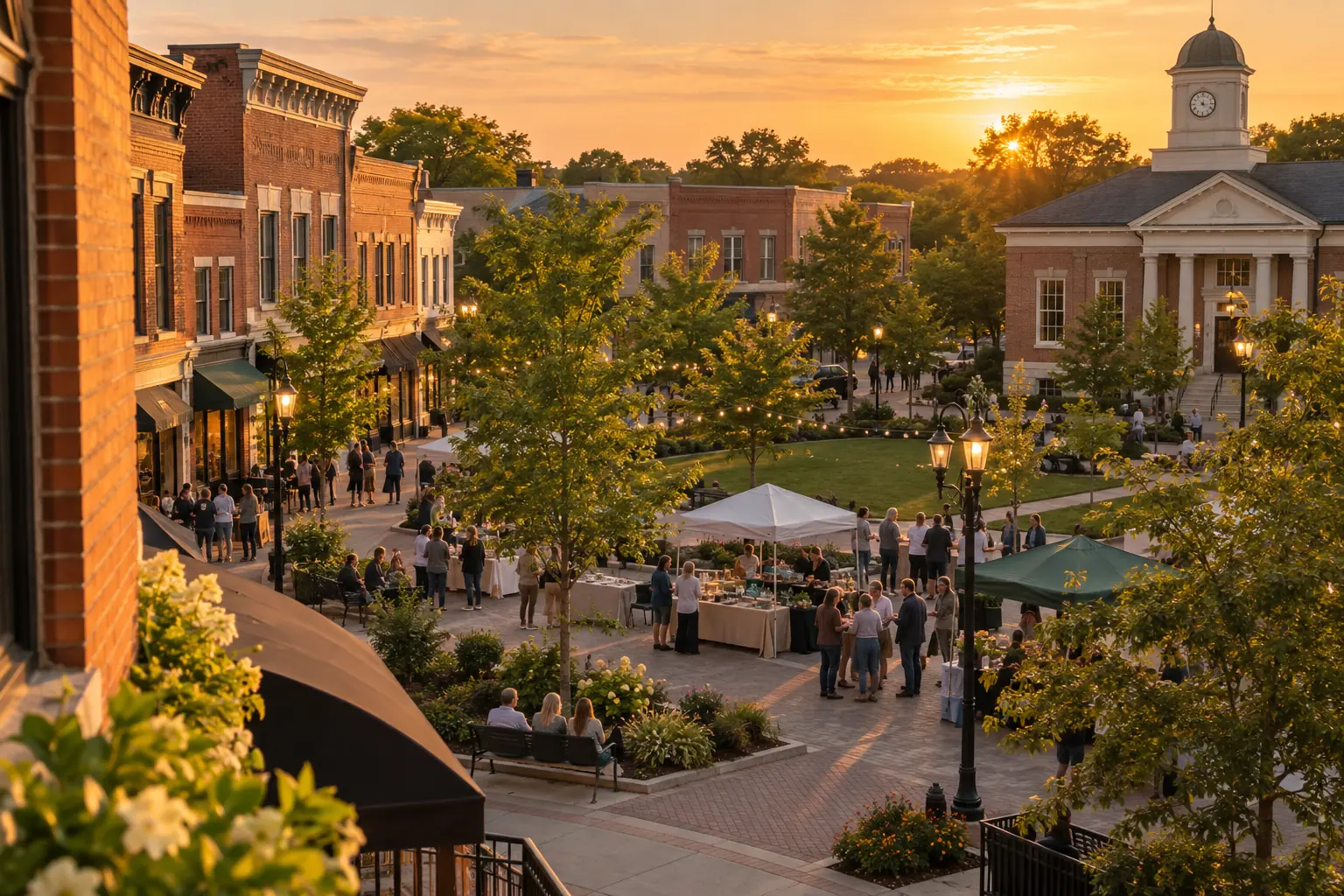
AI & digital marketing agency in Wheaton can turn discovery into useful relationships when the offer, first reply and follow-up fit the buyer. We build those digital systems remotely from Toronto for Wheaton service firms.
Map what happens after attention
Essential Website$99/month for hosting and care, free design and buildPublished price in US dollars
The place behind the argument
Wheaton invests in business visibility. An owner has to make it count.

The City says it works to attract and retain businesses and names the Downtown Wheaton Association, Chamber, Choose DuPage and Business Resource Center as economic-development partners. The Downtown Wheaton Association describes a mix of shops, services and professional offices, along with events that bring people into the district.
We read that as a strong introduction mechanism, not a guaranteed customer pipeline. The firm still needs a specific promise, a reachable team and a reason for a satisfied buyer to continue the relationship.
City of Wheaton economic development Downtown Wheaton Association business guideAn opinion for Wheaton owners
An event is an invitation. The business must earn the second conversation.
A busy room can feel like momentum. The next morning, a service owner needs a smaller, harder account: who asked about which service, who promised a reply, who booked and who wants to hear from the business again. We would rather improve that handoff than report an impressive but unqualified crowd.
The relationship ledger
Four entries that turn a moment into a customer path.
Attention
What did they notice?A local event, a recommendation or a search result may start the relationship. Name the precise service that matches the moment.
Intent
What did they ask?Record the buyer's job in their own words. A conversation about a future visit should not be counted as a completed booking.
Response
Who took responsibility?Give the inquiry a human owner or an approved response rule, then make the promised next step visible to the team.
Return
Was there a reason to come back?A useful reminder, a new appointment or a genuine recommendation can continue the relationship when the customer welcomes it.
Our opinion · Wheaton
Wheaton's community events create attention. The businesses that win are the ones who follow up.
Wheaton has a busy civic calendar and a strong downtown association. Events generate goodwill and names, but very few businesses do anything with them afterward. The follow-up is where the money is.
We would build the system before the next event: a way to collect consent, a thank-you, and a reason to come back.
Wheaton in numbers
What the Census says about the Wheaton market, and what we make of it.
| Wheaton | Illinois | |
|---|---|---|
| Residents (2025 estimate) | 54,065 | 12,719,141 |
| Population change since 2010 | +2% | -1% |
| Median household income | $120,008 | $83,390 |
| Income per person | $62,088 | $46,406 |
| Median home value | $455,700 | $263,300 |
| Homes lived in by their owners | 71.7% | 67.1% |
| Adults with a bachelor's degree or more | 64.5% | 37.8% |
| Residents under 18 | 22.0% | 20.6% |
| Residents 65 and older | 17.5% | 18.7% |
| Average commute (minutes) | 25.7 | 27.8 |
Local sales and receipts, 2022
- Health care and social assistance receipts$494 million$9,145 per resident · $9,848 statewide
- Retail sales$583 million$10,781 per resident · $19,240 statewide
- Restaurant and lodging sales$129 million$2,390 per resident · $3,283 statewide
Educated buyers research first. Increasingly, they ask an AI.
64.5% of adults in Wheaton hold a bachelor's degree or more, against 37.8% statewide. People who read contracts for a living read your website the same way, and more of that reading now happens through AI assistants: Gartner forecast in 2024 that search engine volume would fall a quarter by 2026 as people move to chatbots. Our view: if your prices, process and proof are not written in plain text on your site, the assistant will recommend a competitor whose are.
Research: Gartner, search engine volume forecast (February 2024)Money is not the constraint here. Attention is.
Median household income in Wheaton is $120,008, against $83,390 across Illinois. Buyers can afford most options, so they choose on signals of quality, exactly as Veblen observed of wealthy consumers more than a century ago. In 2026 the strongest signal is not a glossy brochure; it is a site that answers the real question, a named person and a reply within the hour. Keep the menu short: in Iyengar and Lepper's famous jam study, shoppers shown six choices were far more likely to buy than shoppers shown twenty-four.
Research: Iyengar and Lepper, When Choice Is Demotivating (2000)In a settled town, growth comes from the customers you already have.
Wheaton's population has barely moved since 2010 (52,894 then, 54,065 now). That changes the playbook. There is no wave of newcomers to catch, so the money is in keeping and expanding the relationships you have: Harvard Business Review's summary of the research puts the cost of winning a new customer at five to 25 times the cost of keeping one. Reminders, rebooking and a real thank-you are not admin; they are the marketing plan.
Research: Harvard Business Review, The Value of Keeping the Right Customers (2014)
Figures: US Census Bureau QuickFacts (American Community Survey 2020-2024 5-year estimates; Vintage 2025 population estimates; 2022 Economic Census). Dollar figures for 2022 sales are in current dollars; per-resident figures divide by the latest population estimate. The readings are our opinion.
The Wheaton owner's desk
The follow-up is where local attention becomes a business asset.
Four short pieces for firms participating in community life while building a dependable sales path.
The service behind the name
Recognition is only useful when the next step fits the work.
Aesthetics and med spas
Interest at a community gathering still needs treatment information, suitability limits and a real consultation route.
Explore the industry systemDental practices
A new household may remember a name later; clear visit types and a calm first booking turn recognition into care.
Explore the industry systemHome field services
A local introduction is valuable when the provider can state its actual work, coverage and response responsibility.
Explore the industry systemThe accounting path
Community recognition does not sort a tax question from an advisory one.
A Wheaton accounting firm can be well known and still lose time when every inquiry enters one mailbox. Separate an individual return, business bookkeeping and ongoing advisory request on the site. A client intake system can preserve context and route the matter to the right professional without presuming to give tax advice.
Accounting firm guide Accounting client system · From $199/month total; Solo plan includes 1 user and a professional websiteBuild what happens next
Make the next Wheaton customer easy to recognize and serve.
We work online with owners to approve the service story, response rules and follow-up. Toronto is our base; the customer's actual Wheaton need directs the work.
Book an intro callPublished starting points
Essential Website$99/month for hosting and care, free design and buildLocal Ranking Accelerator$99/month, or $82.50/month billed yearlyAI voice agentsFrom $449/month, free setup, no contractSmart WebsiteFrom $2,395 setup + $197/monthManaged Signature SystemsFrom $995/monthSetup, monthly platform fees and usage can be separate. Scope and terms are on each offer page.Wheaton owner questions
Should a Wheaton owner build a campaign around a downtown event?
Only if the business has a relevant offer and a responsible way to follow up with people who choose to hear from it. An event can create attention; bookings and repeat relationships depend on the website, response and consent-aware follow-up.
Can The Quiet Protocol serve my Wheaton business remotely?
Yes. We work from Toronto with Wheaton owners online. The owner approves the service facts, audience, booking rules and follow-up. We do not claim a Wheaton office or local employees.
Can an AI system send everyone an event follow-up?
No. Messages need a valid basis and an offer relevant to the person. We set rules for consent, timing, content and human review instead of treating every contact as permission to market.
How should a Wheaton business read its local market?
US Census figures show a median household income of $120,008 ($83,390 statewide), a median home value of $455,700, 64.5% of adults with a bachelor's degree or more. Our reading: educated buyers research first. increasingly, they ask an ai. We use numbers like these to decide positioning, pricing language and which channel to fix first.
What is the smallest first step for a Wheaton business?
The Essential Website is $99/month for hosting and care, free design and build. Local Ranking Accelerator is $99/month, or $82.50/month billed yearly. The AI voice agents are from $449/month, free setup, no contract, with minutes of calls included in the plan. Managed Signature Systems start from $995/month. Prices are in US dollars.