Why technicians leave disorganized offices, and how cleaner intake, scheduling, customer communication, and CRM ownership protect retention.
Treat any number without a nearby source or stated method as a planning assumption, then replace it with your own records.
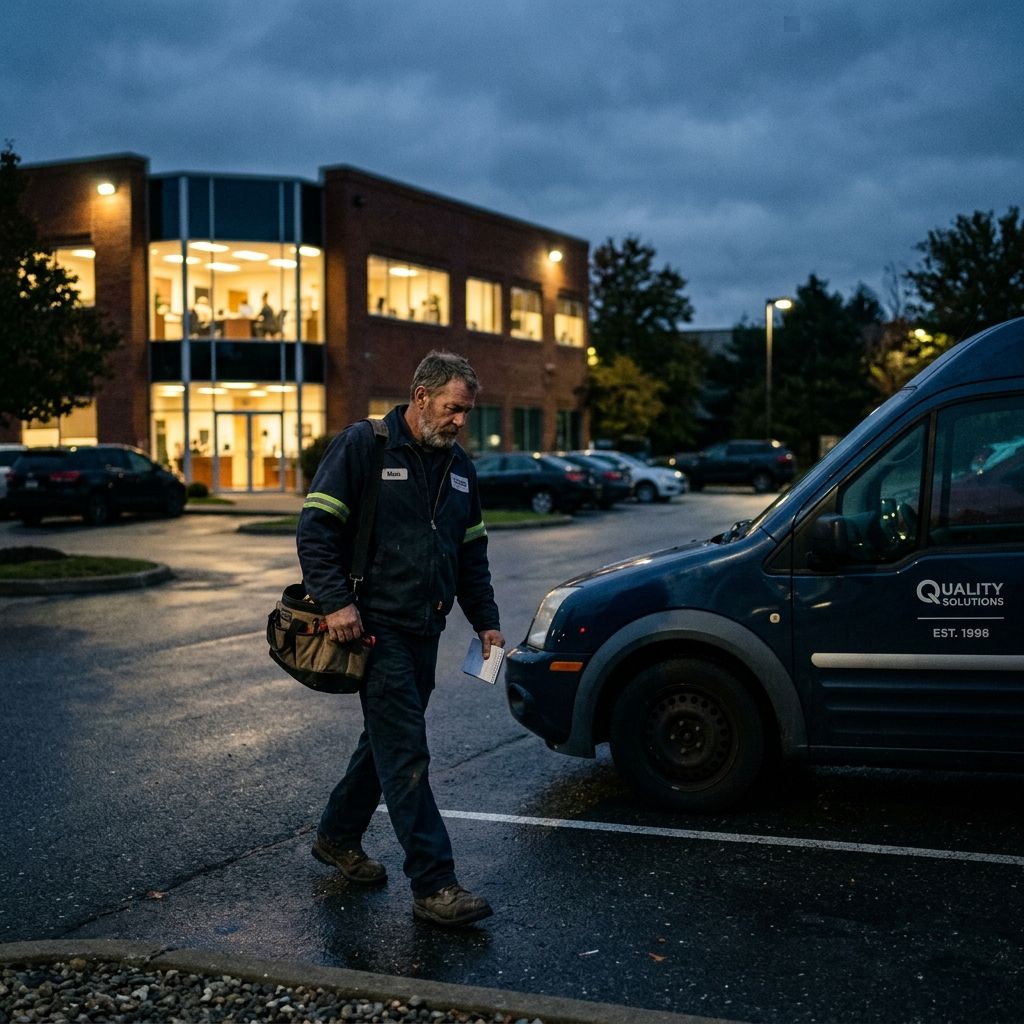
I want to tell you about a conversation I had with a former HVAC technician in Charlotte. He had left a company where he'd worked for six years. His previous employer couldn't figure out why. He was well paid. He liked the owner. His customers loved him. The reason he left had nothing to do with money.
'I'd show up to a job and the customer would be expecting someone tomorrow. I'd be doing a complicated install and calling the office for spec information and nobody would know where it was. I'd try to get materials authorized and the owner wouldn't answer, and I'd be standing in a customer's attic for 40 minutes waiting. The customer would get frustrated and look at me like I was the problem. I'm a good technician. I've been doing this for 12 years. But I looked incompetent because the back office was a mess. I found a company where the office actually has it together, and I'm not embarrassed to show up at a customer's house anymore.'
The Retention Factor Nobody Writes About
The HR literature on technician retention focuses on: compensation, growth opportunity, work-life balance, management quality, and culture. But skilled technicians, the people who are genuinely good at their trade, want to work for operations that match their professional standard. They've worked at multiple companies. They know what good operations feel like. When they join your business, they're evaluating whether the systems around them are professionally run.
The Systems That Skilled Technicians Notice
Job preparation quality: Did they receive accurate information before the job? Was the right equipment on the truck? Did the customer know they were coming? Authorization pathways: Can they get approval for additional scope without waiting 45 minutes for a callback? Customer communication alignment: When the customer says 'I thought you were coming at 2pm,' does the technician have to say 'I'm not sure what happened'? Dispatch accuracy: Is the technician dispatched to the right job with the right information?
The Retention Math
Hiring and training a new skilled technician in the trades costs $8,000-$15,000 in direct costs. Reducing technician turnover from 25% to 12% annually in a 10-person field team prevents 1-2 departures per year. That's $8,000-$30,000 in avoided costs, from a retention improvement with nothing to do with pay raises. The operational improvements that produce the professionalism technicians want are the same improvements that produce better customer experience, better conversion rates, and better business outcomes overall. There is no tradeoff.
What the Best Technicians Want
Asked directly across dozens of conversations: 1. Good pay, obviously. 2. Owners who respect the skilled work. 3. 'A business that runs like a business', professional systems, clear communication, things that work. 4. Predictable scheduling. 5. Authority to handle situations in the field without waiting for approval on everything. 'A business that runs like a business' is the one that rarely gets addressed in retention conversations.
Book a Revenue Leak Diagnostic to see where your operational systems are creating friction for your field team → /book-a-call
What to check before you choose a fix
Before buying another answering service, chatbot, phone tree, or AI receptionist, look at the actual path a caller, website visitor, referral, past customer, or high-intent lead takes when they reach your business. The first question is not whether the tool sounds impressive. The first question is whether the buyer gets a clear next step while they still care. In service business operations, that usually means a fast answer, a useful question, a booked appointment or estimate path, and a follow-up record that does not rely on memory.
A strong system should make the business feel easier to choose. It should reduce the waiting, repeating, guessing, and manual chasing that make a buyer keep searching. If the current setup answers only during business hours, takes a message without qualifying intent, or leaves the follow-up to whoever remembers first, the problem is not only staffing. It is front-door design.
The week-one diagnostic
Run this review over the last seven days before making a decision. Pull the call log, website form submissions, chat history, booking calendar, CRM notes, missed-call list, and Google Business Profile activity. Do not start with opinions. Start with timestamps and outcomes. A small sample is enough to show whether the leak is response speed, qualification, booking friction, review weakness, or follow-up failure.
- Count every missed call and every call that lasted under 20 seconds. Those are often buyers who never became visible in the CRM.
- Count every form or chat that waited more than 10 minutes for a real next step. This is where high-intent demand starts cooling off.
- Mark every inquiry that needed a human callback before booking. That tells you whether the website is explaining the next step clearly enough.
- Review the last five reviews buyers can see publicly. Recency matters because buyers compare proof before they commit.
This is the source method for the article: use your own call log, CRM, booking calendar, form inbox, and Google Business Profile review activity. Public research can explain the pattern, but your own records show where money is escaping in this business.
Where the revenue usually leaks
The leak usually appears in one of four places. First, the buyer calls when the team is busy or closed. Second, the buyer reaches the business but is not qualified clearly enough to book. Third, the buyer receives a polite response but no firm next step. Fourth, the buyer finishes the job or visit but no review, referral, or reactivation path happens after the work is done. Each leak looks small by itself. Together, they decide whether marketing produces booked revenue or only more noise.
For a service business, the most valuable fix is the one that protects answered calls, booked appointments, stronger reviews, and follow-up. That is why the technician who left because he was embarrassed by the office should be judged by business outcomes, not by novelty. A phone feature that sounds clever but does not improve booked appointments is not enough. A website widget that collects contact details but does not trigger follow-up is not enough. A review tool that asks once and disappears is not enough.
What a stronger system should do
A stronger front door answers quickly, asks the right questions, captures the reason for contact, separates urgent from routine demand, books when rules are clear, sends confirmations, updates the follow-up path, and asks for reviews after the work is done. The system should make the owner less dependent on heroic callbacks and make the buyer feel that the business is organized from the first touch.
The Quiet Protocol treats this as an operating system, not a single widget. Calls, web forms, missed-call text-back, appointment booking, CRM handoff, review requests, and reactivation all need to point in the same direction. When those pieces are connected, a service business can capture more demand without turning the team into a bigger manual call center.
How to judge whether it is working
Do not judge the system by how futuristic it feels on day one. Judge it by what changes in the business. Useful measurements include missed-call recovery rate, average response time, booked appointment rate, no-show recovery, review request volume, review recency, reactivated past-customer conversations, and the number of leads that have a clear next action in the CRM.
The best early sign is calm. Fewer loose callbacks. Fewer mystery leads. Fewer buyers waiting for a reply. More conversations with a clear status. That is what good automation should feel like to the owner and to the customer.
Use your own records before you decide
Source: start with your call log, CRM notes, booking calendar, missed-call records, web form timestamps, and Google Business Profile. Those records show whether buyers reached you, how fast they heard back, what they asked for, and where the next step broke down.
For seven days, mark each missed call, late reply, unbooked form, stale estimate, and review request that never went out. That small sample gives an owner a practical picture of the front-door gap before they spend more on ads, software, or staff.
The professionalism gap technicians feel before owners see it
Technicians usually experience operational weakness before the owner sees it in a report. They are the ones standing in the driveway when the customer says nobody confirmed the visit. They are the ones explaining a quote they did not write. They are the ones waiting on approval while the customer watches the clock. Over time, that friction feels like disrespect, even when the owner likes the technician and pays fairly.
In a retention audit, I would not start with a generic morale survey. I would ask technicians where the business makes them look unprepared. Bad work orders, unclear photos, missing parts, wrong arrival windows, weak office notes, delayed approvals, and surprise customer expectations are the usual answers. Those are system issues disguised as culture issues.
The owner-first question is blunt: does your operation help good technicians look excellent, or does it make excellent technicians apologize for things outside their control?
The retention system hiding inside dispatch
The fastest retention improvement is often a better pre-job packet. Before the technician leaves, they should have the problem summary, customer history, photos or prior notes if available, access instructions, quote context, decision-maker name, and approval rules. That packet turns the technician from a person arriving cold into a professional arriving prepared.
This does not need to be complex. Even a structured intake form and clean dispatch note can change how the field team feels. The technician stops absorbing office chaos. The customer sees continuity. The office receives fewer rescue calls. The owner gets fewer end-of-day complaints that are really symptoms of messy handoffs.
For buyers and search engines, the experience signal is practical: retention is not only HR. It is operational design. A business with better intake and dispatch tends to keep better technicians because the workday feels less chaotic.
Can better systems reduce technician turnover?
Yes. Pay still matters, but strong technicians also stay where dispatch, communication, approvals, and customer expectations make them look professional.
What should owners ask technicians first?
Ask: 'Where does the office make the field look unprepared?' The answers usually point directly to fixable systems.
How I would ask technicians for the truth without creating blame
Technicians will not always tell the owner the full truth if they think it will turn into office drama. The better prompt is specific and neutral: 'What information would have made your last three jobs easier?' That question points to systems, not personalities. It usually produces cleaner answers than asking whether dispatch is good or bad.
Then close the loop visibly. If technicians say arrival windows are unclear, fix the message. If they say photos are missing, add a photo field. If they say approvals stall, define approval thresholds. Retention improves when the field team sees that operational complaints turn into operating changes.
The loss estimate is basic business math, not a magic claim.
Revenue-leak examples on this site are built from visible operating inputs: inquiry volume, missed-call or slow-response rate, booking rate, average job or client value, repeat value, and follow-up recovery. The fastest way to make the number real is to run the diagnostic for your closest business type, then compare it against your own call log, CRM, booking calendar, form timestamps, and review activity.
The practical questions behind this decision.
Is this just a 24/7 answering service?
No. A traditional answering service usually takes a message. A properly designed AI receptionist and front-door system captures intent, qualifies the buyer, routes the request, books when possible, triggers follow-up, and supports reviews after the work is done. Message-taking is coverage. Revenue capture is a fuller operating path.
What should a service business fix first?
Fix the first place buyers disappear. For some businesses that is after-hours calls. For others it is slow website follow-up, weak booking logic, old leads, or stale reviews. The right first move comes from the seven-day diagnostic, not from guessing.
Will AI make the business feel less human?
Bad automation feels colder than a person. Good automation feels like the business is paying attention. It answers quickly, uses plain language, collects the right information, and hands the buyer to a human when judgment or empathy is needed. The goal is not to remove people. The goal is to stop making buyers wait for basic next steps.
How fast should we expect improvement?
The first lift should come from visibility and speed: fewer missed opportunities and cleaner routing. Deeper gains come after the system has enough real conversations to tune scripts, booking rules, follow-up timing, and review requests. Treat the first month as deployment and calibration, not a magic switch.
Can better systems reduce technician turnover?
Yes. Pay still matters, but strong technicians also stay where dispatch, communication, approvals, and customer expectations make them look professional.
What should owners ask technicians first?
Ask: 'Where does the office make the field look unprepared?' The answers usually point directly to fixable systems.
Decide what the AI must handle before you choose the software.
A useful intake system begins with the caller journey, the rules, and the human handoff, not a long feature list.

Vikram Roy is the founder of The Quiet Protocol, a Toronto-based systems firm serving service businesses across the Greater Toronto Area, Canada, and the United States. He works directly with professional firms, home service companies, dental practices, clinics, and local businesses to connect websites, customer intake, booking, reviews, follow-up, and practical AI into a clearer digital front door. All content is written from Toronto, Ontario. See the editorial method →
Give the receptionist a realistic scenario and hear how it answers, gathers context, and moves the caller toward a useful next step.
See how the capability in this article fits into a complete customer journey.
Service BusinessesSee the same decision through the language, buyer behavior, and operating reality of this industry.
Client Results & ProofInspect the starting condition, installation, measurement window, and outcome behind real client work.
Carpet Cleaning Businesses Win on Speed. Here's Why Your Intake Is the Bottleneck.
A carpet cleaning field guide to missed calls, same-day booking, dispatch notes, CRM handoff, and follow-up when speed decides the job.

Commercial Cleaning Companies Win Bids They Never Close. Here's the Leak.
How commercial cleaning companies can close more walkthroughs and bids with faster follow-up, cleaner CRM notes, proof, and renewal-ready communication.

The Formula That Tells You Whether Your Marketing Is Actually Working
A practical CAC, LTV, call conversion, and review-driven ROI guide for owners who need to know whether marketing is really working.
Calculate the revenue leak.
Stop guessing. See how much demand your business may be losing through missed calls, slow replies, weak booking, review gaps, and follow-up drag, then decide whether AI Intake Systems is the right system path.
Run the calculationPrefer to hear it first?
Call the live AI receptionist and test the conversation.
Call the live AI receptionist anytime. Tell it about service businesses, then hear a short live roleplay based on the calls your front desk actually gets.