
The Sunday-night cost of missed calls, open loops, weak CRM ownership, and follow-up gaps, plus the systems that make work stop following you home.
Treat any number without a nearby source or stated method as a planning assumption, then replace it with your own records.
Picture it. Sunday, 7:14 PM.
You're on the couch. The TV is on, some game, some show, something your spouse picked and you've been half-watching for 40 minutes. Your phone is face-down on the cushion next to you. You haven't picked it up in a while.
But you know it's there.
And somewhere in the back of your head, a quiet conversation is happening that has nothing to do with what's on the screen.
*Who didn't I call back on Friday?*
*There were three estimates I sent out this week. None of them confirmed. Are they going with someone else? Should I follow up tonight? Is tonight too late to follow up?*
*Jennifer left early on Friday. Did she lock up the routing board? If the system is wrong going into Monday, dispatch is going to be a disaster by 9 AM.*
If you own a service business and you've never had that exact Sunday evening experience, stop reading. This post isn't for you and you're doing something right.
But if you read that and felt a flicker of recognition? Stay with me.
I've asked a single question in hundreds of audit calls: *When was the last Sunday night you didn't think about work at all?*
The silence is always the same. Long. A little uncomfortable. Sometimes a short, humorless laugh.
And then, every time, the same three thoughts come out. Almost word for word.
The Three Things You're Always Thinking About
It doesn't matter if you run HVAC in Phoenix or a landscaping company in Nashville or a home services franchise in suburban Ohio. The Sunday night inventory is always the same three categories:
One. The callbacks you didn't make.
Someone called Friday afternoon. You were in a truck, or on a job, or dealing with something else that needed handling. You told yourself you'd call back Monday. But the call was from a number you didn't recognize, and now you're doing the math in your head on who it might have been and whether they've already called a competitor.
In 9 out of 10 businesses we audit, there is no systematic process for what happens to a missed call after business hours. There's a voicemail. Maybe there's a vague understanding that someone will "check it" on Monday. But there is no defined response window, no automated acknowledgment, no callback queue. The lead sits in limbo all weekend.
Two. The estimates going cold.
You spent real time on those estimates. You showed up, did the assessment, priced it fairly, sent a professional-looking quote. And now it's been four or five days with no response. You don't know if they're thinking it over, if they've already said yes to someone else, or if the email went to spam.
The estimate follow-up process in most service businesses exists entirely in someone's head. Which means it exists inconsistently, and on Sunday night, the owner is the one carrying the weight of that inconsistency.
Three. Whether Monday is going to be manageable.
This one is the most diffuse and the most exhausting. It's not one specific thing. It's a general dread about the density of Monday morning, the calls that will come in at once, the scheduling gaps from jobs that cancelled Friday, the technician who may or may not show up on time, the customer who said they were "flexible" on timing and will definitely not be flexible on timing.
Here's what I've found over hundreds of these conversations: owners don't think about these three things on Sunday because they're anxious people. They think about them because their systems require them to. The information lives in their heads because there's nowhere else for it to live.
That's a design problem. And design problems have design solutions.
The Real Cost Nobody Accounts For
Most conversations about business operational problems focus on the revenue cost. I do it too, we talk about missed calls turning into missed jobs, missed jobs turning into missed revenue.
That's all real and I'll stand behind every number we calculate.
But the Sunday Night Tax isn't primarily a revenue cost. It's a cognitive cost. And the research on cognitive cost is clear and the implications for service business owners are significant.
Decision fatigue is real. When you spend your Sunday evening running mental loops on unresolved operational problems, you're drawing down on a finite daily budget of decision-making capacity. That's not a metaphor. That's a documented psychological mechanism.
On Monday morning, an owner who slept clean, who didn't spend Sunday doing invisible mental work, arrives with full cognitive bandwidth. They make better pricing decisions. They hire better. They negotiate better with suppliers. They catch the things that need catching.
The owner who spent Sunday running the callback inventory and the estimate follow-up list and the Monday dispatch scenario arrives partially depleted. They make decisions from a reduced cognitive pool. And they often don't notice. Because the depletion is incremental. It doesn't feel like "I'm running low", it feels like "today is just a harder day."
A Phoenix HVAC company we audited was doing $3.4 million in revenue with a team of 11 technicians. The owner had been running the company for 11 years. Sharp guy. Built it from scratch. When I asked him about Sunday nights, he laughed and said "I've had maybe six good Sunday nights in 11 years." He didn't say it with bitterness. He said it like it was just the deal. The cost of the gig.
It doesn't have to be.
The sleep quality cost compounds. Interrupted or poor-quality sleep impairs the kind of pattern recognition and judgment that experienced operators rely on. When owners tell me they're making decisions more slowly or feeling like the business is "getting away" from them, sleep quality is in the differential diagnosis every time. You can't separate Sunday night anxiety from Monday morning performance.
And then there's the spillover cost, the one that never shows up in any business metric but that owners feel most acutely. The half-present father at the Sunday dinner table. The spouse who asks how you're doing and gets a "fine" that means something different. The family time that is technically happening but isn't really happening because you're somewhere else in your head.
These aren't soft costs. They're real costs. They accumulate. And they have a source.
What the Other Sunday Looks Like
I want to describe a different Sunday night. Not a hypothetical. An actual account from a client who runs a plumbing company in the Chicago suburbs.
He implemented full intake systematization, automated call handling, structured callback queues, estimate follow-up sequences, about 14 months before I'm writing this. When I spoke with him for a check-in call a few months after the implementation, I asked him about Sundays.
He said: "It's weird. I still have the instinct to pick up my phone and check. But when I do, there's nothing to check. The system handled everything Friday. Anything that came in over the weekend either got responded to automatically or is sitting in a queue for Monday that I'll see when I open my laptop. It's all there. I don't have to hold it."
He used that phrase, "I don't have to hold it."
That's what systematized operations actually does. It takes the information that was living in your head, the callbacks, the estimates, the dispatch calendar, and puts it in a container that isn't you. The information doesn't disappear. It's still there. It's just not your job to remember it anymore.
The last time I talked to him, he mentioned that his wife had noticed. She'd asked him, a few months in, what had changed. He'd told her about the systems. She'd said: "I thought you just started caring less."
He hadn't started caring less. He'd started carrying less.
The Path from One Sunday to the Other
Here's what I actually see happening in businesses that make this transition, in roughly the sequence it happens.
What to check before you choose a fix
Before buying another answering service, chatbot, phone tree, or AI receptionist, look at the actual path a caller, website visitor, referral, past customer, or high-intent lead takes when they reach your business. The first question is not whether the tool sounds impressive. The first question is whether the buyer gets a clear next step while they still care. In service business operations, that usually means a fast answer, a useful question, a booked appointment or estimate path, and a follow-up record that does not rely on memory.
A strong system should make the business feel easier to choose. It should reduce the waiting, repeating, guessing, and manual chasing that make a buyer keep searching. If the current setup answers only during business hours, takes a message without qualifying intent, or leaves the follow-up to whoever remembers first, the problem is not only staffing. It is front-door design.
The week-one diagnostic
Run this review over the last seven days before making a decision. Pull the call log, website form submissions, chat history, booking calendar, CRM notes, missed-call list, and Google Business Profile activity. Do not start with opinions. Start with timestamps and outcomes. A small sample is enough to show whether the leak is response speed, qualification, booking friction, review weakness, or follow-up failure.
- Count every missed call and every call that lasted under 20 seconds. Those are often buyers who never became visible in the CRM.
- Count every form or chat that waited more than 10 minutes for a real next step. This is where high-intent demand starts cooling off.
- Mark every inquiry that needed a human callback before booking. That tells you whether the website is explaining the next step clearly enough.
- Review the last five reviews buyers can see publicly. Recency matters because buyers compare proof before they commit.
This is the source method for the article: use your own call log, CRM, booking calendar, form inbox, and Google Business Profile review activity. Public research can explain the pattern, but your own records show where money is escaping in this business.
Where the revenue usually leaks
The leak usually appears in one of four places. First, the buyer calls when the team is busy or closed. Second, the buyer reaches the business but is not qualified clearly enough to book. Third, the buyer receives a polite response but no firm next step. Fourth, the buyer finishes the job or visit but no review, referral, or reactivation path happens after the work is done. Each leak looks small by itself. Together, they decide whether marketing produces booked revenue or only more noise.
For a service business, the most valuable fix is the one that protects answered calls, booked appointments, stronger reviews, and follow-up. That is why the sunday night tax: what running a broken system actually costs you should be judged by business outcomes, not by novelty. A phone feature that sounds clever but does not improve booked appointments is not enough. A website widget that collects contact details but does not trigger follow-up is not enough. A review tool that asks once and disappears is not enough.
What a stronger system should do
A stronger front door answers quickly, asks the right questions, captures the reason for contact, separates urgent from routine demand, books when rules are clear, sends confirmations, updates the follow-up path, and asks for reviews after the work is done. The system should make the owner less dependent on heroic callbacks and make the buyer feel that the business is organized from the first touch.
The Quiet Protocol treats this as an operating system, not a single widget. Calls, web forms, missed-call text-back, appointment booking, CRM handoff, review requests, and reactivation all need to point in the same direction. When those pieces are connected, a service business can capture more demand without turning the team into a bigger manual call center.
How to judge whether it is working
Do not judge the system by how futuristic it feels on day one. Judge it by what changes in the business. Useful measurements include missed-call recovery rate, average response time, booked appointment rate, no-show recovery, review request volume, review recency, reactivated past-customer conversations, and the number of leads that have a clear next action in the CRM.
The best early sign is calm. Fewer loose callbacks. Fewer mystery leads. Fewer buyers waiting for a reply. More conversations with a clear status. That is what good automation should feel like to the owner and to the customer.
The loss estimate is basic business math, not a magic claim.
Revenue-leak examples on this site are built from visible operating inputs: inquiry volume, missed-call or slow-response rate, booking rate, average job or client value, repeat value, and follow-up recovery. The fastest way to make the number real is to run the diagnostic for your closest business type, then compare it against your own call log, CRM, booking calendar, form timestamps, and review activity.
The practical questions behind this decision.
Is this just a 24/7 answering service?
No. A traditional answering service usually takes a message. A properly designed AI receptionist and front-door system captures intent, qualifies the buyer, routes the request, books when possible, triggers follow-up, and supports reviews after the work is done. Message-taking is coverage. Revenue capture is a fuller operating path.
What should a service business fix first?
Fix the first place buyers disappear. For some businesses that is after-hours calls. For others it is slow website follow-up, weak booking logic, old leads, or stale reviews. The right first move comes from the seven-day diagnostic, not from guessing.
Will AI make the business feel less human?
Bad automation feels colder than a person. Good automation feels like the business is paying attention. It answers quickly, uses plain language, collects the right information, and hands the buyer to a human when judgment or empathy is needed. The goal is not to remove people. The goal is to stop making buyers wait for basic next steps.
How fast should we expect improvement?
The first lift should come from visibility and speed: fewer missed opportunities and cleaner routing. Deeper gains come after the system has enough real conversations to tune scripts, booking rules, follow-up timing, and review requests. Treat the first month as deployment and calibration, not a magic switch.
Turn the article into one week of real numbers.
Use your own call log, form timestamps, calendar, and CRM before accepting any industry estimate.

Vikram Roy is the founder of The Quiet Protocol, a Toronto-based systems firm serving service businesses across the Greater Toronto Area, Canada, and the United States. He works directly with professional firms, home service companies, dental practices, clinics, and local businesses to connect websites, customer intake, booking, reviews, follow-up, and practical AI into a clearer digital front door. All content is written from Toronto, Ontario. See the editorial method →
Use your own operating numbers to see where response, booking, reviews, and follow-up may be costing the business.
See how the capability in this article fits into a complete customer journey.
Service BusinessesSee the same decision through the language, buyer behavior, and operating reality of this industry.
Client Results & ProofInspect the starting condition, installation, measurement window, and outcome behind real client work.
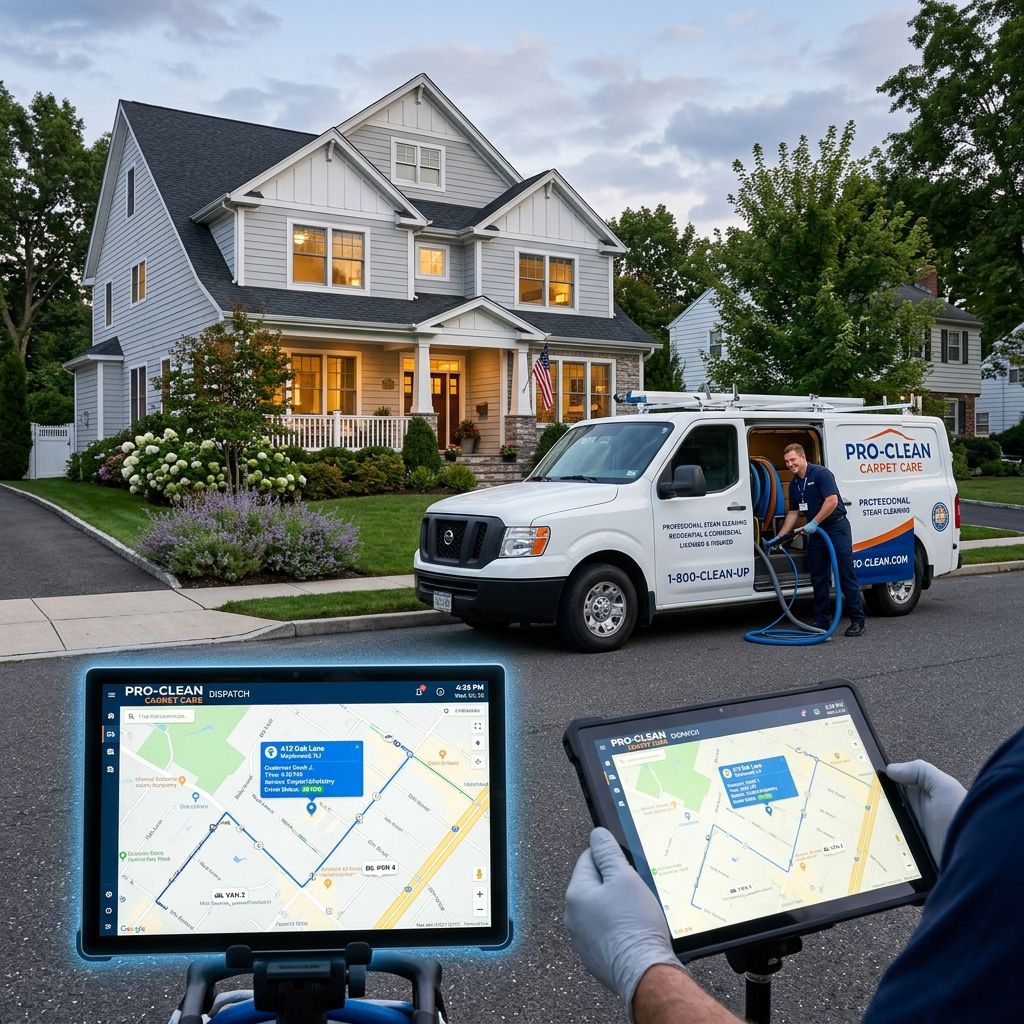
Carpet Cleaning Businesses Win on Speed. Here's Why Your Intake Is the Bottleneck.
A carpet cleaning field guide to missed calls, same-day booking, dispatch notes, CRM handoff, and follow-up when speed decides the job.

Commercial Cleaning Companies Win Bids They Never Close. Here's the Leak.
How commercial cleaning companies can close more walkthroughs and bids with faster follow-up, cleaner CRM notes, proof, and renewal-ready communication.

The Formula That Tells You Whether Your Marketing Is Actually Working
A practical CAC, LTV, call conversion, and review-driven ROI guide for owners who need to know whether marketing is really working.